
TL;DR
An automotive garage creeper is a low wheeled platform that lets you roll beneath a vehicle that is already secured on suitable jack stands or a lift. Choose one that fits the available clearance and your body, check its capacity and casters, and inspect it before each use. A creeper supports you; it never lifts or supports the vehicle.
A creeper carries the person using it; support the vehicle separately on suitable jack stands or a lift.
Measure supported vehicle clearance and compare it with creeper height, width, and length before buying.
Check the capacity label, frame or body, padding, and casters before every use.
Clear cords and debris, and avoid sloped or uneven floors that can impede movement.
Match the tool to the job: creeper for undercar work, mat for stationary floor work, and rolling seat for upright tasks.

Get business pricing on garage and car supplies
- Business-only prices and quantity discounts
- Tax-exempt purchasing
- Multiple users, one account, clear invoices
What a garage creeper does—and what it can’t do
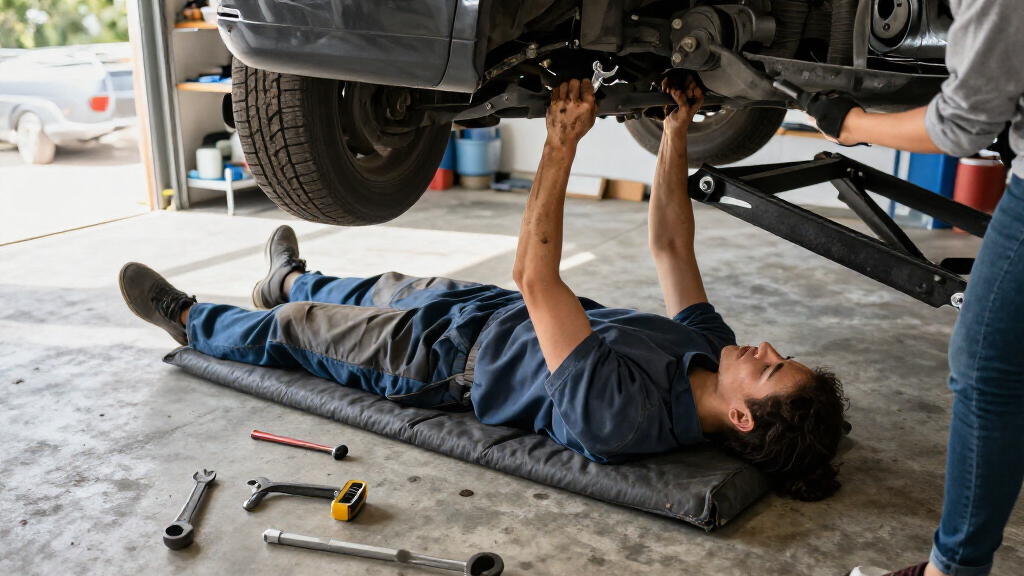
A garage creeper is a low, wheeled platform that lets a mechanic roll beneath a vehicle that is already raised and properly supported. Its job is to make undercar work easier by keeping your back and shoulders off the floor and reducing repeated shuffling. It does not lift, hold, or stabilize the vehicle. That distinction changes how you plan the job. On a routine task like changing an oil filter, you might roll in with a wrench, adjust your position, and roll out for a drain pan. The creeper makes those movements easier, but it cannot make an unsafe work area safe: the car must be immobilized and supported according to the vehicle and lifting-equipment instructions before you go underneath. A hydraulic jack alone can lower or shift, so it is not a safe support for undercar work. Creepers come in molded plastic or composite, padded frame, and metal frame designs. Some fold or convert into a mechanic’s seat, and some add small tool trays. These options affect comfort, storage, and convenience, but extra features also add bulk or moving parts to inspect. A tray can keep a tool close, for example, but anything that falls into your path can catch a caster or interrupt your movement. Read the creeper manual and capacity label, and stay within the ratings for the creeper, stands, lift, and vehicle. The useful mental picture is a small rolling work surface for your body. It moves with you, while separate equipment holds the vehicle in place. Keeping those roles distinct helps you judge which features make a job more comfortable without mistaking convenience for support or safety.Products Worth Considering

Chemical Guys 17-Piece Car Detailing Kit for Interior, Exterior, and Wheels

NOCO Boost GB250 5250A UltraSafe Jump Starter, 12V Lithium Battery Booster

DEWALT 20V MAX XR Cordless 1/2-Inch Impact Wrench Kit (DCF900P1)
As an affiliate, we earn on qualifying purchases.
Check fit, capacity, and comfort before you buy
The right creeper fits beneath your supported vehicle, carries your weight within its rating, and lets you move without fighting the frame or wheels. Start with the space you actually have: measure the clearance beneath the vehicle at its supported height, then compare it with the creeper’s height, width, and length. Height is often the limiting dimension; a model that is too tall will not fit, while choosing the lowest one available can leave less room for its wheels to roll over floor joints. Width is a similar tradeoff: a wider platform may feel steadier, but it can be harder to steer between tires and nearby lift arms. Capacity labels deserve a careful read. Check the manufacturer’s stated load rating and compare it with your weight and anything you’ll carry on the creeper. Never exceed its rating. The rating is a limit, not a measure of comfort or durability under every condition, so inspect the construction as well. If a molded platform visibly bows when you press it, or the frame feels loose, pick another model. In a small home garage, a mechanic who mainly works on a compact sedan may value low height and narrow width more than a large tray, since extra width can make positioning harder without helping the work. Comfort depends on your body and the job. Padding, a headrest, a contoured shape, and enough length can reduce pressure during a long inspection. If you’re tall, measure the usable surface instead of assuming a product photo tells the whole story; a body that extends beyond the padding may still end up uncomfortable. A cushion that feels plush at the store may also raise your body enough to reduce clearance beneath the car, so consider whether the comfort gain is worth the lost space. Before checkout, compare the dimensions, capacity, padding, and warranty. Ask whether the maker offers replacement casters, since worn wheels can affect how the platform moves and whether the tool remains useful over time. Availability and specifications change, so verify current details with the manufacturer or retailer rather than relying on an old product listing.Choose casters that suit your garage floor
Casters decide whether a creeper glides smoothly or catches on every crack, cord, and stray washer. That affects more than comfort: a wheel that stops suddenly can jolt you out of position or make it harder to roll back out. Larger wheels may roll over small floor defects more easily, while swiveling casters make steering easier in a confined space. The tradeoff is that larger wheels may add height, which can reduce the clearance available under a vehicle. The floor matters as much as the wheel: debris, uneven concrete, damaged casters, and extension cords can stop a creeper abruptly.| Feature | What it can help with | What to check |
|---|---|---|
| Larger casters | Small cracks and joints in concrete | Clearance under the vehicle and wheel condition |
| Swiveling casters | Turning and positioning in a tight bay | Whether each wheel turns freely without wobbling |
| Keeping small tools near your hand | That tools stay clear of wheels and your path | |
| Foldable or convertible design | Storage or switching to seated work | Hinges, locks, and the maker’s instructions |
Use your creeper only after the vehicle is secured
A creeper is safe to use under a vehicle only after the vehicle has been immobilized and supported on suitable, properly rated jack stands or a lift. Follow the vehicle and lifting-equipment instructions, use a level and stable workspace, and never rely on a hydraulic jack alone. The creeper carries your weight close to the vehicle, where there may be little room to react; it cannot catch or hold a falling vehicle.- Prepare the floor. Work on a level, stable surface and clear cords, tools, and loose debris from your path. Don’t use a creeper on a sloped or uneven floor. A clear route lets you roll in and back out without a wheel snagging or an object shifting under you.
- Secure the vehicle. Immobilize it and raise and support it according to the vehicle and equipment instructions. Confirm the support equipment is appropriate and within its rated capacity before going underneath. This check matters because the creeper offers no backup if the vehicle moves.
- Inspect the creeper. Check the body or frame for cracks or looseness, the casters for damage and free movement, and the padding and fasteners for wear. Stop if anything looks unstable; a defect that seems minor while rolling across the garage may matter more when you are beneath the vehicle.
- Roll in slowly. Carry only what you need, keep your hands and clothing clear of moving parts, and stop if a wheel catches or the creeper shifts unexpectedly. Slow movement gives you a chance to respond before you are in a cramped position.