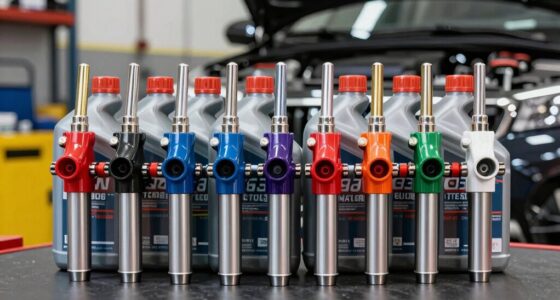
The best motor oil for your car is the one that matches the viscosity and oil specification in your owner’s manual. For a broadly useful pick among these options, I’d start with Mobil 1 Advanced Full Synthetic 5W-30; drivers with older, higher-mileage engines may prefer Valvoline MaxLife 5W-30, while Castrol EDGE 0W-20 suits cars that call for that lighter grade. The main tradeoffs are conventional or synthetic blend versus full synthetic, standard versus high-mileage formulas, and choosing the right viscosity for your engine. A premium formula cannot make an unapproved viscosity suitable for a vehicle. Read on for the full comparison and a guide to matching an oil to your car’s requirements.

Get business pricing on garage and car supplies
- Business-only prices and quantity discounts
- Tax-exempt purchasing
- Multiple users, one account, clear invoices
Complete the kit


Key Takeaways
Viscosity comes first: The lineup spans 0W-20 through 20W-50, so the right choice depends on the vehicle manual, not a general preference for thicker or thinner oil.
Full synthetic is the broadest group here: Mobil 1 Advanced, Valvoline Advanced, and Castrol GTX Full Synthetic offer several common grades, while synthetic blends give buyers another formulation to compare.
High-mileage oils serve a specific use: Castrol EDGE High Mileage, Mobil 1 High Mileage, and Valvoline MaxLife are aimed at older engines, but the high-mileage label does not replace the required grade or specification.
Brand alone does not settle the choice: Castrol, Mobil 1, and Valvoline each appear in multiple grades and formulations, making the exact product label more useful than choosing by brand name.
20W-50 is the narrowest-fit option: Castrol GTX High Mileage 20W-50 is only a match for engines whose requirements call for that viscosity; it is not a general fix for wear or oil consumption.
| Castrol EDGE High Mileage 5W-20 Advanced Full Synthetic Motor Oil, 5 Quarts |  | Best Full Synthetic for High-Mileage Cars | Brand: Castrol | Viscosity: 5W-20 | Oil type: Full synthetic | VIEW LATEST PRICE | See Our Full Breakdown |
| Castrol GTX 5W-30 Synthetic Blend Motor Oil, 5 Quarts |  | Best Synthetic Blend for Everyday Gasoline Cars | Brand: Castrol | Viscosity grade: 5W-30 | Oil type: Synthetic blend | VIEW LATEST PRICE | See Our Full Breakdown |
| Castrol EDGE 0W-20 Advanced Full Synthetic Motor Oil, 5 Quarts |  | Best for 0W-20 Cars with Extended-Interval Claims | Viscosity: 0W-20 | Oil type: Full synthetic | Quantity: 5 quarts | VIEW LATEST PRICE | See Our Full Breakdown |
| Valvoline MaxLife High Mileage 5W-30 Synthetic Blend Motor Oil, 5 qt |  | Best High-Mileage 5W-30 Blend | Brand: Valvoline | Viscosity: 5W-30 | Oil type: Synthetic blend | VIEW LATEST PRICE | See Our Full Breakdown |
| Mobil 1 High Mileage Full Synthetic Motor Oil, 10W-30, 5 Quart |  | Best 10W-30 Full Synthetic for High-Mileage Engines | Brand: Mobil 1 | Viscosity grade: 10W-30 | Oil type: Full synthetic | VIEW LATEST PRICE | See Our Full Breakdown |
| Mobil 1 Advanced Full Synthetic Motor Oil, 5W-30, 5 Quart |  | Best for Extended Drain Intervals | Brand: Mobil 1 | Viscosity grade: 5W-30 | Oil type: Full synthetic motor oil | VIEW LATEST PRICE | See Our Full Breakdown |
| Mobil 1 Advanced Full Synthetic Motor Oil 5W-20, 5 Quart |  | Best 5W-20 Extended-Interval Pick | Brand: Mobil 1 | Viscosity: 5W-20 | Oil type: Full synthetic motor oil | VIEW LATEST PRICE | See Our Full Breakdown |
| Castrol GTX Full Synthetic 0W-20 Motor Oil, 5 Quarts |  | Best for 0W-20 Cold-Weather Starts | Brand: Castrol GTX | Viscosity: 0W-20 | Oil type: Full synthetic | VIEW LATEST PRICE | See Our Full Breakdown |
| Castrol GTX High Mileage 5W-30 Synthetic Blend Motor Oil, 5 Quarts |  | Best for Cars Over 75,000 Miles | Brand: Castrol | Viscosity: 5W-30 | Oil type: Synthetic blend | VIEW LATEST PRICE | See Our Full Breakdown |
| Valvoline Advanced Full Synthetic 5W-30 Motor Oil, 5 QT |  | Best for Broad Specification Coverage | Brand: Valvoline | Viscosity grade: SAE 5W-30 | Oil type: Full synthetic motor oil | VIEW LATEST PRICE | See Our Full Breakdown |
| Castrol GTX Full Synthetic 5W-30 Motor Oil, 5 Quarts |  | Best for Broad 5W-30 Compatibility | Oil type: Full synthetic | Viscosity grade: 5W-30 | Quantity: 5 quarts | VIEW LATEST PRICE | See Our Full Breakdown |
| Castrol GTX Full Synthetic 5W-20 Motor Oil, 5 Quarts |  | Best for Ford 5W-20 Requirements | Brand: Castrol | Oil type: Full synthetic | Viscosity grade: 5W-20 | VIEW LATEST PRICE | See Our Full Breakdown |
| Castrol GTX High Mileage 20W-50 Synthetic Blend Motor Oil, 5 Quarts |  | Best for Older Engines Requiring 20W-50 | Brand: Castrol | Viscosity: 20W-50 | Oil type: Synthetic blend | VIEW LATEST PRICE | See Our Full Breakdown |
| Castrol EDGE 5W-30 Advanced Full Synthetic Motor Oil, 5 Quarts |  | Best for Longer Stated Oil-Change Intervals | Viscosity grade: 5W-30 | Oil type: Full synthetic | Volume: 5 quarts (160 fluid ounces) | VIEW LATEST PRICE | See Our Full Breakdown |
| Castrol EDGE High Mileage 5W-30 Full Synthetic Motor Oil, 5 Quarts |  | Best for High-Mileage 5W-30 Engines | Viscosity: 5W-30 | Oil type: Full synthetic | Quantity: 5 quarts | VIEW LATEST PRICE | See Our Full Breakdown |
| motor oils for car | Oil type | Brand | API specifications | Viscosity |
|---|---|---|---|---|
| Castrol EDGE High Mileage 5W-2 | Full synthetic | Castrol | — | 5W-20 |
| Castrol GTX 5W-30 Synthetic Bl | Synthetic blend | Castrol | SQ/SP/SN PLUS/SN | — |
| Castrol EDGE 0W-20 Advanced Fu | Full synthetic | — | SQ/SP/SN PLUS/SN | 0W-20 |
| Valvoline MaxLife High Mileage | Synthetic blend | Valvoline | — | 5W-30 |
| Mobil 1 High Mileage Full Synt | Full synthetic | Mobil 1 | — | — |
| Mobil 1 Advanced Full Syntheti | Full synthetic motor oil | Mobil 1 | — | — |
| Mobil 1 Advanced Full Syntheti | Full synthetic motor oil | Mobil 1 | — | 5W-20 |
| Castrol GTX Full Synthetic 0W- | Full synthetic | Castrol GTX | SP, SN PLUS, SN | 0W-20 |
| Castrol GTX High Mileage 5W-30 | Synthetic blend | Castrol | SP, SN PLUS, SN, SM | 5W-30 |
| Valvoline Advanced Full Synthe | Full synthetic motor oil | Valvoline | — | — |
| Castrol GTX Full Synthetic 5W- | Full synthetic | — | SQ, SP, SN PLUS, SN | — |
| Castrol GTX Full Synthetic 5W- | Full synthetic | Castrol | SP, SN PLUS, SN | — |
| Castrol GTX High Mileage 20W-5 | Synthetic blend | Castrol | SP, SN PLUS, SN, SM | 20W-50 |
| Castrol EDGE 5W-30 Advanced Fu | Full synthetic | — | SQ, SP, SN PLUS, SN | — |
| Castrol EDGE High Mileage 5W-3 | Full synthetic | — | SP, SN PLUS, SN, SM | 5W-30 |
More Details on Our Top Picks
Castrol EDGE High Mileage 5W-20 Advanced Full Synthetic Motor Oil, 5 Quarts
Castrol EDGE High Mileage 5W-20 is the focused pick for an older car that calls for 5W-20 and needs attention to leaks, oil burnoff, or deposits. Its full synthetic formulation and Phosphorus Replacement Technology are aimed at protecting engine parts while helping preserve the catalytic converter and emissions system. Compared with Valvoline MaxLife High Mileage 5W-30, this Castrol is full synthetic rather than a synthetic blend, but its narrower 5W-20 fit makes it less flexible for vehicles requiring 5W-30. The listed change interval is 15,000 miles or one year, whichever comes first; actual service timing should follow the vehicle maker’s guidance. Choose it for a compatible high-mileage engine where emissions-system protection matters, and skip it if your owner’s manual specifies another viscosity.
Pros:- Full synthetic formulation tailored to high-mileage engines
- Phosphorus Replacement Technology is designed to help protect the catalytic converter and emissions system
- Formulated to help reduce leaks, oil burnoff, and deposits
- Lists API SP and ILSAC GF-6 specifications
Cons:- Only appropriate for engines that specify 5W-20
- The stated 15,000-mile interval is capped at one year and may not match the vehicle maker’s service schedule
Best for: Owners of cars with more than 75,000 miles that specify 5W-20 and may benefit from help managing oil burnoff or leaks.
Not ideal for: Drivers whose vehicles require 5W-30, 0W-20, or another viscosity, since this oil is formulated for 5W-20 applications.
- Brand:Castrol
- Viscosity:5W-20
- Oil type:Full synthetic
- Volume:5 quarts (160 fluid ounces)
- Recommended application:Vehicles with over 75,000 miles
- Specifications:API SP/SN PLUS/SN/SM; ILSAC GF-6; Chrysler MS 6395; Ford WSS-M2C945-B1 and WSS-M2C960-A1
- Listed oil change interval:15,000 miles or 1 year
- Part number:15906D
Our verdict“Choose this full synthetic for a high-mileage car that specifies 5W-20 and needs targeted emissions-system and oil-consumption support.”
Castrol GTX 5W-30 Synthetic Blend Motor Oil, 5 Quarts
Castrol GTX 5W-30 Synthetic Blend suits routine gasoline-car maintenance when the engine calls for 5W-30 and a full synthetic is not the priority. Its stated defenses against sludge, hot deposits, and viscosity breakdown address common stresses of everyday driving. Against Castrol EDGE 0W-20, the GTX blend trades a full synthetic formulation and a different viscosity grade for a conventional 5W-30 option; it is not a substitute when the manual calls for 0W-20. Its listed API SQ and ILSAC GF-7 specifications give buyers concrete compatibility markers to check against their vehicle requirements. The product data lists gasoline engines, so owners of diesel vehicles should look elsewhere. This is a practical, straightforward choice when the grade and specifications line up, without a stated extended change interval to guide longer service plans.
Pros:- Formulated to help prevent engine sludge
- Designed to resist high-temperature deposits and viscosity breakdown
- Lists API SQ/SP/SN PLUS/SN and ILSAC GF-7 specifications
- Includes specified Ford application standards
Cons:- Specified for gasoline engines, limiting its stated application
- Synthetic blend rather than full synthetic
- No oil change interval is provided in the product data
Best for: Drivers of gasoline cars that specify 5W-30 and want a synthetic blend with listed current API and ILSAC specifications.
Not ideal for: Diesel owners or drivers whose manuals require a different viscosity or a specific full synthetic product.
- Brand:Castrol
- Viscosity grade:5W-30
- Oil type:Synthetic blend
- Volume:5 quarts (160 fluid ounces)
- Vehicle compatibility:Gasoline engines
- API specifications:SQ/SP/SN PLUS/SN
- ILSAC specification:GF-7
- Ford specifications:WSS-M2C946-B1; WSS-M2C961-A1
Our verdict“Pick this GTX blend for an everyday gasoline car that calls for 5W-30 and matches its listed specifications.”
Castrol EDGE 0W-20 Advanced Full Synthetic Motor Oil, 5 Quarts
Castrol EDGE 0W-20 stands out for drivers whose vehicles specify this grade and who value a full synthetic with a stated extended protection interval. The product data claims up to 20,000 miles or one year, but that claim does not replace the vehicle maker’s maintenance schedule. Its listed API SQ and ILSAC GF-7 specifications, along with GM dexos1 Gen 3, help distinguish it from Castrol GTX 5W-30 Synthetic Blend, which is a different grade and formulation for gasoline engines. EDGE’s viscosity-breakdown resistance claim is aimed at high-stress performance, while the 0W-20 grade limits it to compatible engines. This makes it a strong match for a newer car requiring 0W-20, but a poor choice for buyers trying to address high-mileage leaks specifically.
Pros:- Full synthetic formulation
- Lists API SQ and ILSAC GF-7 specifications
- Includes GM dexos1 Gen 3 and specified Chrysler and Ford engine-test requirements
- Manufacturer claim lists protection up to 20,000 miles or one year
Cons:- Only suitable for engines that specify 0W-20
- The extended interval is a product claim and should not override the vehicle maker’s schedule
Best for: Owners of cars that specify 0W-20 and want a full synthetic with listed API, ILSAC, and GM dexos1 Gen 3 credentials.
Not ideal for: Drivers whose engines require another viscosity, or high-mileage owners specifically seeking an oil formulated to address leaks and oil burnoff.
- Viscosity:0W-20
- Oil type:Full synthetic
- Quantity:5 quarts
- Listed oil change interval:Up to 20,000 miles or 1 year
- API specifications:SQ/SP/SN PLUS/SN
- ILSAC specification:GF-7
- GM specification:dexos1 Gen 3
- Additional engine-test requirements:Chrysler MS 6395; Ford WSS-M2C947-B1 and WSS-M2C962-A1
Our verdict“Choose EDGE 0W-20 for a compatible car when you want a full synthetic carrying broad listed specifications and an extended-interval claim.”
Valvoline MaxLife High Mileage 5W-30 Synthetic Blend Motor Oil, 5 qt
Valvoline MaxLife High Mileage 5W-30 is tailored to older engines that call for 5W-30, especially when leaks or oil consumption are a concern. Its seal conditioners are intended to help reduce those issues, while detergents and friction-fighting additives target sludge, corrosion, and deposits. Compared with Castrol EDGE High Mileage 5W-20, MaxLife has the more widely shared 5W-30 grade in this lineup but uses a synthetic blend instead of full synthetic. That distinction can make it a sensible fit for a high-mileage car that needs the grade and targeted seal support, while Castrol may suit an owner seeking a full synthetic and whose manual specifies 5W-20. MaxLife lists API SQ and ILSAC GF-7A credentials, but the product data gives no oil-change interval. Match it to the manual and service plan.
Pros:- Seal conditioners are designed to help reduce leaks and oil consumption
- Detergents target sludge, corrosion, and deposits
- Includes wear-protection additives
- Lists API SQ and ILSAC GF-7A standards
Cons:- Synthetic blend rather than full synthetic
- No oil change interval is specified in the product data
Best for: Owners of gasoline cars with 75,000 miles or more that specify 5W-30 and show signs of leaks or oil consumption.
Not ideal for: Drivers seeking a full synthetic or whose engines require a viscosity other than 5W-30.
- Brand:Valvoline
- Viscosity:5W-30
- Oil type:Synthetic blend
- Volume:5 quarts (160 fluid ounces)
- Recommended application:Engines with 75,000 miles or more
- Standards:ILSAC GF-7A; API SQ/SP/SN with SN PLUS and preceding API and ILSAC gasoline categories
- Additional specifications:Ford WSS-M2C971-A-1; Chrysler MS-13340
- Pack count:1
Our verdict“Choose MaxLife when a high-mileage gasoline car specifies 5W-30 and could benefit from seal-conditioner support.”
Mobil 1 High Mileage Full Synthetic Motor Oil, 10W-30, 5 Quart
Mobil 1 High Mileage 10W-30 brings a full synthetic option to older cars that specify this less common grade. Its formulation targets sludge, deposits, oxidation, pre-ignition, and timing-chain wear, giving high-mileage owners a broader protection focus than Valvoline MaxLife High Mileage 5W-30, which instead highlights seal conditioners in a synthetic blend. Mobil 1 lists ILSAC GF-7 and claims protection for up to 15,000 miles between changes. That interval is a manufacturer claim, not a universal service recommendation, and the product data notes that vehicle conditions matter. The 10W-30 grade also narrows the fit: it is useful when specified, but does not replace the more common 5W-30 or 5W-20 grades in this roundup. Choose it for a compatible high-mileage engine when full synthetic matters.
Pros:- Full synthetic formulation designed for high-mileage engines
- Targets sludge, deposits, oxidation, pre-ignition, and timing-chain wear
- Lists ILSAC GF-7
- Manufacturer claims protection up to 15,000 miles between changes
Cons:- 10W-30 limits compatibility to vehicles specifying that grade
- The stated protection interval is a manufacturer claim that can depend on vehicle conditions
- Warranty details are not provided in the product data
Best for: Owners of cars with 75,000 miles or more that specify 10W-30 and want a full synthetic targeting deposits, oxidation, and timing-chain wear.
Not ideal for: Drivers whose vehicles call for 5W-30, 5W-20, or another viscosity, or who need detailed warranty information from the product listing.
- Brand:Mobil 1
- Viscosity grade:10W-30
- Oil type:Full synthetic
- Container size:5 quarts (160 fluid ounces)
- Recommended application:Engines with 75,000 miles or more
- Claimed protection interval:Up to 15,000 miles
- Standard:ILSAC GF-7
- Vehicle fit:Cars; universal fit
Our verdict“Pick Mobil 1 High Mileage for a compatible 10W-30 car when you want full synthetic protection aimed at several age-related engine stresses.”
Mobil 1 Advanced Full Synthetic Motor Oil, 5W-30, 5 Quart
Mobil 1 Advanced 5W-30 pairs a common viscosity grade with a full synthetic formula aimed at reducing friction and resisting sludge. Its stated protection interval of up to 15,000 miles or one year may suit drivers whose vehicle maker permits longer intervals, though the one-year limit still applies. Compared with Castrol GTX Full Synthetic 0W-20, this oil fits engines that call for 5W-30 rather than 0W-20; viscosity must match the vehicle’s requirements. The ILSAC GF-7 standard and cold-start focus add useful specification context, but they do not make it a universal fit. Check the owner’s manual before choosing it, and follow the vehicle maker’s service schedule instead of treating the mileage claim as a target for every car.
Pros:- Full synthetic formula designed to reduce friction and fight sludge
- Stated protection interval of up to 15,000 miles or one year
- Meets ILSAC GF-7
- 5-quart container suits many routine passenger-car oil changes
Cons:- The one-year limit can shorten the stated mileage interval for low-mileage drivers
- Vehicle-specific compatibility requires checking the owner’s manual
- The extended interval claim does not replace the vehicle maker’s service schedule
Best for: Drivers whose newer car specifies 5W-30 and permits extended oil-change intervals.
Not ideal for: Owners of cars requiring another viscosity or a different manufacturer approval, and drivers who change oil more often than the stated interval.
- Brand:Mobil 1
- Viscosity grade:5W-30
- Oil type:Full synthetic motor oil
- Container size:5 quarts (160 fluid ounces)
- Standard:ILSAC GF-7
- Protection claim:Up to 15,000 miles or one year, whichever comes first
- Flash point:230 °C
Our verdict“Choose this Mobil 1 when your car calls for 5W-30 and its service guidance supports a longer interval.”
Mobil 1 Advanced Full Synthetic Motor Oil 5W-20, 5 Quart
For a car that specifically calls for 5W-20, this Mobil 1 offers a full synthetic formula focused on engine performance, protection, and cleanliness. Its stated interval reaches up to 15,000 miles or one year, giving it a longer-interval emphasis than Castrol GTX Full Synthetic 0W-20, which is described for up to 10,000 miles. That comparison only helps if both grades are approved for the vehicle; 0W-20 and 5W-20 are not interchangeable by assumption. The ILSAC GF-7 standard and cold-start performance support its everyday passenger-car role. The tradeoff is that the extended interval claim still has a time limit, and the product data does not provide a vehicle-specific manufacturer approval list. Match the oil to the manual and service schedule.
Pros:- Full synthetic formulation designed to reduce friction and deposits
- Stated protection interval of up to 15,000 miles or one year
- Meets ILSAC GF-7
- Designed to support cold starts
Cons:- The one-year cap can limit the mileage interval for infrequent drivers
- Its 5W-20 grade is unsuitable when the vehicle specifies another viscosity
- The provided data does not list specific automaker approvals
Best for: Owners of cars or trucks whose manuals specify 5W-20 and allow longer oil-change intervals.
Not ideal for: Drivers whose vehicles require 0W-20, 5W-30, or a specific approval not confirmed by the product data.
- Brand:Mobil 1
- Viscosity:5W-20
- Oil type:Full synthetic motor oil
- Container size:5 quarts (160 fluid ounces)
- Standard:ILSAC GF-7
- Protection interval:Up to 15,000 miles or one year
- Container type:Bottle
Our verdict“Pick this Mobil 1 for a 5W-20 vehicle whose manufacturer permits the stated extended interval.”
Castrol GTX Full Synthetic 0W-20 Motor Oil, 5 Quarts
Castrol GTX Full Synthetic 0W-20 is the lineup’s cold-weather-oriented choice for vehicles that call for this grade. Its 0W-20 viscosity and stated protection against wear, sludge, and viscosity breakdown make it distinct from the 5W-30 oils here, including Valvoline Advanced Full Synthetic 5W-30. The listed approvals span API, ILSAC, GM dexos1 Gen 3, and Ford specifications, which can help owners check fit against their manuals. Castrol gives an oil-change interval of up to 10,000 miles, shorter than the up-to-15,000-mile claims on the Mobil 1 options. That may be less appealing to drivers seeking the longest stated interval, and the product data does not describe a one-year limit. Buy it for the required grade and approvals, not simply for the 0W label.
Pros:- 0W-20 grade is suited to vehicles specifying that viscosity
- Designed to protect against wear, sludge, and viscosity breakdown
- Lists API, ILSAC, GM dexos1 Gen 3, and Ford specifications
- Five-quart quantity fits many passenger-car oil changes
Cons:- The stated interval is up to 10,000 miles, shorter than the Mobil 1 extended-interval claims
- The 0W-20 grade is not appropriate for every car
- Product data does not specify a time-based change limit
Best for: Drivers in cold climates whose vehicles specifically require 0W-20 and match the listed specifications.
Not ideal for: Owners whose manuals call for 5W-20, 5W-30, or approvals absent from the listed specifications.
- Brand:Castrol GTX
- Viscosity:0W-20
- Oil type:Full synthetic
- Quantity:5 quarts
- Oil-change interval:Up to 10,000 miles
- API specifications:SP, SN PLUS, SN
- Other listed specifications:ILSAC GF-6; GM dexos1 Gen 3; Ford WSS-M2C947-B1 and WSS-M2C962-A1
Our verdict“Choose Castrol GTX when your car requires 0W-20 and its listed specifications match the manual.”
Castrol GTX High Mileage 5W-30 Synthetic Blend Motor Oil, 5 Quarts
For an older, higher-mileage car that still calls for 5W-30, Castrol GTX High Mileage targets concerns a standard full synthetic may not address as directly: oil burn-off, leaks, and emissions-system protection. Its synthetic blend gives it a different role from Mobil 1 Advanced Full Synthetic 5W-30, which emphasizes full synthetic protection and an extended interval claim. Castrol’s stated fit is vehicles with over 75,000 miles, and its phosphorus replacement technology is intended to help protect the emissions system and catalytic converter. The tradeoff is that this is not a full synthetic, and the data provides no oil-change interval claim to compare with Mobil 1’s. It also only makes sense when 5W-30 suits the engine; high mileage alone does not determine viscosity.
Pros:- Formulated for vehicles with over 75,000 miles
- Designed to help reduce oil burn-off and leaks
- Helps control sludge and engine wear
- Phosphorus Replacement Technology is intended to help protect the emissions system
Cons:- Synthetic blend rather than full synthetic
- No oil-change interval claim is listed in the product data
- High-mileage positioning does not make it suitable for engines requiring another viscosity
Best for: Drivers of cars over 75,000 miles that specify 5W-30 and show concerns about oil consumption or seepage.
Not ideal for: Owners of lower-mileage cars, vehicles requiring a different viscosity, or drivers specifically seeking a full synthetic.
- Brand:Castrol
- Viscosity:5W-30
- Oil type:Synthetic blend
- Container size:5 quarts (160 fluid ounces)
- Recommended vehicle mileage:Over 75,000 miles
- API specifications:SP, SN PLUS, SN, SM
- Other listed specifications:ILSAC GF-6; Ford WSS-M2C946-B1 and WSS-M2C961-A1
Our verdict“Choose this Castrol for an older 5W-30 car where oil consumption or leak control is a priority.”
Valvoline Advanced Full Synthetic 5W-30 Motor Oil, 5 QT
Valvoline Advanced Full Synthetic 5W-30 earns its place through a broad set of listed standards and manufacturer specifications, including ILSAC GF-7A, API SQ, and GM dexos1 Gen 3. That makes the spec list useful for owners comparing manual requirements, while the full synthetic formula targets wear, friction, heat, and deposits. Against Mobil 1 Advanced Full Synthetic 5W-30, Valvoline’s supplied data emphasizes specification coverage and low-temperature flow but gives no extended mileage interval claim. That gap matters to drivers who prioritize a stated longer interval. The 5W-30 grade and approvals still need to match the car; the broad list does not mean universal compatibility. Its role is a standards-led everyday option for drivers who want to cross-check multiple requirements before choosing.
Pros:- Full synthetic 5W-30 formula
- Lists ILSAC GF-7A and multiple API standards
- Includes Ford, Chrysler, and GM specifications
- Low-temperature flow is intended to reduce cold-start wear
Cons:- Vehicle compatibility still depends on matching the required specification
- No protection mileage or oil-change interval claim is provided
- The extensive specification list may not apply to cars requiring another viscosity
Best for: Owners of cars specifying 5W-30 who want a full synthetic with several listed API and automaker specifications.
Not ideal for: Drivers seeking a stated extended oil-change interval or owners whose manuals require a specification not listed here.
- Brand:Valvoline
- Viscosity grade:SAE 5W-30
- Oil type:Full synthetic motor oil
- Container size:5 quarts
- ILSAC standard:GF-7A
- API standards:SQ, SP, SN with SN PLUS
- Additional specifications:Ford WSS-M2C961-A1; Chrysler MS-13340; GM dexos1 Gen 3
Our verdict“Pick Valvoline when your 5W-30 car matches its listed standards and specification coverage matters more than an extended-interval claim.”
Castrol GTX Full Synthetic 5W-30 Motor Oil, 5 Quarts
Castrol GTX Full Synthetic 5W-30 is a strong fit for drivers whose manuals call for this common viscosity and who want a current spread of listed specifications. Its API SQ and ILSAC GF-7 coverage, alongside GM dexos1 Gen 3 and specified Ford requirements, gives it a broader stated spec set than the 5W-20 GTX variant, though the correct approval still depends on the vehicle. The advertised protection interval reaches up to 10,000 miles, shorter than Castrol EDGE 5W-30’s stated 20,000-mile ceiling. That makes GTX a straightforward choice for owners following more frequent service intervals. It targets wear, sludge, and viscosity breakdown, but it is not the longest-interval option in this group, and buyers must match its grade and approvals to their engine.
Pros:- Full synthetic formulation targets wear, sludge, and viscosity breakdown.
- Lists API SQ and ILSAC GF-7 specifications.
- Includes GM dexos1 Gen 3 and specified Ford requirements.
- Five-quart jug suits many routine oil changes.
Cons:- Its stated protection interval is shorter than Castrol EDGE 5W-30’s advertised interval.
- 5W-30 and listed specifications may not match every car.
- The product data does not identify a high-mileage-specific formulation.
Best for: Drivers whose owner’s manuals specify 5W-30 and one of the listed API, ILSAC, GM, or Ford requirements.
Not ideal for: Owners seeking a stated interval beyond 10,000 miles or whose vehicles require a different viscosity or approval.
- Oil type:Full synthetic
- Viscosity grade:5W-30
- Quantity:5 quarts
- Protection interval:Up to 10,000 miles
- API specifications:SQ, SP, SN PLUS, SN
- ILSAC specification:GF-7
- GM specification:dexos1 Gen 3
- Ford specifications:WSS-M2C947-B1; WSS-M2C962-A1
Our verdict“Choose this GTX when your manual calls for 5W-30 and its listed specifications, and you prefer a stated interval of up to 10,000 miles.”
Castrol GTX Full Synthetic 5W-20 Motor Oil, 5 Quarts
When a car calls for 5W-20, this GTX formulation offers a focused match with listed Ford requirements WSS-M2C945-B1 and WSS-M2C960-A1. That makes it easier to distinguish from Castrol GTX Full Synthetic 5W-30, which targets a different viscosity and lists different manufacturer specifications. It is also a full synthetic with claims for wear protection, sludge control, and resistance to viscosity breakdown, plus an advertised interval of up to 10,000 miles. The tradeoff is that its listed ILSAC grade is GF-6, while the 5W-30 GTX listing includes GF-7; buyers should follow the exact requirement in the manual rather than choosing by brand or newer-sounding label. This is a practical routine-service option, but its fit is narrower than a universal recommendation.
Pros:- Full synthetic oil formulated for wear protection and sludge control.
- Lists two specific Ford requirements for 5W-20 applications.
- Advertised protection interval of up to 10,000 miles.
- Five-quart container suits many standard oil changes.
Cons:- Its 5W-20 grade is unsuitable when the vehicle calls for another viscosity.
- Listed ILSAC GF-6 differs from the GF-7 specification on the 5W-30 GTX listing.
- The product data advises checking compatibility with the vehicle’s requirements.
Best for: Owners of cars or trucks whose manuals specify 5W-20 and one of the listed Ford requirements.
Not ideal for: Drivers whose manuals call for 5W-30, a different ILSAC/API requirement, or an approval absent from this product’s specifications.
- Brand:Castrol
- Oil type:Full synthetic
- Viscosity grade:5W-20
- Container size:5 quarts
- Vehicle types:Car, truck
- API specifications:SP, SN PLUS, SN
- ILSAC specification:GF-6
- Ford specifications:WSS-M2C945-B1; WSS-M2C960-A1
- Protection interval:Up to 10,000 miles
Our verdict“Pick this GTX if your manual specifies 5W-20 and its listed Ford requirements; otherwise match the oil to your car’s stated grade and approvals.”
Castrol GTX High Mileage 20W-50 Synthetic Blend Motor Oil, 5 Quarts
Castrol GTX High Mileage 20W-50 serves a narrower purpose than the full synthetic 5W-30 oils here: it is a synthetic blend for vehicles with more than 75,000 miles, with seal conditioners intended to help reduce leaks. Its 20W-50 grade is much heavier than Castrol EDGE High Mileage 5W-30, so it belongs only in engines whose manuals specify that viscosity and operating conditions. The formula also targets sludge, corrosion, oil burn-off, and catalytic-converter protection through its phosphorus replacement technology. Those high-mileage features give it a distinct role, but the blend is not full synthetic, and the thicker grade excludes many modern cars. I would choose it for the right older engine, not simply because the odometer has passed a mileage threshold.
Pros:- Formulated for vehicles with more than 75,000 miles.
- Seal conditioners are intended to help reduce leaks in older engines.
- Phosphorus replacement technology is designed to help protect the catalytic converter.
- Targets sludge, corrosion, wear, and oil burn-off.
Cons:- 20W-50 is too thick for engines that require a lighter grade.
- Synthetic blend rather than full synthetic.
- Its high-mileage focus does not make it suitable for every older vehicle.
Best for: Owners of older, high-mileage vehicles whose manuals specify 20W-50 and who want seal conditioners in the oil.
Not ideal for: Drivers of modern engines requiring 5W-30, 5W-20, or another lighter viscosity, and buyers seeking full synthetic oil.
- Brand:Castrol
- Viscosity:20W-50
- Oil type:Synthetic blend
- Container size:5 quarts (160 fluid ounces)
- Intended mileage:Vehicles with over 75,000 miles
- API specifications:SP, SN PLUS, SN, SM
- Model number:1597C3
- Manufacturer warranty:12 months
Our verdict“Choose this blend for a high-mileage engine only when its manual specifies 20W-50; otherwise Castrol EDGE High Mileage 5W-30 is the closer match for a 5W-30 requirement.”
Castrol EDGE 5W-30 Advanced Full Synthetic Motor Oil, 5 Quarts
Castrol EDGE 5W-30 is the interval-focused choice in this set, with a stated allowance of up to 20,000 miles or one year, whichever comes first. That goes beyond the up-to-10,000-mile interval listed for Castrol GTX Full Synthetic 5W-30, which may better suit owners who follow more frequent service schedules. EDGE is full synthetic and lists API SQ, ILSAC GF-7, GM dexos1 Gen 3, plus Chrysler and Ford requirements. Those specifications can help narrow the match, but the manual still decides whether the oil is appropriate. Its one-year cap also means low-mileage drivers cannot stretch the interval indefinitely. This pick makes sense for a compatible vehicle and service plan that can use its longer stated interval; the extra reach is not a reason to ignore the manufacturer’s schedule.
Pros:- Full synthetic 5W-30 formulation.
- Stated interval reaches up to 20,000 miles or one year, whichever comes first.
- Lists API SQ and ILSAC GF-7.
- Includes GM dexos1 Gen 3 plus specified Chrysler and Ford requirements.
Cons:- The one-year limit applies even when mileage remains below 20,000.
- The longer stated interval does not override the vehicle maker’s service schedule.
- The 5W-30 grade and listed specifications will not fit every engine.
Best for: Drivers whose manuals allow 5W-30 and listed specifications, and whose service schedule can use a longer stated interval.
Not ideal for: Owners whose vehicles require another grade or approval, or who prefer routine oil changes at shorter intervals.
- Viscosity grade:5W-30
- Oil type:Full synthetic
- Volume:5 quarts (160 fluid ounces)
- Stated interval:Up to 20,000 miles or one year, whichever comes first
- API specifications:SQ, SP, SN PLUS, SN
- ILSAC specification:GF-7
- GM specification:dexos1 Gen 3
- Additional requirements:Chrysler MS 6395; Ford WSS-M2C946-B1; Ford WSS-M2C961-A1
- Flash point:230 °C
Our verdict“Choose EDGE over GTX 5W-30 when your manual permits its specifications and you can benefit from its longer stated service interval.”
Castrol EDGE High Mileage 5W-30 Full Synthetic Motor Oil, 5 Quarts
For a high-mileage car that still calls for 5W-30, Castrol EDGE High Mileage pairs full synthetic oil with features aimed at leaks, oil burn-off, and deposits. That makes its focus different from Castrol GTX Full Synthetic 5W-30, which emphasizes general wear, sludge, and viscosity protection rather than a high-mileage formulation. EDGE High Mileage lists an interval of up to 15,000 miles or one year, shorter by mileage than standard Castrol EDGE 5W-30’s stated 20,000-mile ceiling. Its phosphorus replacement technology is designed to help extend emission-system life. The tradeoff is that the listed specifications include ILSAC GF-6, so buyers should check the exact requirements for their vehicle rather than assuming it matches every newer 5W-30 application. Its targeted features matter most when they match the engine’s needs.
Pros:- Full synthetic 5W-30 formulated for high-mileage concerns.
- Designed to help reduce leaks and oil burn-off.
- Targets power-robbing deposits.
- Phosphorus replacement technology is designed to help extend emission-system life.
Cons:- Its stated 15,000-mile ceiling is shorter than standard Castrol EDGE 5W-30’s 20,000-mile ceiling.
- The listed ILSAC specification is GF-6, so compatibility must be checked against the manual.
- The interval is capped at one year even if mileage is lower.
Best for: Owners of higher-mileage cars that require 5W-30 and want a full synthetic formulated to address leaks, burn-off, and deposits.
Not ideal for: Drivers whose manuals require a specification not listed here, or those seeking the longest stated mileage interval in this lineup.
- Viscosity:5W-30
- Oil type:Full synthetic
- Quantity:5 quarts
- Stated interval:Up to 15,000 miles or one year, whichever comes first
- API specifications:SP, SN PLUS, SN, SM
- ILSAC specification:GF-6
- Chrysler requirement:MS 6395 engine test requirements
- Ford requirements:WSS-M2C946-B1; WSS-M2C961-A3
Our verdict“Choose EDGE High Mileage when your higher-mileage 5W-30 engine matches its listed requirements and you value targeted leak and burn-off features.”

How We Picked
I organized the comparison around the factors that determine whether an oil is a sensible fit: viscosity grade, formulation, intended engine use, and clarity of application. The first ranking consideration is whether the grade matches a common vehicle requirement, because a mismatch can rule out an otherwise appealing product. I then weighed the practical distinction between full synthetic and synthetic blend, and whether a high-mileage formula gives a relevant alternative for an older engine.
The ordering favors versatile options in common grades, followed by choices with a more specific audience or narrower viscosity fit. Products are compared within the actual 15-item lineup: repeated grades from different brands are separated by formulation and intended use, rather than treated as interchangeable. Buyers should still confirm the oil specification and approval listed in the owner’s manual, since viscosity alone does not establish compatibility.
| motor oils for car | Brand | Oil type | API specifications |
|---|---|---|---|
| Castrol EDGE High Mileage 5W-2 | Castrol | Full synthetic | — |
| Castrol GTX 5W-30 Synthetic Bl | Castrol | Synthetic blend | SQ/SP/SN PLUS/SN |
| Castrol EDGE 0W-20 Advanced Fu | — | Full synthetic | SQ/SP/SN PLUS/SN |
| Valvoline MaxLife High Mileage | Valvoline | Synthetic blend | — |
| Mobil 1 High Mileage Full Synt | Mobil 1 | Full synthetic | — |
| Mobil 1 Advanced Full Syntheti | Mobil 1 | Full synthetic motor oil | — |
| Mobil 1 Advanced Full Syntheti | Mobil 1 | Full synthetic motor oil | — |
| Castrol GTX Full Synthetic 0W- | Castrol GTX | Full synthetic | SP, SN PLUS, SN |
| Castrol GTX High Mileage 5W-30 | Castrol | Synthetic blend | SP, SN PLUS, SN, SM |
| Valvoline Advanced Full Synthe | Valvoline | Full synthetic motor oil | — |
| Castrol GTX Full Synthetic 5W- | — | Full synthetic | SQ, SP, SN PLUS, SN |
| Castrol GTX Full Synthetic 5W- | Castrol | Full synthetic | SP, SN PLUS, SN |
| Castrol GTX High Mileage 20W-5 | Castrol | Synthetic blend | SP, SN PLUS, SN, SM |
| Castrol EDGE 5W-30 Advanced Fu | — | Full synthetic | SQ, SP, SN PLUS, SN |
| Castrol EDGE High Mileage 5W-3 | — | Full synthetic | SP, SN PLUS, SN, SM |
Factors to Consider When Choosing Best Motor Oils For Cars
I’d narrow the options in a fixed order: confirm the vehicle’s requirements, then decide which formulation and use case make sense. That avoids paying attention to brand claims before establishing whether a product fits the engine.
Start With the Manual’s Viscosity and Specification
Find the recommended viscosity grade and any required industry or manufacturer specification in the owner’s manual or maintenance information. The numbers in this lineup are not a performance ladder: 0W-20, 5W-30, and 20W-50 serve different engine designs and operating requirements. A lower winter grade may support cold starts where the engine calls for it, while the second number reflects viscosity at operating temperature. Do not switch to a thicker grade just because an engine is older or seems noisy without checking the manufacturer’s guidance. An oil can carry a familiar brand name and still be the wrong fit if its grade or specification is not approved for the vehicle. Treat a matching label as the first filter, then compare formulations among the oils that remain.
Choose Full Synthetic or a Synthetic Blend for Your Use
Full synthetic and synthetic blend are different formulation choices, but the label alone does not determine which one your car needs. Start with the manual, warranty terms, and the maker’s service interval rather than assuming that every engine benefits from an upgrade. A blend may suit a vehicle whose requirements allow it, while full synthetic provides a wider set of choices in this roundup’s common grades. The useful comparison is between oils that meet the same required specification, not between unlike grades. Avoid extending oil-change intervals simply because a product is synthetic; follow the schedule for your vehicle and driving conditions. If you are unsure, a service professional can help identify the correct specification from the vehicle details.
Decide Whether a High-Mileage Formula Fits the Engine
High-mileage oils in this selection include both full synthetic and synthetic blend options, so the label does not describe one uniform formula. They are aimed at engines with substantial use, but mileage by itself does not prove that a special formula is necessary. Look at the vehicle maker’s requirements and the engine’s actual condition, including any documented oil consumption or leaks. A high-mileage product should not be treated as a repair for a gasket, seal, or mechanical problem. If the car runs well on an approved standard oil, switching solely because the odometer crossed a milestone may add little practical value. Compare high-mileage choices at the same viscosity before deciding whether the formulation is relevant.
Match the Oil to Climate Without Guessing
Cold starts and seasonal temperatures can make the winter portion of a multigrade rating relevant, but the engine’s approved grades remain the boundary. This lineup includes 0W-20, 5W-20, 5W-30, 10W-30, and 20W-50; those grades should not be swapped casually based on a broad rule about climate. Check whether the manual allows more than one viscosity for your expected temperatures. If it lists alternatives, choose from those rather than extrapolating from another car or a general online tip. A common mistake is to use thicker oil to compensate for wear without diagnosing the cause. For a vehicle with an unusual climate or operating pattern, ask a qualified mechanic to interpret the manufacturer’s guidance.
Compare the Exact Label, Not Just the Brand
Several brands in this roundup offer multiple lines and viscosities, so a brand-level preference does not narrow the decision enough. Read the front and back labels for the exact grade, formulation, and applicable specification. Two 5W-30 oils may differ in whether they are full synthetic, synthetic blend, or marketed for high-mileage engines. Those distinctions affect which buyer the product is aimed at, but they do not override the vehicle’s required approvals. Keep a note or photo of the manual’s oil requirements when shopping to reduce the chance of selecting a familiar name in the wrong grade. When two options both meet the vehicle’s requirements, then compare the formulation and the maintenance guidance that applies to your car.
Frequently Asked Questions
Can I use 5W-30 if my car’s manual specifies 5W-20?
Do not assume the grades are interchangeable. Check the manual for approved alternatives and temperature ranges; if it specifies only 5W-20, choose an oil in that grade that also meets the stated specification. A different grade can affect how the oil behaves in an engine designed around a particular viscosity. The Castrol and Mobil 1 5W-20 options in this roundup are relevant only when they match your car’s requirements. If the manual is unclear, ask a mechanic or consult the vehicle maker using your model year and engine.
Does a high-mileage oil make sense if my engine is not leaking?
Not automatically. High-mileage products are an option for older engines, but the label alone does not establish that your car needs one. If the engine runs normally and your current oil meets the manual’s requirements, you can compare standard and high-mileage formulas at the same approved grade. Do not treat a high-mileage oil as a substitute for diagnosing leaks, oil consumption, or unusual engine noise. The manual and the engine’s condition should guide the choice more than the odometer alone.
Should I choose full synthetic over a synthetic blend?
Choose based on the engine maker’s requirements and your maintenance plan, not on the assumption that one formulation is always right for every car. This roundup includes both types, often in similar grades, so you can compare options that may fit the same vehicle. Confirm that the oil meets the required specification before weighing the formulation. Follow the vehicle’s service interval even when using full synthetic, since the oil label does not set your maintenance schedule. If the car is under warranty, check its terms and approved oil requirements.
Is 20W-50 a good choice for an older car that burns oil?
Only if the vehicle maker lists that grade as suitable for your engine and conditions. Castrol GTX High Mileage 20W-50 has a much narrower fit than the 5W-30 high-mileage options in this group, so age or oil consumption alone is not enough reason to choose it. Using a viscosity outside the approved range may create problems rather than solve the cause of oil loss. Check the manual and have persistent consumption assessed, especially if the level drops quickly or warning lights appear. A mechanic can help distinguish normal use from a leak or engine issue.
How do I choose between two oils with the same viscosity?
Compare the full product labels for formulation, high-mileage positioning, and the specification or approval required by your car. For example, this list contains several 5W-30 choices from Castrol, Mobil 1, and Valvoline, but they include different formulations and intended uses. First eliminate any product that does not meet the manual’s requirements. Then decide whether a full synthetic, synthetic blend, or high-mileage formula suits the vehicle’s age and service needs. If both oils meet the requirements, use the product’s maintenance guidance and your established service routine to make the final call.
Conclusion
For a broad starting point, I’d choose Mobil 1 Advanced Full Synthetic 5W-30 as the best overall option in this lineup when that grade and specification fit the car. Castrol GTX 5W-30 Synthetic Blend is the best value style of pick for drivers whose manuals allow a blend, while Castrol EDGE 5W-30 is my premium full-synthetic choice among the common 5W-30 options. For beginners, Valvoline Advanced Full Synthetic 5W-30 offers a straightforward choice when the label matches the manual. Drivers with older engines can compare Valvoline MaxLife 5W-30, Mobil 1 High Mileage 10W-30, and the Castrol high-mileage options by the grade their cars require. I’d reserve 0W-20 and especially 20W-50 picks for vehicles whose manuals call for those viscosities; the right match matters more than any roundup ranking.
Fall Picks
fall essentials
As an affiliate, we earn on qualifying purchases.