TL;DR

Get business pricing on garage and car supplies
- Business-only prices and quantity discounts
- Tax-exempt purchasing
- Multiple users, one account, clear invoices
ZF has developed a three-in-one electric drive that can reach 30,000 rpm, with a displayed version rated at 200 kW and 3,500 Nm of peak wheel torque. The company says it is nearly 25% smaller and lighter than a comparable 18,000-rpm SELECT drive and is in talks with automakers, with production targeted by 2030.
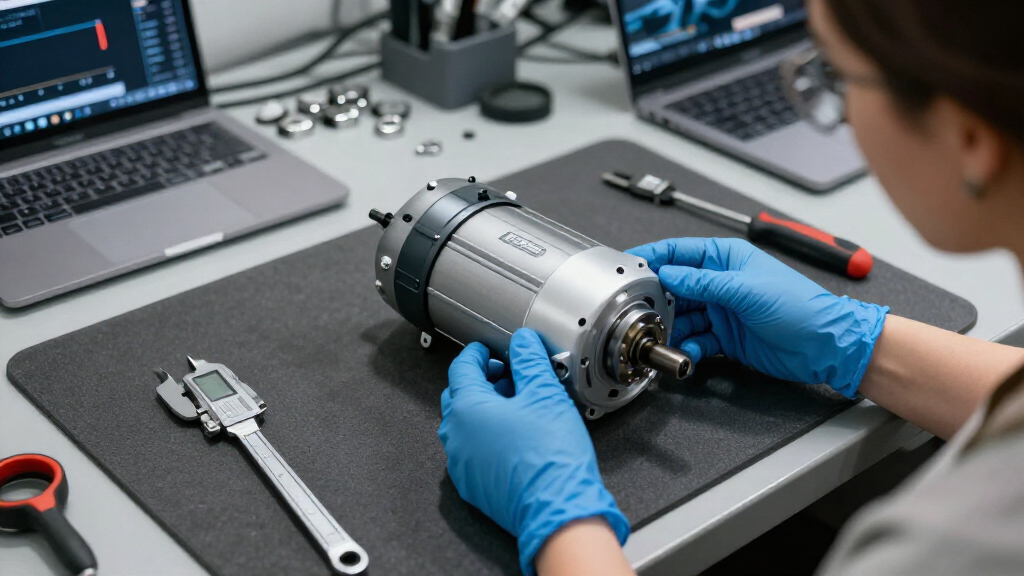
ZF has developed the High Revolution Drive, a three-in-one electric drive for passenger cars that spins at up to 30,000 rpm. The company says the system is nearly 25% smaller and lighter than a comparable SELECT drive running at 18,000 rpm, and it is in talks with several automakers about potential use, with production targeted by 2030.
The High Revolution Drive is a variant of ZF’s modular SELECT e-drive platform. The version the company has presented has a peak output of 200 kW and peak wheel torque of 3,500 Nm. ZF says the design is intended for drive outputs of roughly 150 to 200 kW, and that the architecture can be scaled for different power ratings and for both 400-volt and 800-volt systems.
ZF’s design uses higher motor speed to reduce the torque required from the motor for a given power output. Because torque is closely linked to rotor volume, the company says the motor can be made smaller and lighter. A two-stage spur gear transmission with a ratio of about 18:1 then increases torque for delivery to the wheels.
Compared with a SELECT system operating at 18,000 rpm, ZF says the new drive is nearly 25% smaller and nearly 25% lighter, and uses 50% less magnet mass. The company also reports efficiency of nearly 93%, on par with the comparison system. These are ZF’s stated figures; the supplied report does not provide independent test data or specify the conditions behind the efficiency measurement.
Smaller Motors, Less Magnet Material
If the reported size and weight reductions hold in production vehicles, automakers could gain more flexibility in packaging electric drivetrains. A smaller, lighter drive may give vehicle designers more room to manage components and vehicle weight, although the report does not quantify any effect on driving range, vehicle price or performance.
ZF also says the system uses 50% less magnet mass than the comparable drive. Lower magnet use could reduce material requirements and exposure to supply constraints, according to the company. The benefit depends on the materials used, sourcing and production volumes, details that have not been provided.
The reported nearly 93% efficiency is relevant because very high motor speeds and a substantial gear ratio can add engineering challenges. ZF says the figure is on par with its 18,000-rpm comparison system, but the available information does not include a test cycle, operating range or third-party validation. The stated efficiency should not be read as a direct measure of whole-vehicle efficiency.
Products Worth Considering

Innova 5610 OBD2 Bidirectional Scan Tool
Autel MaxiCOM MK808BT PRO Bidirectional OBD2 Diagnostic Scanner

Autel MaxiCheck MX808S Bidirectional OBD2 Diagnostic Scanner
As an affiliate, we earn on qualifying purchases.
A Variant of ZF’s SELECT Platform
ZF describes the High Revolution Drive as part of its existing modular SELECT system, rather than a wholly separate platform. The company says reusing SELECT technologies could let automakers integrate the new variant with less development time and cost than starting a new drive design from scratch. That is ZF’s assessment; no customer contracts, vehicle programs or development-cost figures were included in the source report.
The design approach trades motor speed against torque: at a given power output, faster rotation means the motor itself needs less torque. The gearing then raises torque for the wheels. ZF’s presented configuration uses an approximately 18:1 ratio, while the company says 30,000 rpm is the economic and technical sweet spot for this design. That is a company judgment about the configuration, not a general limit for electric drives.
Higher rotational speeds make it more difficult to manage noise and vibration, according to ZF. The company says it treated the motor, gearing, bearings and tooth geometry as an integrated system to address those issues. The report provides no measured noise levels, durability results or operating-condition data.
“With SELECT, we do not have to start from scratch for every new drive variant. We use our modular system to tailor new concepts to different customer requirements.”
— Thomas Meiser, head of ZF’s E-Mobility Business Unit
Automaker Interest, Testing and Costs
ZF says it is in talks with several automakers, but it has not identified them or disclosed whether the discussions have reached development agreements. No vehicle models, launch dates or confirmed customer orders are specified.
The available report also does not detail the drive’s mass, dimensions, cost, durability testing or noise and vibration results. ZF’s comparisons with its 18,000-rpm SELECT system are company-reported, and the basis for those figures is not described in the material provided. It is not yet clear how the system would perform across different vehicles or real-world driving conditions.
The production target is by 2030, not a confirmed start date. ZF has not provided a production site, manufacturing volume or pricing information.
From Discussions to Production Plans
The next milestones will be whether ZF turns its automaker discussions into named vehicle programs and whether the drive completes further validation for noise, vibration, durability and efficiency. Those results would help show how the system’s claimed reductions in size, weight and magnet use translate into production applications.
ZF’s stated goal is to begin production by 2030. Until the company or an automaker announces a specific program, the timing and commercial uptake remain unconfirmed.
Key Questions
What is ZF’s High Revolution Drive?
It is a three-in-one electric drive developed as a variant of ZF’s modular SELECT platform. It is designed for passenger cars and can spin at up to 30,000 rpm.
How much power and wheel torque does the presented version produce?
ZF says the version it presented has 200 kW peak output and peak wheel torque of 3,500 Nm. The company is focusing on drive outputs of about 150 to 200 kW.
What size and weight reductions does ZF claim?
ZF says the drive is nearly 25% smaller and nearly 25% lighter than a comparable SELECT drive running at 18,000 rpm. The figures are company-reported comparisons; the supplied material does not give independent test results.
When could the drive enter production?
ZF says it aims to start production by 2030. It has not announced a confirmed production date, customer vehicle or manufacturing volume.
Has an automaker committed to using the drive?
ZF says it is in talks with several automakers, but no company or vehicle program has been named in the source report. A confirmed customer commitment has not been reported.
Source: chargedevs.com