
Mixing GL-4 and GL-5 gear oils is generally not recommended because it can weaken their protective additives and increase the risk of gear damage. GL-4 oils are made for moderate loads, while GL-5 oils contain extreme pressure additives for heavier loads. Combining them can reduce their effectiveness and cause gear wear over time. To guarantee your gears stay protected, it’s best to stick with the manufacturer’s recommended oil—if you want to learn more, keep going.
Key Takeaways
- Mixing GL-4 and GL-5 oils is generally not recommended due to potential additive interactions.
- The oils have different formulations; blending can weaken their protective properties.
- Always follow manufacturer recommendations for gear oil types to ensure proper gear protection.
- Topping off with the same grade of oil is safer than mixing different types.
- Consult a professional before mixing gear oils to prevent gear damage and maintain optimal performance.
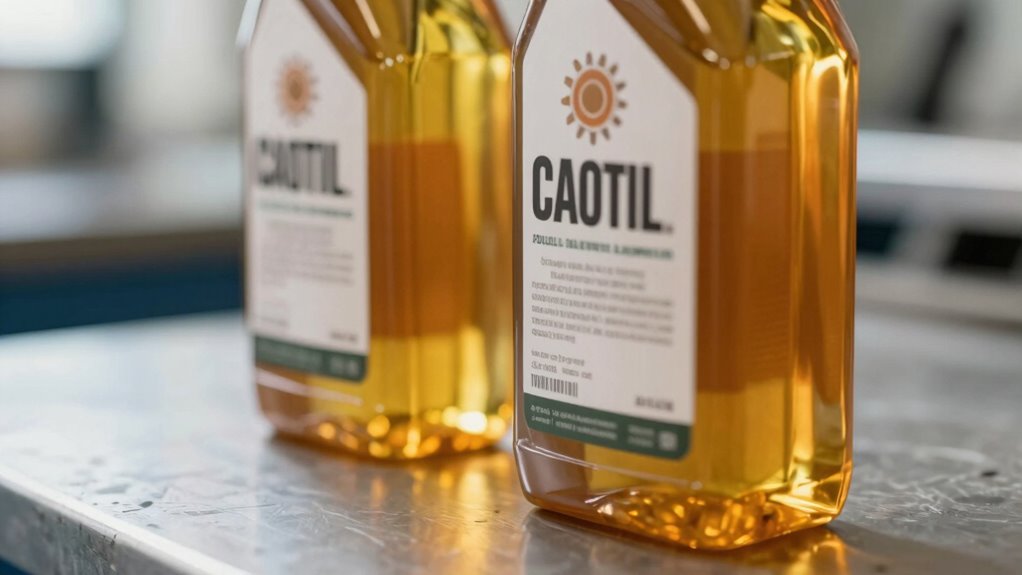
Are you wondering whether you can safely blend GL-4 and GL-5 gear oils? The answer isn’t straightforward, but understanding gear compatibility and lubricant performance can help you make an informed decision. Both GL-4 and GL-5 are gear oils designed for different applications, and mixing them can sometimes cause issues. To keep your transmission or differential functioning properly, you need to consider the specific properties of each oil and how they interact.
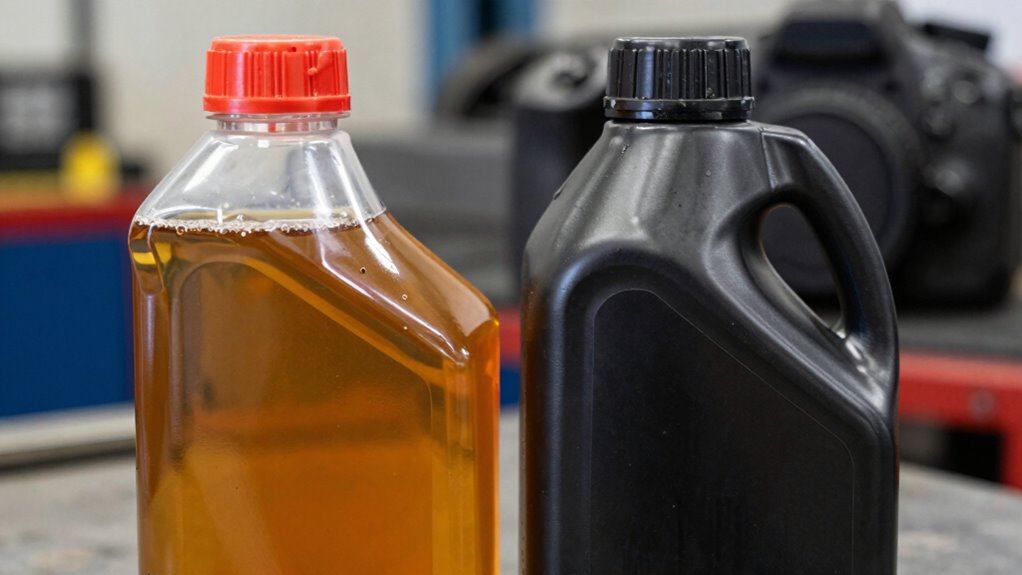
GL-4 gear oils are typically formulated for moderate to high-speed gears with lower load demands. They tend to have a balanced additive package that offers good gear protection without being overly aggressive. On the other hand, GL-5 oils are designed for heavily loaded gears, often in differentials and axles, with additives that provide extreme pressure (EP) protection. These additives help prevent gear wear under high-stress conditions but can sometimes be incompatible with GL-4 oils.
GL-4 oils protect moderate-speed gears, while GL-5 offers extreme pressure protection for heavily loaded gears.
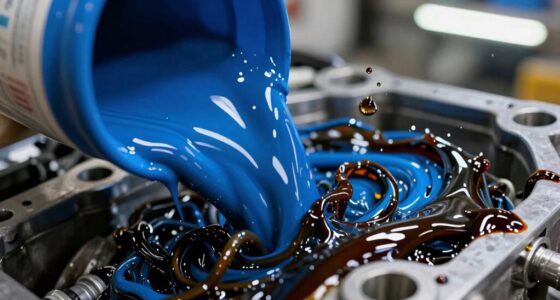
When you mix GL-4 and GL-5, you risk compromising gear compatibility and lubricant performance. The additives in GL-5 oils are often more aggressive, and blending them with GL-4 oils can dilute or deactivate their effectiveness. This may lead to reduced protection against wear, increased gear noise, or even gear damage over time. Furthermore, the additive interactions could cause the oils to separate or form deposits, further impairing lubricant performance.
If you’re contemplating mixing these oils, the safest approach is to consult your vehicle or equipment manufacturer’s recommendations. Many manufacturers specify which gear oil type to use, and following their guidance guarantees ideal gear compatibility and lubricant performance. If you’re in a pinch and need to top off your gear oil, using a compatible oil of the same grade is always better than mixing different types. If you do choose to mix, do so cautiously and in small quantities, and be aware that it may affect your gear’s longevity and operation.
Additionally, choosing the correct gear oil based on gear load and operating conditions can help prevent issues related to incompatible oils.
Ultimately, sticking to the recommended gear oil type is the best way to protect your gears and maintain peak performance. Mixing GL-4 and GL-5 isn’t recommended unless explicitly advised by the manufacturer or a professional mechanic. By understanding gear compatibility and how different oils interact, you safeguard your vehicle’s transmission and ensure smooth, reliable operation for miles to come.

Driven Racing Oil Gear Oil, GL-4, 80W90, Conventional, 1 qt Bottle, Each
Country of Origin: United States
As an affiliate, we earn on qualifying purchases.
As an affiliate, we earn on qualifying purchases.
Frequently Asked Questions
Can Mixing GL-4 and GL-5 Affect Vehicle Warranty?
Mixing GL-4 and GL-5 can affect your vehicle warranty if it doesn’t align with manufacturer guidelines. Some manufacturers specify specific gear oil types, and using the wrong one might lead to warranty issues if problems arise. Always check your owner’s manual or consult the manufacturer before mixing these oils. Following their guidelines guarantees your warranty remains valid and your vehicle stays protected.
Are There Specific Conditions Where Mixing GL-4 and GL-5 Is Recommended?
While mixing GL-4 and GL-5 is generally discouraged, there are rare cases where manufacturer recommendations might allow it, such as in older vehicles with specific gear requirements. You should always prioritize safety considerations and follow your vehicle’s manual. If your manufacturer explicitly states it’s safe, then mixing might be okay. Otherwise, sticking to recommended gear oils guarantees peak performance and avoids potential damage.
How Does Mixing These Gear Oils Impact Transmission Performance?
Mixing GL-4 and GL-5 can impact your transmission’s performance because it may compromise lubricant compatibility and gear oil stability. When combined, these oils might not blend uniformly, leading to increased wear or reduced lubrication efficiency. To guarantee ideal transmission function, it’s best to use only the recommended gear oil type specified by your vehicle manufacturer, avoiding mixing different gear oils altogether.
Is There a Compatibility Test to Check if GL-4 and GL-5 Can Be Mixed?
Think of lubricant compatibility as a dance—you want the oils to move smoothly together. To check if GL-4 and GL-5 can be mixed, perform a compatibility test by combining small amounts and observing for any additive reaction, such as cloudiness or separation. This simple step helps you identify potential issues, ensuring your transmission stays protected without risking harmful chemical reactions that could damage gears.
What Are the Long-Term Effects of Mixing GL-4 and GL-5?
Mixing GL-4 and GL-5 can cause long-term issues like increased corrosion and reduced additive stability. Over time, this may lead to gear wear, damage, or failure, especially under high stress or temperature conditions. You might not notice immediate effects, but the overall performance degrades, risking costly repairs. To avoid these risks, it’s best to use the recommended gear oil type for your vehicle or equipment.

CAM2 80W-90 LS GL-5 Gear Oil, 5 Gallon Pail
PREMIUM GEAR OIL: CAM2 80W-90 LS GL-5 gear oil formulated for superior protection of automotive differentials and manual…
As an affiliate, we earn on qualifying purchases.
As an affiliate, we earn on qualifying purchases.
Conclusion
Mixing GL-4 and GL-5 gear oils isn’t recommended because their additive formulas can react negatively, potentially damaging your transmission. Although some believe they can be safely combined, most experts warn it may compromise lubrication and cause wear over time. It’s best to stick with the manufacturer’s recommended gear oil to guarantee your vehicle’s longevity. Ultimately, for maximum protection, avoid mixing these oils unless you’re certain it won’t harm your transmission.
Driven Racing Oil Gear Oil, GL-4, 80W90, Conventional, 1 qt Bottle, Each
Country of Origin: United States
As an affiliate, we earn on qualifying purchases.
As an affiliate, we earn on qualifying purchases.

Lucas Oil 10047 SAE 75W-90 Synthetic Gear Oil/Transmission and Differential Lube – 1 Quart
Fit type: Vehicle Specific
As an affiliate, we earn on qualifying purchases.
As an affiliate, we earn on qualifying purchases.