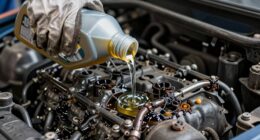

Oil thickening additives temporarily boost your oil’s viscosity, creating a protective film that conceals engine issues like wear or contamination. While they may improve performance in some conditions, they don’t fix the underlying problems causing oil breakdown or engine stress. Instead, they mask symptoms, giving a false sense of security. To truly protect your engine, understanding how these additives work and their limits is essential—more details await if you continue exploring.
Key Takeaways
- Thickening additives temporarily improve oil viscosity but do not address underlying engine issues or oil degradation.
- They form a coating that masks problems, giving a false impression of proper lubrication.
- Relying on additives can hide symptoms of wear, delaying necessary repairs.
- Additives may cause sludge buildup and filter clogging over time, complicating maintenance.
- Proper engine health depends on regular oil changes and repairs, not just additive use.

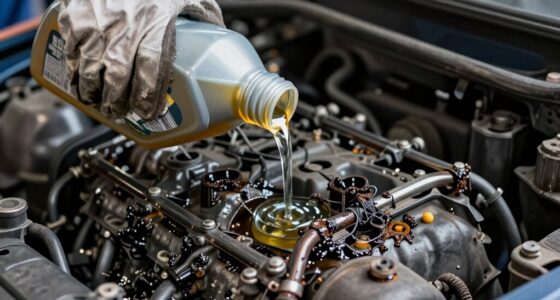
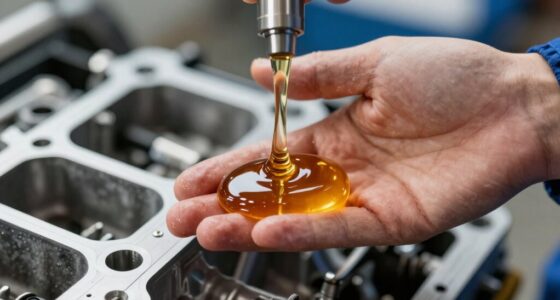
Have you ever wondered how lubricants maintain their viscosity under extreme conditions? It’s a question that gets to the core of how oil thickening additives work. When temperatures soar or drop sharply, your engine oil needs to stay thick enough to protect moving parts, yet thin enough for efficient flow. That’s where oil thickening additives come into play. These additives, often based on advanced additive chemistry, are designed to modify the oil’s flow properties by increasing viscosity. They form a film that resists thinning out at high temperatures or thickening too much in cold conditions. Among the options, synthetic blends are common because they combine the benefits of mineral oils with synthetic components, offering better stability and performance. These blends incorporate specially formulated additives that help maintain the best possible viscosity across a broader temperature range, reducing wear and tear on engine parts. Proper maintenance is essential because, despite their benefits, thickening additives can only do so much to prevent engine wear if the oil itself has degraded. However, it’s important to understand that oil thickening additives don’t actually fix underlying problems. Instead, they mask symptoms by making the oil appear to perform better than it truly does under stress. When you add thickening agents, you’re fundamentally creating a barrier that temporarily compensates for issues like oil breakdown, contamination, or degraded base oils. This can give the illusion of a healthy, well-lubricated engine, but it doesn’t address the root causes of wear or failure. In fact, relying solely on thickening additives can lead to a false sense of security, causing you to overlook critical maintenance needs or underlying mechanical issues. It’s akin to using a bandage instead of treating a wound; the problem may seem better temporarily, but it won’t heal on its own.
Additive chemistry is central to how these thickening agents function. They often include thickening polymers or other compounds that increase the oil’s viscosity by forming a network within the oil. These polymers are engineered to respond to temperature variations, ensuring that viscosity remains within a safe range. Yet, they can only do so much; if the oil’s base quality deteriorates or contaminants accumulate, the thickening additives become less effective. Over time, they may even contribute to sludge formation or clog filters, which further complicates maintenance. So, while synthetic blends and advanced additive chemistry help stabilize viscosity temporarily, they shouldn’t replace proper oil changes or mechanical repairs. They hide problems, but they don’t solve them.

Liqui Moly MoS2 Anti-Friction Engine Treatment | 300 ml | Oil additive | SKU: 2009
Motor oil additive – Liqui Moly MoS2 anti-friction (300 ml. Can).Fit Type: Universal
As an affiliate, we earn on qualifying purchases.
As an affiliate, we earn on qualifying purchases.
Frequently Asked Questions
How Do Thickening Additives Impact Overall Oil Lifespan?
Thickening additives can extend oil lifespan by maintaining viscosity stability, preventing the oil from thinning too quickly. However, as these additives degrade over time, their effectiveness diminishes, and they may hide underlying issues like wear or contamination. This can give a false sense of security, delaying necessary maintenance, and ultimately shortening the overall oil lifespan. Regular oil checks are essential to guarantee ideal performance.
Are Thickening Additives Compatible With All Engine Types?
Thickening additives aren’t compatible with all engine types, especially when it comes to synthetic oils and diesel engines. You should verify your manufacturer’s recommendations because some engines require specific oil formulations. Using incompatible additives might cause clogging or improper lubrication, leading to engine issues. For diesel engines, in particular, ensure any additive suits their unique requirements. Always consult a professional before adding thickening agents to your engine oil.
Can Thickening Additives Cause Long-Term Engine Damage?
Coincidentally, using thickening additives can cause long-term engine damage. They may seem helpful initially, but over time, additive corrosion can develop, leading to engine wear. This deterioration silently compromises parts, increasing the risk of costly repairs. You might not notice the damage right away, but neglecting these effects can reduce your engine’s lifespan, highlighting the importance of choosing the right oil and avoiding unnecessary additives.
Do Thickening Additives Affect Fuel Efficiency?
Thickening additives can negatively affect your fuel efficiency because they alter additive formulations, making the oil thicker. This increased viscosity can cause your engine to work harder, reducing fuel economy. You might notice decreased mileage and increased fuel costs over time. It’s crucial to choose high-quality oils with proper additive formulations to maintain ideal engine performance and fuel efficiency, avoiding the pitfalls of overly thickened oils.
How Are Thickening Additives Tested for Effectiveness?
Imagine a detective uncovering clues—testing thickening additives is just like that. You evaluate their effectiveness through synthetic formulations that simulate real engine conditions, measuring viscosity changes over time. Additive stability tests guarantee these substances maintain their properties without breaking down. By examining how well they perform under stress, you determine if they truly improve lubrication or merely mask underlying issues, much like a detective solving a mystery rather than hiding it.

Lucas Oil 10130 Pure Synthetic Oil Stabilizer – 1 Quart
World’s #1 synthetic oil additive
As an affiliate, we earn on qualifying purchases.
As an affiliate, we earn on qualifying purchases.
Conclusion
Think of oil thickening additives like a band-aid on a leaking pipe—they might hide the drip temporarily, but the problem’s still there. I once saw a car owner rely on additives alone, only to find his engine’s true issue months later. These additives can mask symptoms, giving a false sense of security. Remember, addressing the root cause saves you time, money, and headaches in the long run—don’t just cover up problems, fix them.

TRIAX Pro Engine Flush Oil-Based Deep Clean Motor Oil Flush Removes Sludge & Carbon | Non-Solvent | Safe for Engine, Seals, Injectors | Professional Shop Grade (16 oz – 473 ml)
Rapidly Dissolves Sludge & Deposits: Dissolves engine deposits from piston rings, bearings, valve train, and other lubricant-related parts,…
As an affiliate, we earn on qualifying purchases.
As an affiliate, we earn on qualifying purchases.
Liqui Moly MoS2 Anti-Friction Engine Treatment | 300 ml | Oil additive | SKU: 2009
Motor oil additive – Liqui Moly MoS2 anti-friction (300 ml. Can).Fit Type: Universal
As an affiliate, we earn on qualifying purchases.
As an affiliate, we earn on qualifying purchases.