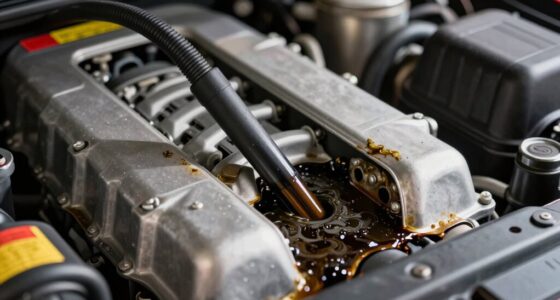

When switching to a lower viscosity oil, start gradually by checking your vehicle’s manual for compatibility and sticking to recommended standards. Shift slowly from your current oil—for example, from 10W-30 to 5W-30, then to 0W-20—to give your engine time to adapt. Monitor engine performance, listen for unusual noises, and watch oil consumption. Keeping these steps in mind helps prevent issues and guarantees a smooth change—so continue, and you’ll discover more tips for a seamless switch.
Key Takeaways
- Verify engine compatibility and manufacturer recommendations before choosing a lower viscosity oil.
- Transition gradually by switching from higher to slightly lower viscosities over multiple oil changes.
- Monitor engine performance, oil consumption, and noise closely during and after the transition.
- Ensure the oil meets quality standards (API, ACEA) to maintain proper lubrication and engine protection.
- Consider your engine’s age and condition, adjusting the viscosity change plan accordingly to avoid wear.

Switching to a lower viscosity product can feel risky, but with the right approach, you can make the shift smoothly and confidently. One of the first things to consider is oil compatibility. Not all oils are created equal, and choosing the wrong type can lead to serious engine issues. Before making the switch, check your vehicle’s manual to see what viscosity range is recommended. Manufacturers specify oil grades that suit your engine’s design, so sticking within those guidelines helps prevent problems down the line. When you switch to a lower viscosity oil, you might worry about whether it will provide the same protection, but modern formulations are designed to offer excellent lubrication, even at thinner viscosities. Just ensure the oil you select meets the quality standards specified by your manufacturer, such as API or ACEA ratings. Additionally, verifying the oil’s performance standards can further ensure its suitability for your engine’s needs.
Another concern for many drivers is engine wear. A lower viscosity oil can flow more easily through engine parts, which is beneficial for cold starts and fuel efficiency. However, if the oil is too thin for your engine’s needs, it might not provide enough film strength to prevent metal-to-metal contact, leading to increased wear over time. This makes it essential to evaluate your engine’s condition and age. If your engine is older or has high mileage, switching to a considerably lower viscosity might accelerate wear rather than reduce it. Conversely, if your engine is relatively new and well-maintained, a lower viscosity oil can work well, offering improved cold start performance and potentially better fuel economy.
The key to a successful transition is gradual change. Instead of immediately switching to a much lower viscosity, consider moving incrementally—perhaps from 10W-30 to 5W-30, and then to 0W-20 if appropriate. This approach allows your engine to adapt without sudden stress, reducing the risk of oil-related issues. Also, keep an eye on oil consumption and engine performance after the change. If you notice increased engine noise, oil burn-off, or reduced power, it might be time to reconsider your choice. Regular oil analysis can help you track how well the new oil is performing and whether it’s compatible with your engine’s needs.

Castrol GTX Full Synthetic 5W-30 Motor Oil, 5 Quarts
6X better wear protection on critical engine parts than industry standards**
As an affiliate, we earn on qualifying purchases.
As an affiliate, we earn on qualifying purchases.
Frequently Asked Questions
What Are the Signs I Need to Switch to a Lower Viscosity?
You should consider switching to a lower viscosity oil if you notice engine performance issues like sluggish starts or rough idling. Increased oil consumption is another sign, indicating your current oil isn’t lubricating efficiently at certain temperatures. If your engine runs smoother and uses less oil after switching, it’s a good indication you made the right choice. Always consult your owner’s manual or a mechanic before changing viscosities.
How Often Should I Change to a Lower Viscosity Oil?
Think of your engine oil as a heartbeat—keeping things running smoothly. You should change to a lower viscosity oil during regular oil change intervals, typically every 3,000 to 5,000 miles, or as recommended by your vehicle’s manufacturer. Doing so guarantees ideal engine performance, especially in changing weather conditions. Regular oil changes help your engine run efficiently, prevent wear, and extend its lifespan.
Will Switching Viscosities Void My Vehicle Warranty?
Switching to a lower viscosity oil generally won’t void your manufacturer warranties if you choose an oil that’s compatible with your vehicle’s specifications. You should check your owner’s manual for oil compatibility and make certain the new oil meets or exceeds the required standards. If you stay within the manufacturer’s recommended viscosity range, your warranty remains protected. Always consult your dealer or a trusted mechanic if you’re unsure about the switch.
Is Switching to a Lower Viscosity Suitable for All Climates?
Switching to a lower viscosity oil isn’t suitable for all climates. If you live in cold environments, it can improve engine startup and efficiency, but in hotter climates, it might reduce lubrication and protection. You need to take into account your climate’s adaptability and your engine’s specific needs. Always check your vehicle’s manual or consult a mechanic to make certain the oil change supports ideal engine efficiency and protection in your climate.
Are There Specific Brands Recommended for Lower Viscosity Oils?
You’ll find many reputable brands for lower viscosity oils, including those offering synthetic blends and mineral oils. Brands like Mobil 1, Castrol, and Valvoline are well-known for quality and performance. It’s wise to select oils that meet your vehicle’s specifications and climate needs. Trust established brands to guarantee smooth operation, and consider consulting your owner’s manual or a trusted mechanic for personalized advice.

Mobil 1 High Mileage Full Synthetic Motor Oil 0W-20, 5 Quart
Mobil 1 High Mileage full-synthetic motor oil 0W-20 is designed for engines with over 75,000 miles to go…
As an affiliate, we earn on qualifying purchases.
As an affiliate, we earn on qualifying purchases.
Conclusion
Switching to a lower viscosity oil can boost your engine’s efficiency, but do your research first. Some experts say it helps fuel economy, while others warn it might reduce protection if not done properly. Trust your vehicle’s manual and consult with a mechanic to guarantee the switch aligns with your engine’s needs. With careful consideration, you can enjoy smoother running without regrets—just remember, the right choice depends on understanding your engine’s unique demands.

Engine Oil Tester Gasoline & Diesel Engine Oil Quality Tester Analyzer Detector High-precision Car Engine Oil Diagnostic Tool with 50inch Flexible Probe,Identifier&Sound Prompt,2.8in Backlight Display
【Why You Need Engine Oil Tester】Engine oil tester can help you check your engine oil regularly to ensure…
As an affiliate, we earn on qualifying purchases.
As an affiliate, we earn on qualifying purchases.

Oil Change Kit – Includes 8-Quart Oil Pan, Longneck Oil Funnel with Removable Filter, and 5 Pack of Shop Towels – Motor Oil Drain pan for Changing Oil – Oil Change Value Kit with by Foxtrot Living
Oil Changing Solution – Tackle your next oil change with confidence using Fox Trot's Oil Change Pan Kit….
As an affiliate, we earn on qualifying purchases.
As an affiliate, we earn on qualifying purchases.