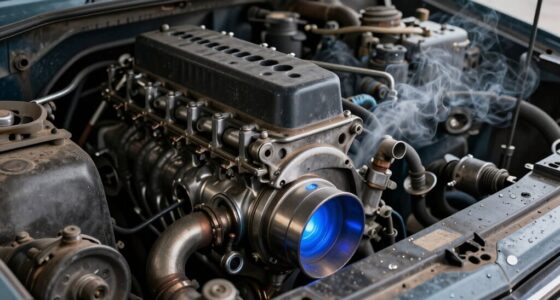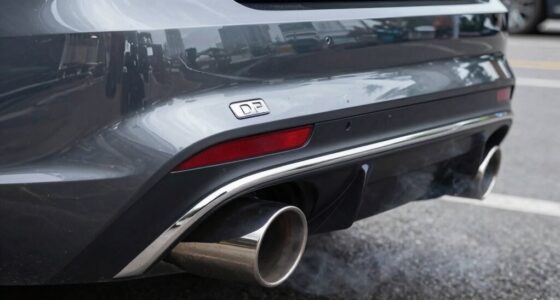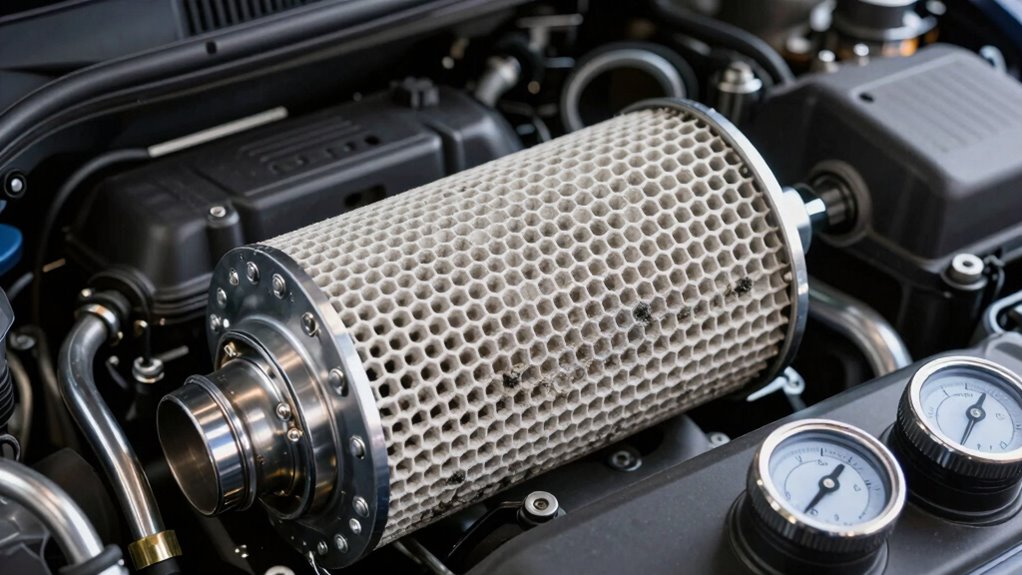

Gasoline particulate filters (GPFs) have changed the game by trapping tiny soot particles from your exhaust, helping your car meet strict emission standards. To keep the GPF working efficiently, oil specs are more important than ever. Using the wrong oil can cause ash buildup, clogging the filter and reducing performance. Proper maintenance and suitable oil choices ensure your GPF functions smoothly longer. Keep going to discover more about how oil impacts GPF performance and longevity.
Key Takeaways
- GPFs reduce particulate emissions from gasoline engines, meeting stricter environmental standards globally.
- Proper oil specs prevent ash buildup that can clog GPFs and hinder regeneration.
- Modern oils contain additives optimized to support catalytic coatings and efficient soot oxidation.
- Using incorrect oils can impair GPF performance, leading to increased backpressure and potential damage.
- Evolving oil standards are essential for maintaining GPF effectiveness and ensuring compliance with emission regulations.
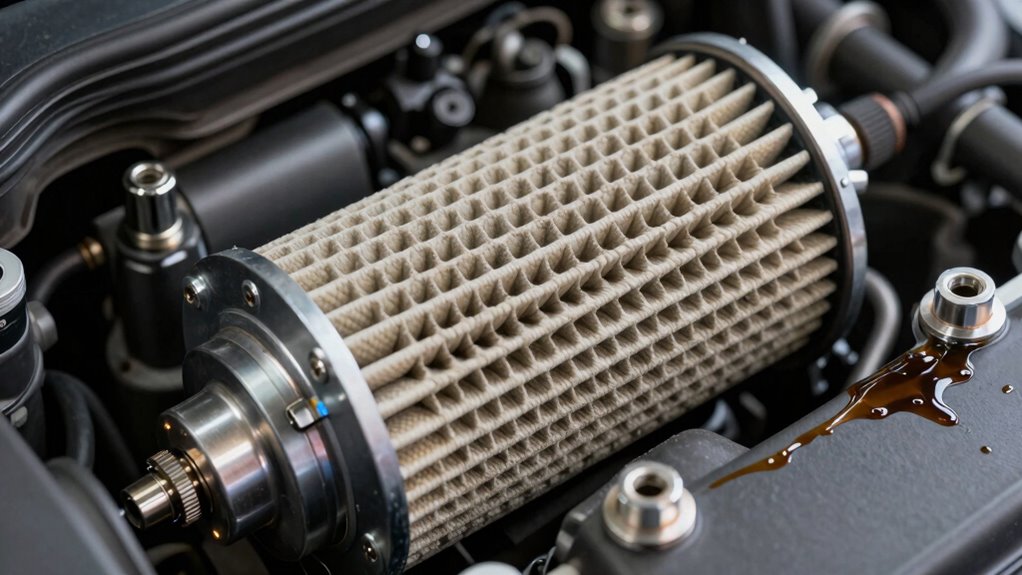
Gasoline Particulate Filters (GPFs) are essential components in modern vehicles designed to reduce harmful emissions. They trap tiny particulate matter from exhaust gases, preventing pollutants from entering the environment. As stricter emission standards take hold worldwide, GPFs have become a game-changer for automakers and drivers alike. One key aspect of GPF efficiency lies in their catalytic coatings, which are applied to the filter’s surface. These coatings, often made from precious metals like platinum or palladium, activate chemical reactions that help burn off trapped soot during filter regeneration, guaranteeing the filter remains effective over time. Without these catalytic layers, the GPF would struggle to oxidize the accumulated particulates, leading to clogging and potential engine performance issues. The design of these coatings is essential because it determines how efficiently the filter can perform at various engine loads and temperatures.
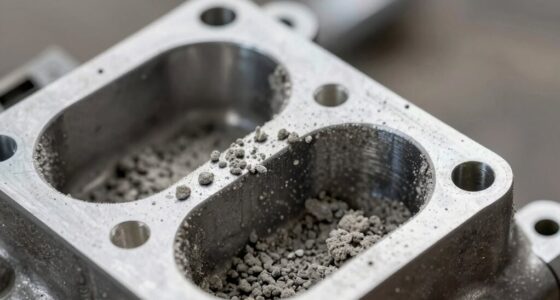
Filter regeneration is another critical process that keeps GPFs functioning at their best. During normal driving, soot builds up inside the filter, gradually reducing its capacity. To clear this buildup, the vehicle’s system initiates a regeneration cycle, where high temperatures burn off the accumulated particulates. This process relies heavily on the catalytic coatings to facilitate combustion at lower temperatures, making it more efficient and less disruptive to your driving experience. When regeneration occurs, gases pass through the catalytic layer, triggering oxidation of the soot and converting it into harmless gases like carbon dioxide. Proper filter regeneration helps prevent clogging, extends the lifespan of the GPF, and maintains ideal engine performance. If regeneration is incomplete or fails, soot deposits can accumulate excessively, leading to increased backpressure, reduced fuel economy, and potential damage to other exhaust components. Additionally, using oils with the correct oil specifications can prevent excessive ash buildup that may hinder filter efficiency.
Choosing the right oil specifications is also essential for GPF longevity. Using oils that meet the manufacturer’s recommended standards ensures that the engine runs smoothly without producing excessive ash or soot that could clog the filter prematurely. Some oils contain additives that can interfere with the catalytic coatings or hinder the regeneration process, so it’s important to select oils compatible with GPF-equipped engines. Regular maintenance and adhering to oil change intervals help keep the catalytic coatings in good condition, promoting effective filter regeneration. Overall, GPFs changed the game by enabling vehicles to meet tougher emission standards while maintaining performance. Their reliance on catalytic coatings and efficient regeneration cycles means you need to pay attention to your vehicle’s maintenance to maximize the benefits. When properly cared for, a GPF can substantially reduce your car’s environmental impact and ensure smooth, reliable operation for miles to come.

Fill-Rite F1810PM0 3/4" 18 GPM (68 LPM) 10 Micron Particulate Spin-On Fuel Filter
- Filtration Micron Size: 10 Micron particulate filter
- Flow Rate: Up to 25 GPM
- Connection Type: 1-inch-12 UNF threaded connection
As an affiliate, we earn on qualifying purchases.
As an affiliate, we earn on qualifying purchases.
Frequently Asked Questions
How Do GPFS Impact Vehicle Fuel Efficiency?
You’ll notice that GPFs can slightly improve your vehicle’s fuel economy because they help optimize engine performance and reduce emissions. By capturing particulate matter, GPFs support cleaner combustion, which can lead to more efficient fuel use. Additionally, the emission reduction benefits mean your vehicle runs more smoothly and meets stricter standards, ultimately helping you save fuel and reduce your environmental impact over time.
Are GPFS Compatible With All Gasoline Engines?
Don’t put all your eggs in one basket—GPFs aren’t compatible with every gasoline engine. While modern engines often integrate catalytic converters designed to work with GPFs, older models might face compatibility issues. Fuel additives can help optimize performance, but check your vehicle’s specs first. Always consult your manufacturer to confirm GPF compatibility, because ignoring this could lead to costly repairs or reduced efficiency.
What Are the Maintenance Requirements for Gpf-Equipped Vehicles?
You need to follow specific maintenance requirements for GPF-equipped vehicles. Check your oil change intervals regularly, as GPFs can impact engine oil life. You should also perform filter replacement procedures as recommended, often more frequently than standard filters. Keep an eye on warning lights and consult your owner’s manual to guarantee proper maintenance, which helps keep your GPF functioning efficiently and prevents potential issues down the road.
Do GPFS Increase Exhaust System Costs?
Yes, GPFs can increase exhaust system costs due to higher cost implications and installation challenges. You might find that installing a GPF involves specialized parts and precise procedures, which can raise expenses. While they improve emissions, you should be aware that the added complexity often leads to increased maintenance and repair costs, making the overall exhaust system pricier compared to traditional setups.
How Do GPFS Affect Vehicle Emissions Standards Compliance?
Think of GPFs as guardians of the environment, ensuring your vehicle meets emissions standards. They enhance catalyst compatibility by trapping particulate matter, helping you comply with emissions regulation. With GPFs, your vehicle can adhere to stricter laws without sacrificing performance. By filtering pollutants effectively, GPFs make it easier to stay within legal limits, turning compliance into a seamless part of your driving experience—like a trusted ally on the road to cleaner emissions.

Lucas Oil 10278 Engine Oil Stop Leak – 1 Quart
- Product Type: Auto Oil Stop Leak
- Package Dimensions: 8.89 x 10.16 x 30.48 cm
- Package Weight: 0.953 kg
As an affiliate, we earn on qualifying purchases.
As an affiliate, we earn on qualifying purchases.
Conclusion
Gasoline particulate filters have revolutionized emission control, reducing harmful particulate emissions by up to 90%. This change means your engine runs cleaner and meets stricter environmental standards. As oil specifications adapt to these new filters, you’ll notice better engine performance and longevity. Embracing GPF technology isn’t just about compliance — it’s about making a real difference. So, next time you fill up, remember that these filters are changing the game for cleaner, smarter driving.

Envig 4C Catalytic Carbon Water Filter Cartridge, Removes Chloramine, Hydrogen Sulfide, 10" x 2.5", Reverse Osmosis System Pre-Filter for Express Water, iSpring, APEC RO systems
- Multi-layer Filtration: Four-layer effective filtration system
- Removes Contaminants: Eliminates chloramine, hydrogen sulfide, heavy metals, and more
- High Capacity: Filters up to 8,000 gallons
As an affiliate, we earn on qualifying purchases.
As an affiliate, we earn on qualifying purchases.

STP Premium Synthetic Blend 4 Cycle Small Engine Oil, SAE 10w30 Motor Oil for Lawnmowers, Generators, Tractors, Snow Blowers, and More, 32 fl oz
- Engine Compatibility: Suitable for small engines like lawnmowers and generators
- Temperature Resistance: Fights thermal breakdown for high-temperature durability
- Engine Cleanliness: Prevents buildup and controls carbon deposits
As an affiliate, we earn on qualifying purchases.
As an affiliate, we earn on qualifying purchases.