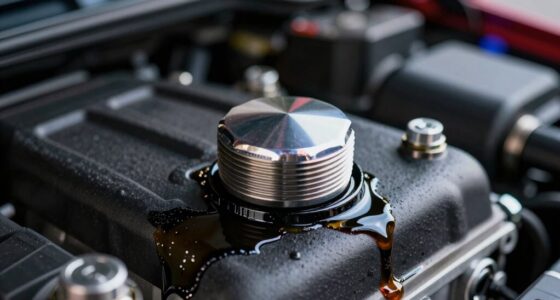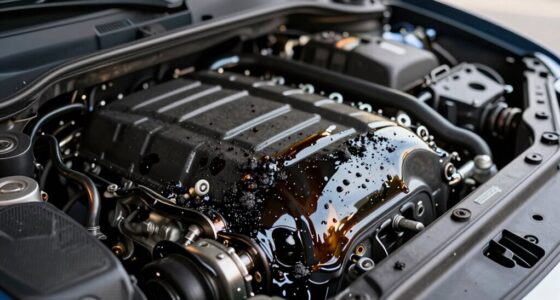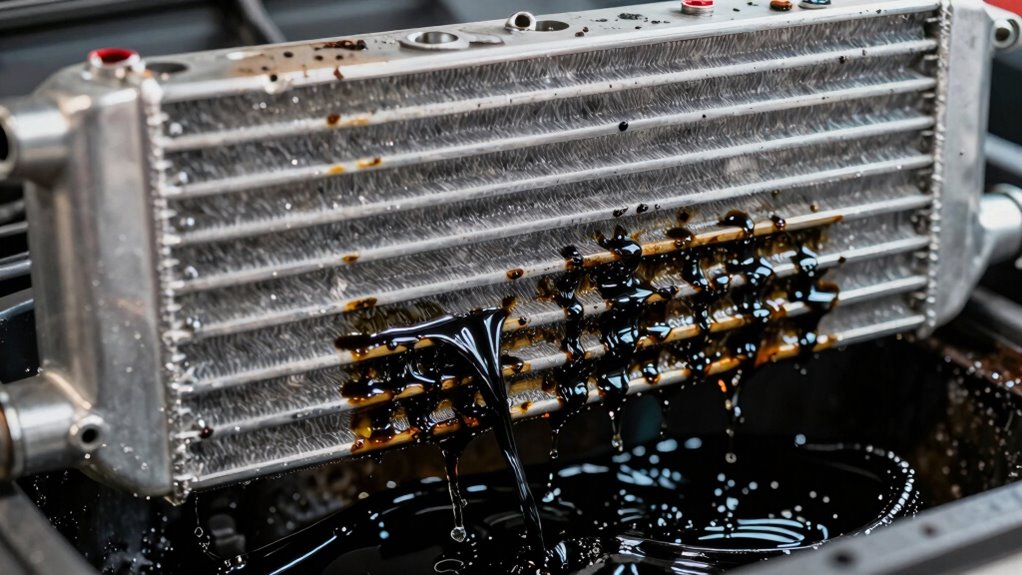

When an EGR cooler develops leaks, exhaust gases, soot, and unburned hydrocarbons can enter your engine oil, contaminating it and impairing its lubricating properties. This contamination accelerates engine wear, causes increased oil consumption, and can lead to oil and coolant mixing if seals fail. Such issues can create a cycle where contaminated oil feeds back into the sump, further harming your engine. Keep exploring to uncover how you can prevent and fix these problems effectively.

Get business pricing on garage and car supplies
- Business-only prices and quantity discounts
- Tax-exempt purchasing
- Multiple users, one account, clear invoices
Key Takeaways
- EGR cooler leaks allow exhaust gases and soot to enter the oil system, contaminating the sump.
- Cracks or failed seals create a pathway for exhaust gases to bypass the cooling system into the oil sump.
- Gas entry increases soot and unburned hydrocarbons in oil, accelerating sludge buildup and degrading oil quality.
- Contaminated oil can show signs like increased viscosity, odor, and sludge, indicating the loop feeding contaminants into the sump.
- Repairing leaks and sealing joints prevent exhaust gases from entering the oil system, protecting the sump from contamination.

Exhaust Gas Recirculation (EGR) coolers play a vital role in reducing emissions, but when they fail, oil contamination often follows. One common issue you might face is EGR cooler leaks, which create a pathway for exhaust gases to enter the engine’s oil system. These leaks occur when the cooler’s internal or external components develop cracks, corrosion, or compromised seals. Once a leak forms, it becomes a primary source of oil contamination because exhaust gases contain soot, unburned hydrocarbons, and other pollutants that can mix with engine oil. When this mixture occurs, the oil’s lubricating properties degrade, leading to increased engine wear and potential damage.
Understanding the oil contamination sources is essential for diagnosing and preventing long-term engine issues. EGR cooler leaks are a significant contributor, but other sources include faulty seals, worn piston rings, and cracked valve covers. These issues allow oil and combustion gases to exchange improperly, leading to contamination. Once exhaust gases enter the oil sump via a leak, they carry soot and particulates that accelerate sludge formation. This sludge can clog oil passages, impair lubrication, and reduce overall engine efficiency. Besides, the presence of unburned hydrocarbons in the oil accelerates oxidation and breakdown of oil additives, shortening oil change intervals and increasing maintenance costs. Recognizing the importance of engine oil quality can help maintain optimal engine health.
Oil contamination sources like faulty seals and worn piston rings cause sludge, impairing engine performance and increasing maintenance costs.
You need to be vigilant if you notice symptoms like increased oil consumption, dark and gritty oil, or a rise in engine temperature. Regularly checking your oil for signs of contamination can help catch problems early. If you suspect EGR cooler leaks, a thorough inspection of the cooler and surrounding components is vital. Leaks are often confirmed through pressure tests or by examining the coolant and oil for cross-contamination. When oil contamination sources are identified, addressing leaks promptly can prevent more severe engine damage. Replacing or repairing the EGR cooler, sealing compromised joints, or upgrading faulty seals can restore proper function and stop the cycle of contamination.
Preventing oil contamination from EGR cooler leaks involves routine maintenance and early detection. Keep an eye on oil quality and condition, and don’t ignore warning signs like unusual engine odors or emissions. Proper sealing and using high-quality replacement parts also help reduce the risk of leaks. Ultimately, understanding how EGR cooler leaks serve as oil contamination sources empowers you to take proactive steps, ensuring your engine runs smoothly, efficiently, and with minimal emissions.
As an affiliate, we earn on qualifying purchases.
Frequently Asked Questions
How Does EGR Cooler Design Impact Oil Contamination Levels?
Your EGR cooler design considerably impacts oil contamination levels by influencing contamination pathways. A poorly designed cooler may allow exhaust gases and soot to bypass seals, leading to increased oil contamination. Conversely, a well-optimized design minimizes leaks and prevents contaminants from entering the oil system. Consider how flow paths and sealing mechanisms are structured to reduce contamination, ensuring better oil purity and engine longevity.
Can Oil Contamination From EGR Coolers Cause Engine Wear?
Oil contamination from EGR coolers can cause significant engine wear, and it’s no exaggeration to say it’s as destructive as a storm tearing through a city. When EGR cooler materials degrade or coolant leaks occur, oil gets contaminated, leading to increased engine parts friction and premature failure. Regular maintenance and monitoring for coolant leakage are essential to prevent this damage and keep your engine running smoothly.
What Are Early Signs of Oil Contamination Due to EGR Coolers?
You might notice early signs of oil contamination from EGR coolers through darker, milky oil during oil analysis or increased coolant leaks. Pay attention to any unusual oil color, frothing, or loss of coolant without obvious leaks. These indicators suggest coolant might be mixing with oil, and catching them early helps prevent engine wear. Regular oil analysis and inspecting for coolant leaks are key to spotting issues before they cause significant damage.
Are There Specific Maintenance Practices to Prevent Egr-Related Oil Issues?
To prevent EGR-related oil issues, you should perform routine inspections of your EGR system and cooling components regularly. Keep an eye out for signs of leaks or buildup. Additionally, prioritize filter maintenance by replacing or cleaning oil and air filters on schedule to reduce contaminants. These proactive steps help maintain proper oil quality and prevent contamination from EGR cooler issues, ensuring your engine runs smoothly and efficiently.
How Effective Are Oil Filters in Removing Contaminants From EGR Cooler Leaks?
Oil filters are quite effective at removing contaminants from EGR cooler leaks, ensuring cleaner oil and protecting engine components. Their filter efficiency depends on the filter’s quality and condition, which directly impacts contaminant removal. Regularly replacing filters enhances their ability to trap debris and oil residues, preventing buildup. Think of filters as your engine’s frontline defense—keeping harmful particles out and maintaining ideal performance by consistently improving contaminant removal.
engine oil contamination test kit
As an affiliate, we earn on qualifying purchases.
As an affiliate, we earn on qualifying purchases.
Conclusion
So, if you notice increased oil contamination or a drop in oil quality, check your EGR cooler. For instance, a truck owner found sludge buildup in the sump after neglecting EGR maintenance, leading to costly repairs. Regular inspections and timely cleaning can prevent this. Stay proactive, and you’ll keep your engine running smoothly and avoid unexpected breakdowns. Remember, a well-maintained EGR system protects your engine and saves you money in the long run.
As an affiliate, we earn on qualifying purchases.
As an affiliate, we earn on qualifying purchases.
Fall Picks
fall essentials
As an affiliate, we earn on qualifying purchases.