TL;DR

Get business pricing on garage and car supplies
- Business-only prices and quantity discounts
- Tax-exempt purchasing
- Multiple users, one account, clear invoices
Switzerland’s Federal Council has opened consultation on draft changes that would align CO2 rules for new vans and trucks with forthcoming EU standards from 2030. The proposal raises the van target from 90.6 to 108.7 g/km but increases the required truck emissions reduction from 30% to 45%.
Switzerland’s Federal Council has opened consultation on draft changes that would align CO2 requirements for new vans and trucks with EU standards from 2030, easing the proposed limit for light commercial vehicles while requiring a larger emissions cut from heavy trucks. The draft revisions to the CO2 Act and Energy Act are intended to track the EU’s forthcoming Auto Package, but do not set requirements for 2035 and later.
For vans and other light commercial vehicles, the draft raises the 2030 CO2 target from the previously planned 90.6 grams per kilometre to 108.7 g/km. For heavy commercial vehicles, including trucks, it instead increases the required reduction from 30% to 45% from 2030. These are proposed changes submitted for consultation, not final rules.
The government also proposes letting importers calculate compliance for passenger cars and light commercial vehicles over a three-year average from 2030 to 2032, rather than requiring a separate annual assessment. Passenger-car fleet targets themselves would not change: the 2030 target would remain 49.5 g/km, following the current target of 93.6 g/km from 2025, measured under WLTP.
Another element is replacing Switzerland’s current energy label for vehicles with the future EU vehicle label. The draft would also allow manufacturers to supply the label with vehicles from the factory. The report says this could change how electric vehicles are classified: under the EU label’s focus on local CO2 emissions, battery-electric cars would be placed in efficiency class A, whereas some have received class B under the Swiss system, which includes the electricity mix.
Different Rules for Vans and Trucks
The proposal would move the two commercial-vehicle categories in opposite directions. The higher van target would give manufacturers a less demanding 2030 limit than Switzerland had previously planned, while the truck target would require a 45% emissions reduction rather than 30%. That distinction matters to vehicle makers, importers and transport operators planning purchases and compliance for the next decade.
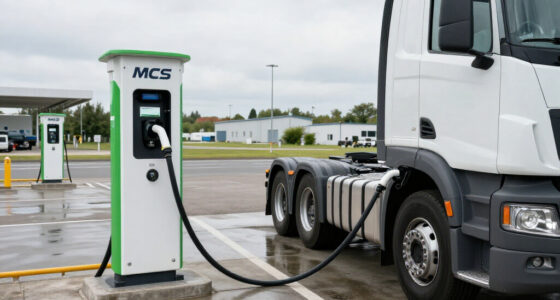
The truck target comes as electric trucks are gaining a foothold in Swiss registrations. Citing figures from the automotive association ACEA, the report says electric trucks accounted for 26% of new registrations in Switzerland in the first half of 2026 among trucks over 16 tonnes gross vehicle weight. The Swiss government also began a programme in early 2026 to support truck-charging infrastructure; its budget was raised from 20 million to 40 million francs in October after strong demand, according to the report. Those figures provide context for the proposal, but do not establish whether the target will be met.
Keeping the passenger-car target unchanged gives importers a different kind of adjustment: more flexibility in how they calculate compliance, rather than a new target value. The proposed common vehicle label could also make comparisons more consistent across Switzerland and the EU, though the effect on individual vehicle ratings will depend on the final labeling rules.
Products Worth Considering

Autel Home EV Charger up to 50A J1772 Hardwired Level 2 Charger with 25 ft Cable

Vantrue N4 Pro S 4K 3-Channel Dash Cam with Triple STARVIS 2 HDR

DEWALT 20V MAX 5-Tool Cordless Combo Kit with Drill, Impact Driver, Saws, Oscillating Multi-Tool, Batteries, Charger, and Bag (DCK551D1M1)
As an affiliate, we earn on qualifying purchases.
How the Draft Fits EU Rules
The Federal Council says the revisions are intended to align Swiss requirements for new vehicles from 2030 with the EU Commission’s forthcoming Auto Package. The package is still under development, according to the source report, and could change. Switzerland is beginning its legislative process now to avoid missing implementation deadlines.
The proposal deliberately stops short of deciding what should apply from 2035 onward. It therefore does not resolve the wider EU debate over whether to alter plans concerning new combustion-engine vehicles after that date. For passenger cars, Switzerland already has CO2 fleet targets aligned with EU requirements, so the current draft leaves the 2030 value unchanged.
The consultation process, known in Switzerland as Vernehmlassung, allows interested parties to submit views on draft legislation before the government advances it. The consultation on these revisions runs until February 18, 2027.
“The aim is to align the requirements for new vehicles from 2030 with the EU Commission’s forthcoming Auto Package.”
— Swiss Federal Council, as described in the report
Targets Await Consultation and EU Decisions
The measures are draft proposals; the consultation has not concluded and the final Swiss rules are not yet known. The government’s plans are also framed around an EU Auto Package that, according to the report, may still be revised. It is therefore unclear whether the eventual Swiss legislation will match the proposal as written or how it may be adjusted to reflect final EU rules.
The draft does not specify a decision on CO2 requirements from 2035 onward. The available report also does not provide further detail on enforcement, penalties, or how the proposed three-year averaging method would be applied in specific cases. Those points should not be treated as settled.
Consultation Closes in February
Interested parties can submit comments on the draft revisions until February 18, 2027. The Federal Council will then need to consider the consultation responses and advance the legislative process. The source report does not give a date for a final decision or specify when the revised rules would take effect beyond the proposed 2030 alignment.
Further developments to watch include the final content of the EU Auto Package, changes to Switzerland’s draft after consultation, and the details of the planned EU-style vehicle label and compliance averaging. Until those steps are completed, the proposed targets remain subject to change.
Key Questions
What would change for Swiss vans from 2030?
The proposed target would rise from 90.6 to 108.7 g/km for light commercial vehicles, making the limit less strict than previously planned.What is proposed for heavy trucks?
The draft calls for a 45% emissions reduction from 2030, compared with the previously planned 30% reduction.Are passenger-car CO2 targets changing?
No change is proposed to the passenger-car fleet target for 2030, which would remain 49.5 g/km. The draft would allow compliance for cars and light commercial vehicles to be averaged over 2030–2032.When could the proposal become final?
The consultation runs until February 18, 2027. The report does not specify when the Federal Council expects a final decision or implementation.Does the proposal decide what happens to combustion engines after 2035?
No. Requirements for 2035 onward are outside this legislative package, so the proposal does not settle that policy question.Source: electrive.com