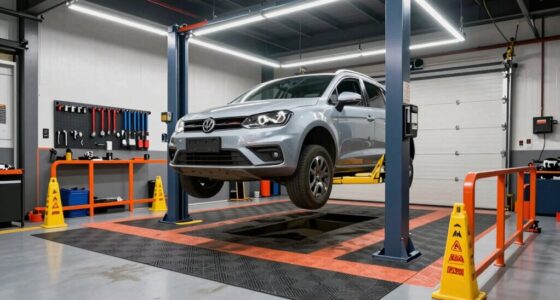

The most common mistake people make is not properly placing jack stands on solid, designated support points or on uneven surfaces, which can lead to instability or falls. You might also rely on stands that aren’t rated for your vehicle’s weight or miss double-checking their stability after setup. To stay safe, always identify the right support points, use quality stands on level ground, and confirm everything is secure. Keep going to learn how to do this correctly every time.
Key Takeaways
- Always place jack stands on solid, level support points like frame rails, not soft or unstable surfaces.
- Verify the vehicle’s recommended lift points in the owner manual before positioning stands.
- Ensure stands are rated for the vehicle’s weight and fully engaged before working underneath.
- Use the correct size and type of jack stand suited for your vehicle’s weight and size.
- Double-check stability by gently rocking the vehicle after setting the stands before beginning work.

Amazon Basics Steel Jack Auto Stands, 3 Ton (2.7 metric Ton) Capacity, Easy to Use, Adjustable Height, 6,000 lb, 1 Pair, Black and Red
Pair of 3 Ton (2.7 metric Ton) jack stands with 6,000-pound capacity
As an affiliate, we earn on qualifying purchases.
As an affiliate, we earn on qualifying purchases.
Why Proper Jack Stand Placement Is Critical for Safety
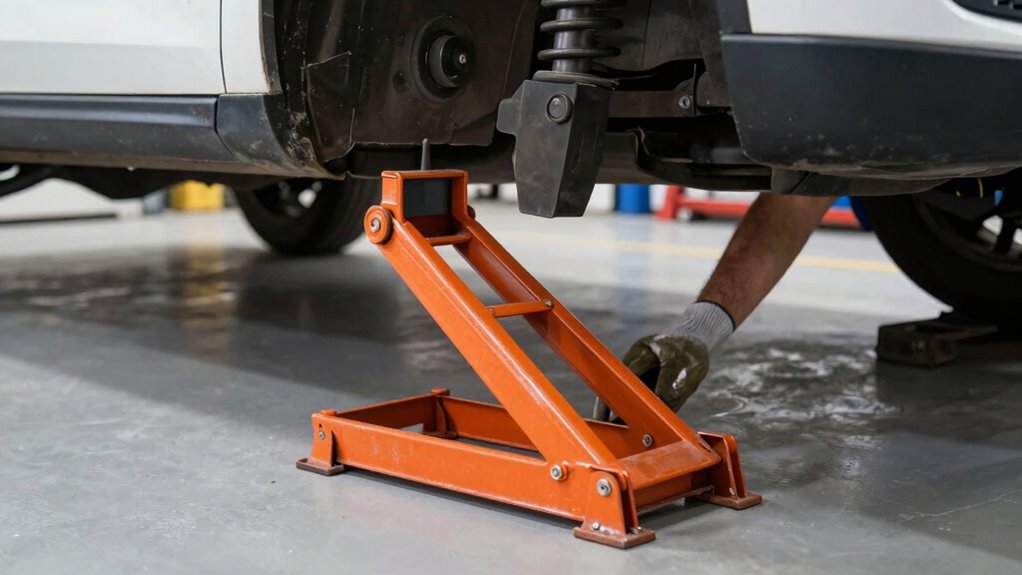
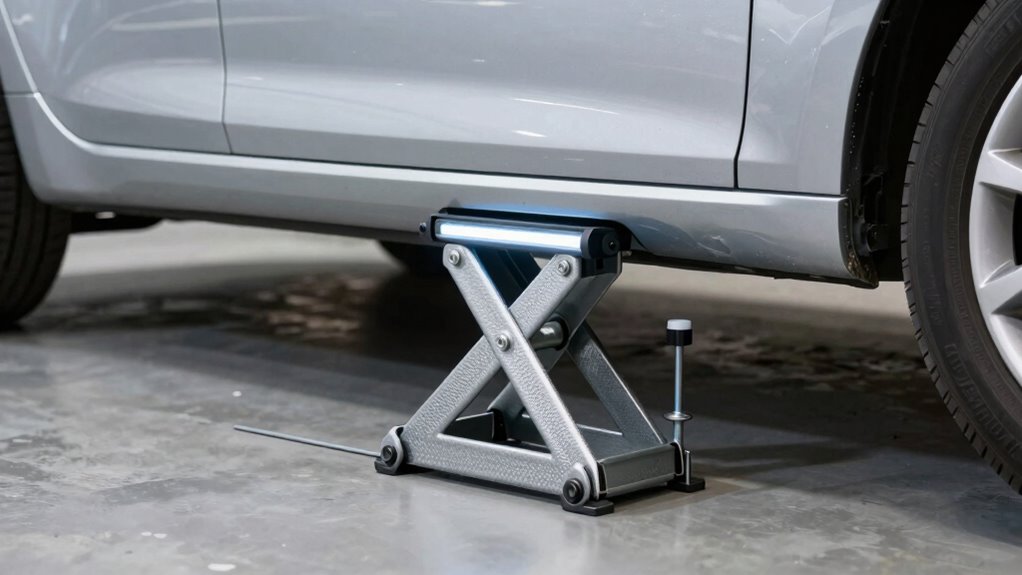
Proper jack stand placement is essential because it directly affects the stability of the vehicle while it’s lifted. You need to evaluate the vehicle weight and how it distributes across the frame. Incorrect placement can lead to dangerous shifts or falls. Hydraulic jacks, while useful for lifting, don’t support the vehicle’s weight once it’s raised; that’s where jack stands come in. Positioning the stands on the vehicle’s designated support points ensures they bear the load safely. If you place them on weak or unstable areas, the vehicle could shift unexpectedly, risking injury. Always double-check the weight capacity of your jack stands relative to your vehicle’s weight. Proper placement isn’t just about convenience—it’s critical to your safety during maintenance or repairs. Understanding vehicle support points is crucial for safe lifting practices. Additionally, proper equipment maintenance helps prevent equipment failure during use. Ensuring your jack stands are in good condition and free from damage is a vital part of preventing accidents, especially during critical lifting tasks. Regular inspection of the support points and equipment condition can further reduce the risk of accidents caused by improper placement or equipment failure.

Use 3 Points of Contact When Entering Or Exiting Vehicle Sign 12 X 8 Inch Metal Sign, Rustproof Aluminum, Multicolor
【High-Visibility 8×12 Inch Metal Sign】Standard-sized tin sign (20x30cm) with bold single-sided print for clear gate/wall visibility. Weather-resistant design…
As an affiliate, we earn on qualifying purchases.
As an affiliate, we earn on qualifying purchases.
How to Find and Identify Stable Support Points on Your Vehicle
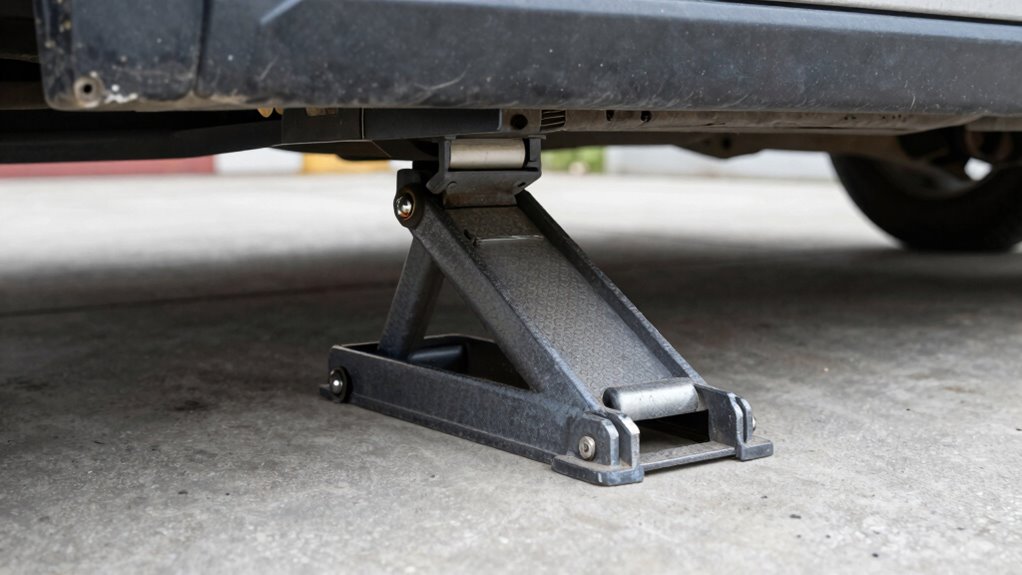
Ever wonder how to find the safest spots to support your vehicle? Support point identification is vital for vehicle support stability. First, consult your vehicle’s owner manual for factory-recommended support locations. Look for solid, unpainted metal areas such as frame rails or designated support pads. Avoid softer materials like plastic or thin sheet metal, which can bend or collapse. Use this table to help identify support points:
| Vehicle Area | Support Point Characteristics |
|---|---|
| Frame rails | Heavy gauge metal, unpainted or marked |
| Underdoor areas | Reinforced sections, visible welds |
| Axle housings | Solid and free of rust or damage |
| Crossmembers | Thick metal bars, often marked or reinforced |
| Suspension points | Designed for load support, usually marked |
Additionally, always verify support point integrity before placing your jack stands to ensure they are capable of safely bearing the vehicle’s weight. It is also good practice to inspect support surfaces for any debris or unevenness that could compromise stability. To further reduce the risk of accidents, always double-check the support location for stability after positioning the stands. It is also important to properly position the jack stands on a flat, stable surface to prevent slipping or tipping. Properly assessing support strength can prevent accidents and ensure safety during maintenance. Focus on these key spots to guarantee vehicle support stability and safe jack stand placement.
Amazon Basics Steel Jack Auto Stands, 3 Ton (2.7 metric Ton) Capacity, Easy to Use, Adjustable Height, 6,000 lb, 1 Pair, Black and Red
Pair of 3 Ton (2.7 metric Ton) jack stands with 6,000-pound capacity
As an affiliate, we earn on qualifying purchases.
As an affiliate, we earn on qualifying purchases.
Common Mistakes to Avoid When Setting Up Jack Stands
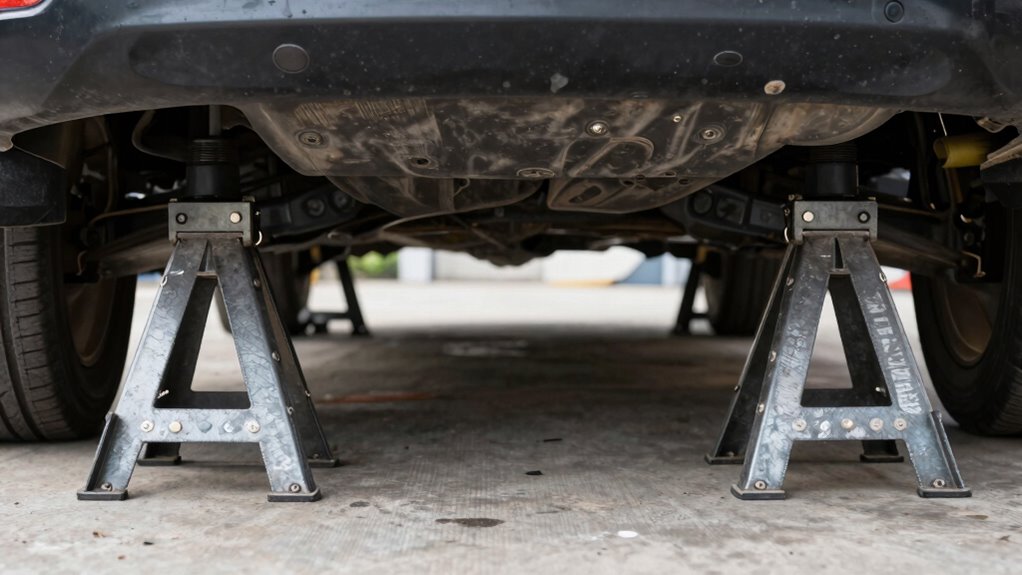
Setting up your jack stands correctly is essential for safe vehicle support, but mistakes can happen if you’re not careful. One common error is choosing jack stands with an improper design; some models may not handle the vehicle’s weight distribution evenly, leading to instability. Always verify the jack stand design is suitable for your vehicle’s weight and size. Proper jack stand selection ensures that the stands can withstand the specific loads they will encounter, which is crucial for safety. Avoid placing stands on uneven or weak surfaces, which can compromise stability. Also, don’t rely solely on the stand’s height; check that it supports the vehicle’s weight distribution properly, with the load centered and balanced. Proper vehicle support techniques are crucial to ensure safety when lifting and supporting your vehicle. Proper setup techniques help prevent accidents and ensure your vehicle remains securely supported during maintenance.
Amazon Basics Steel Jack Auto Stands, 3 Ton (2.7 metric Ton) Capacity, Easy to Use, Adjustable Height, 6,000 lb, 1 Pair, Black and Red
Pair of 3 Ton (2.7 metric Ton) jack stands with 6,000-pound capacity
As an affiliate, we earn on qualifying purchases.
As an affiliate, we earn on qualifying purchases.
How to Position and Secure Jack Stands Step-by-Step
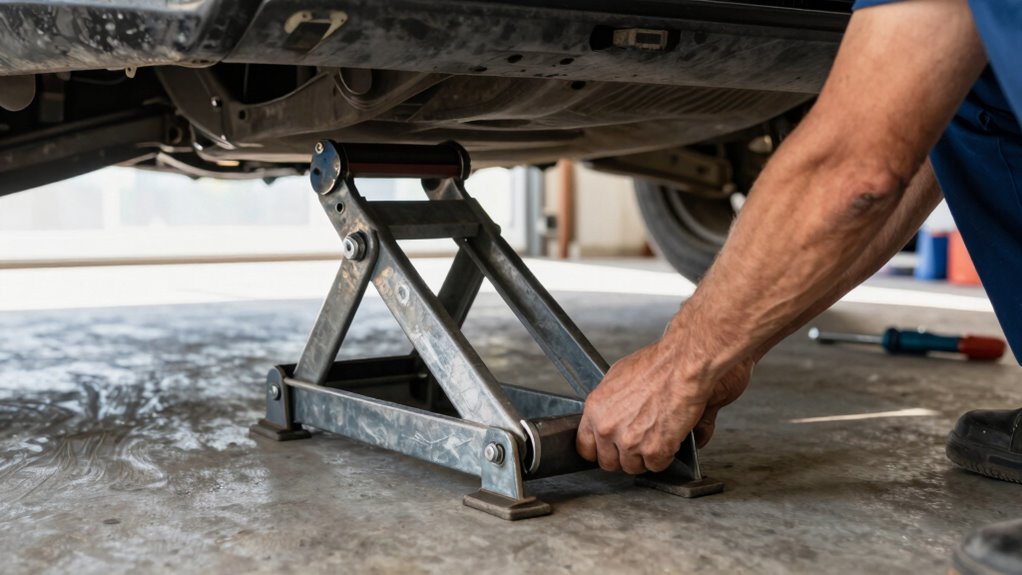
To position and secure jack stands correctly, start by locating solid, level ground free of debris or soft spots. Choose the right jack stand types for your vehicle and task, ensuring they are rated for the weight. Wear appropriate safety gear, like gloves and eye protection, before lifting the car. Raise your vehicle with a jack, then carefully place the jack stands under sturdy lift points specified in your vehicle’s manual. Make sure the stands are firmly on the ground and the load is centered on the support saddle or arm. Once in position, slowly lower the vehicle onto the stands, ensuring it sits securely without wobbling. Double-check that the stands are stable and locked before working underneath. Proper ground stability is crucial to prevent accidents and ensure safety during maintenance. Additionally, verifying that the jack stand placement is on firm, level ground helps prevent tipping or shifting during use. Inspect the support surfaces of the stands for any damage or wear before use to maintain safety. Ensuring proper weight distribution can further enhance stability and safety during vehicle support. Always remember that a secure setup reduces the risk of accidents and injuries while working underneath a vehicle.
Tips to Double-Check Your Setup Before Working Under the Car
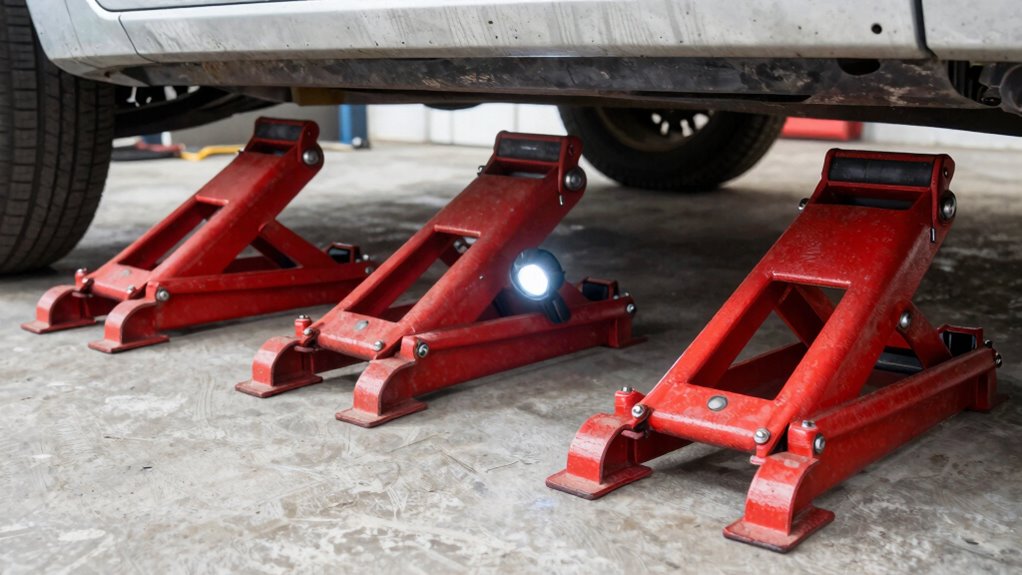
Before you start working beneath your vehicle, take a few moments to double-check your setup. Begin with a thorough jack stand inspection, ensuring they’re on a flat, stable surface and securely positioned under the manufacturer’s recommended lift points. Confirm that the stands are fully engaged and locked in place. Check for any signs of damage or wear, such as rust or bent components. It’s also wise to test the stability by gently rocking the vehicle after positioning it on the stands. Don’t forget to review your emergency preparedness plan—know where the phone is, and have a plan in case something goes wrong. Additionally, understanding essential safety precautions and their impact on your overall safety can help ensure you choose the safest equipment. Taking these steps helps prevent accidents and keeps you safe while working under the car.
Frequently Asked Questions
What Are the Signs of a Failing or Unstable Jack Stand?
You’ll know a jack stand is failing or unstable if you notice corrosion on the metal, which weakens its structure. Also, if the stand wobbles or tilts under load, it’s a sign of uneven load distribution, indicating instability. Always inspect for cracks, bends, or rust, and avoid using stands that show these signs. Regular checks make certain your safety and prevent accidents caused by compromised jack stands.
How Often Should I Inspect My Jack Stands for Damage?
In the age of the internet, you should examine your jack stands at least once a month for damage indicators. Regular inspections help catch cracks, rust, or bent components early. Always check for stability and wear before each use, especially if they’ve been stored for a while. Consistent inspection frequency ensures your safety and prevents accidents caused by unnoticed damage indicators. Don’t wait for a failure—stay vigilant.
Can I Use Homemade Supports Instead of Proper Jack Stands?
You shouldn’t use homemade supports instead of proper jack stands because they lack the necessary strength and stability to safely support your vehicle. Proper jack stands are designed with specific safety standards, ensuring your safety during maintenance. Homemade supports can fail unexpectedly, risking injury or damage. Always invest in quality, certified jack stands, and avoid makeshift solutions to keep yourself and others safe while working on your vehicle.
What Safety Gear Should I Wear When Working Under a Vehicle?
When working under a vehicle, you should wear protective gloves to prevent cuts and burns, and eye protection to shield your eyes from debris or fluids. Always prioritize safety gear to reduce injury risk and stay protected during repairs. Make sure your gloves fit well and your eye protection is secure and impact-resistant. This way, you stay safe while working confidently beneath your vehicle.
Are There Specific Types of Jack Stands Recommended for Different Vehicles?
You should choose jack stands based on your vehicle’s weight and stand material. For heavier vehicles, like trucks, opt for stands rated for higher weights, typically made from heavy-duty steel for strength and durability. Lighter cars can use lighter stands, often aluminum or steel. Always check the weight capacity and verify the material is sturdy enough to support your vehicle safely. Properly rated and durable stands prevent accidents and keep you safe while working underneath.
Conclusion
Remember, proper jack stand placement keeps you safe beneath your car. It’s easy to focus on the task at hand and overlook the basics, but a small mistake can lead to big danger. Think of it like building a sturdy bridge—if the supports aren’t secure, everything risks collapsing. Take the time to double-check your setup; it’s the difference between a safe repair and an accident. Stay vigilant, stay safe.