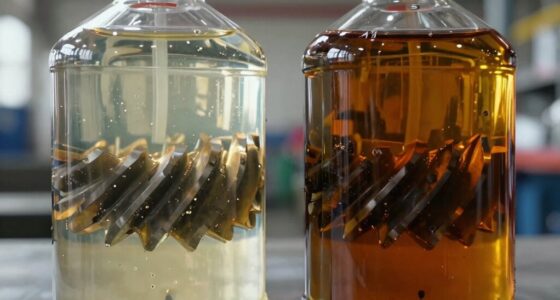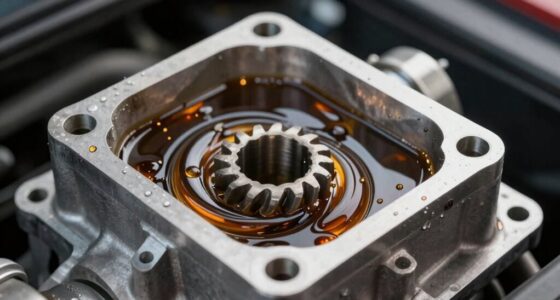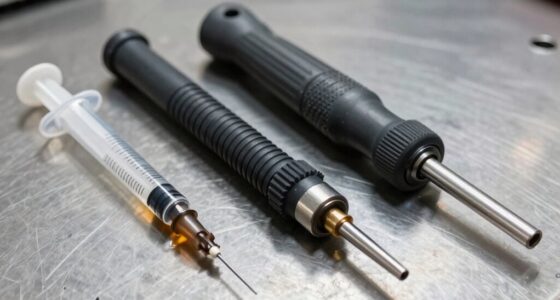

Balancing shift feel and protection in your manual transmission depends on choosing the right transmission fluid. Thinner, synthetic oils improve shift smoothness and responsiveness but may offer less high-temperature protection, while thicker fluids provide better wear resistance but can cause stiffer shifts. Maintaining proper fluid levels and quality is essential for both performance and longevity. To optimize both aspects, understanding how different fluids work will help you keep your transmission in top shape and enjoy smooth, reliable gear engagement.
Key Takeaways
- Thinner, low-viscosity fluids improve shift smoothness but may reduce gear protection and heat dissipation.
- Thicker fluids enhance protection but can cause sluggish shifts and delay engagement.
- Synthetic fluids often balance shift responsiveness and component protection with advanced additives.
- Proper fluid viscosity and condition are crucial to maintaining both optimal shift feel and transmission longevity.
- Regular maintenance and correct fluid choice help manage the tradeoff between smooth shifting and gear protection.

Valvoline Synchromesh Manual Transmission Fluid 1 Quart
Meets the demands of manual synchro transmissions and manual transaxles
As an affiliate, we earn on qualifying purchases.
As an affiliate, we earn on qualifying purchases.
What Is the Role of Transmission Fluid in Manual Transmissions?
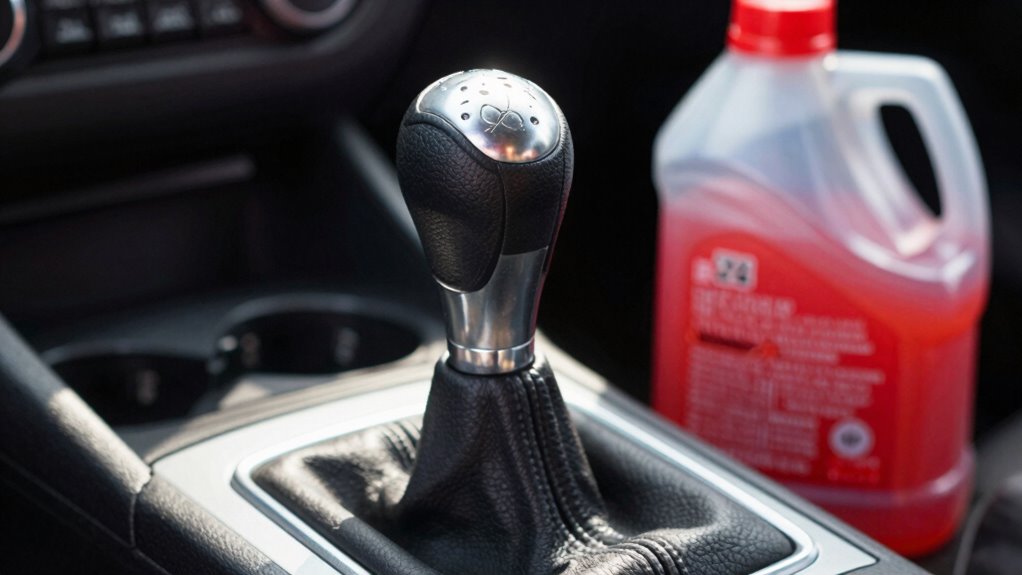
Transmission fluid in manual transmissions plays a crucial role in ensuring smooth gear shifts and reliable operation. It provides essential gear lubrication, reducing friction between the moving parts inside the transmission. Proper lubrication helps prevent wear and tear on gears, shafts, and synchronizers, extending the lifespan of your transmission. The fluid’s viscosity is key here; it must be thick enough to coat parts effectively but not so thick that it hampers movement. If the fluid is too thin, it won’t lubricate properly, leading to increased wear. Conversely, overly viscous fluid can cause sluggish shifting. Maintaining the correct fluid viscosity ensures that gears engage smoothly and efficiently, keeping your transmission running smoothly and reliably over time. Additionally, using the right type of transmission fluid can help optimize performance and protect your transmission components from damage. Choosing the correct viscosity grade is essential for balancing shift feel and protection, especially in varying operating conditions.

John Deere Original Equipment Hy-Gard 32 oz. Transmission & Hydraulic Oil #TY22035
OEM John Deere Part Number TY22035 Replaces Prior MPN TY22038
As an affiliate, we earn on qualifying purchases.
As an affiliate, we earn on qualifying purchases.
How Does Transmission Fluid Affect Shift Feel and Responsiveness?
When the transmission fluid is in good condition, it directly influences how smoothly and quickly your gears shift. Proper fluid ensures ideal gear engagement, reducing hesitation and grind during shifts. It also supports clutch performance by providing the right lubrication and friction characteristics. Low-quality or worn fluid can cause delayed responses, rough shifts, and increased wear on components. To understand this better:
| Fluid Condition | Impact on Shift Feel | Effect on Clutch Performance |
|---|---|---|
| Fresh & clean | Smooth, quick shifts | Consistent clutch operation |
| Slightly degraded | Slight delays, roughness | Slight clutch slippage |
| Dirty or old | Hesitation, grinding | Clutch slipping or grabbing |
| Contaminated | Hard shifts, noise | Clutch engagement issues |
Regular transmission fluid maintenance is essential to preserve optimal shift feel and clutch function.

Mannol DEXRON 3 Automatic Plus, 1L Transmission Fluid for Smoother Shifting, Longer Life, Enhanced Performance, and Better Protection for Your Vehicle
Do-It-All ATF Transmission Fluid: Works in automatic transmissions, power steering systems, torque converters, and hydraulic drives. Compatible with…
As an affiliate, we earn on qualifying purchases.
As an affiliate, we earn on qualifying purchases.
What Does ‘Protection’ Mean for Your Transmission Components?
Protection means your transmission fluid keeps gears properly lubricated, reducing friction and wear over time. It also fights against corrosion and helps prevent damage caused by moisture or debris. Additionally, efficient heat dissipation keeps your transmission cool, ensuring smooth operation and longevity. Regularly checking for microplastics in dust can help maintain optimal transmission conditions by reducing potential contaminants. Maintaining clean transmission fluid and monitoring fluid degradation are key to preserving overall transmission health. Incorporating the right fluid properties ensures your transmission performs reliably under various conditions, especially when considering temperature fluctuations that can impact fluid performance. Proper maintenance and understanding of transmission protection methods are essential for preventing costly repairs and extending component lifespan.
Lubrication of Gears
Lubrication of gears is essential for ensuring your manual transmission operates smoothly and reliably. Proper gear lubrication reduces friction between moving parts, preventing excessive heat and wear. When you maintain adequate transmission fluid, it forms a protective film that minimizes direct metal-to-metal contact, which is vital for friction reduction. This film helps prevent gear surfaces from grinding against each other during shifts, ensuring smoother operation. Additionally, good lubrication extends the lifespan of your transmission components by reducing the risk of damage caused by heat and wear. Proper color accuracy in the lubrication process can ensure consistent and reliable performance over time. Maintaining correct fluid levels and quality is crucial for optimal lubrication and protection. To achieve the best results, using precise measurement tools can help monitor and maintain optimal fluid conditions, ensuring your gears stay protected over the long haul. Regular inspection and maintenance can help identify early signs of fluid degradation or contamination, further safeguarding your transmission. Incorporating proper lubrication techniques can significantly enhance the overall efficiency and longevity of your transmission system. Prioritizing proper lubrication means your gears will shift more effortlessly and stay protected over the long haul.
Wear and Corrosion Resistance
Proper wear and corrosion resistance guarantee your transmission components stay durable and reliable over time. High-quality manual transmission fluid helps prevent gear wear and shields against corrosion, extending component life. To achieve this, look for fluids with:
- Superior anti-wear additives that minimize gear wear during operation.
- Corrosion inhibitors that protect metal surfaces from rust and oxidation.
- Stable chemistry to maintain protective properties under varying temperatures.
- Compatibility with transmission materials to prevent degradation or damage.
These features ensure your gears stay smooth and free from premature deterioration. Corrosion resistance is essential for preventing rust buildup that can compromise gear engagement. Additionally, selecting compatible fluids and office gear that integrate well with your system can enhance overall security and reliability. Incorporating proper maintenance practices can further prolong the life of your transmission. Using quality transmission fluid ensures you maintain optimal protection and performance. By choosing the right fluid, you safeguard your transmission’s longevity and maintain excellent performance.
Heat Dissipation Efficiency
Effective heat dissipation is essential for maintaining your transmission’s performance and longevity. Proper thermal management ensures heat transfer away from critical components, preventing overheating that can cause damage. When your transmission fluid effectively dissipates heat, it keeps internal temperatures within ideal ranges, reducing wear and preventing thermal breakdown. Using high-quality fluid improves heat transfer, allowing your transmission to operate smoothly even under demanding conditions. Poor heat dissipation can lead to increased friction, corrosion, and premature failure of parts. Maintaining proper fluid levels is crucial for optimal heat transfer and overall transmission health. Additionally, ensuring that your cooling system functions correctly can significantly enhance heat dissipation efficiency and protect your transmission from thermal damage. Regularly inspecting and maintaining your cooling system components, such as the radiator and cooler lines, can further improve thermal management and prolong transmission life. Incorporating advanced cooling techniques can also provide additional protection against excessive heat buildup. By prioritizing thermal management, you protect your transmission from excessive heat, ensuring consistent shift feel and extending its lifespan. Ultimately, efficient heat dissipation isn’t just about comfort; it’s a crucial aspect of safeguarding your transmission’s health over the long run.

Red Line 50604 MT-LV 70W/75W GL-4 High-Performance Full Synthetic Gear Oil Lubricant for Manual Transmissions & Transaxles – 1 Quart
HIGH PERFORMANCE – gear protection and longer synchro life, Satisfies the gear oil viscosity requirements of 70W &…
As an affiliate, we earn on qualifying purchases.
As an affiliate, we earn on qualifying purchases.
Which Transmission Fluids Offer the Best Balance of Shift Feel and Protection?
When choosing a transmission fluid, you might wonder which options strike the best balance between smooth shifting and reliable protection. Synthetic fluids generally provide better additive benefits, enhancing wear protection and thermal stability, while mineral oils often deliver a more traditional feel. To find the right fit, consider these factors:
Choosing between synthetic and mineral transmission fluids depends on balancing shift feel and protection needs.
- Synthetic fluids tend to offer superior shift feel due to consistent viscosity.
- Mineral oils may promote a more direct, engaged connection.
- Additives in synthetic fluids improve protection against wear and temperature extremes.
- Blending synthetic with mineral components can balance shift smoothness and durability.
- Considering the chemical composition of the fluid can also help you understand its performance characteristics and suitability for your vehicle.
- Additionally, understanding the compatibility of the fluid with your transmission system can prevent potential issues and optimize performance.
Ultimately, synthetic fluids with advanced additive packages often strike a better balance between shift feel and protection, especially in demanding conditions. Your choice depends on your driving style and the protection level you need.
How Do You Choose the Right Transmission Fluid for Your Driving Style?
Choosing the right transmission fluid depends largely on how you drive. If you prefer quick, spirited shifts, you’ll want a fluid that offers excellent gear lubrication while maintaining ideal fluid viscosity for smooth operation. For aggressive driving or frequent stop-and-go traffic, a thicker fluid may provide better protection against wear, but it could also impact shift feel. Conversely, if you prioritize a lighter feel and easier shifts, a lower-viscosity fluid could enhance responsiveness. Always check your vehicle manufacturer’s recommendations, as they specify the ideal fluid viscosity and type for your driving style. Additionally, understanding ADAS sensor calibration and other vehicle systems can help ensure your transmission maintenance supports overall vehicle safety and performance. Selecting the right transmission fluid ensures your transmission operates smoothly, protects against wear, and matches your driving demands perfectly. Being aware of how regional driving conditions influence fluid choice can further optimize your vehicle’s longevity and handling.
How Viscosity and Additives Impact Shift Smoothness and Transmission Safety
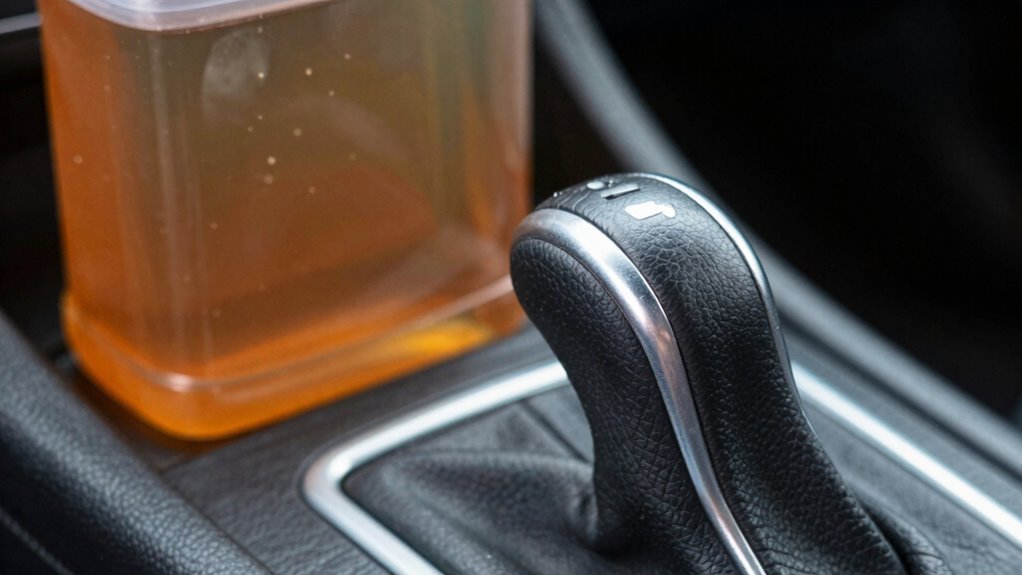
Viscosity and additives in transmission fluid play essential roles in guaranteeing smooth shifts and protecting your transmission. Viscosity effects influence how easily gears engage; too thick can cause stiff shifts, while too thin might reduce protection. Additive benefits include improving lubrication, reducing wear, and preventing corrosion. Specifically:
- Higher viscosity improves protection at high temperatures but may hinder shift feel.
- Lower viscosity enhances shift smoothness but can compromise gear protection.
- Friction modifiers in additives help ensure precise gear engagement.
- Wear inhibitors extend transmission lifespan by reducing metal-on-metal contact.
Understanding viscosity effects helps balance shift smoothness and safety. Additives are key to customizing fluid performance, ensuring your transmission operates efficiently while minimizing damage risks. Properly selected transmission fluid optimizes both shift feel and long-term safety.
How Can You Tell When It’s Time to Change Your Transmission Fluid?
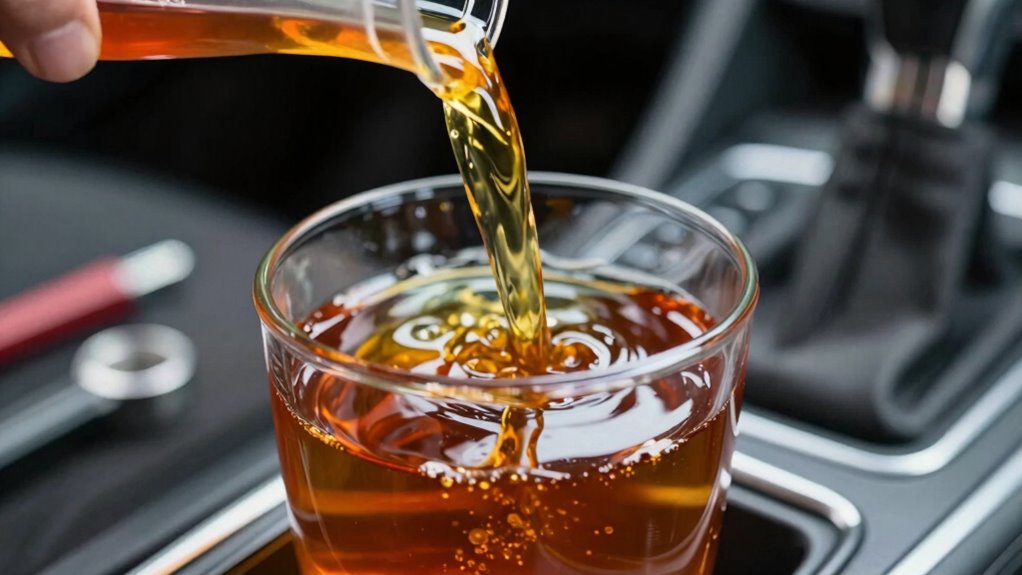
If your shifts feel rougher or more jerky than usual, it could be a sign your transmission fluid needs changing. Also, check the fluid’s color—if it looks dark or burnt, it’s time for a change. Staying alert to these signs helps keep your transmission running smoothly.
Unusual Shifting Feel
You’ll notice that your car’s transmission feels different when the fluid is no longer effective. Unusual shifting can signal it’s time for a change. Common signs include:
- Difficulty engaging gears smoothly, especially during gear synchronization.
- Clutch engagement feels inconsistent or jerky.
- Increased resistance or grinding when shifting.
- The transmission feels sluggish or hesitant, even when shifting carefully.
These issues often point to degraded fluid that no longer lubricates or cushions properly. When fluid loses its viscosity, it hampers clutch engagement and gear synchronization, making shifts feel rough or delayed. Addressing these symptoms early helps maintain smooth shifting and prevents further damage. If you notice these signs, it’s time to check your transmission fluid and consider a change.
Fluid Color Changes
The color of your transmission fluid provides a clear visual clue about its condition. Fluid discoloration signals whether your transmission needs attention. Fresh fluid is typically bright red or pink, indicating good lubrication and protection. As the fluid ages, it darkens to brown or black, showing oxidation and contamination. If you notice a milky or cloudy appearance, moisture may be present, risking damage. Use this color indication to decide when to change your transmission fluid.
| Fluid Color | Condition | Recommended Action |
|---|---|---|
| Bright Red/Pink | New/Good | No change needed |
| Dark Brown | Aged/Contaminated | Change soon |
| Black | Old/Degraded | Replace immediately |
| Milky/Cloudy | Water contamination | Flush and replace |
| Pinkish or Purple | Fresh but contaminated | Check for leaks |
How to Check and Replace Manual Transmission Fluid Properly
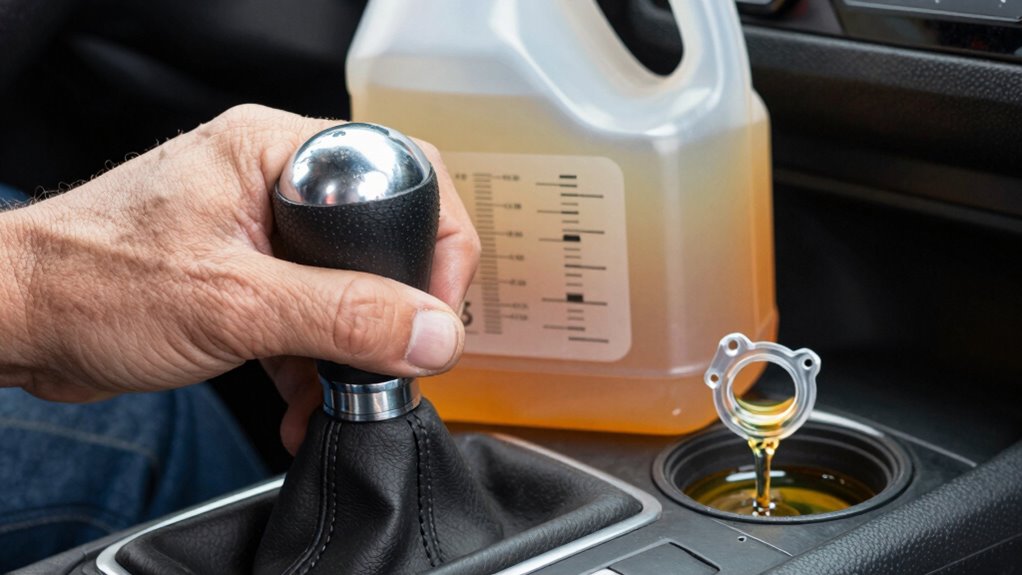
Checking and replacing manual transmission fluid is a straightforward maintenance task that can help extend your vehicle’s lifespan and guarantee smooth shifting. First, locate the transmission fluid fill and drain plugs, usually on the transmission case. Use a socket wrench to remove the drain plug and drain the old gear oil into a container. Next, clean the drain plug and replace it securely. Then, refill with the recommended gear oil through the fill hole until it reaches the proper level. Finally, check for leaks and ensure the fluid is at the correct level. Remember, proper transmission maintenance guarantees ideal shift feel and protection. To summarize:
- Locate fill and drain plugs.
- Drain old gear oil.
- Refill with fresh gear oil.
- Verify level and check for leaks.
Common Myths About Transmission Fluids and Shift Feel
Many believe that shifting should be instant and effortless, but that’s not always true. Synthetic fluids aren’t a guaranteed fix for all shift issues or safety concerns. Understanding these myths helps you make better decisions for your transmission’s health.
Myth of Instant Shift Feel
A common misconception is that transmission fluid should provide an instant, seamless shift feel. In reality, expecting immediate gear engagement can lead you to overlook important aspects of proper transmission function. Here are four points to contemplate:
- Fluid viscosity affects how quickly gears engage but isn’t the sole factor.
- A slight delay in shift feel often indicates healthy gear engagement, not a problem.
- Synthetic fluids may improve shift smoothness but don’t eliminate all engagement delays.
- Rushing gear engagement can cause increased wear and damage over time.
Understanding that a tiny lag in shift feel is normal helps you avoid unnecessary repairs. Proper fluid helps balance shift quality with protection, rather than aiming for an impossible instant transition.
False Safety of Synthetic Fluids
Synthetic transmission fluids are often marketed as safer and more reliable than conventional oils, leading some drivers to believe they eliminate shift delays and reduce wear entirely. However, this false sense of synthetic safety can be misleading. While synthetic fluids may offer better fluid longevity and resist breakdown longer than conventional oils, they don’t guarantee perfect protection or instant shift feel. Overestimating their capabilities can cause you to overlook regular maintenance or necessary fluid changes. No fluid, synthetic or not, can prevent all wear or guarantee flawless shifting forever. Relying solely on synthetic fluids for safety may lead to overlooked issues and increased long-term costs. Understanding that synthetic safety isn’t absolute helps you make informed decisions for your transmission’s health and performance.
Tips for Maintaining Transmission Fluid to Balance Performance and Protection
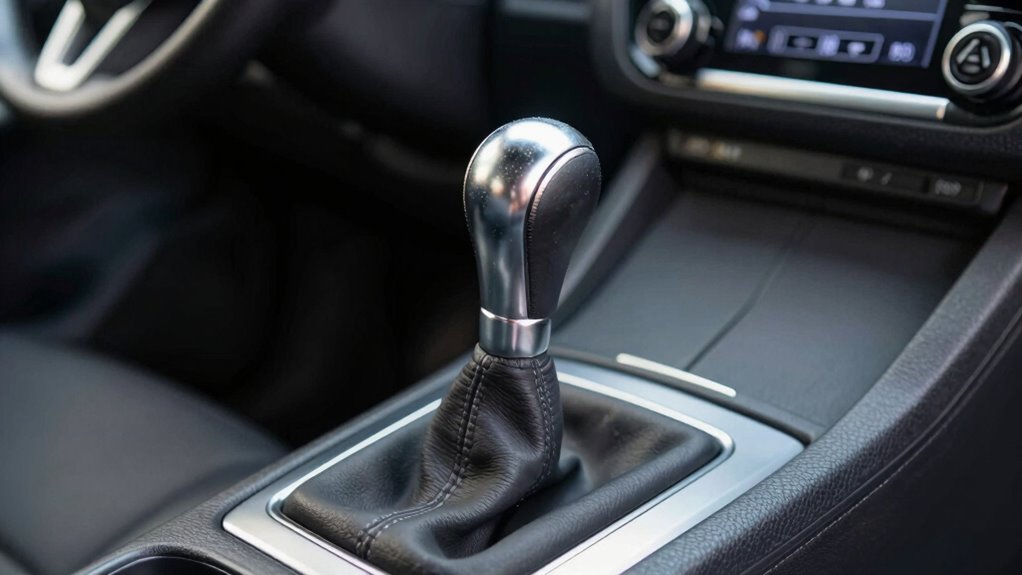
Maintaining the right level and quality of transmission fluid is essential for balancing ideal performance and protecting your manual transmission. Proper gear lubrication ensures smooth shifting and reduces wear. To achieve this, regularly check fluid levels and top off as needed. Consider using fluid additives designed to enhance lubrication and protect against wear, but choose them carefully to avoid compromising shift feel. Here are some tips:
- Check fluid levels monthly and top up if necessary.
- Use high-quality transmission fluid suited for your vehicle.
- Change the fluid at manufacturer-recommended intervals to prevent degradation.
- Avoid overfilling, which can cause foaming and inconsistent gear lubrication.
Following these steps helps maintain excellent shift feel while protecting your transmission from unnecessary wear and damage.
Frequently Asked Questions
How Does Driving Style Influence Ideal Transmission Fluid Choice?
Your driving style, especially your gear shifting techniques, directly influences your suitable transmission fluid choice. If you have aggressive driving habits with rapid shifts, opt for a fluid that prioritizes protection to reduce wear. Conversely, if you prefer smooth, precise gear changes, a fluid that enhances shift feel might suit you better. Adjusting your fluid based on your driving habits ensures ideal performance and longevity of your manual transmission.
Can Aftermarket Transmission Fluids Improve Both Shift Feel and Protection?
Yes, aftermarket transmission fluids can improve both shift feel and protection. Synthetic formulations often provide smoother shifts and better temperature stability, while advanced additive packages enhance wear protection and friction control. By choosing high-quality aftermarket options, you can enjoy a more responsive driving experience and extend your transmission’s lifespan. Just guarantee the fluid meets your vehicle’s specifications to maximize benefits without compromising performance.
What Are Signs of Transmission Fluid Degradation Beyond Shift Issues?
You might notice fluid contamination, which can cause increased gear grinding or difficulty shifting, and seals deterioration, leading to leaks around the transmission. If the fluid appears dark, gritty, or smells burnt, it’s a sign it’s breaking down. These issues not only affect shift feel but also compromise protection, risking further damage. Regularly checking your transmission fluid helps catch signs early and keeps your transmission running smoothly.
Does Ambient Temperature Affect Transmission Fluid Performance?
Did you know that extreme temperatures can change transmission fluid viscosity by up to 50%? Temperature effects profoundly impact your manual transmission’s performance. In cold weather, fluid thickens, making shifts stiff and sluggish. Conversely, high heat thins the fluid, reducing lubrication and protection. To keep your gear shifts smooth and protect your transmission, you should regularly check and change your fluid based on the climate, especially during seasonal shifts.
Are There Specific Transmission Fluids Recommended for High-Performance Manual Transmissions?
For high-performance manual transmissions, you should choose synthetic formulations designed for extreme conditions, as they offer better protection and smoother shifts. Mineral oils can work but may not withstand high temperatures and stress as effectively. Check your vehicle’s manual for recommended fluids, and consider upgrading to synthetic options if you frequently push your transmission hard or operate in demanding environments. This guarantees ideal performance and longevity.
Conclusion
Choosing the right manual transmission fluid means balancing smooth shift feel with solid protection. Did you know that using the correct fluid can extend your transmission’s lifespan by up to 50%? Regular checks and proper maintenance help you achieve peak performance without sacrificing protection. By understanding your driving needs and fluid options, you’ll keep your transmission shifting smoothly and lasting longer—saving you money and avoiding costly repairs down the road.