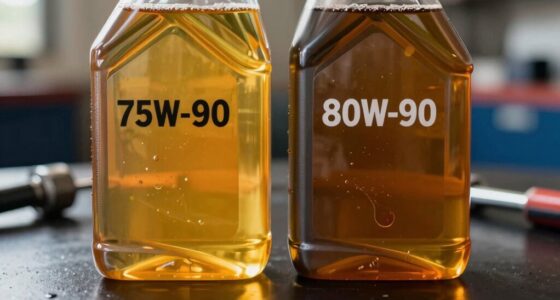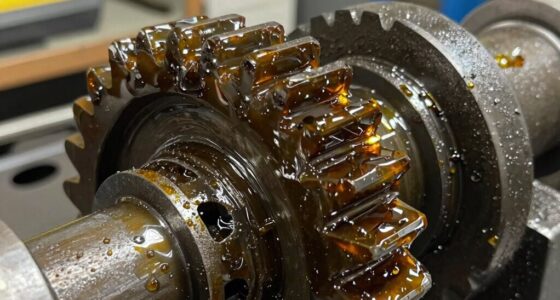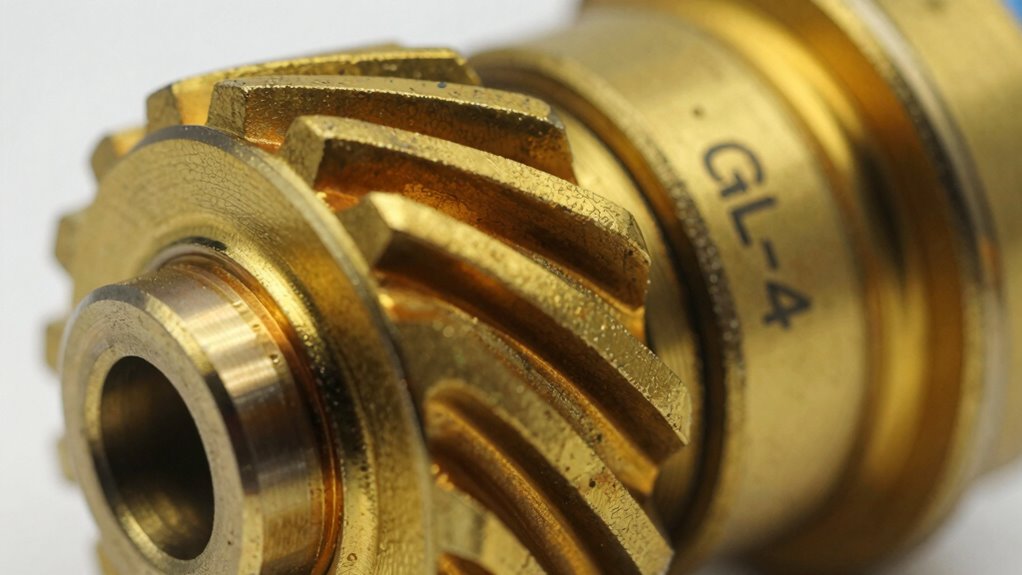

When choosing GL-4 gear oil for your transmission, you need to take into account the yellow metals inside, like brass and copper, which are common in synchros and shift forks. Some GL-4 formulations contain additives that can cause corrosion or damage these softer metals, leading to poor shifting or premature wear. Selecting an oil labeled as “yellow metal safe” can help protect your transmission components. Keep investigating to discover how proper oil selection extends your transmission’s life.

Get business pricing on garage and car supplies
- Business-only prices and quantity discounts
- Tax-exempt purchasing
- Multiple users, one account, clear invoices
Key Takeaways
- Yellow metals like brass and bronze are softer and prone to corrosion from incompatible additives in some GL-4 gear oils.
- Using GL-4 oils labeled as “yellow metal safe” prevents pitting, corrosion, and increased friction on synchros.
- Compatibility with yellow metals ensures the longevity and smooth operation of transmission synchros and shift components.
- Properly formulated GL-4 oils avoid harmful sulfur-phosphorus compounds that can degrade yellow metals over time.
- Regular maintenance and correct oil selection protect yellow metals, reducing wear and extending transmission component lifespan.
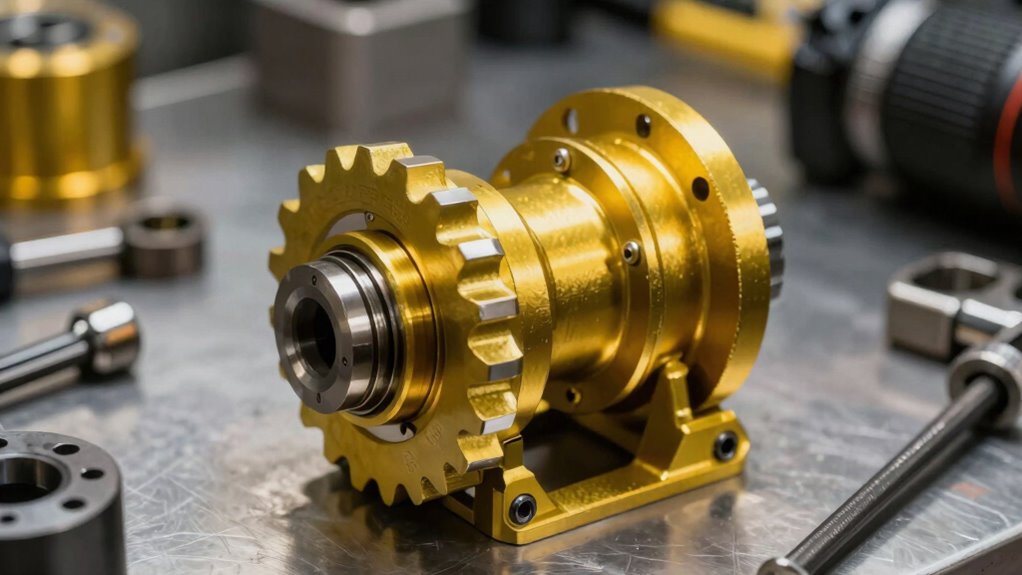
Are you wondering whether GL-4 gear oil is suitable for synchros? The answer depends on several factors, especially the compatibility issues that can arise with certain metals inside your transmission. Synchros, or synchronizers, rely on precise friction properties to help your gears shift smoothly. Using the wrong gear oil can lead to increased wear or even damage to these critical components. GL-4 oils are often recommended because they offer the right balance of lubricity and wear protection, but they aren’t universally compatible with all transmission materials.
Yellow metals, like brass, bronze, and copper, are common in synchros and shift forks. These metals are softer and more prone to corrosion or degradation when exposed to certain additives found in some gear oils. Many GL-4 formulations contain sulfur-phosphorus compounds intended to protect against gear wear, but these additives can cause compatibility issues with yellow metals. Over time, this can lead to pitting, corrosion, or increased friction, which hampers your transmission’s performance. That’s why it’s critical to check whether your specific GL-4 gear oil is formulated to be compatible with yellow metals. Some oils are specially designed to avoid harmful additives, ensuring that your synchros stay in good shape longer.
Maintaining your transmission with the right gear oil involves following some simple maintenance tips. First, always consult your vehicle’s manual to see what type of oil is recommended. If GL-4 is advised, look for formulations that specify compatibility with yellow metals or are labeled as “yellow metal safe.” Regularly changing your gear oil as per the manufacturer’s schedule helps prevent contamination and the buildup of harmful compounds that could accelerate wear. Keep an eye out for signs of poor lubrication, such as difficulty shifting, grinding noises, or increased transmission temperatures. These symptoms may indicate that the current oil isn’t performing well or that compatibility issues are developing.
Proper maintenance also includes inspecting your transmission components periodically and ensuring the oil level is adequate. Using a high-quality GL-4 oil that’s compatible with yellow metals can greatly extend the lifespan of your synchros. It’s also important to verify whether the oil contains appropriate additives that protect yellow metals without causing corrosion. Remember, even the best oil won’t do its job if it’s incompatible with your transmission materials. By paying attention to compatibility issues and following maintenance tips, you promote smoother shifts, less wear, and a longer-lasting transmission. Ultimately, choosing the right GL-4 gear oil isn’t just about viscosity or specifications; it’s about safeguarding the metals inside your transmission to keep everything running reliably.
As an affiliate, we earn on qualifying purchases.
Frequently Asked Questions
Can I Use GL-4 Gear Oil in Older Synchro Transmissions?
Yes, you can use GL-4 gear oil in older synchro transmissions, but you should check metal compatibility first. GL-4 oils meet specific lubrication standards suitable for many older transmissions, especially those with yellow metals like brass or bronze synchros. Confirm the oil’s formulation doesn’t cause corrosion or wear. Always follow your vehicle manufacturer’s recommendations to maintain peak performance and prevent damage to your transmission components.
How Often Should I Change GL-4 Oil in Synchro Systems?
You should change GL-4 oil in your synchro systems every 30,000 miles or as recommended by your vehicle’s manufacturer. Regular oil changes help maintain proper lubrication, which extends synchro lifespan and prevents wear. Keep an eye on oil quality and address any signs of contamination or degradation promptly. Sticking to these intervals guarantees your synchros stay smooth and functional, ultimately prolonging their durability and performance.
Are Yellow Metals Compatible With Other Types of Gear Lubricants?
You might wonder if yellow metals can mix with other gear lubricants, and the answer’s not straightforward. Yellow metals are highly sensitive to certain lubricants, risking corrosion if incompatible oils are used. Metal compatibility is essential; mixing incompatible lubricants can cause damage or reduce performance. To keep your synchro systems safe, always choose lubricants specifically designed for yellow metals, avoiding potential corrosion and ensuring smooth, reliable operation.
What Are the Signs of Incompatible or Degraded GL-4 Oil?
If your GL-4 oil shows signs of incompatible or degraded conditions, you’ll notice metal corrosion or oil discoloration. Metal corrosion indicates that the lubricant isn’t protecting components properly, risking damage. Discolored oil, especially dark or cloudy, suggests contamination or breakdown of additives. Regularly check your oil for these signs, and replace it promptly to prevent further wear and guarantee your transmission’s longevity.
Does GL-4 Oil Affect the Longevity of Synchro Components?
Yes, GL-4 oil affects the longevity of synchro components by ensuring proper metal compatibility and effective lubrication. Using the right GL-4 oil helps prevent wear and corrosion, which can degrade synchros over time. When you choose a compatible lubricant, it supports the longevity of your transmission parts by reducing friction and maintaining peak performance, ultimately extending the lifespan of your synchro components and keeping your vehicle running smoothly.
As an affiliate, we earn on qualifying purchases.
Conclusion
Remember, old habits die hard, and choosing the right lubricant for your synchros isn’t the place to cut corners. GL-4 gear oil still matters for yellow metals, ensuring smooth, reliable performance. Don’t overlook the importance of proper maintenance—your vehicle’s longevity depends on it. In the end, “a stitch in time saves nine,” so investing in quality now prevents costly repairs later. Keep your gear system running smoothly by sticking to proven solutions.
brass and copper compatible gear oil
As an affiliate, we earn on qualifying purchases.
As an affiliate, we earn on qualifying purchases.
automatic transmission gear oil for synchros
As an affiliate, we earn on qualifying purchases.
As an affiliate, we earn on qualifying purchases.
Fall Picks
fall essentials
As an affiliate, we earn on qualifying purchases.