
TL;DR

Get business pricing on garage and car supplies
- Business-only prices and quantity discounts
- Tax-exempt purchasing
- Multiple users, one account, clear invoices
The U.S. Department of Energy has issued a national battery strategy and launched BattMan, a consortium led by Pacific Northwest National Laboratory. The strategy sets targets for a domestic supply chain by 2030 and U.S. leadership in battery technology and manufacturing by 2035; DOE projects battery demand across transport and energy storage will rise from 179 GWh in 2025 to 707 GWh in 2035.
The U.S. Department of Energy has released a national battery strategy and launched the Battery Manufacturing Accelerator, or BattMan, a consortium intended to strengthen domestic battery production and supply chains. The strategy sets a goal of building a fully integrated U.S. battery supply chain by 2030 and achieving U.S. leadership in battery technology and manufacturing by 2035, while BattMan is meant to help move battery technologies from laboratories toward manufacturing.
DOE projects U.S. battery demand across transportation and energy-storage applications will nearly quadruple, rising from 179 gigawatt-hours in 2025 to 707 GWh in 2035. That forecast is the agency’s projection, not a reported outcome. The strategy also calls for faster commercialization of energy storage and identifies six areas for action: investment in upstream and midstream supply-chain steps, quicker commercial deployment of laboratory discoveries, manufacturing-process innovation, mission-driven deployment for grid modernization, coordination with international partners, and investment in American talent.
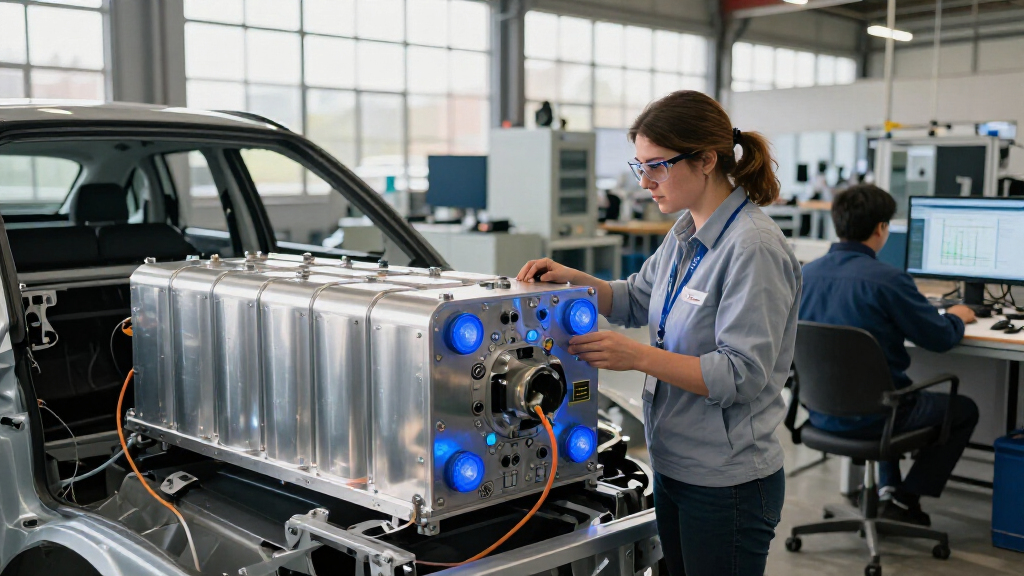
Pacific Northwest National Laboratory leads BattMan, with support from DOE’s Advanced Materials and Manufacturing Technologies Office in the Office of Critical Minerals and Energy Innovation. Argonne National Laboratory, Oak Ridge National Laboratory and the National Laboratory of the Rockies are listed as partners, alongside five universities. DOE says the accelerator will seek to lower manufacturing costs, address production challenges earlier and develop battery materials using more abundant domestic elements.
The source report says BattMan will use what it calls “Super Intelligence” alongside manufacturing capabilities to identify challenges sooner and improve production processes. It does not define the term or provide specific project schedules, funding amounts, production targets or measurable cost-reduction goals. Organizations interested in collaborating can find details through the BattMan site, according to the report.
Building a U.S. Battery Supply Chain
The announcement links federal battery research and manufacturing priorities to a substantial demand forecast. If demand grows as DOE projects, domestic manufacturers and suppliers will need capacity across materials, components and production—not just finished battery plants. The strategy’s focus on upstream and midstream supply-chain steps reflects that wider challenge.
BattMan is intended to connect laboratory discoveries with factory processes, a step that can be difficult and costly for emerging technologies. DOE says the consortium will work on manufacturing costs and earlier identification of production issues, but the announcement does not establish that these efforts have already lowered costs or increased output. Its practical effect will depend on which projects it takes on, what resources are committed and whether technologies can scale reliably.
The strategy also has implications beyond electric vehicles. DOE’s demand estimate includes grid energy storage, and the agency lists grid modernization as a deployment priority. Batteries are used in other sectors, too, as Assistant Secretary Audrey Robertson noted, although the supplied announcement gives no separate demand figures for medical devices or consumer electronics.
Products Worth Considering

NOCO Boost GB150 3000A UltraSafe Jump Starter, 12V Lithium Battery Booster
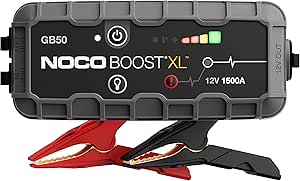
NOCO Boost GB50 1500A UltraSafe Jump Starter, 12V Lithium Battery Booster

NOCO Boost GBX75 2500A UltraSafe Jump Starter, 12V Lithium Battery Booster
As an affiliate, we earn on qualifying purchases.
DOE’s Targets for 2030 and 2035
The strategy sets two long-term milestones: a fully integrated domestic battery supply chain by 2030 and U.S. leadership in battery technology and manufacturing by 2035. It also calls for speeding the commercialization of energy storage. The source material does not say that either milestone has been achieved; they are stated priorities and goals.
BattMan is presented as one component of that broader approach. Its partners include national laboratories and universities, while the six strategy pillars range from investment and manufacturing research to international coordination and workforce development. The supplied report does not identify specific international partners or name the five universities.
““From transportation and power grids to medical devices and consumer electronics, batteries are essential to modern life.””
— Audrey Robertson, DOE assistant secretary
Funding, Projects and Measurable Results
The announcement, as summarized in the source material, does not disclose how much funding BattMan will receive, when its first projects will begin, or what milestones it will use to measure progress. It also does not specify which battery chemistries, materials or manufacturing processes will receive priority, or how the consortium will define and measure lower costs.
DOE’s demand figures are projections, and the source does not give the assumptions behind them. The meaning and role of the stated “Super Intelligence” approach are also not explained. Further details will be needed to judge how BattMan’s work connects to commercial production and whether it changes the pace or cost of domestic manufacturing.
BattMan’s Projects and Partners
The next indicators to watch are BattMan’s initial projects, partner participation, funding and published measures of manufacturing progress. DOE’s announcement says organizations interested in collaborating can find information on the BattMan site, but the supplied report does not give a launch timetable for individual initiatives.
Progress toward the strategy’s 2030 and 2035 goals will also depend on developments across the supply chain, including materials, manufacturing processes, workforce capacity and deployment. The announcement establishes priorities and launches a consortium; it does not yet provide results against those targets.
Key Questions
What did the Energy Department announce?
DOE released a national battery strategy and launched BattMan, a consortium focused on domestic battery manufacturing and supply chains.
What are the strategy’s main deadlines?
The strategy sets a goal for a fully integrated U.S. battery supply chain by 2030 and U.S. leadership in battery technology and manufacturing by 2035. These are goals, not confirmed outcomes.
Who leads BattMan?
Pacific Northwest National Laboratory leads the accelerator. Argonne, Oak Ridge and the National Laboratory of the Rockies are also partners, along with five universities.
How much is U.S. battery demand expected to grow?
DOE projects demand across transportation and energy storage will rise from 179 GWh in 2025 to 707 GWh in 2035, nearly quadrupling over that period. These are agency projections.
Has BattMan announced its funding or first projects?
The supplied announcement does not state a funding amount or project timetable. Those details remain unclear.
Source: chargedevs.com