
TL;DR

Get business pricing on garage and car supplies
- Business-only prices and quantity discounts
- Tax-exempt purchasing
- Multiple users, one account, clear invoices
Volkswagen has opened an industrial dismantling line at its Zwickau plant, where it plans to process 4,100 vehicles annually from 2027. The operation will recover parts for resale and materials for recycling, but VW has not disclosed key sales and cost figures, and the plant has no vehicle production planned beyond 2031.
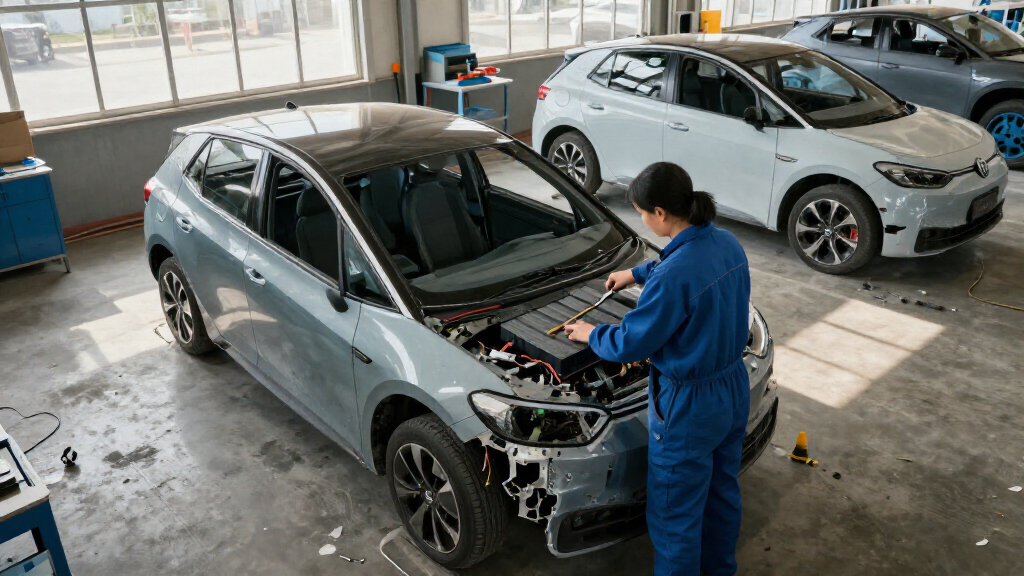
Volkswagen has opened an industrial vehicle-dismantling line at its Zwickau factory, turning a plant known for building electric cars into a source of reusable parts and recycled materials. The automaker plans for the operation to process 4,100 vehicles a year from 2027, creating a new potential revenue stream as the future of vehicle production at the site remains unsettled beyond 2031.
The new line uses an eight-stage process. It will initially take apart preproduction vehicles, with end-of-life cars also expected to be handled eventually. From 2027, Volkswagen expects the operation to run across two shifts with about 100 workers, retrained for the dismantling work. The line has opened after construction and approval work that Volkswagen says took nine months and finished three months ahead of schedule.
Volkswagen says it has been selling usable original parts recovered at Zwickau since July. Doors, bumpers, motors and transmission components are among the parts reported to be in demand. They are offered through the company’s dealer and service networks, as well as independent workshops and parts retailers. VW has not identified the vehicles supplying the parts already on sale.
The operation also aims to recover materials for manufacturing. Volkswagen says sorting plastics before recycling can help retain their value for use in new components, and that plastic from one vehicle could contribute material to three new cars. That does not mean one dismantled car supplies all the plastic needed to make three vehicles. The company plans to invest up to €90 million in expanding its recycling business, while the Saxony government has pledged €10.7 million.
A Second Business for Zwickau
Recovering and reselling parts could give Volkswagen a way to earn revenue from vehicles after they leave the road, while offering repairers another source of original components. If prices and quality meet customer needs, used parts could help make repairs less costly and keep some older vehicles in service rather than being written off. Those benefits are a stated rationale for the business, not yet a demonstrated result: Volkswagen has not released prices, sales volumes or profitability data.
The line also connects vehicle production with material recovery. Sorting components and plastics for reuse may reduce the need for newly produced inputs, but the extent of any savings will depend on how much material can be recovered economically and at consistent quality. Volkswagen’s investment plan and the state’s contribution show an effort to build the business beyond the initial dismantling line; they do not establish that it will be profitable at scale.
For Zwickau workers and the surrounding region, the project offers a possible source of employment as the factory’s role changes. Volkswagen says the broader recycling business could eventually support 1,000 jobs. That is a potential longer-term figure, distinct from the 100 workers assigned to the planned dismantling operation from 2027.
Products Worth Considering

Chemical Guys HOL123 Car Cleaning Kit – 14-Item Interior & Exterior Detailing Set

Chemical Guys 17-Piece Car Detailing Kit

Chemical Guys 14-Piece Arsenal Builder Car Wash Kit with Foam Blaster
As an affiliate, we earn on qualifying purchases.
From EV Production to Recovery
Zwickau became a Volkswagen electric-vehicle production hub after a €1.2 billion conversion that began in 2018. Production of the ID.3 started in November 2019, and the last combustion-engine car rolled off the line in June 2020. Volkswagen completed the factory’s transformation in January 2022 with the start of ID.5 production. The plant now builds six electric models based on the company’s MEB platform for Volkswagen, Audi and Cupra.
The dismantling project is a shift in the factory’s work, not an announced replacement for vehicle assembly. Volkswagen has said there is no vehicle production planned at Zwickau beyond 2031. That leaves the new activity with both a commercial purpose—parts and material recovery—and a wider role in the plant’s future, although the company has not shown that it can replace vehicle production or secure the site’s long-term position.
“The company says plastic recovered from one vehicle could contribute recycled material to three new cars.”
— Volkswagen
Profitability and Plant Plans
Volkswagen has not disclosed the prices, sales volumes, warranty terms or inspection procedures for the parts it is selling. The company also has not said which models have supplied the parts currently available, or whether the dismantling operation will be restricted to electric vehicles. Photos published by VW appear to show at least one car that may be a Golf, but the model is not identified in the captions, so that identification is not confirmed.
It is also unclear whether the dismantling business can generate enough work and profit to make a meaningful difference to Zwickau’s long-term prospects. The announced annual throughput and potential job figures describe plans or possible future outcomes, not results already achieved. With no vehicle production planned beyond 2031, the site’s longer-term role remains unresolved.
Scaling the Dismantling Operation
Volkswagen’s stated next milestone is to reach the planned rate of 4,100 vehicles annually in 2027, with the line operating across two shifts. The company also plans to expand its recycling business using investment of up to €90 million, alongside the Saxony government’s €10.7 million pledge. Further details on rollout, recovered-part sales and the business’s financial performance have not been provided.
Evidence of actual sales, repeat demand, operating costs and recovered-material yields will help show whether the project can become a durable business. Volkswagen has not announced a decision on Zwickau’s production or overall operating plans beyond 2031.
Key Questions
How many vehicles will the Zwickau line dismantle?
Volkswagen plans for it to process 4,100 vehicles a year from 2027, across two shifts.
What parts will Volkswagen sell?
VW says recovered doors, bumpers, motors and transmission components are among the parts in demand. They are being sold through its dealer and service networks, independent workshops and parts retailers.
Will the line dismantle only electric vehicles?
Volkswagen has not said that the operation will be limited to EVs. The models supplying parts currently on sale have not been identified.
How many jobs will the project create?
The dismantling operation is planned to employ 100 retrained workers from 2027. Volkswagen says the broader recycling business could eventually support 1,000 jobs, but that is a potential longer-term figure.
What is planned for Zwickau after 2031?
Volkswagen has no vehicle production planned at the plant beyond 2031. The company has not said whether the dismantling and recycling work will provide a longer-term role for the site.
Source: insideevs.com