
TL;DR

Get business pricing on garage and car supplies
- Business-only prices and quantity discounts
- Tax-exempt purchasing
- Multiple users, one account, clear invoices
Pilot has opened its first Tesla Semi Megachargers at a truck stop in Ellabell, Georgia, and a Flying J in Tulare, California. The six-stall Georgia site is part of a planned expansion at Pilot locations, but the chargers currently work only with Tesla trucks and the number of Semis on the road remains limited.
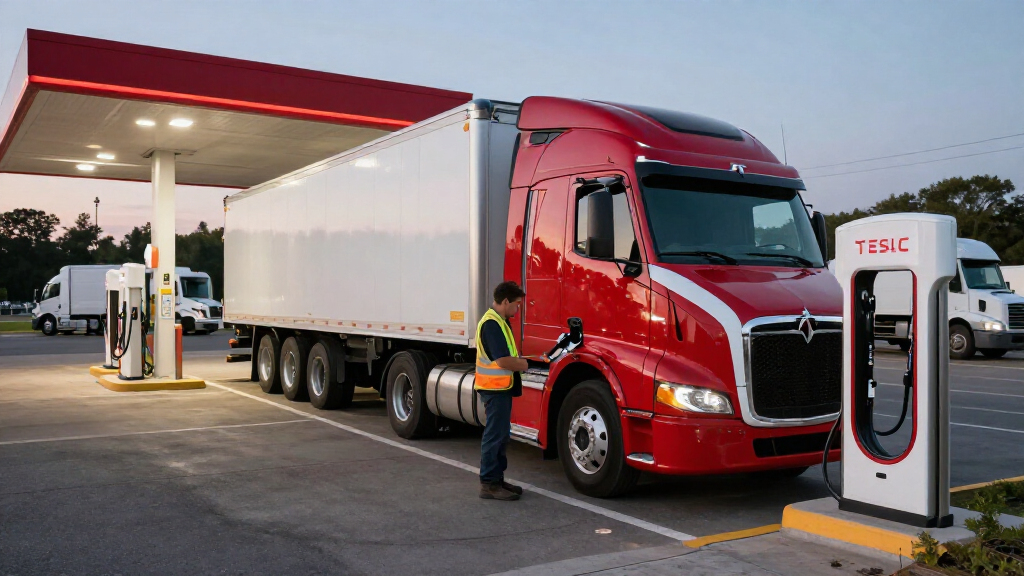
Pilot, the truck-stop operator behind Pilot and Flying J, has opened its first charging stations for Tesla Semis at a Pilot location in Ellabell, Georgia, and a Flying J in Tulare, California. The six charging stalls in Georgia can deliver up to 1.2 megawatts each, giving Tesla’s electric trucks new charging options at established highway stops beyond California.
The Ellabell site has six Megacharger stalls and was followed by the Tulare location, which came online the next day, according to The Drive’s report. Sites in Fort Stockton, Texas, and North Las Vegas are expected next. Pilot had expected the chargers to open in the summer, making the first openings a couple of months later than planned.
Tesla says a Semi can regain 60% of its battery charge in 30 minutes at a 1.2-megawatt stall. That matches the length of the federally required rest break for drivers after eight hours behind the wheel, though the actual charging time and amount added can depend on circumstances not detailed in the report.
The new locations extend a network that, until recently, was mostly limited to Tesla facilities and a small number of customer-facing sites in California. A Tesla charging site at a TA truck stop in Ontario, California, has operated since March, but it tops out at 750 kilowatts. The Ellabell location and a new eight-stall site near Atlanta mark the Semi’s first public charging options outside California, according to the report.
Truck-Stop Access for Electric Fleets
Putting high-power chargers at existing truck stops could make electric freight routes more practical for fleet operators. Trucking companies need charging where their vehicles already travel and pause; a network limited to company depots or a handful of regional sites offers less flexibility for operations across multiple states.
Pilot operates more than 900 locations in the United States and Canada, and the report says 12 additional Megacharger sites are under construction at its locations. If those stations open as planned, Pilot could host a substantial share of Tesla’s truck-charging network. That does not by itself make long-distance electric trucking broadly available: the network remains small, and there are still relatively few Semis in service.
The development also highlights the infrastructure challenge facing electric trucks. Fleet managers may hesitate to buy vehicles without dependable charging along working routes, while charging operators have a reason to build out only if enough trucks are using their sites. Public truck-stop installations can help address both sides of that vehicle-and-charger gap, but their impact depends on expansion, access, and vehicle availability.
Products Worth Considering

DEWALT 20V MAX Drill and Impact Driver (DCK277D2)

Milwaukee 2697-22 M18 18-Volt Lithium-Ion Cordless Hammer Drill/Impact Driver XC Combo Kit (2-Tool)

Chemical Guys HOL123 Car Cleaning Kit – 14-Item Interior & Exterior Detailing Set
As an affiliate, we earn on qualifying purchases.
A Small Network Begins to Grow
Before the Pilot openings, Tesla Semi charging was available mainly at Tesla facilities such as Giga Nevada and a fleet depot near the Port of Long Beach, alongside a handful of customer-facing sites in Southern California. The report cites Electrek’s count of four customer-facing locations and 26 stalls once Ellabell opened; that figure describes the network at that point, not a current verified total.
Tesla has said it planned about 37 Megacharger sites for 2026, while Semi program lead Dan Priestley has said the goal is 46 by early 2027. As of February, Tesla’s map showed 64 additional sites marked “coming soon” across 15 states, including 19 in Texas and 17 in California. Those map listings are plans, not proof that the sites have opened.
The Pilot chargers use the Megawatt Charging System (MCS) connector, which other truck makers, including Daimler and Volvo, are also building their electric trucks around. Priestley has said other trucks may eventually be able to use Tesla’s stations, but Tesla and Pilot have not announced a date for broader access.
“A Semi can regain 60% of its charge in 30 minutes at a 1.2-megawatt stall.”
— Tesla
Access and Expansion Still Unsettled
The new Pilot stalls are currently limited to Tesla vehicles. Although they use the MCS connector adopted by other truck makers, connector compatibility does not establish that those trucks can charge at the sites. Neither Tesla nor Pilot has said when, or under what conditions, access might expand.
The report identifies locations planned for upcoming construction and gives Tesla’s stated network targets, but it does not confirm opening dates for the next Pilot sites or for all locations marked “coming soon.” The number of Semis in operation and the pace at which customers will take delivery also remain important unknowns for gauging demand.
More Pilot Sites Are Planned
The next reported Pilot locations are in Fort Stockton, Texas, and North Las Vegas. Pilot also has 12 more Megacharger sites under construction, though the report does not provide completion dates for those projects.
Further developments to watch include whether Tesla meets its stated site targets, whether the chargers become available to other MCS-equipped trucks, and how quickly Semi deployments grow. Until Tesla or Pilot provides more detail, the current confirmed change is narrower: high-power Tesla truck charging has begun at two established Pilot and Flying J stops, with additional locations planned.
Key Questions
Where have Pilot’s Tesla Semi chargers opened?
The first reported Pilot Megachargers opened in Ellabell, Georgia, followed by a Flying J site in Tulare, California.
How powerful are the new Megachargers?
The Ellabell site has six stalls rated for up to 1.2 megawatts each, according to the report.
Can electric trucks from other manufacturers use the chargers?
Not at present, according to the report: the stalls are currently for Tesla Semis. Tesla Semi program lead Dan Priestley has said other trucks may eventually be able to use them, but Tesla and Pilot have not announced when.
How many more Pilot charging sites are planned?
The report says 12 additional Megacharger sites are under construction at Pilot locations. It also identifies Fort Stockton, Texas, and North Las Vegas as upcoming sites, without giving opening dates.
Source: thedrive.com