
TL;DR
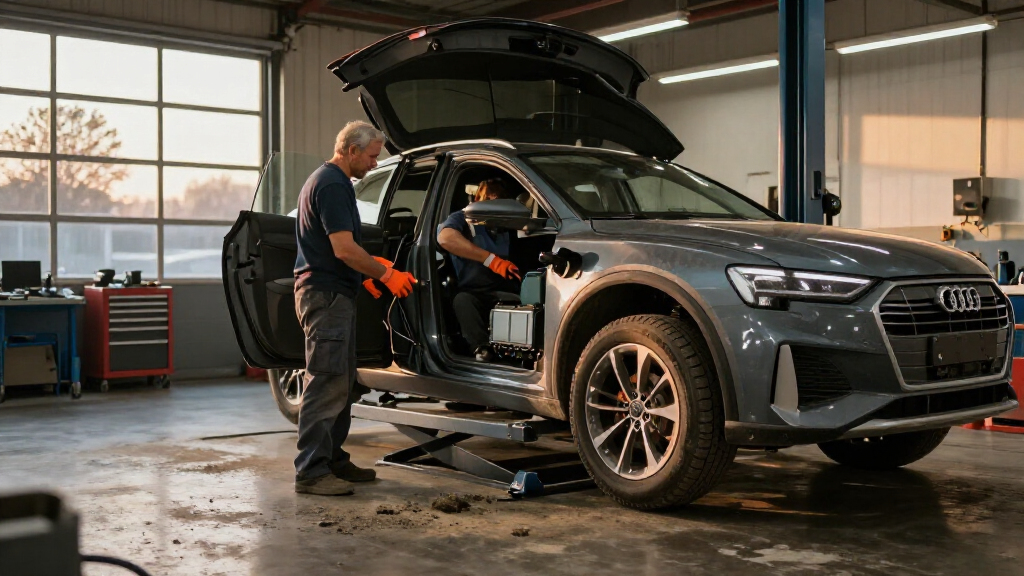
InsideEVs reports that a 2020 Audi e-tron Sportback’s battery failed after about 125,000 miles, immobilizing the car. Out of Spec Renew fitted a used replacement pack, but damage to the donor battery and programming problems stretched the work to nearly a week; the car now runs, according to the report.
A 2020 Audi e-tron Sportback with about 125,000 miles was immobilized after its traction battery failed, and replacing the pack took nearly a week, according to a report by InsideEVs. Out of Spec Renew carried out the repair, which involved fitting a used battery and resolving physical damage and programming issues before the vehicle could run again.

Get business pricing on garage and car supplies
- Business-only prices and quantity discounts
- Tax-exempt purchasing
- Multiple users, one account, clear invoices
InsideEVs reported that diagnostic checks found a battery module showing 0% state of charge while its voltage reading was at the maximum. About a dozen other modules also showed voltage inconsistencies, leading the repair team to conclude that the original pack needed replacement. The report says the rest of the car was in good shape, but the failed battery left it unable to drive.
The replacement was a pack from a crash-damaged Audi e-tron with roughly 30,000 miles on it. Removal of the failed battery was described as relatively straightforward. Installing the donor pack proved more complicated: it had damage at one corner that compromised its seal, so the team transferred the original battery’s top lids. A damaged coolant fitting and pyro fuse also had to be transferred.
After the battery was assembled and installed, the car still would not start. The report says the vehicle’s control system would not authorize replacement components carrying crash codes from the donor car. Out of Spec Renew sought outside help to program the parts and get the vehicle to recognize them. The process took nearly a week of labor rather than the one or two days the job was expected to require, and brought additional costs. The report says the Audi now works normally.
Why This Battery Swap Took Longer
The repair shows how a battery replacement can involve more than removing one pack and installing another. In this case, a damaged donor battery required parts to be transferred, while stored crash codes triggered a separate programming and authorization problem. Those complications added time, specialist help and expense, though the report does not provide a final repair bill.
For owners considering a used EV or facing a major battery repair, the account is a specific example of the uncertainty around a complex job: the condition and compatibility of a replacement pack matter, and software work may be required after installation. It does not establish how often e-tron batteries fail at this mileage, nor does it show that all battery replacements will be similarly difficult.
Products Worth Considering

Autel MaxiCOM MK808S Bidirectional Automotive Diagnostic Scanner

NOCO Boost GBX45 1250A UltraSafe 12V Lithium Jump Starter

Chemical Guys 14-Piece Arsenal Builder Car Wash Kit with Foam Blaster
As an affiliate, we earn on qualifying purchases.
The Donor Pack and Its Damage
The vehicle in the report is a 2020 e-tron Sportback, and the battery failure came after six years and approximately 125,000 miles. The source presents it as an outlier rather than evidence of a typical battery lifespan. The replacement pack was not new: it came from a crash-damaged vehicle and had covered around 30,000 miles.
That distinction shaped the repair. The donor pack’s corner damage affected its seal, and other damaged components needed to be replaced with parts from the original unit. The car’s refusal to accept components carrying crash-related codes then turned a mechanical installation into a programming task. InsideEVs’ account focuses on this individual repair; it does not provide broader failure-rate data or a comparison with other e-tron battery jobs.
“The battery replacement job “was not easy, to say the least.””
— InsideEVs report
Repair Cost and Battery History
The report does not state the total repair cost, the exact amount of additional expense, or whether the battery failure was caused by a particular defect. It describes diagnostic readings that led the team to replace the pack, but does not identify a confirmed underlying cause for the failure.
It is also unclear how the donor battery’s remaining capacity was assessed, what warranty applied to the used pack, or how long the replacement will last. The account says the car is working again, but offers no longer-term follow-up. One vehicle’s experience cannot establish the expected service life or failure rate for the wider e-tron fleet.
Monitoring the Repaired Audi
According to InsideEVs, the immediate repair is complete and the Audi is operating again. The next evidence of how successful the swap proves to be would come from the car’s performance over time, including whether the replacement pack remains reliable and whether any further faults appear. The report does not announce a scheduled follow-up or provide a longer-term update.
For now, the case documents the practical hurdles faced by this repair team, not a general forecast for Audi battery replacements. Questions about the final bill, donor-pack condition and long-term results remain unanswered in the available account.
Key Questions
What happened to the Audi e-tron?
Its original traction battery failed after the 2020 e-tron Sportback had covered about 125,000 miles, leaving the vehicle unable to drive, according to InsideEVs.
What battery was installed?
The repair team used a battery from a crash-damaged e-tron with roughly 30,000 miles. The donor pack had damage that required transferring parts from the failed battery.
Why did the repair take nearly a week?
Damage to the replacement pack’s corner affected its seal, and the team transferred the original pack’s top lids, coolant fitting and pyro fuse. The car also would not authorize components carrying crash codes until outside programming help was brought in.
How much did the repair cost?
The report mentions unexpected additional costs but does not give a final price or a detailed breakdown.
Does this mean e-tron batteries usually fail at 125,000 miles?
No. This is one reported vehicle and does not provide data on typical battery life or failure rates across the e-tron fleet. The report describes this car’s failure as an outlier.
Source: insideevs.com