
TL;DR

Get business pricing on garage and car supplies
- Business-only prices and quantity discounts
- Tax-exempt purchasing
- Multiple users, one account, clear invoices
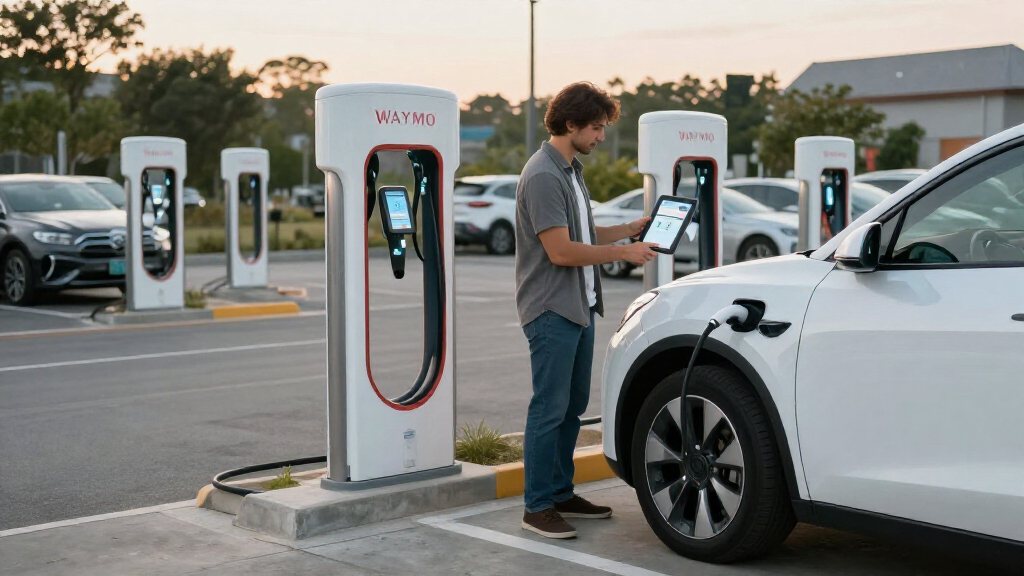
EV drivers in San Diego have reported waiting for public fast chargers occupied by Waymo robotaxis, with one telling the Los Angeles Times that vehicles arrive in groups. Waymo says it prioritizes its own charging hubs and tries to avoid crowding stations; EVgo told the newspaper its chargers are open to both private drivers and robotaxis.
Some San Diego EV drivers say they have waited for public fast chargers occupied by Waymo robotaxis, according to a Los Angeles Times report cited by InsideEVs. Waymo says it prioritizes its own charging hubs and tries to keep vehicles from crowding a single station, but the reports highlight competition for public charging stalls as the ride-hailing fleet expands.
Drivers told the Los Angeles Times that Waymo vehicles sometimes arrive at public charging locations in groups. One driver said, “They come in droves.” The report said some drivers had to wait as long as an hour or look for another charging location. These are accounts from drivers, not a published measure of how often stations are occupied or how long typical waits last.
Waymo told the newspaper that it has staff at some public charging sites to assist its vehicles and tries to avoid sending them in a way that crowds one station. It said its fleet’s own charging hubs are the priority. The company also said its Jaguar I-Pace vehicles and Zeekr vans, which may be driven by people during breaks, can use public chargers.
EVgo told the Los Angeles Times that its San Diego chargers are available to private EV drivers and robotaxis. The source report does not say Waymo is violating charging-station rules. The dispute is instead about access and convenience: a vehicle may be permitted to charge at a public site while still adding to waits for other drivers.
Public Chargers Face Fleet Demand
Public fast chargers serve drivers who may not have a home charger and need to recharge while traveling. When commercial fleets use the same stalls, available charging capacity can tighten, particularly at busy locations. A lengthy wait or a trip to another station can disrupt a private driver’s plans, even when every vehicle is following the site’s rules.
The issue also shows how fleet growth affects shared infrastructure. Waymo operates its own depots, but building or arranging dedicated facilities in a new market takes time, according to the report. Until sufficient private capacity is available, some fleet charging may take place alongside individual drivers. The source does not quantify the scale of that use or its effect on San Diego’s overall charger availability.
Products Worth Considering

Autel MaxiCharger AC Home Level 2 EV Charger, 50A, Hardwired J1772, Wi-Fi, 25-Foot Cable

DEWALT 20V MAX XR Hammer Drill and Impact Driver Combo Kit with Two 4Ah Batteries and Charger

DEWALT 20V MAX 1/4-Inch Impact Driver Kit with Battery and Charger (DCF787D1)
As an affiliate, we earn on qualifying purchases.
Waymo’s Depots and Expansion
Waymo, owned by Alphabet, is expanding its robotaxi service. InsideEVs reported that the company served riders in 15 cities at the time of its article. Its operations rely on vehicles that need regular charging, and the company said its preferred option is charging at dedicated hubs rather than public stations.
The San Diego accounts are not the only complaints described in the source. Social media users in Nashville and St. Louis have also accused Waymo vehicles of occupying public chargers. The report does not independently verify those posts or establish how frequently the vehicles use public sites in those cities. It also mentions earlier neighborhood complaints about Waymo vehicle noise, a separate issue from charger access.
“They come in droves.”
— A driver quoted by the Los Angeles Times
Wait Times and Charger Use
The source provides no station-by-station data on how many Waymo vehicles charge publicly, how often they do so, or what share of stalls they occupy. The reported wait of up to an hour comes from driver accounts; the report does not provide a broader measurement or independently confirm typical wait times.
It is also unclear when Waymo expects to add or expand dedicated charging capacity in San Diego, whether the company plans changes to its use of public chargers, or whether similar conditions are occurring at a measurable scale in other cities. The available information does not establish that Waymo is breaking station rules.
Dedicated Capacity and Driver Access
The immediate question is whether Waymo’s own charging hubs can accommodate more of its fleet as the service operates in San Diego. The company says those hubs are its priority, but the report gives no timetable for new facilities or figures for their capacity.
Drivers may continue to encounter robotaxis at public stations while the fleet uses available charging options. Further reporting or data from Waymo and charging providers could clarify how often this happens, whether waits are changing, and what measures—such as additional fleet charging space or more public stalls—might ease pressure on drivers.
Key Questions
Are Waymo robotaxis allowed to use the San Diego chargers?
EVgo told the Los Angeles Times that its San Diego chargers are available to private EV drivers and robotaxis. The source report does not say Waymo is breaking charging-site rules.
How long have drivers had to wait?
Some drivers told the Los Angeles Times they had waited up to an hour or gone to another location. The report does not establish how common that wait is.
What has Waymo said about charging its fleet?
Waymo said it prioritizes its own charging hubs, has staff at some public charging locations to assist vehicles, and tries to avoid crowding a single station.
Is this problem confirmed in other cities?
The source reports social media complaints about Waymo vehicles using public chargers in Nashville and St. Louis. Those posts are described as accusations; the report does not independently verify their frequency or scale.
Source: insideevs.com