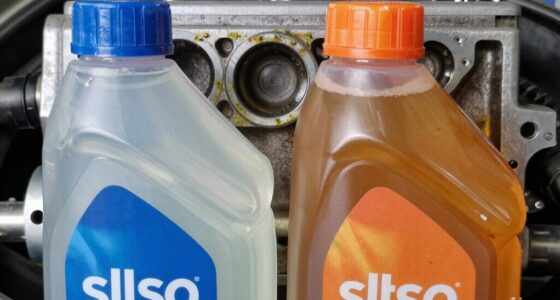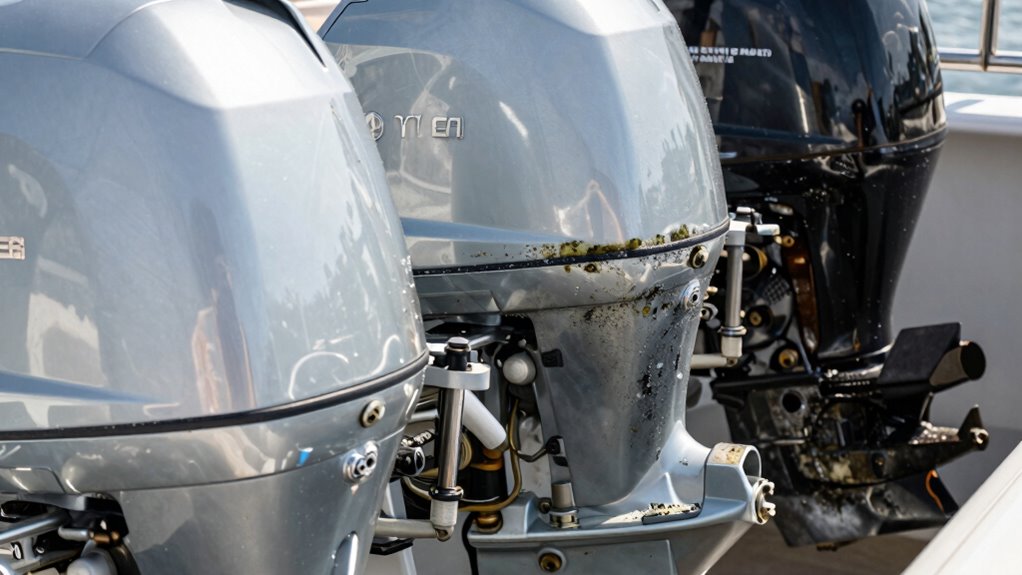

In saltwater environments, your outboard’s lubrication system faces more immediate corrosion risks because it’s mounted externally and directly exposed to salt. Inboards are somewhat protected inside the hull but still require careful maintenance to prevent salt ingress in cooling and lubrication pathways. Regular flushing, using corrosion-resistant lubricants, and monitoring sacrificial anodes are essential for both. Understanding these differences can greatly extend your engine’s lifespan—stay tuned for more tips to keep your boat running smoothly.

Get business pricing on garage and car supplies
- Business-only prices and quantity discounts
- Tax-exempt purchasing
- Multiple users, one account, clear invoices
Key Takeaways
- Outboards are more exposed to saltwater contact, increasing corrosion risk and demanding frequent flushing and maintenance.
- Inboards, while protected inside the hull, require sealed lubrication pathways to prevent salt ingress and internal corrosion.
- Both engine types benefit from corrosion-resistant lubricants and sacrificial anodes to mitigate saltwater corrosion effects.
- Regular flushing of cooling systems after saltwater use is critical for both outboards and inboards to prevent salt buildup.
- Proper maintenance of seals, cooling systems, and lubrication components extends engine lifespan in salty environments.
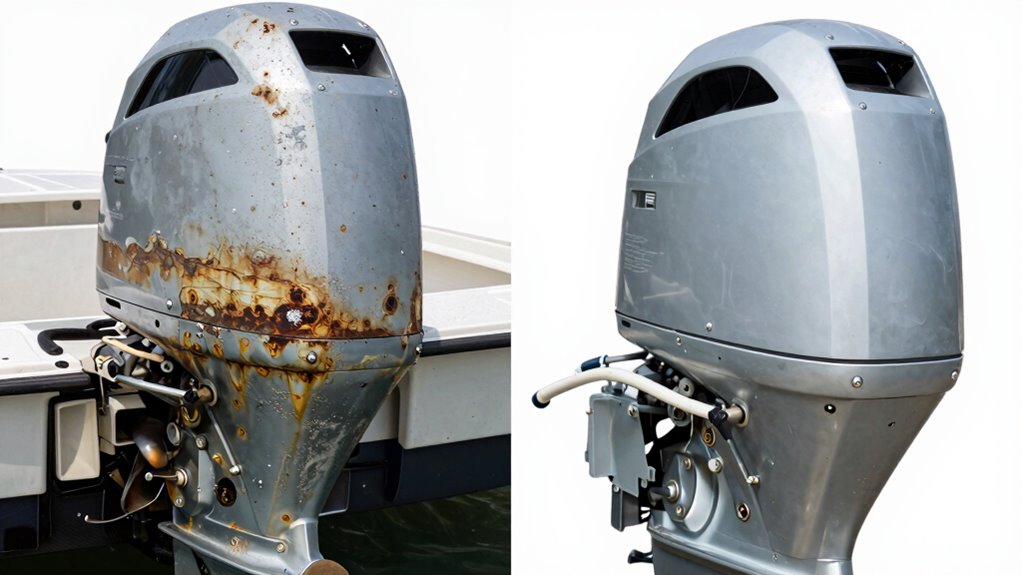
When choosing between outboard and inboard engines, understanding their lubrication systems is essential for proper maintenance and performance. One of the most critical factors to consider is how each type handles corrosion prevention, especially if you frequently operate in saltwater. Saltwater is highly corrosive, and it can accelerate wear and damage if your engine’s lubrication system isn’t designed to combat it effectively. Outboard engines, being mounted outside the hull, are directly exposed to saltwater and humidity, which increases the risk of corrosion. To prevent this, you need to prioritize regular flushing and use corrosion-resistant lubricants. Outboards often feature simpler lubrication systems, but that simplicity can make maintenance more challenging when salt deposits build up or rust starts to form. Ensuring that all moving parts are properly greased and that the cooling systems are flushed after each use becomes a necessity to combat these issues. Additionally, choosing corrosion-resistant materials for engine components can help extend the lifespan of your outboard in saltwater environments.
Outboard engines need regular flushing and corrosion-resistant lubricants to prevent saltwater damage and rust buildup.
In contrast, inboard engines, mounted inside the boat, tend to have more complex lubrication systems with enclosed components that are somewhat protected from direct salt exposure. However, this doesn’t mean they’re immune to corrosion. Salt can still ingress through cooling systems or leaks, leading to internal rust if not properly maintained. One of the maintenance challenges with inboard engines is keeping their lubrication systems sealed and free from salt intrusion. Regular inspection and flushing are vital to prevent corrosion from developing unnoticed within the engine block or oil passages. Additionally, you need to be vigilant about oil changes and coolant quality, as contaminated or degraded fluids can accelerate corrosion inside the engine.
Both engine types require diligent maintenance routines to combat corrosion, but the challenges differ. Outboards demand frequent flushing, cleaning, and the use of corrosion inhibitors to keep salt deposits at bay. You’ll also want to inspect anodes regularly and replace them as needed since they serve as sacrificial metal parts that protect the engine from corrosion. Inboards, on the other hand, require careful attention to cooling systems, seals, and lubrication pathways to prevent saltwater intrusion and internal rust. The complexity of their lubrication systems means you might face more maintenance challenges in ensuring all parts are properly sealed, lubricated, and corrosion-free.
Ultimately, your choice hinges on how much effort you’re willing to invest in maintenance and how often you operate in saltwater environments. Both outboard and inboard engines can perform reliably with proper care, but understanding their unique corrosion prevention needs and maintenance challenges helps you keep your engine running smoothly and extend its lifespan.
saltwater resistant outboard engine lubricant
As an affiliate, we earn on qualifying purchases.
As an affiliate, we earn on qualifying purchases.
Frequently Asked Questions
How Often Should I Change Outboard or Inboard Lubrication?
You should change your outboard or inboard lubrication every 50 to 100 hours of use or at least once a year, whichever comes first. Follow your maintenance schedule closely, and always use the recommended lubricant selection for your engine. Regular oil changes help prevent saltwater corrosion and keep your engine running smoothly. Monitoring and maintaining proper lubrication is key to extending your engine’s lifespan and avoiding costly repairs.
What Types of Lubricants Are Best for Saltwater Environments?
Imagine you’re steering saltwater and want to prevent corrosion. You should choose lubricants with corrosion inhibitors, like synthetic marine-grade oils. These specially formulated lubricants help prevent saltwater-induced corrosion by creating a protective barrier. Proper lubricant selection is vital in saltwater environments to extend engine life and maintain performance. Regularly using these high-quality lubricants ensures your engine stays protected against the harsh effects of saltwater corrosion.
Can Improper Lubrication Cause Engine Corrosion?
Improper lubrication can definitely cause engine corrosion, especially in saltwater environments. When lubrication techniques are neglected or the wrong lubricants are used, moisture and salt can build up, leading to rust and corrosion. To prevent this, you should regularly apply corrosion prevention treatments and use appropriate lubricants designed for saltwater. Properly maintaining your engine’s lubrication system guarantees it stays protected, runs smoothly, and lasts longer in harsh marine conditions.
Are There Specific Maintenance Tips for Saltwater Boat Engines?
You should follow specific marine engine maintenance tips to prevent saltwater corrosion. Regularly rinse your engine with fresh water after saltwater use, apply corrosion inhibitors, and check all seals and anodes. Don’t overlook oil changes and lubrication, as these help protect moving parts. Many underestimate the importance of routine maintenance, but consistent care markedly extends your engine’s lifespan and keeps corrosion at bay, ensuring reliable performance in harsh saltwater environments.
How Does Lubrication Impact Engine Lifespan in Salty Conditions?
Lubrication considerably impacts your engine’s lifespan in salty conditions by preventing corrosion and reducing wear. Proper lubrication techniques, like using marine-grade oils and regularly checking and changing them, help create a protective barrier against saltwater exposure. This prevents corrosion buildup on engine parts and keeps everything running smoothly. Consistent maintenance and the right lubrication practices are key to extending your engine’s life and ensuring reliable performance in harsh, salty environments.
inboard engine corrosion prevention kit
As an affiliate, we earn on qualifying purchases.
As an affiliate, we earn on qualifying purchases.
Conclusion
Whether you choose outboard or inboard lubrication, remember that saltwater’s relentless corrosion is the enemy you both face. Outboards splash and dance with waves, their lubricants fighting to keep the salt at bay, while inboards sit quietly beneath the surface, where hidden corrosion lurks unseen. Your boat’s longevity depends on understanding these differences. Stay vigilant, maintain your lubrication system, and picture each engine as a fortress—guarded fiercely against the salty assault.
As an affiliate, we earn on qualifying purchases.
As an affiliate, we earn on qualifying purchases.
Fall Picks
fall essentials
As an affiliate, we earn on qualifying purchases.