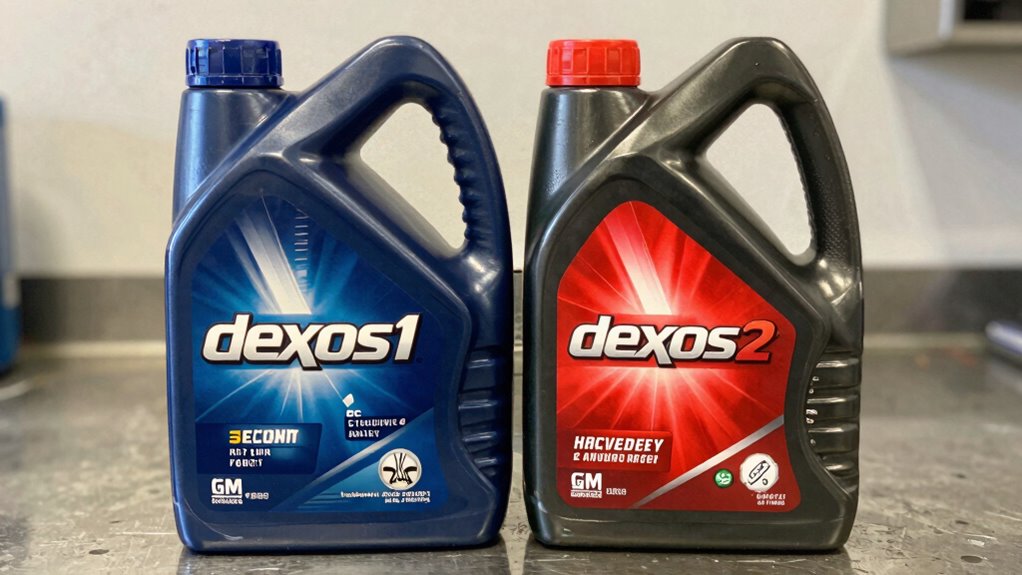

GM dexos1 and dexos2 are not interchangeable because they meet different standards for gasoline and diesel engines. Using dexos1 in a diesel engine or mixing them can risk engine performance, cause deposits, or increase wear. Always follow your vehicle manufacturer’s recommendations to guarantee you use the correct oil. Staying within the right standard is key to protecting your engine. Keep exploring to discover more about their differences and why mixing them isn’t advisable.
Key Takeaways
- Dexos1 is mainly for gasoline engines, while dexos2 suits diesel engines and some demanding gasoline engines.
- Mixing dexos1 and dexos2 can reduce oil effectiveness and risk engine damage.
- Always follow your vehicle’s manufacturer recommendations for the correct oil standard.
- Using the wrong standard may lead to increased wear, deposits, and engine performance issues.
- Avoid mixing these oils to ensure optimal engine protection and longevity.
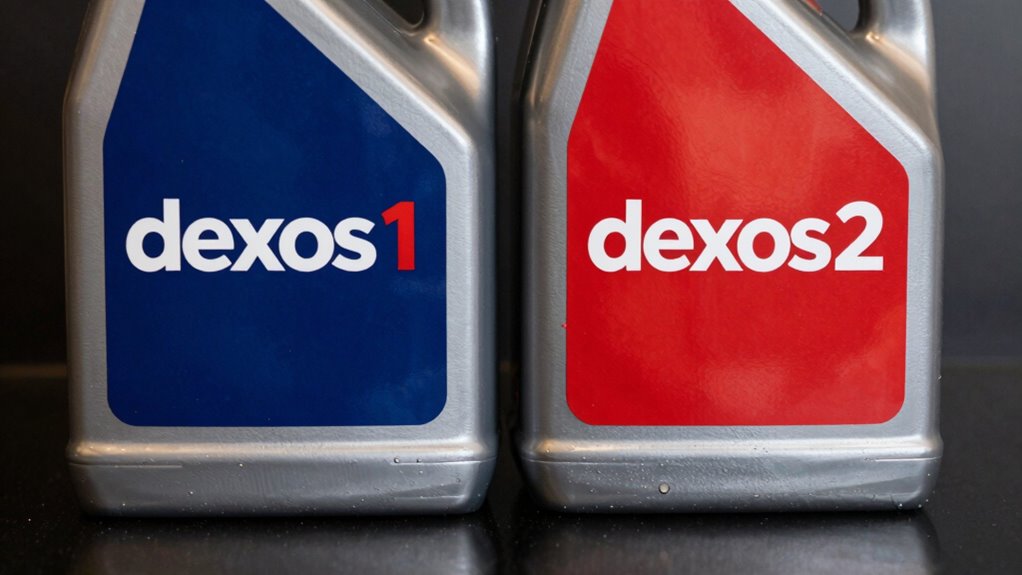
When choosing engine oil for your vehicle, understanding the differences between GM’s dexos1 and dexos2 specifications can help you make an informed decision. These designations aren’t just labels—they define specific standards for engine oil quality, performance, and compatibility. If you want your engine to run smoothly and last longer, it’s vital to select the right type based on engine oil compatibility and your vehicle manufacturer’s recommendations. Mixing dexos1 and dexos2 oils isn’t advisable because they are formulated to meet different criteria, and combining them can compromise engine protection and performance.
Dexos1 is primarily designed for gasoline engines, including those in passenger cars and light trucks. It’s optimized for engines that require a higher level of fuel efficiency and emissions control. If your vehicle’s owner’s manual specifies dexos1, you should stick to this standard to guarantee optimal lubrication and engine health. On the other hand, dexos2 is tailored more toward diesel engines and some gasoline engines that demand a different set of performance standards. It’s often recommended for diesel-powered vehicles or those running in demanding conditions. Using dexos2 in a gasoline engine that specifies dexos1 might lead to issues like inadequate engine protection or accelerated wear, especially if the engine manufacturer has strict specifications.
Knowing engine oil compatibility is essential because not all oils are interchangeable. GM’s dexos standards are designed to ensure that oils meet specific performance criteria, such as viscosity, additive package, and oxidation stability. When you ignore these specifications and mix different types, you risk reducing the oil’s effectiveness, which can lead to engine deposits, increased wear, or even damage. Always consult your vehicle manufacturer’s recommendations before choosing an oil, and follow their guidelines closely. If your vehicle’s manual states dexos1, don’t switch to dexos2 without confirming it meets the same standards; the reverse is equally true.
In essence, selecting the correct dexos standard isn’t just about compliance—it’s about protecting your engine and ensuring it performs at its best. Stick to the recommended oil type, and avoid mixing dexos1 and dexos2, as doing so can compromise engine oil performance and longevity. Your vehicle was designed for specific standards, and adhering to those ensures you get the most out of your engine’s life and efficiency.
Top picks for "dexos1 dexos2"
Open Amazon search results for this keyword.
As an affiliate, we earn on qualifying purchases.
Frequently Asked Questions
Can I Use dexos1 Oils in Engines That Require dexos2?
You shouldn’t use dexos1 oils in engines that require dexos2 because of oil compatibility issues. Manufacturer specifications are essential; using the wrong oil can lead to engine problems or void warranties. Always check your vehicle’s manual to confirm the correct oil type. While dexos2 oils are more versatile, sticking to the recommended oil guarantees peak performance and protects your engine from potential damage.
Are dexos1 and dexos2 Oils Compatible With Diesel Engines?
Think of dexos1 and dexos2 oils as keys to different doors. While dexos2 oils often suit diesel engines with specific requirements, not all dexos1 oils are compatible. You need to check your engine’s requirements carefully. Diesel compatibility depends on oil features like detergency and additive package. Always verify if your engine needs dexos2 for diesel compatibility, ensuring you use the right key for superior performance and protection.
How Often Should I Change Oil When Using dexos2?
You should change your oil every 5,000 to 7,500 miles or roughly every 6 months when using dexos2, but check your vehicle’s maintenance schedule for specific recommendations. Regular oil changes help maintain engine performance and longevity. Keep an eye on your oil level and quality, and follow the manufacturer’s suggested oil change interval to guarantee maximum protection, especially if you drive under severe conditions.
Do dexos1 and dexos2 Oils Have Different Shelf Lives?
You’ll be pleased to know that dexos1 and dexos2 oils do have different shelf lives, which affects their shelf longevity. While both are formulated for peak performance, oil degradation can occur over time, especially if stored improperly. Generally, dexos1 may last a bit longer if stored in a cool, dark place. To guarantee peak performance, check the expiration date and avoid using oils that have been sitting too long.
Are There Specific Vehicles That Strictly Require dexos2 Oil?
You should use dexos2 oil if your vehicle’s manufacturer specifies it for ideal performance and compliance with oil certification standards. Many European vehicles, including Opel and Saab, require dexos2 for vehicle compatibility, ensuring proper engine lubrication and protection. Check your owner’s manual; if it calls for dexos2, don’t substitute with dexos1, as using the correct oil meets manufacturer standards and maintains your engine’s health.
Conclusion
Don’t forget, differentiating between GM dexos1 and dexos2 is essential for vehicle vitality. Mixing mismatched oils might seem minor, but it could cause costly complications. By paying proper attention and choosing the correct oil, you guarantee engine efficiency and endurance. Remember, small specifics safeguard your car’s health. So, stay savvy, select carefully, and steer clear of serious surprises. Simplify your service, safeguard your system, and keep running smoothly—because proper product pairing prevents problems before they start.