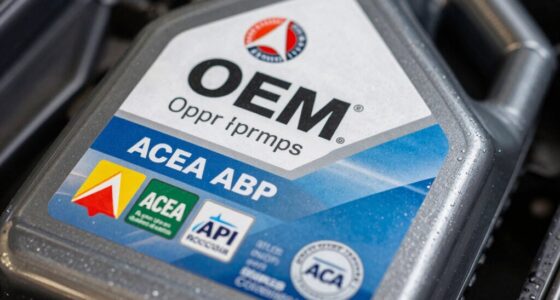

When approvals require specific viscosity ranges, they guarantee lubricants perform reliably in different conditions. Viscosity affects how well an oil flows, starts engines, and protects parts from wear. Using the right range prevents problems like leaks, undue wear, or energy waste. Standards set these limits based on extensive testing to match equipment needs. Continuing here will help you understand how these standards keep machinery safe and efficient under various circumstances.
Key Takeaways
- To ensure lubricants perform reliably under specific operating temperatures and conditions.
- To prevent engine or machinery damage caused by inappropriate flow characteristics.
- To meet safety, performance, and compatibility standards set by regulatory and industry organizations.
- To optimize fuel efficiency and reduce energy consumption across different applications.
- To maintain proper lubrication film strength, minimizing wear and preventing system failures.

Have you ever wondered how approvals influence the selection of lubricants for different applications? When choosing a lubricant, approval standards play a vital role in guaranteeing safety, performance, and compatibility. One key factor these standards often specify is the viscosity range, which directly impacts how well a lubricant performs in a given environment. This is where viscosity measurement becomes essential. By accurately measuring viscosity, manufacturers and users can verify that a lubricant meets the required standards for a particular approval. Approvals from organizations like the API, ACEA, or OEMs set specific viscosity ranges because they recognize that certain applications demand precise flow characteristics to function correctly and prevent failures.
Viscosity determines how a lubricant flows at different temperatures, affecting everything from engine startup to long-term wear protection. For instance, in an engine, a lubricant with too high viscosity may cause sluggish startup and increased energy consumption, while one with too low viscosity can fail to provide adequate film strength to prevent metal-to-metal contact. Approval standards specify the acceptable viscosity range to guarantee that lubricants will perform reliably under operational conditions. These standards are based on extensive testing, which includes viscosity measurement at various temperatures, to verify that the lubricant maintains its properties throughout its service life.
Different applications require specific viscosity ranges because of the unique stresses and environments they face. Heavy machinery, for example, may need a thicker, more viscous oil to protect parts under high loads, while precision equipment may require a thinner lubricant for smooth operation. Approval bodies recognize these needs and establish viscosity limits that guarantee superior performance and equipment longevity. When a lubricant meets these standards, it assures users that it has undergone rigorous testing and is suitable for its intended purpose.
Furthermore, adhering to approval standards ensures compatibility with seals, filters, and other system components. Using a lubricant outside the specified viscosity range might lead to leaks, increased wear, or even system failure. That’s why manufacturers and engineers rely heavily on viscosity measurement during the formulation process to meet these strict requirements. It’s not just about meeting a number; it’s about guaranteeing that the lubricant will perform consistently and safely under real-world conditions.

MOLUCKFU Engine Oil Comparator Tool and Transmission Oil Viscosity Tester Acrylic Stand for Accurate Car Maintenance and Quality Testing
Versatile functionality: not only compares engine oil but also tests the viscosity of transmission oil, providing comprehensive oil…
As an affiliate, we earn on qualifying purchases.
As an affiliate, we earn on qualifying purchases.
Frequently Asked Questions
How Do Viscosity Ranges Affect Product Shelf Life?
Viscosity ranges impact your product’s shelf life by influencing its stability and performance over time. Maintaining the correct viscosity guarantees your product remains consistent, preventing separation or degradation that could compromise quality. It also helps you meet regulatory compliance, as authorities often specify viscosity limits to guarantee safety and efficacy. By controlling viscosity, you extend shelf life, enhance product stability, and stay aligned with industry standards.
Can Viscosity Adjustments Improve Approval Success Rates?
Yes, adjusting viscosity consistency can improve approval success rates by offering greater approval flexibility. When you fine-tune viscosity levels, you make your product more adaptable to various regulatory standards and application needs. This proactive approach shows regulators that you’re committed to safety and performance, increasing the likelihood of approval. Maintaining ideal viscosity helps guarantee your product meets specific requirements, streamlining the approval process and boosting your chances of success.
Are There Industry-Specific Viscosity Standards for Approvals?
Yes, industry standards often set viscosity thresholds for approvals. You should be aware of these specific viscosity ranges because they vary across sectors like pharmaceuticals, lubricants, and food products. Meeting these viscosity standards guarantees your product complies with regulations and passes quality checks. By adhering to industry-specific viscosity thresholds, you improve your chances of approval and maintain consistency, safety, and effectiveness in your product’s performance.
How Is Viscosity Measured Accurately Across Different Products?
You measure viscosity accurately across different products by using specialized instruments like viscometers or rheometers, which provide precise readings. Remarkably, over 85% of manufacturers rely on automated viscosity measurement tools to ensure consistent product quality. These methods help you monitor product consistency, regardless of whether you’re testing thick oils or thin liquids. Proper calibration and adapting measurement techniques to each product type guarantee reliable results every time.
What Are the Consequences of Incorrect Viscosity for Approvals?
If you don’t meet the approval criteria due to incorrect viscosity, your product risks rejection or delays. Viscosity testing ensures your product aligns with regulatory standards, preventing issues during approval. Failing to maintain proper viscosity can compromise product quality, safety, and performance, leading to costly rework or recalls. Accurate viscosity measurements are essential to meet approval standards, guaranteeing your product gets approved smoothly and maintains consumer trust.

Southern Industrial Replacement for Parker High Viscosity Silicone Lubricant, General Purpose and High Pressure Pneumatic, Translucent (Super O-lube), 2oz Tube/PN: 884-2
Heat resistance – up to 204C (400F)
As an affiliate, we earn on qualifying purchases.
As an affiliate, we earn on qualifying purchases.
Conclusion
So, it’s no surprise that approvals often hinge on specific viscosity ranges. Sometimes, it feels like a coincidence—like the perfect viscosity aligns just right, ensuring safety and efficiency. When everything falls into place, it’s as if the universe itself is guiding the process. By understanding these requirements, you’re not just meeting standards; you’re embracing a harmony that keeps everything running smoothly. After all, the right viscosity might just be the key to uncovering success.

SPX Power Team 9637 Hydraulic Standard Oil, 1 gal
For dependable performance of all your hydraulic pumps and cylinders
As an affiliate, we earn on qualifying purchases.
As an affiliate, we earn on qualifying purchases.

CLIsyntec Air Tool Lubricant – Premium Industrial Pneumatic Tool Oil (64oz.)
Lubricates and Protects Your Air Tools
As an affiliate, we earn on qualifying purchases.
As an affiliate, we earn on qualifying purchases.