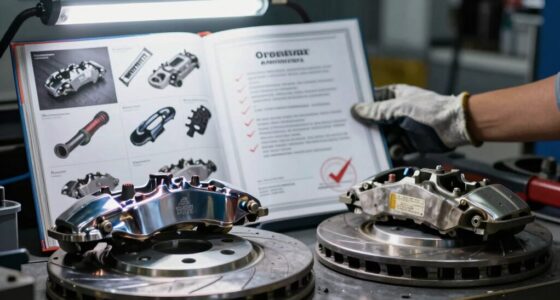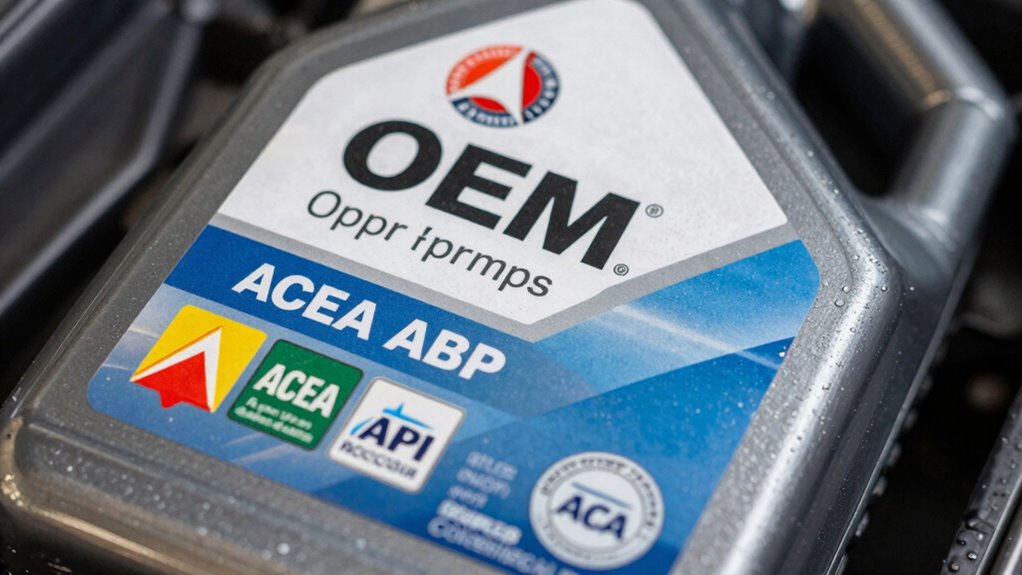
OEM approvals set the specific testing and performance criteria that vehicle manufacturers require for their engines, ensuring ideal compatibility and durability. In contrast, ACEA and API standards establish industry-wide minimum benchmarks for safety, emissions, and reliability, often adding extra tests for environmental impact and longevity. Fundamentally, OEM approvals are tailored to each brand’s needs, while ACEA and API provide broad safety and quality standards. Keep exploring to see how these standards can impact your choices.
Key Takeaways
- ACEA and API standards establish baseline minimum quality, safety, and environmental criteria for motor oils.
- OEM approvals set additional, specific performance and compatibility requirements tailored to individual vehicle manufacturers.
- ACEA/API standards ensure broad industry compliance, while OEM approvals guarantee optimal performance for particular vehicle models.
- OEM approvals add “extra” testing and certification beyond industry minimums to meet manufacturer-specific standards.
- Both standards serve different purposes: ACEA/API define minimums, OEM approvals provide tailored enhancements.
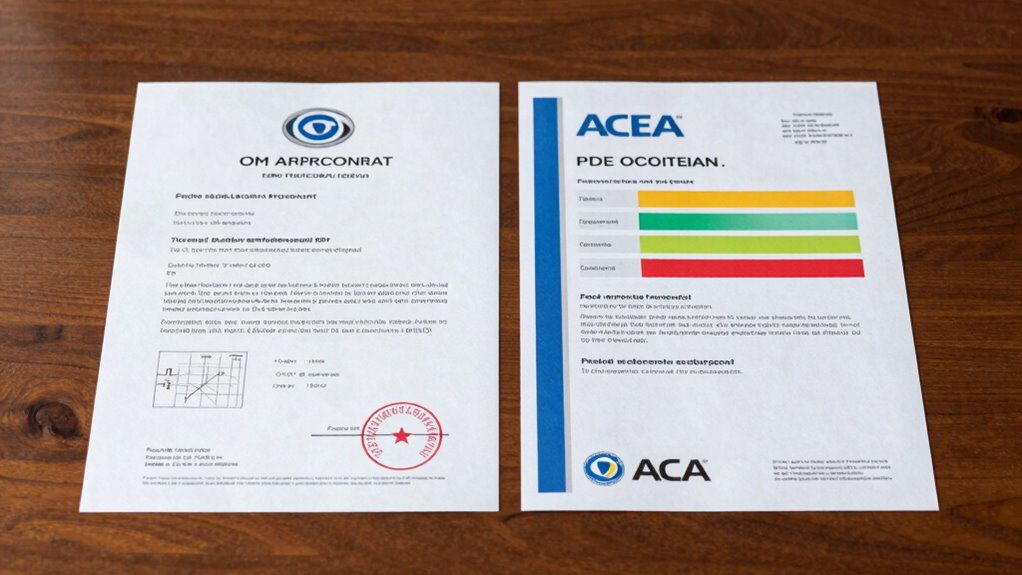
When choosing motor oils, understanding the differences between OEM approvals and ACEA/API standards can be confusing. You might wonder what each certification really guarantees and how they affect your vehicle’s performance. Essentially, these standards serve different purposes but are both essential when selecting the right oil. OEM approvals are specific to individual vehicle manufacturers, focusing on engine compatibility and ensuring the oil meets their precise requirements. If you own a particular brand of car, you’ll want to look for oils that carry the OEM approval for that make and model to guarantee ideal performance. These approvals often involve rigorous testing to confirm the oil works seamlessly with the engine’s design, protecting critical components and maintaining efficiency. In contrast, ACEA (European Automobile Manufacturers Association) and API (American Petroleum Institute) standards are more broadly applicable and set the minimum criteria for motor oils across the industry. They also incorporate industry safety and environmental standards**, ensuring oils meet regulatory requirements globally. ACEA and API standards primarily focus on environmental standards and overall oil performance. They establish benchmarks for things like fuel economy, emissions, sludge prevention, and engine wear. These standards are designed to ensure that oils meet a baseline of quality, durability, and environmental friendliness, regardless of the vehicle’s make. When an oil meets ACEA or API standards, you can be confident it adheres to industry-wide safety and environmental regulations**, which are especially important given increasingly strict emissions laws. These standards don’t necessarily guarantee perfect compatibility with your specific engine but do ensure that the oil provides a solid minimum level of protection and environmental compliance.
The key difference lies in who sets the bar and what they emphasize. OEM approvals are tailored, often more rigorous, and focus on engine compatibility—making sure the oil suits the unique needs of that vehicle’s design. They’ll often include tests for long-term durability and specific performance metrics. ACEA and API standards, on the other hand, set the minimum standards for quality and environmental impact that any oil must meet to be considered safe and reliable industry-wide. Oils meeting these standards are widely accepted, but they might not be optimized for every engine type, especially high-performance or specialized engines.

ACDelco dexosD SAE 0W-20 Diesel Oil & PF66A Filter Kit for 3.0L Duramax
- Bundle Includes: 7 quarts oil and 1 filter
- Designed for 3.0L Duramax: Engineered for GM 3.0L diesel engines
- DEXOSD Approved: Meets GM dexosD standards for diesel
As an affiliate, we earn on qualifying purchases.
As an affiliate, we earn on qualifying purchases.
Frequently Asked Questions
How Do OEM Approvals Impact Overall Engine Performance?
OEM approvals boost your engine’s performance by ensuring ideal engine longevity and fuel efficiency. When you use oils with these approvals, you help reduce wear and tear, extending engine life. Additionally, they maintain proper lubrication, which improves fuel efficiency and overall reliability. By choosing approved lubricants, you protect your engine and keep it running smoothly longer, saving you money and preventing costly repairs down the road.
Are ACEA and API Standards Compatible With OEM Requirements?
Surprisingly, ACEA and API standards are often quite compatible with OEM requirements, especially for synthetic oils with advanced additive packages. While OEMs set high benchmarks, these standards guarantee oils meet basic performance. You’ll find that many synthetic oils align with both ACEA/API and OEM specs, giving you peace of mind. Just remember, always check whether your engine prefers the extras ACEA/API might add beyond minimum standards.
Can a Lubricant Meet Acea/Api Standards but Lack OEM Approval?
Yes, a lubricant can meet ACEA/API standards but lack OEM approval. Synthetic blends with robust additive packages might pass these standards but still not satisfy specific OEM requirements. OEM approvals often demand additional testing and customization to guarantee compatibility with particular engines. Always check if the lubricant’s formulation aligns with your vehicle’s specifications, as meeting ACEA/API standards alone doesn’t guarantee OEM approval or ideal performance.
How Often Do OEM Approval Criteria Change?
You should know that OEM approval criteria tend to change gradually, influenced by market trends and advancements in engine technology. The certification process is rigorous and involves regular updates to guarantee compatibility and performance. As a result, you might find that approvals are reviewed periodically, often every few years, to reflect innovations and new standards, so staying informed helps you choose lubricants that meet the latest OEM requirements.
Do OEM Approvals Include Testing for Newer Electric Vehicle Technologies?
Yes, OEM approvals now include electric vehicle testing, making the approval process even more advanced. You’ll find that these standards cover everything from battery safety to motor efficiency, ensuring your EV performs at peak levels. Manufacturers push the limits by adding extras like fast-charging compatibility and thermal management testing. This evolution guarantees your electric vehicle meets the highest criteria, keeping you safe and ahead in the fast-changing world of EV technology.

Valvoline European Vehicle Full Synthetic SAE 5W-40 Motor Oil 5 QT
- Engine Protection: Protects against wear, friction, heat, deposits
- High-Quality Additives: Contains advanced anti-wear additives
- Deposit Prevention: Includes antioxidants and detergents for cleanliness
As an affiliate, we earn on qualifying purchases.
As an affiliate, we earn on qualifying purchases.
Conclusion
Understanding the difference between OEM approvals and ACEA/API standards is like steering a map—you need both to reach your destination safely. OEM approvals set the foundation, like the sturdy roots of a tree, while ACEA/API add extra branches of expertise. By knowing who sets the minimum and who adds the extras, you guarantee your vehicle’s health and performance. Think of it as building a house: solid basics with thoughtful enhancements make all the difference.

Mobil 1 Extended Performance High Mileage Full Synthetic Oil 5W-30, 5 Quart
- Suitable for High Mileage Engines: For engines over 75,000 miles
- Long Oil Change Interval: Up to 20,000 miles between changes
- Triple Action+ Formula: Enhances performance, protection, and cleanliness
As an affiliate, we earn on qualifying purchases.
As an affiliate, we earn on qualifying purchases.

API SN Plus Motor Oil 6 Gallon Bag In Box Single 5W-30 | 18010
- Oil Type: SAE 5W-30
- Container Size: 6 Gallon Bag In Box
- Packaging: Single unit
As an affiliate, we earn on qualifying purchases.
As an affiliate, we earn on qualifying purchases.