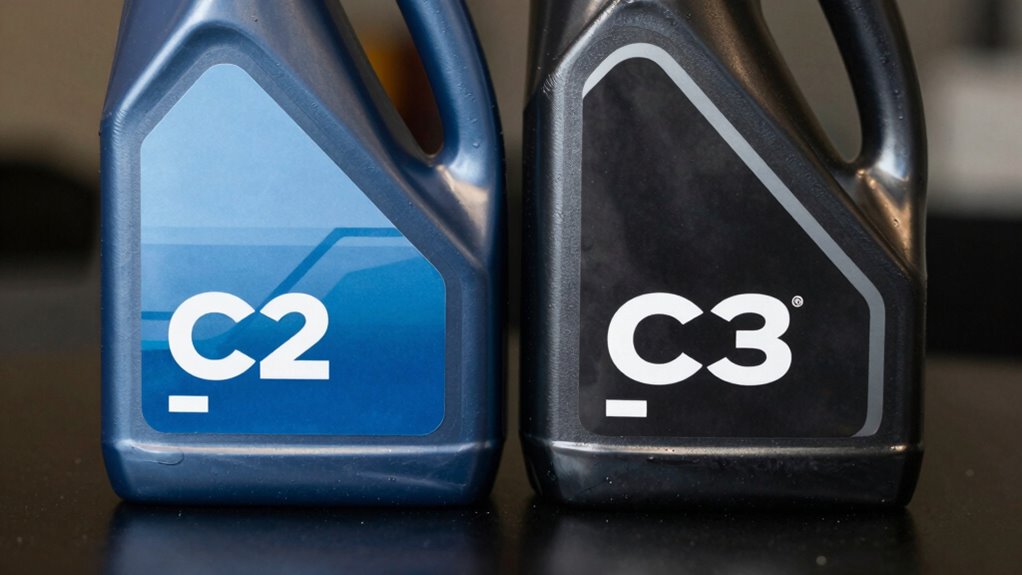

The one key number that often determines whether you should choose ACEA C2 or C3 oil is its viscosity grade. C2 oils typically have a lower viscosity, allowing for easier cold starts and better fuel economy, while C3 oils are thicker, offering improved wear protection at higher temperatures. Your choice depends on your engine’s requirements, but understanding this essential number helps you pick the right oil for maximum performance. Keep exploring to discover which fits your needs best.
Key Takeaways
- The main difference is viscosity: C2 oils are lower viscosity, C3 oils are higher viscosity.
- Viscosity impacts cold start lubrication and high-temperature engine protection.
- Always follow manufacturer recommendations to choose the appropriate oil for your engine.
- C2 oils prioritize fuel economy and emissions; C3 oils offer enhanced wear protection.
- The deciding factor is often the engine’s specific viscosity requirement, typically indicated by a single number like 0W-20 or 5W-30.
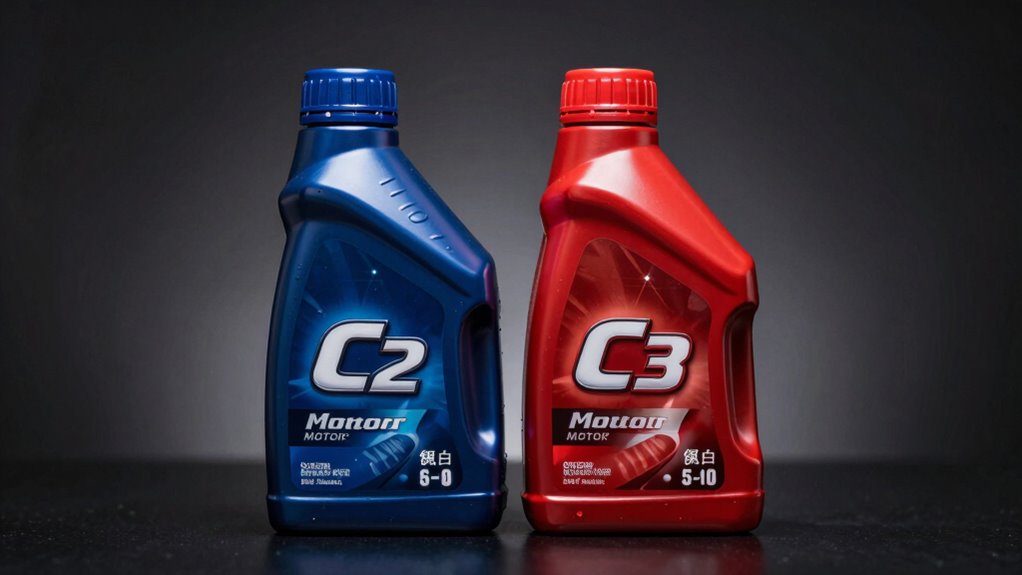
Are you unsure about whether to choose ACEA C2 or C3 motor oil for your vehicle? The decision often hinges on understanding the key differences between these two specifications, especially when it comes to engine oil viscosity and what your vehicle manufacturer recommends. Both ACEA C2 and C3 oils are designed for high-performance, low-emission engines, but subtle distinctions can impact your vehicle’s health and efficiency.
Engine oil viscosity plays a pivotal role in this choice. Viscosity refers to how thick or thin the oil is at different temperatures, influencing how well it lubricates engine parts. ACEA C2 oils generally have a lower viscosity compared to C3 oils, meaning they flow more easily at colder temperatures, providing quicker lubrication during startup. This can be especially beneficial if you live in a colder climate or drive short distances where cold starts are frequent. Conversely, ACEA C3 oils tend to have higher viscosity levels, offering a thicker film of lubrication at operating temperature, which can provide better wear protection for engines under higher loads or hotter conditions.
ACEA C2 oils have lower viscosity for colder starts; C3 oils are thicker for high-temperature protection.
However, the most important factor remains the vehicle manufacturer’s recommendations. Manufacturers specify the ideal engine oil viscosity and type for their engines to ensure maximum performance and longevity. Ignoring these guidelines and using a lower viscosity oil than recommended might lead to insufficient lubrication, increased engine wear, and even damage over time. On the other hand, using an oil with too high a viscosity can cause increased resistance, reduced fuel efficiency, and sluggish engine response. Always check your vehicle’s owner’s manual or consult the manufacturer to confirm whether ACEA C2 or C3 oils are suitable for your specific model.
While ACEA C2 oils are formulated to meet stringent emissions standards with a focus on fuel economy, C3 oils are often engineered for engines that require enhanced wear protection and deposit control, especially in turbocharged or high-performance engines. Your choice should align with your driving habits, engine design, and manufacturer’s specifications. If your vehicle is designed to run on ACEA C2, switching to C3 might offer more robust protection but could also affect fuel economy. Conversely, if your manufacturer recommends C3, sticking with it ensures compliance with warranty requirements and engine longevity. Additionally, understanding engine oil viscosity and its impact on engine performance can help you make more informed decisions tailored to your driving needs.

Lubeworks Oil Control Meter Digital 1-35lpm / 1-10gpm Heavy Duty 3V Batter Powered for Motor, Synthetic Hydraulic, Gear Oil, Transmission Fluid in Liter, Gallon, Pint and Quart (Meter Only)
METER SPECS - This Lubeworks Oil Control Meter has a Fluid Measuring Range of 1-GPM, at a precision...
As an affiliate, we earn on qualifying purchases.
Frequently Asked Questions
Can ACEA C2 and C3 Oils Be Mixed Safely?
You can blend ACEA C2 and C3 oils, but be cautious about oil compatibility and additive differences. Mixing oils may dilute protective qualities or alter performance, especially if additive packages differ considerably. To avoid potential issues, check manufacturer recommendations or opt for a single, high-quality oil. If you must mix, do so sparingly and ensure both oils meet your vehicle’s specifications for maximum protection.
Do C2 and C3 Oils Affect Fuel Economy Differently?
You’ll notice that C2 oils generally improve fuel economy more than C3 oils because they’re often synthetic blends designed for efficiency. Mineral oils tend to offer less fuel savings, regardless of C2 or C3 classification. C2 oils focus on low friction, enhancing MPG, while C3 oils prioritize engine protection, which can sometimes slightly reduce fuel economy. So, choose based on your priorities—efficiency or engine longevity.
Are C2 and C3 Oils Suitable for Turbocharged Engines?
Think of your turbocharged engine as a delicate ballet performer. C2 and C3 oils, especially synthetic ones, are like finely tuned dancers. Both suit turbo engines well, but synthetic C3 oils often have a more robust additive package that offers superior protection under high stress. Mineral C2 oils may work, but synthetic C3 oils provide better thermal stability and cleaner operation, making them the ideal choice for turbocharged engines.
How Do C2 and C3 Oils Impact Long-Term Engine Health?
Using C2 and C3 oils positively impacts your engine’s longevity by providing superior additive effects that protect crucial components over time. These oils help reduce wear, deposit buildup, and maintain ideal engine performance, especially in turbocharged engines. Regular use ensures your engine stays cleaner and runs efficiently longer, ultimately extending its lifespan. Choosing the right oil based on your engine’s needs keeps it healthier and more reliable in the long run.
Is One Type More Environmentally Friendly Than the Other?
You’ll find that ACEA C2 oils tend to be more environmentally friendly, thanks to their lower viscosity and fuel economy benefits. They often contain eco-friendly additives and may carry green certifications, making them a better choice if you’re prioritizing sustainability. C3 oils, while also eco-conscious, typically focus on engine protection and long-term health. So, if eco-friendliness is your main goal, C2 oils usually have the edge.

Lincoln 877 Mechanical Fluid Dispense Meter with Odometer Style Totalizer for Petroleum, Synthetic-Based Oil, ATF, Gear Lube and Antifreeze, 16 Quart Dial, 4 GPM, 10" Flex Hose, in-line Swivel
FLUID DISPENSING WITH TOTALIZER FUNCTION: The Lincoln 877 features an odometer-style totalizer that accurately tracks fluid quantities, ideal...
As an affiliate, we earn on qualifying purchases.
Conclusion
At the end of the day, choosing between ACEA C2 and C3 is like selecting the right key for a lock. The one number you focus on becomes the key that unlocks your vehicle’s potential, guiding you through a door of efficiency and protection. Trust that small, decisive detail—your perfect key—will open the path to smoother rides and greater peace of mind, turning complex choices into simple, symbolic acts of confidence.
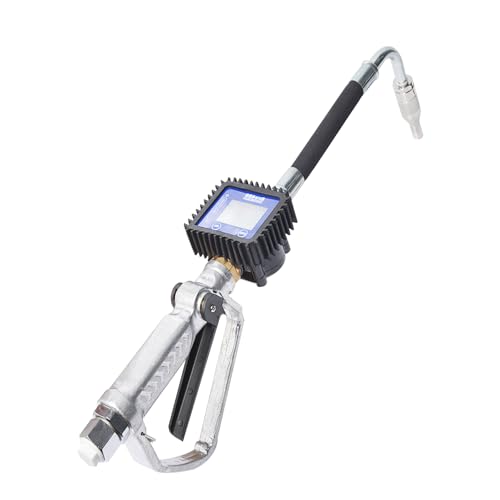
JAHEZYAN Digital Oil Control Valve Meter Dispenser, with 1/2" NPT Inlet, Digital Oil Control Valve Meter Nozzle Gun, with LCD Display, Air Operated Oil Control Valve Gun, for engine oil etc
【LCD Display】The Digital Oil Control Valve Meter Nozzle features a 5-digit LCD display that shows both the single...
As an affiliate, we earn on qualifying purchases.
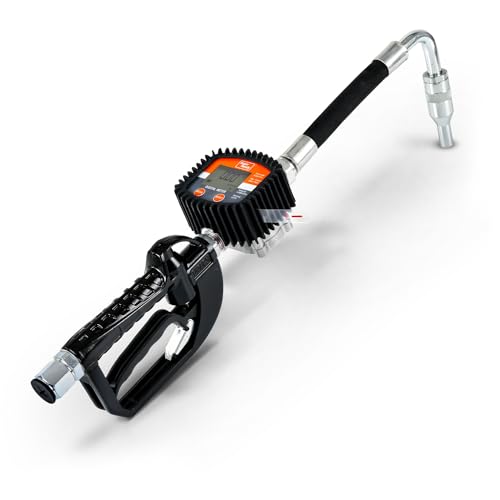
SuperHandy Digital Oil Control Valve Flow Meter Dispenser Nozzle 10 GPM / 35 LPM Heavy Duty Air Operated Pneumatic 1/2" Inch NPT Inlet Pressure Range 70-725 Psi Flexible Spout
DIGITAL OIL CONTROL VALVE - This Commercial capable Digital Oil Control Valve is designed for all DIY or...
As an affiliate, we earn on qualifying purchases.