
TL;DR

Get business pricing on garage and car supplies
- Business-only prices and quantity discounts
- Tax-exempt purchasing
- Multiple users, one account, clear invoices
Many companies are investing heavily in solid-state battery technology due to its potential for higher energy density and safety. While several firms report progress, widespread commercial deployment remains uncertain. This shift could significantly impact electric vehicle performance and energy storage.
Several major automakers and battery manufacturers are actively advancing solid-state battery technology, aiming to replace traditional lithium-ion batteries in electric vehicles and energy storage systems. While no fully commercialized product is yet available, early prototypes and pilot projects indicate significant potential for improved safety, energy density, and charging speed, making this a key focus in the transition to cleaner energy.
Major companies such as Toyota, Samsung, and QuantumScape have announced ongoing research and pilot programs focused on solid-state batteries. These batteries use a solid electrolyte instead of the liquid or gel electrolytes found in conventional lithium-ion batteries, which can reduce flammability and increase durability.
According to industry reports, some prototypes have demonstrated energy densities up to 50% higher than current lithium-ion cells, potentially enabling longer-range electric vehicles and more efficient energy storage solutions. Additionally, solid-state batteries are expected to support faster charging times, which could address one of the main barriers to EV adoption.
However, manufacturing challenges remain, including difficulties in scaling production, ensuring consistent quality, and reducing costs. No company has yet announced a definitive timeline for mass-market availability, though several expect to see commercial products within the next 1-2 years.
Implications of Solid-State Batteries for Electric Vehicles and Energy Storage
The push toward solid-state batteries signifies a potential breakthrough in electric vehicle range, safety, and charging speed. If commercialized successfully, this technology could accelerate EV adoption, reduce reliance on fossil fuels, and enhance grid-scale energy storage. It also represents a major shift in battery manufacturing, impacting supply chains and industry standards.
Nevertheless, the transition depends on overcoming current technical hurdles and achieving cost competitiveness with existing lithium-ion batteries, which remain dominant in the market.
As an affiliate, we earn on qualifying purchases.
Recent Developments and Industry Commitments to Solid-State Tech
Over the past few years, several automakers have announced significant investments in solid-state battery research. Toyota, a pioneer in the field, has stated plans to introduce solid-state batteries in its electric vehicles by the mid-2020s, though specific timelines remain unconfirmed. Samsung and LG Chem have also reported progress in developing prototypes with promising performance metrics.
In addition, startups like QuantumScape have attracted substantial funding, claiming to have made breakthroughs in manufacturing processes. These developments follow a broader industry trend of seeking safer, higher-capacity batteries amid rising EV sales and energy storage needs.
Despite these advances, experts caution that large-scale production and cost reduction are still significant obstacles, and widespread adoption may take several more years.
“We are optimistic about the potential of solid-state batteries, but scaling up production remains our biggest challenge.”
— Dr. Hiroshi Yamamoto, Toyota Battery Research Lead
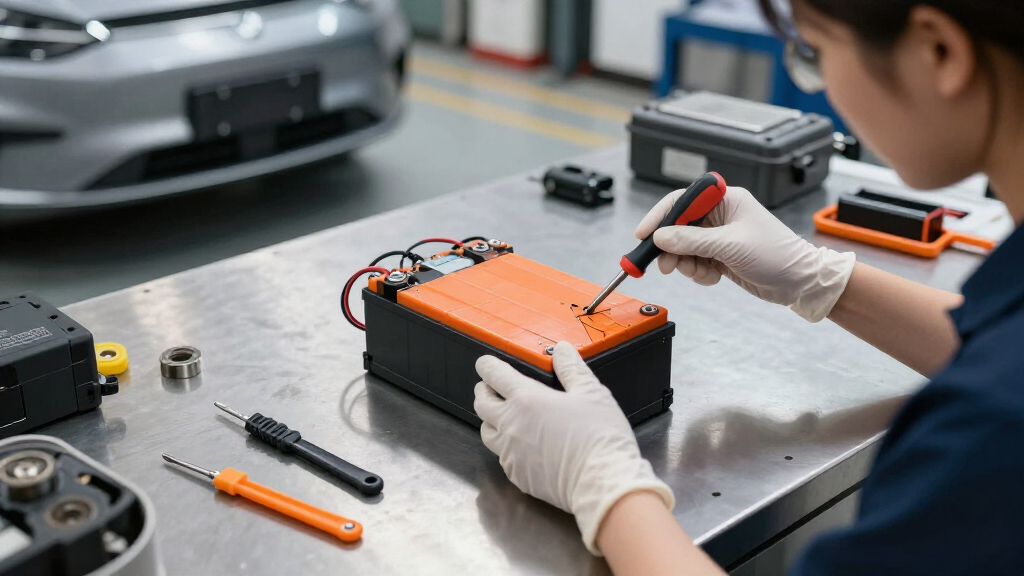
electric vehicle solid-state battery
As an affiliate, we earn on qualifying purchases.
As an affiliate, we earn on qualifying purchases.
Unresolved Technical and Commercial Challenges
While prototypes demonstrate promising performance, it is not yet clear when solid-state batteries will be produced at scale and at a competitive cost. Manufacturing processes need further refinement, and issues such as material stability and long-term durability remain unresolved. Additionally, regulatory and safety standards for new battery chemistries are still being developed, adding to the uncertainty.
As an affiliate, we earn on qualifying purchases.
Expected Milestones in Commercialization Timeline
Over the next 1-2 years, several companies plan to announce pilot production lines and initial commercial models featuring solid-state batteries. Industry analysts expect that breakthroughs in manufacturing processes and cost reduction could accelerate market entry, but widespread adoption might still take several years. Continued investment and collaboration between automakers, battery producers, and researchers will be critical in overcoming remaining hurdles.
As an affiliate, we earn on qualifying purchases.
Key Questions
What are the main advantages of solid-state batteries?
They offer higher energy density, improved safety due to reduced flammability, and faster charging capabilities compared to traditional lithium-ion batteries.
When will solid-state batteries be available in consumer electric vehicles?
Most industry experts expect initial commercial applications within the next 1-2 years, but full-scale adoption might take several more years due to manufacturing challenges.
What are the main obstacles to mass production?
Technical issues such as material stability, manufacturing scalability, and cost reduction are the primary hurdles remaining before widespread deployment.
Will solid-state batteries replace lithium-ion batteries entirely?
While they are expected to complement and eventually replace lithium-ion batteries in many applications, the transition will depend on overcoming current technical and economic challenges.
How could solid-state batteries impact the environment?
They could reduce the environmental footprint of batteries by enabling longer-lasting, safer energy storage and potentially decreasing the need for frequent replacements, but their full environmental impact depends on manufacturing processes and material sourcing.
Source: hn
Fall Picks
fall essentials
As an affiliate, we earn on qualifying purchases.