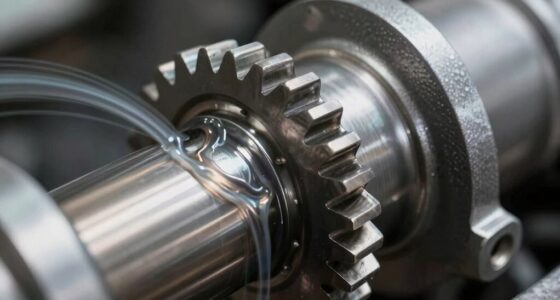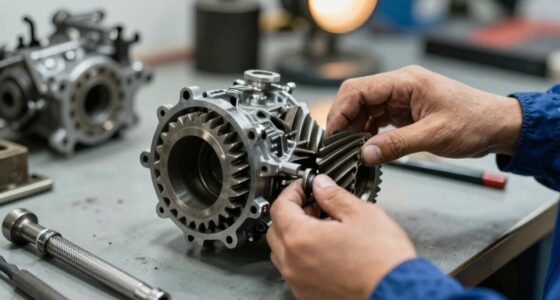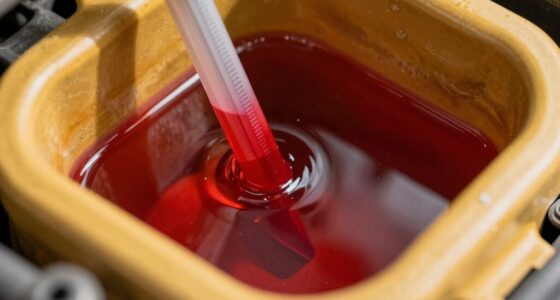

Friction in automatic transmission fluid is vital for clutch engagement and smooth gear changes, but aiming for maximum slipperiness isn’t always best. Too slippery, and the transmission might slip or overheat; too gripping, and it can cause excessive wear and harsh shifts. Balancing friction ensures reliable performance, better fuel efficiency, and longer-lasting components. Understanding how controlling friction, rather than just making fluid as slippery as possible, improves your transmission’s health and performance. Keep going to learn more about maintaining that balance.
Key Takeaways
- Excessive slipperiness in ATF can cause insufficient clutch grip, leading to slipping, harsh shifts, and increased wear.
- Proper friction balance ensures smooth gear engagement without overheating or component damage.
- Overly slippery fluids reduce control, risking transmission failure and reducing vehicle safety.
- Achieving the right friction level optimizes transmission performance, not just maximizing slipperiness.
- Effective ATF formulation manages friction to balance slipping and gripping for durability and reliability.

Genuine Ford Fluid XL-3 Friction Modifier Additive – 4 oz.
For use on certain limited-slip differentials to reduce chatter and hypoid gear noise levels
As an affiliate, we earn on qualifying purchases.
As an affiliate, we earn on qualifying purchases.
What Is Friction in Automatic Transmission Fluids and Why Does It Matter?
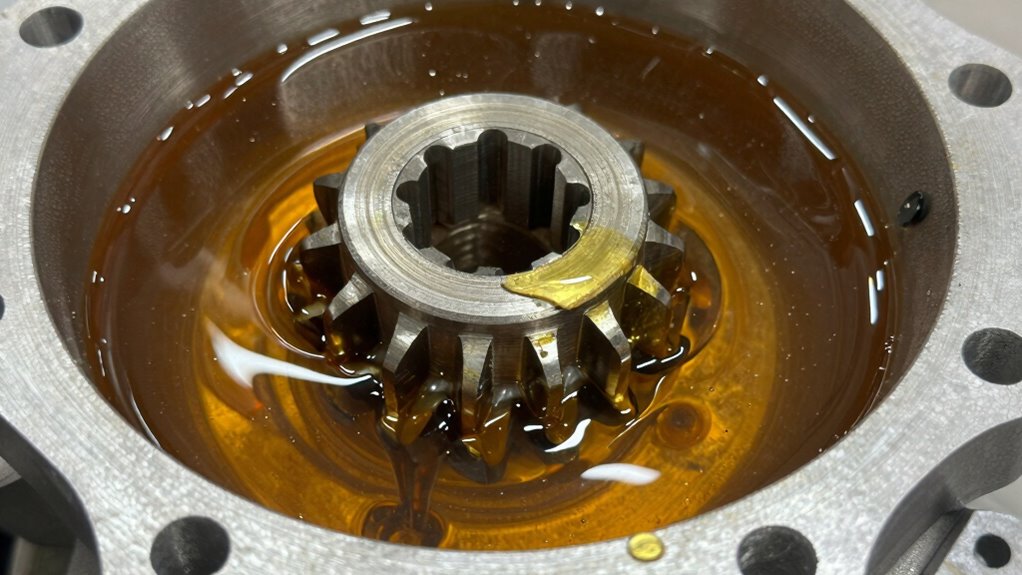
Friction in automatic transmission fluids (ATFs) plays a crucial role in your vehicle’s shifting performance and overall transmission health. It allows the clutch plates and bands to engage smoothly, transferring power effectively without slipping. If the friction is too low, your transmission may slip, causing harsh shifts or a loss of power transfer. Conversely, excessive friction can generate heat, leading to rapid wear and potential damage. The right level of friction ensures seamless gear changes, maintaining efficiency and longevity. ATFs are specially formulated to provide consistent friction properties, balancing slipping and gripping. This careful balance is essential for your transmission to operate smoothly, respond promptly, and avoid costly repairs. Proper friction management keeps your vehicle shifting reliably and performing at its best.

TRIAX DCT ATF – Full Synthetic Dual Clutch Automatic Transmission Fluid – OEM Grade – Compatible with Direct Shift Gearboxes and Dual Clutch Transmissions (1 Quart)
Superior Formulation: Full synthetic, PAO / Ester based formulation with extensive testing and performance data – far exceeding…
As an affiliate, we earn on qualifying purchases.
As an affiliate, we earn on qualifying purchases.
Why Controlled Friction Is Key to Smooth Shifting and Transmission Health
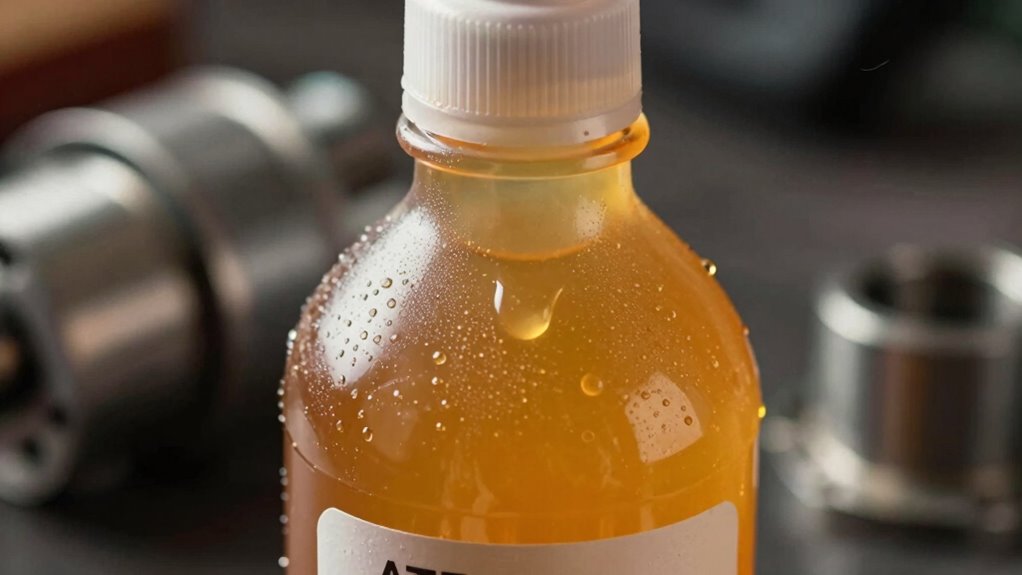
Controlled friction within your automatic transmission fluid is essential for guaranteeing smooth gear shifts and maintaining transmission health. When friction is just right, your transmission shifts seamlessly without jerks or hesitation. If friction is too high, gears may grind or slip, causing wear and tear over time. Conversely, if friction is too low, gears can slip or fail to engage properly, leading to rough shifts and potential damage. Maintaining the right level of friction helps your transmission components engage smoothly and stay properly lubricated. Proper requirements traceability ensures that all specifications for friction levels are met and maintained throughout the vehicle’s lifecycle. Additionally, proper control of friction levels is crucial for preventing overheating and reducing stress on transmission parts. Friction management techniques are vital for optimizing vehicle performance and longevity. Ultimately, controlled friction ensures your vehicle operates smoothly, efficiently, and reliably, preventing costly repairs down the road.
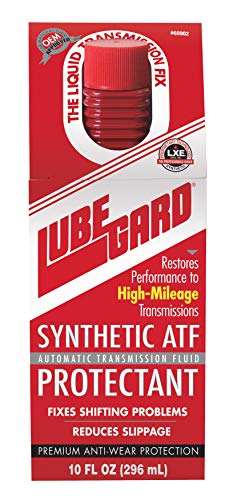
Lubegard 60902 Automatic Transmission Fluid Protectant, 10 oz
Fit type: Universal Fit
As an affiliate, we earn on qualifying purchases.
As an affiliate, we earn on qualifying purchases.
How Friction Modifiers in ATF Help Your Transmission Perform Better
Friction modifiers in automatic transmission fluid actively enhance your transmission’s performance by fine-tuning the friction levels between moving parts. They create the ideal balance, ensuring smooth gear shifts without slipping or grabbing too aggressively. These additives help the clutch plates engage properly, reducing wear and tear over time. By maintaining consistent friction, they improve torque transfer, making acceleration more responsive and preventing slipping that can cause overheating. Friction modifiers also contribute to fuel efficiency by allowing the transmission to operate smoothly at various speeds. Proper transmission maintenance ensures that these additives can function effectively and extend your transmission’s lifespan. Understanding the role of additives in transmission fluids helps consumers make informed choices about vehicle care. In short, these additives optimize the interaction between transmission components, helping your vehicle shift seamlessly while extending its lifespan. The effectiveness of these friction modifiers depends largely on the quality of the oil formulation and proper application. Additionally, advancements in formulation technology are continually improving how these additives perform under different driving conditions.

Valvoline MaxLife Multi-Vehicle ATF Full Synthetic Automatic Transmission Fluid 1 Gallon
For use in 95% of vehicles including most CVTs in operation with US registered light duty applications
As an affiliate, we earn on qualifying purchases.
As an affiliate, we earn on qualifying purchases.
Signs Your Transmission Fluid’s Friction Balance Might Be Off

If your transmission isn’t shifting smoothly or feels unusually sluggish, it could be a sign that the friction balance in your transmission fluid is off. When this balance is disrupted, your transmission may struggle to engage gears properly or respond as expected. Watch out for these signs:
- Delayed or rough gear shifts
- Unusual slipping or slipping sounds
- Overheating transmission temperatures
- Burning smell or dark, foul-smelling fluid
Maintaining proper friction balance is essential for optimal performance and longevity of your transmission. These symptoms indicate that the friction modifiers might be either too weak or too strong, affecting performance. Ignoring these signs can lead to increased wear, damage, or costly repairs. Regularly check your fluid’s condition and color to catch issues early and keep your transmission running smoothly. Additionally, understanding how contrast ratio impacts your transmission’s performance can help you recognize early signs of trouble that may require professional assessment. Proper fluid composition is crucial because it ensures the right friction properties, which help prevent premature wear. Ensuring the correct additive balance can also help maintain the ideal friction level and protect your transmission components from damage.
Choosing the Right ATF: How Friction Characteristics Impact Performance
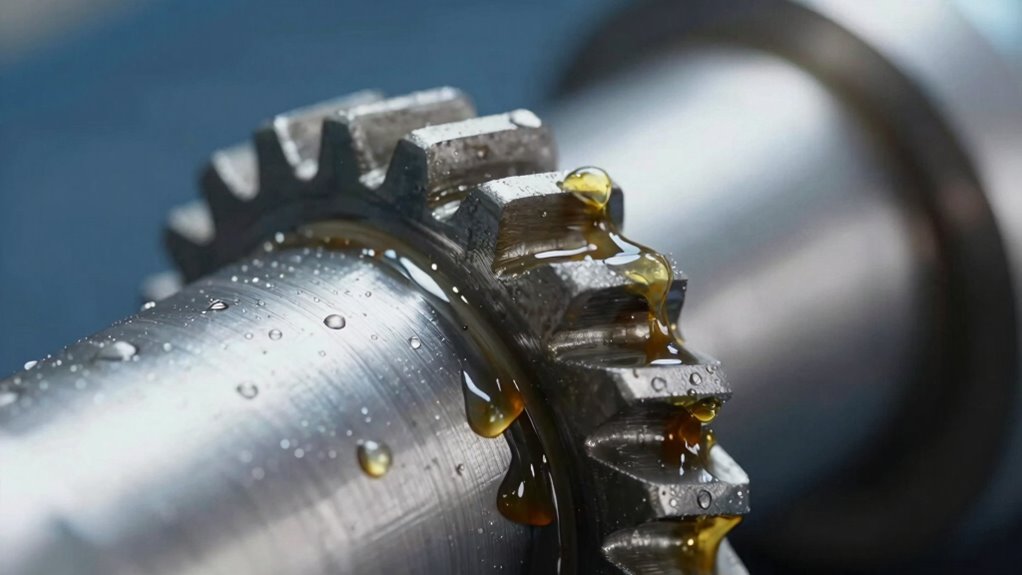
Choosing the right automatic transmission fluid (ATF) is essential because its friction characteristics directly influence how smoothly your transmission shifts and responds. If the fluid’s friction is too high, your transmission may shift harshly or hesitate, reducing comfort and efficiency. Conversely, if it’s too low, shifts can become sloppy or delayed, risking damage over time. Different transmissions require specific friction properties to operate *effectively*, affecting clutch engagement and slip control. Selecting an ATF with the proper friction balance ensures smooth gear changes, enhances fuel economy, and prolongs transmission life. Properly matching the fluid’s friction properties with your vehicle’s design is crucial for optimal performance and longevity. Pay attention to manufacturer recommendations and consider the specific demands of your vehicle’s transmission. Properly chosen fluid improves performance, preventing unnecessary wear caused by improper friction levels.
Is Slipperiness Always Good in Transmission Fluid? Myths and Facts
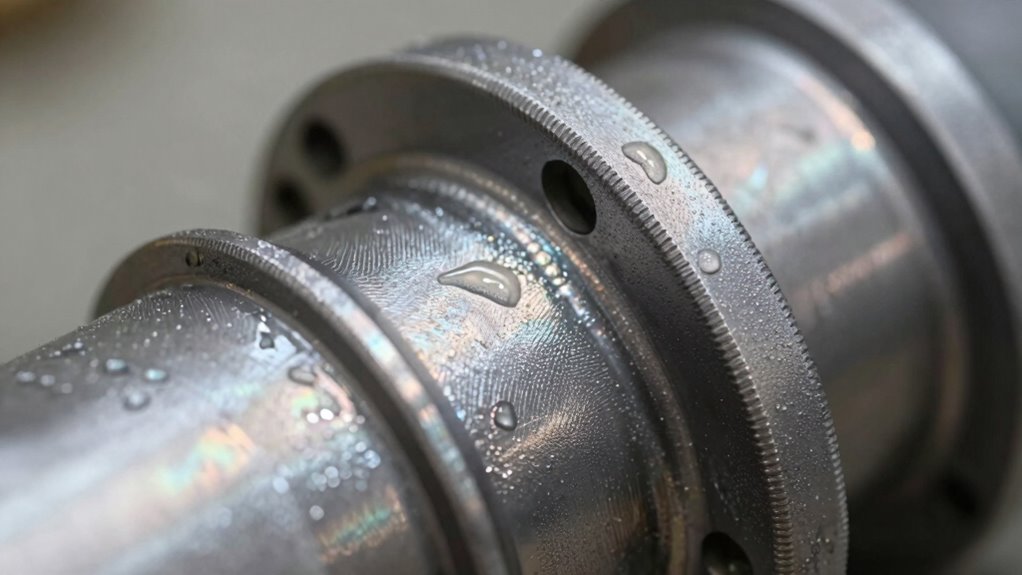
Many people assume that a slippery transmission fluid always means better performance, but that’s not necessarily true. While slipperiness reduces friction and improves shifting, too much slipperiness can cause slipping, overheating, and premature wear. Here are some key points to consider:
- Excess slipperiness can lead to reduced grip between components.
- It may cause slipping in clutch packs, decreasing efficiency.
- Too slick a fluid can impair torque transfer.
- Proper friction levels are essential for smooth, reliable operation.
Finding the right balance matters. Slipperiness isn’t always the goal; instead, you want ideal friction to ensure your transmission functions smoothly and lasts longer. Too slippery or not enough can both create problems—it’s all about moderation.
How Proper Friction Management Can Extend Your Transmission’s Life
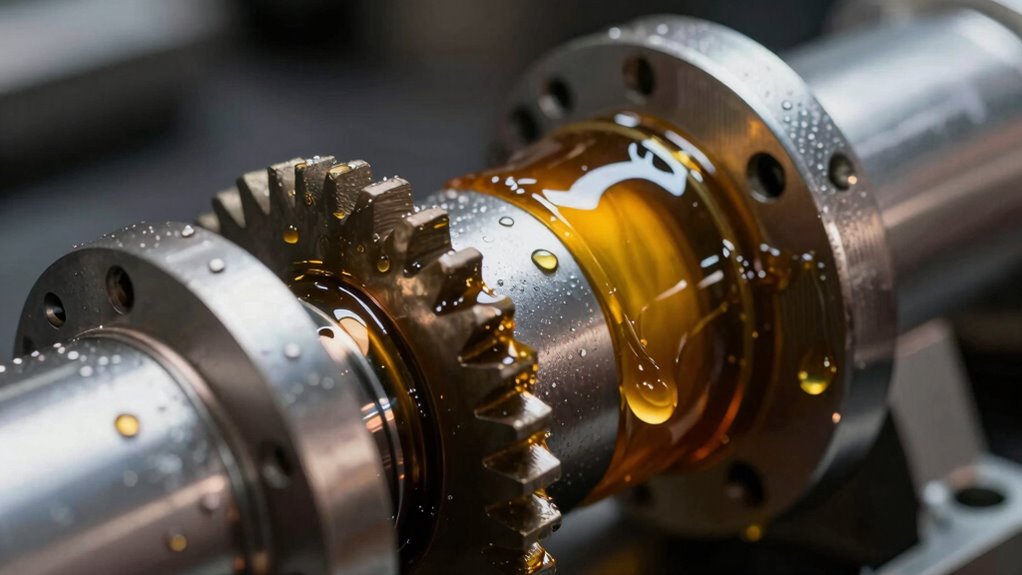
Maintaining the right level of friction in your transmission fluid is key to preventing premature wear and prolonging its lifespan. When friction is balanced, your transmission shifts smoothly, reducing stress on components and minimizing heat buildup. Proper friction management ensures that gears engage correctly without slipping or grabbing too harshly. Using the right type of ATF and changing it at recommended intervals helps maintain ideal friction properties. Additionally, avoiding contamination and ensuring proper fluid levels keep friction consistent. When friction is too low, components slip and wear faster; too high, and parts experience excessive heat and damage. Regularly monitoring fluid condition and quality can help detect issues early and maintain optimal performance. A friction coefficient that is properly maintained is essential for efficient operation. By paying attention to fluid condition and quality, you can keep your transmission running efficiently, reduce repair costs, and extend its operational life considerably.
Common Transmission Problems Caused by Friction Imbalances
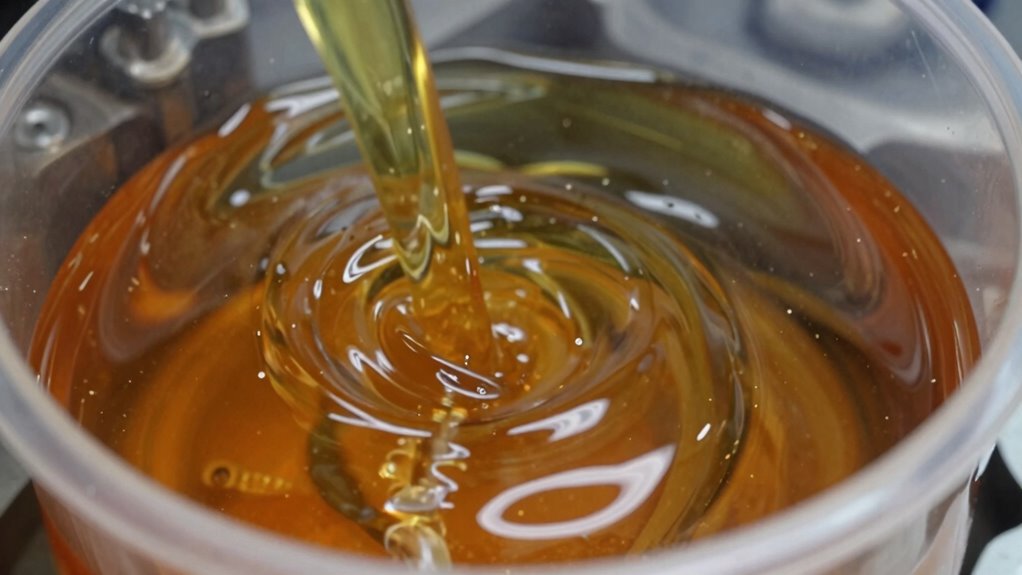
Friction imbalances in your transmission fluid can lead to a range of common problems that affect the vehicle’s performance and longevity. When friction isn’t properly managed, you might experience issues such as slipping, overheating, and uneven wear. These problems can cause costly repairs if left unaddressed. Here are some key issues caused by friction imbalances:
- Slipping gears – Your transmission may shift improperly or slip out of gear.
- Overheating – Excess friction generates heat, risking damage to internal components.
- Delayed shifts – Friction issues can cause sluggish or delayed gear engagement.
- Premature wear – Components wear out faster due to uneven or excessive friction.
Frequently Asked Questions
Can Using the Wrong ATF Cause Transmission Damage?
Yes, using the wrong ATF can cause transmission damage. When you don’t choose the proper fluid for your vehicle, it may not lubricate or protect internal parts effectively. This can lead to increased wear, overheating, or slipping, ultimately damaging your transmission. Always check your owner’s manual and select the recommended ATF type to guarantee your transmission operates smoothly and lasts longer.
How Does Temperature Affect Friction in Transmission Fluids?
Temperature substantially influences the friction in your transmission fluids. When it’s cold, the fluid thickens, reducing friction and causing sluggish shifts. As it heats up, the fluid thins, increasing friction and potentially leading to wear or overheating. You should monitor fluid temperature and guarantee it stays within the recommended range to maintain ideal friction levels, preventing damage and ensuring smooth transmission performance.
Are Synthetic ATFS Better at Managing Friction Than Conventional Ones?
Yes, synthetic ATFs usually manage friction better than conventional ones. They’re formulated with advanced additives that provide more consistent performance across temperature ranges, reducing wear and improving shifting. You’ll notice smoother operation and better protection, especially in extreme conditions. Synthetic fluids also resist breakdown longer, maintaining ideal friction levels. So, if you want reliable transmission performance, upgrading to synthetic ATF is a smart choice.
What Role Does Friction Play in Fuel Efficiency?
Friction is the hidden enemy of fuel efficiency, draining your engine’s power and wasting fuel like crazy. When you minimize unnecessary friction, your engine runs smoother and burns less fuel, boosting your miles per gallon. Proper lubrication reduces wear and tear, keeps parts moving effortlessly, and saves you money at the pump. So, controlling friction isn’t just about smooth rides — it’s about squeezing every drop of fuel from every mile.
How Often Should Transmission Fluid Be Checked for Optimal Friction Balance?
You should check your transmission fluid every 30,000 to 60,000 miles or as recommended in your vehicle’s owner manual. Regular checks help verify the fluid maintains the right friction balance, preventing slipping or excessive wear. If you notice slipping, rough shifts, or fluid discoloration, check it sooner. Keeping the fluid at proper levels and condition promotes smooth operation and prolongs your transmission’s lifespan.
Conclusion
Understanding that ATF isn’t just about slipperiness helps you make smarter choices for your transmission. Proper friction balance ensures smooth shifts and prolongs your transmission’s life. Did you know that maintaining ideal friction levels can extend transmission lifespan by up to 50%? By paying attention to your fluid’s condition and choosing the right type, you prevent costly repairs and keep your vehicle running smoothly for years to come.