
Heat is the main culprit behind transmission fluid oxidation because it speeds up the chemical breakdown of ATF. When your transmission runs hot, the fluid ages faster, forming varnish and sludge that clog filters and cause shifting issues. This gradual deterioration reduces lubrication, increases wear, and shortens your transmission’s lifespan. If you want to protect your transmission from heat damage and keep it running smoothly longer, there’s more to discover ahead.

Get business pricing on garage and car supplies
- Business-only prices and quantity discounts
- Tax-exempt purchasing
- Multiple users, one account, clear invoices
Key Takeaways
- Heat accelerates the oxidation process, causing ATF to break down chemically faster.
- Elevated temperatures lead to varnish, sludge, and filter clogging, impairing transmission function.
- Oxidized ATF loses its lubricating properties, increasing wear and potential component failure.
- Proper cooling and temperature management slow oxidation, extending transmission fluid life.
- Neglecting heat control results in rapid fluid degradation, reducing transmission lifespan and increasing repair costs.
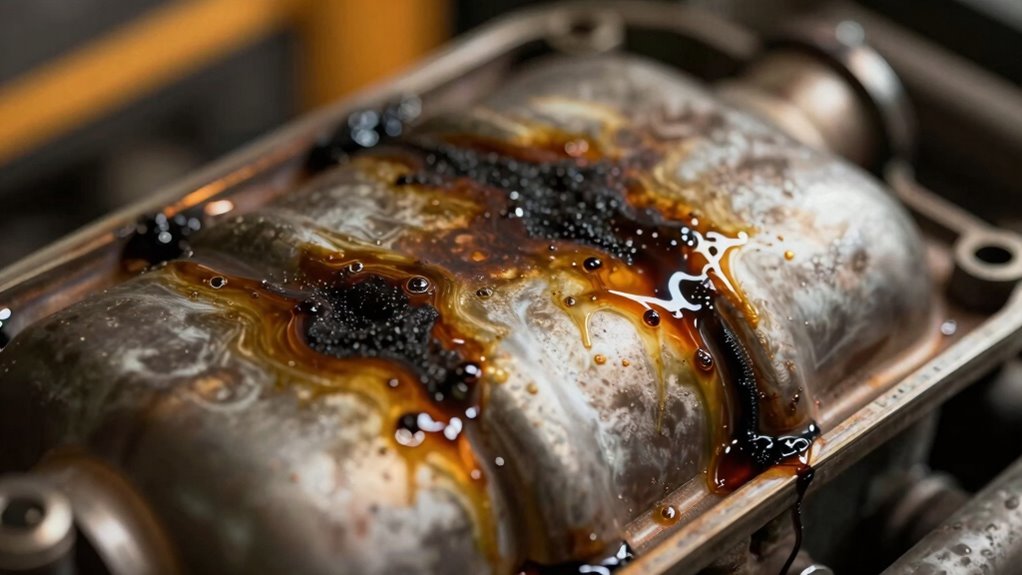
ATF oxidation occurs when automatic transmission fluid (ATF) reacts with oxygen over time, leading to a breakdown of its chemical properties. This process isn’t just a minor inconvenience; it directly impacts your transmission’s health and overall lifespan. As the fluid deteriorates, it loses its ability to lubricate effectively, which can cause increased wear on transmission components. Over time, these problems accelerate, especially if heat isn’t managed properly, shortening the transmission lifespan considerably. That’s why understanding how oxidation happens and taking steps to prevent it is essential for maintaining your vehicle’s transmission in top condition. Proper maintenance, including regular fluid checks and replacements, is vital for supporting caregivers’ emotional well-being, as neglect can lead to costly repairs and added stress. Heat is the primary culprit behind ATF oxidation. When your transmission operates under heavy load or in hot conditions, the fluid heats up beyond its ideal range. Elevated temperatures speed up the oxidation process, making the fluid break down more rapidly. This isn’t just about discomfort or inconvenience; it’s about the core functioning of your transmission. When the fluid oxidizes, it forms varnish and sludge, which can clog filters and cause shifting issues. Over time, these problems compound, leading to costly repairs or even the need for a complete transmission overhaul. To prolong your transmission’s lifespan, you must focus on oxidation prevention, which starts with managing heat effectively. Regular maintenance plays an important role in preventing oxidation. Checking your transmission fluid levels and quality should be part of your routine. If the fluid appears dark or smells burnt, it’s time for a change. Many vehicle manufacturers recommend changing the ATF every 30,000 to 60,000 miles, but this can vary depending on driving habits and conditions. Using high-quality, manufacturer-recommended fluids can also help minimize oxidation. Additionally, installing transmission coolers or ensuring proper airflow around the transmission can notably reduce operating temperatures, thereby slowing down oxidation. These measures are essential not just for immediate performance but for preserving your transmission’s long-term health. Ultimately, recognizing the importance of oxidation prevention is key. It’s about more than just changing fluids; it’s about implementing strategies that keep your transmission cooler and the fluid cleaner over longer periods. By doing so, you extend your transmission’s lifespan, save money on repairs, and enjoy smoother driving. Heat may be unavoidable during demanding drives, but how you manage it makes all the difference. Proper maintenance, quality fluids, and cooling solutions are your best defenses against the damaging effects of oxidation. Keep these in mind, and you’ll guarantee your transmission stays reliable and efficient for years to come.
automatic transmission fluid cooler
As an affiliate, we earn on qualifying purchases.
As an affiliate, we earn on qualifying purchases.
Frequently Asked Questions
Can ATF Oxidation Cause Transmission Failure Without Overheating?
Yes, ATF oxidation can cause transmission failure without overheating. As the fluid degrades, it loses its lubricating and cooling properties, directly impacting your transmission’s lifespan. Oxidized fluid creates sludge and varnish buildup, which can block essential passages and cause parts to wear prematurely. Even if the transmission isn’t overheating, fluid degradation from oxidation silently damages internal components, leading to potential failure over time.
Are There Specific Driving Habits That Accelerate ATF Oxidation?
You might think aggressive driving patterns, like rapid acceleration and hard braking, accelerate ATF oxidation. While they can increase heat, they aren’t the only culprits. Poor maintenance routines, such as neglecting regular fluid changes and ignoring transmission temperature warnings, also speed up oxidation. To protect your transmission, drive smoothly when possible, follow recommended maintenance schedules, and keep an eye on transmission fluid health to avoid premature failure.
How Often Should Transmission Fluid Be Checked for Oxidation?
You should check your transmission fluid for oxidation every 30,000 to 60,000 miles, depending on your driving habits. Regular maintenance scheduling helps catch fluid degradation early, preventing heat-related damage. If you notice a burnt smell or dark color, inspect it sooner. Keeping an eye on fluid condition guarantees smooth transmission performance and extends its lifespan, especially if you often drive in stop-and-go traffic or tow heavy loads.
Do Synthetic ATFS Oxidize Faster or Slower Than Conventional Fluids?
Synthetic ATFs generally resist oxidation faster than conventional fluids because of their enhanced synthetic durability and fluid stability. This means they break down more slowly under high heat conditions, extending their lifespan. You’ll notice that synthetic fluids maintain ideal performance longer, reducing the risk of transmission damage caused by heat. So, if you want better protection and longer intervals between changes, synthetic ATFs are the smarter choice.
Can Additives Reverse or Prevent ATF Oxidation?
Additives can help with oxidation prevention, but they can’t fully reverse existing ATF oxidation. Their effectiveness depends on the formulation and how well they protect against heat and contaminants. Regularly changing your transmission fluid is essential because additives alone can’t stop all oxidation. You should use high-quality additives designed for oxidation resistance, but remember, they work best as preventative measures rather than cures for already oxidized fluid.
transmission fluid temperature gauge
As an affiliate, we earn on qualifying purchases.
As an affiliate, we earn on qualifying purchases.
Conclusion
So, next time you hear about transmission issues, ask yourself: is heat the silent killer lurking in your ATF? Don’t overlook oxidation’s role—it’s more than just a minor problem. By managing heat and maintaining proper fluid levels, you can protect your transmission from costly damage. Remember, prevention is always better than repair. Are you willing to risk your transmission’s health just because you ignored the warning signs? Stay proactive and keep your vehicle running smoothly.
As an affiliate, we earn on qualifying purchases.
As an affiliate, we earn on qualifying purchases.
Fall Picks
fall essentials
As an affiliate, we earn on qualifying purchases.