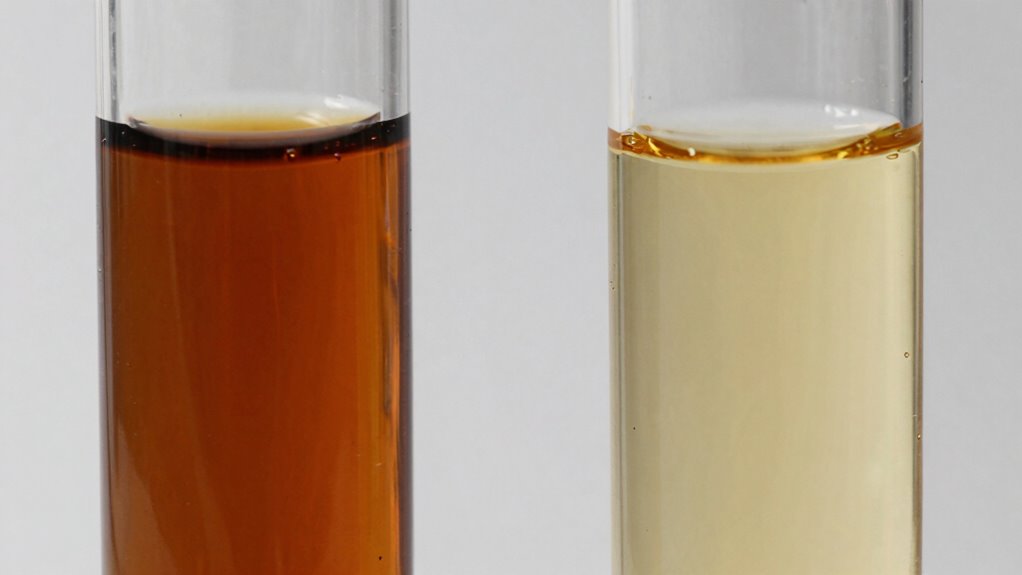

You can’t directly compare ATF viscosity ratings to engine oil numbers because they follow different standards and serve unique functions. ATF is designed for smooth transmission operation and resists oxidation, while engine oil focuses on engine wear protection and sludge prevention. Their viscosity ratings are created using separate testing methods, so numbers alone don’t tell the full story. To understand why these ratings aren’t interchangeable, explore the details that follow.
Key Takeaways
- ATF and engine oil viscosity ratings follow different standards (SAE J306 vs. J300), making direct comparison misleading.
- Viscosity numbers reflect fluid flow characteristics but do not account for additive packages and specific performance properties.
- Each fluid’s viscosity is optimized for its unique function, so similar ratings do not imply interchangeable performance.
- Temperature effects on viscosity and testing conditions vary, so ratings are not directly comparable across fluid types.
- Proper fluid choice depends on manufacturer recommendations, not just viscosity numbers, to ensure optimal vehicle performance.

MOLUCKFU Engine Oil Comparator Tool and Transmission Oil Viscosity Tester Acrylic Stand for Accurate Car Maintenance and Quality Testing
Versatile functionality: not only compares engine oil but also tests the viscosity of transmission oil, providing comprehensive oil…
As an affiliate, we earn on qualifying purchases.
As an affiliate, we earn on qualifying purchases.
What Is Viscosity and Why Is It Important for Your Car?

Viscosity is the measure of a fluid’s resistance to flow, which directly affects how well engine oil performs. When your engine runs, the oil must lubricate moving parts smoothly, prevent wear, and handle high temperatures. If the oil is too thick (high viscosity), it can cause sluggish starts and increased engine strain. If it’s too thin (low viscosity), it might not provide enough lubrication, leading to wear and damage. Proper viscosity ensures that oil flows efficiently at different engine temperatures, maintaining a protective film over components. Understanding viscosity’s importance helps you select the right oil for your vehicle’s specific needs and operating conditions. Additionally, correct viscosity selection is essential for optimizing engine efficiency and preventing long-term damage. Choosing the appropriate viscosity based on engine design and operating environment can significantly extend your engine’s lifespan, especially when considering oil performance characteristics that adapt to varying conditions. Recognizing the impact of temperature on viscosity can further guide you in choosing the right oil for seasonal changes and high-temperature driving.

Valvoline MaxLife Multi-Vehicle ATF Full Synthetic Automatic Transmission Fluid 1 Gallon
For use in 95% of vehicles including most CVTs in operation with US registered light duty applications
As an affiliate, we earn on qualifying purchases.
As an affiliate, we earn on qualifying purchases.
How Is Engine Oil Viscosity Measured and What Does It Mean?

Engine oil viscosity is measured using standardized testing methods that determine how a fluid flows under specific conditions. The most common test is the Saybolt viscometer or kinematic viscosity test, which measures how long it takes a set volume of oil to flow through a capillary tube at a given temperature. These tests are conducted at specified temperatures, usually 40°C and 100°C, to ensure consistency. The results are expressed as numbers like 10W-30, indicating how the oil behaves in cold and hot conditions. Viscosity means the oil’s resistance to flow; higher numbers mean thicker oil, while lower numbers mean thinner oil. This measurement helps you understand how the oil will perform in protecting engine parts under different operating temperatures. Additionally, understanding viscosity index can help predict how the oil’s flow characteristics change with temperature variations.

Rislone 4471 High Performance Oil Treatment,15 oz
REDUCES FRICTION AND WEAR: Cushions and coats engine parts to reduce friction and wear by preventing metal-to-metal contact…
As an affiliate, we earn on qualifying purchases.
As an affiliate, we earn on qualifying purchases.
How Is ATF Viscosity Rated? Understanding Transmission Fluid Ratings

Understanding how ATF viscosity is rated is essential for selecting the right transmission fluid for your vehicle. Transmission fluids are rated using a standardized coding system that indicates their flow characteristics at specific temperatures. The most common system is the SAE J306 classification, which assigns a viscosity grade such as Dexron VI or Mercon V. These ratings specify how the fluid behaves under different conditions, ensuring compatibility with your transmission. Here’s a quick overview:
| Rating System | Example | Temperature Range | Viscosity Range |
|---|---|---|---|
| SAE J306 | Dexron VI | -40°C to 100°C | 6.0 to 9.0 cSt |
| Original Code | Mercon V | -40°C to 100°C | 6.0 to 9.0 cSt |
This helps you identify the right ATF for your vehicle’s transmission needs. A clear understanding of viscosity ratings ensures you select the optimal fluid for performance and longevity. Properly understanding transmission fluid specifications can prevent potential issues caused by incompatible fluids, and knowing the viscosity classification can assist in making accurate comparisons. Additionally, awareness of how temperature impacts viscosity is crucial to selecting a fluid that performs well across different climate conditions. Recognizing fluid performance at various temperatures can further aid in choosing a suitable transmission fluid for diverse environments.
MOLUCKFU Engine Oil Comparator Tool and Transmission Oil Viscosity Tester Acrylic Stand for Accurate Car Maintenance and Quality Testing
Versatile functionality: not only compares engine oil but also tests the viscosity of transmission oil, providing comprehensive oil…
As an affiliate, we earn on qualifying purchases.
As an affiliate, we earn on qualifying purchases.
Can You Compare ATF and Engine Oil Viscosities? Here’s Why It Doesn’t Make Sense

You can’t directly compare ATF and engine oil viscosities because they use different measurement standards. These fluids have distinct properties and functions, so their viscosity ratings aren’t interchangeable. Understanding these differences helps you choose the right fluid for each application.
Different Measurement Standards
Because ATF and engine oil are tested and rated using different measurement standards, comparing their viscosities directly can be misleading. ATF viscosity ratings often follow the SAE J306 standard, which measures viscosity at specific temperatures and uses a different testing process. Engine oils, on the other hand, are rated using the SAE J300 scale, which considers multiple viscosity grades based on temperature performance. These differing standards mean that a viscosity number for ATF isn’t directly comparable to an engine oil’s viscosity number. The testing methods, temperature conditions, and classification criteria vary markedly. As a result, two fluids with similar viscosity numbers may perform very differently under real-world conditions. To avoid confusion, it’s best to interpret these ratings within their respective standards rather than trying to compare them directly.
Distinct Fluid Properties
While viscosity ratings provide useful information, they don’t tell the full story about how ATF and engine oil behave in your vehicle. These fluids have distinct properties beyond their viscosity numbers. ATF is formulated to resist oxidation, maintain proper flow under varying temperatures, and provide lubrication for transmission components. Engine oil, on the other hand, is designed to protect engine parts from wear, sludge buildup, and temperature extremes. They also have different additive packages tailored to their specific functions. Comparing their viscosities directly ignores these core differences. Understanding these distinctions helps you choose the right fluid for each system, ensuring ideal performance and longevity. So, don’t rely solely on viscosity numbers—consider each fluid’s unique properties and purpose.
How Fluid Viscosity Affects Your Engine and Transmission Performance

Fluid viscosity directly impacts how well your engine and transmission perform by controlling how easily lubricants flow under different temperatures. If the fluid is too thick, it resists flow, causing increased friction and wear, especially during cold starts. Conversely, if it’s too thin, it may not provide enough lubrication, leading to metal-on-metal contact and potential damage. Proper viscosity guarantees that lubricants coat engine parts effectively, reducing friction and heat buildup. In transmissions, correct viscosity allows smooth gear shifts and efficient power transfer. Changes in temperature can alter fluid viscosity, so using the right type for your climate helps maintain ideal performance. Additionally, choosing the appropriate battery inverter generator capacity ensures your equipment operates efficiently without overloads. Maintaining proper viscosity is also essential for preventing system failure and ensuring reliable operation over time. Moreover, the use of high-quality lubricants formulated for specific viscosities can further enhance engine longevity. Regularly monitoring oil viscosity with proper testing can help detect potential issues early, preventing costly repairs. Ultimately, maintaining the correct viscosity helps your engine and transmission run smoothly, last longer, and avoid costly repairs.
How to Choose the Right Viscosity for Your Vehicle’s Engine and Transmission

Choosing the right viscosity for your engine and transmission starts with checking manufacturer recommendations and ensuring compatibility. You should also consider temperature changes in your area to select fluids that perform well in both hot and cold conditions. Paying attention to these factors helps you optimize performance and longevity for your vehicle.
Viscosity Compatibility Tips
Selecting the right viscosity for your vehicle’s engine and transmission is crucial for peak performance and longevity. To guarantee compatibility, always check your owner’s manual for manufacturer recommendations. Match the specified viscosity grade with the type of driving you do—thicker oils suit heavy loads, while thinner oils are better for fuel efficiency. Use the table below to compare suitable viscosities for different conditions:
| Vehicle Type | Recommended Viscosity |
|---|---|
| City driving | 5W-30, 5W-40 |
| Heavy-duty use | 10W-30, 10W-40 |
| Cold climate | 0W-20, 0W-30 |
| Hot climate | 20W-50, 15W-50 |
| Transmission | ATF Dexron VI, Mercon V |
Always verify compatibility before switching viscosities to avoid engine or transmission issues. Proper oil viscosity is essential for maintaining lubrication and preventing wear over time.
Temperature Considerations
Understanding how temperature affects your vehicle’s oil and transmission fluid is vital for maintaining ideal performance. As temperatures fluctuate, fluids thicken or thin, impacting flow and lubrication. In cold weather, thicker oils can cause harder starts and slower circulation, so choosing a lower viscosity (like 0W-20) helps your engine and transmission start smoothly. Conversely, in hot conditions, fluids thin out, risking inadequate lubrication; a higher viscosity (such as 10W-40) offers better protection. Always consider the temperature ranges your vehicle operates in regularly. Using the right viscosity ensures your engine and transmission stay well-lubricated, reducing wear and improving efficiency. Properly matching engine oil viscosity to seasonal and climate changes supports reliable performance throughout the year. Additionally, understanding viscosity ratings helps in selecting fluids that adapt to varying temperatures effectively. Recognizing the importance of manufacturer recommendations guarantees optimal protection and longevity for your vehicle’s components.
Manufacturer Recommendations
Your vehicle’s manufacturer provides specific recommendations for engine and transmission fluid viscosities to guarantee ideal performance and longevity. Always follow these guidelines to ensure peak operation. Check your owner’s manual or the oil filler cap for the recommended viscosity grades. Using the wrong viscosity can lead to increased wear, reduced fuel efficiency, or transmission issues. Manufacturers base their recommendations on engine design, operating conditions, and climate. Here’s a quick reference:
| Component | Recommended Viscosity |
|---|---|
| Engine Oil | 5W-30, 10W-40 |
| Transmission Fluid | Dexron VI, Mercon LV |
| Climate Conditions | Cold climates: lower numbers |
| Vehicle Age | Older engines may need thicker |
| Operating Conditions | Heavy towing: thicker oil |
Proper viscosity selection is essential for maintaining optimal engine and transmission performance across various environmental conditions. Understanding engine oil viscosity helps in choosing the right grade for different driving scenarios and climates. Additionally, fluid compatibility ensures that the selected oil works effectively with your vehicle’s components and does not cause long-term damage.
Common Mistakes When Interpreting Viscosity Ratings: and How to Avoid Them

One common mistake people make when interpreting viscosity ratings is assuming that higher numbers always mean better protection. In reality, higher viscosity indicates a thicker fluid, which isn’t necessarily better for your engine or transmission. Using a fluid with too high a viscosity can cause poor flow at cold start or increase wear during operation. Conversely, too low a viscosity might not provide enough lubrication under high temperatures. To avoid this mistake, always follow your manufacturer’s recommended viscosity ratings. Pay attention to the specific conditions your vehicle faces, such as climate and driving style. Remember, the goal is to select a fluid that maintains excellent film strength without compromising flow and efficiency. Proper interpretation ensures you choose the right viscosity for protection and performance. Additionally, understanding Free Floating aspects of fluid behavior can help in making more informed decisions about viscosity ratings.
Frequently Asked Questions
How Often Should I Change My Transmission Fluid Based on Viscosity?
You should change your transmission fluid every 30,000 to 60,000 miles, depending on your vehicle and driving habits. Pay attention to the fluid’s viscosity—if it’s thick or has a burnt smell, it’s time for a change. Regularly check the fluid level and condition, and follow your manufacturer’s recommendations. Keeping the fluid fresh guarantees smooth shifting and prevents costly transmission repairs down the line.
Can Using the Wrong Viscosity Damage My Engine or Transmission?
Using the wrong viscosity can cause damage. Imagine your transmission fluid is too thick in winter; it won’t flow properly, leading to sluggish shifts or overheating. Similarly, if your engine oil’s viscosity is too low, it won’t protect engine parts during cold starts, increasing wear. Always match the recommended viscosity to avoid strain, potential damage, and costly repairs, ensuring your vehicle runs smoothly and reliably.
Are Synthetic Oils and Fluids Rated Differently for Viscosity?
Yes, synthetic oils and fluids are rated differently for viscosity. Manufacturers specify viscosity grades for each type based on their unique formulations and applications. You should always check the label and follow the vehicle’s manual to guarantee you select the correct viscosity for your engine or transmission. Using the right synthetic lubricant helps maintain ideal performance, protects parts, and prevents premature wear.
How Does Temperature Affect the Viscosity Ratings of Fluids?
Think of viscosity like honey flowing in warm weather and thickening in the cold. When temperatures rise, fluids become less viscous, flowing more easily—like honey warmed by the sun. Conversely, cold temperatures make fluids thicker and harder to move, much like honey straight out of the fridge. This temperature change impacts how well lubricants flow, so you need to choose fluids that match your climate to keep your engine or transmission running smoothly.
Is There a Universal Viscosity Standard for All Vehicle Types?
No, there’s no universal viscosity standard for all vehicle types. Different engines and transmissions require specific fluid viscosities to perform well. You need to follow the manufacturer’s recommendations for your vehicle, considering factors like temperature and operating conditions. Using the wrong viscosity can lead to poor lubrication, increased wear, or damage. Always check your owner’s manual or consult a professional to guarantee you’re selecting the right fluid for your vehicle.
Conclusion
Remember, comparing ATF and engine oil viscosity is like judging two different stories by the same chapter. Each fluid has its unique language, crafted for its own purpose. By understanding their nuances, you’ll navigate your vehicle’s needs more wisely. Embrace the subtlety behind these numbers, and you’ll keep your car humming smoothly, avoiding unnecessary confusion. Sometimes, the most meaningful insights come from appreciating the delicate differences rather than seeking a one-size-fits-all answer.