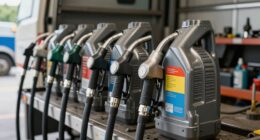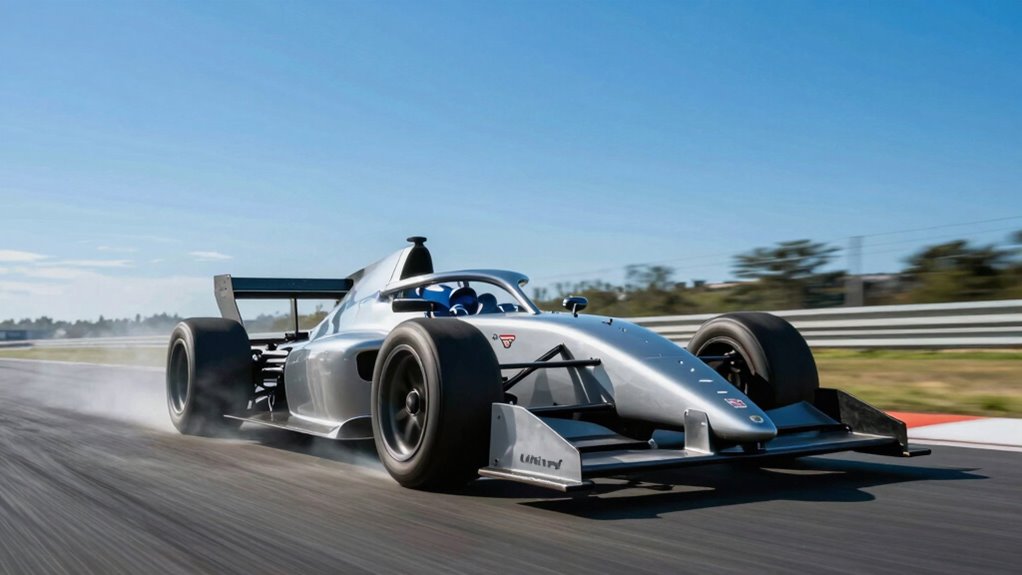

During track days, engine oil viscosity is mainly affected by temperature, not speed, because high RPMs generate heat that breaks down oil faster. The engine produces a lot of heat during intense driving, making the oil thinner and less effective at lubricating. While speed creates some friction, heat from engine operation has a bigger impact on oil condition. Staying aware of how heat affects your oil is key—learn more about how to keep your engine protected.

Get business pricing on garage and car supplies
- Business-only prices and quantity discounts
- Tax-exempt purchasing
- Multiple users, one account, clear invoices
Key Takeaways
- Elevated engine temperatures cause oil viscosity to decrease, making it thinner and less effective regardless of vehicle speed.
- High heat from engine load during track days impacts oil breakdown more than the actual speed of the vehicle.
- Thinner oil at high temperatures leads to increased engine wear and potential damage, emphasizing temperature over speed.
- Proper cooling systems maintain oil temperature, ensuring viscosity stability under high engine stress.
- Oil viscosity changes are primarily driven by temperature-induced heat, not the vehicle’s speed.
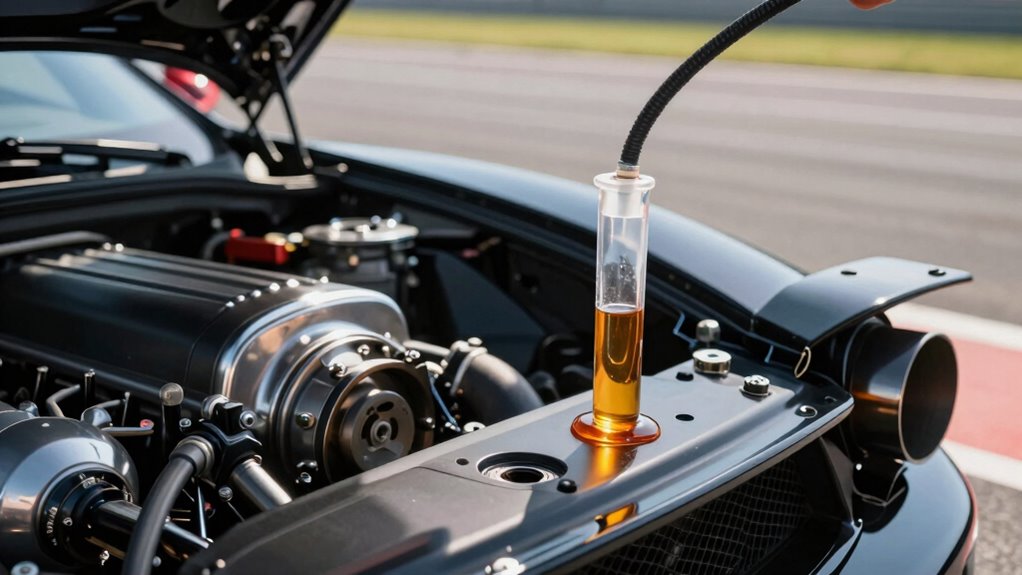
If you’re planning a track day, understanding how your oil performs under intense conditions is essential. When pushing your car to its limits, the heat generated by high engine loads becomes a critical factor. Unlike just focusing on speed, you need to consider how temperature affects your oil’s viscosity. As the engine runs harder, especially during spirited cornering and acceleration, engine cooling becomes vital to prevent overheating. Proper cooling helps keep the engine’s temperature within optimal ranges, ensuring the oil doesn’t break down prematurely. If your engine runs too hot, the oil thins out, losing its ability to lubricate effectively, which can cause increased wear or even engine damage. That’s why monitoring and managing engine cooling is crucial before hitting the track. Additionally, maintaining optimal cooling system performance ensures the engine stays within safe temperature limits, supporting consistent oil viscosity and engine health.
Tire pressure also plays a surprisingly significant role in maintaining consistent engine temperature. Correct tire pressure reduces rolling resistance and improves grip, which in turn minimizes unnecessary engine strain. Underinflated tires can cause increased heat build-up, forcing your engine to work harder to maintain speed and stability. Conversely, overinflated tires might reduce grip, but they also tend to generate less heat, which might seem beneficial. However, improper tire pressure can lead to uneven wear and compromised handling, indirectly affecting engine temperature management. Keeping your tires at the recommended pressure ensures that your car maintains optimal traction and temperature, aiding in stable engine operation and preventing overheating.
Understanding that temperature, not just speed, influences oil viscosity shifts the focus to how you prepare for a track day. High speeds generate wind resistance and friction, but it’s the accumulated heat from engine activity that most impacts oil performance. When oil heats up, its viscosity drops, making it thinner and less effective at lubricating engine parts. This can lead to increased friction, wear, and even engine failure if the oil breaks down. Consequently, choosing the right oil with a high-temperature viscosity rating and ensuring your cooling system is working efficiently becomes a priority. Regularly checking oil levels and condition before a track day helps you avoid unexpected breakdowns caused by degraded oil.
As an affiliate, we earn on qualifying purchases.
Frequently Asked Questions
How Often Should I Change My Oil After a Track Day?
You should change your oil after a track day every 100-200 miles or as recommended by your vehicle’s manufacturer. Track days cause oil degradation and contamination from intense heat and debris, which diminishes its effectiveness. Even if the oil looks fine, it can still be compromised. Regular oil changes ensure your engine stays protected, preventing long-term damage due to degraded or contaminated oil.
Can High Oil Viscosity Improve Engine Performance on Track?
High oil viscosity can improve engine performance on track by providing better lubrication at high temperatures. Did you know that oil thickness impacts viscosity stability, especially under extreme conditions? Using a thicker oil helps maintain consistent viscosity, reducing wear and friction during intense driving. This stability guarantees your engine stays protected, allowing for smoother power delivery. Just remember, too high viscosity might increase drag, so choose the right balance for ideal track performance.
What Signs Indicate My Oil Needs an Upgrade?
If your oil shows signs of contamination or degradation, it’s time for an upgrade. Look out for dark, dirty oil, a burnt smell, or inconsistent engine performance. You might also notice increased engine noise or warning lights. These signs indicate your oil has lost its protective qualities, possibly due to contamination or degradation. Regularly checking oil levels and quality helps you catch these issues early and maintain peak engine health.
Is Synthetic Oil Better for Track Day Driving?
Yes, synthetic oil is better for track day driving because it offers advantages like improved high-temperature stability and better flow at cold start. It also enhances oil longevity, meaning you can go longer between oil changes. This helps maintain engine protection during intense driving sessions. Synthetic oils resist breakdown under heat and stress, ensuring your engine stays lubricated and performs at its best, even during demanding track conditions.
How Does Ambient Temperature Affect Oil Choice?
Ambient temperature greatly influences your oil choice; colder temperatures require lower viscosity oil to flow smoothly, preventing engine wear. Conversely, hot conditions demand thicker oil for proper lubrication at high temperatures. Think of viscosity as your engine’s comfort level—adjusting based on ambient temperature guarantees ideal protection. So, when choosing oil, consider the climate, as it directly impacts how your oil performs and protects your engine during your drive.
performance engine oil for track days
As an affiliate, we earn on qualifying purchases.
As an affiliate, we earn on qualifying purchases.
Conclusion
Remember, on track days, it’s not your speed that truly matters, but how you manage your oil’s temperature. Keep an eye on those heat levels, and you’ll avoid slipping up when it counts. Don’t forget, a little caution can go a long way—sometimes, slow and steady wins the race. By understanding what really affects your oil’s viscosity, you’re better prepared to keep your engine running smoothly, no matter how fast you push it.
As an affiliate, we earn on qualifying purchases.
As an affiliate, we earn on qualifying purchases.
Fall Picks
fall essentials
As an affiliate, we earn on qualifying purchases.