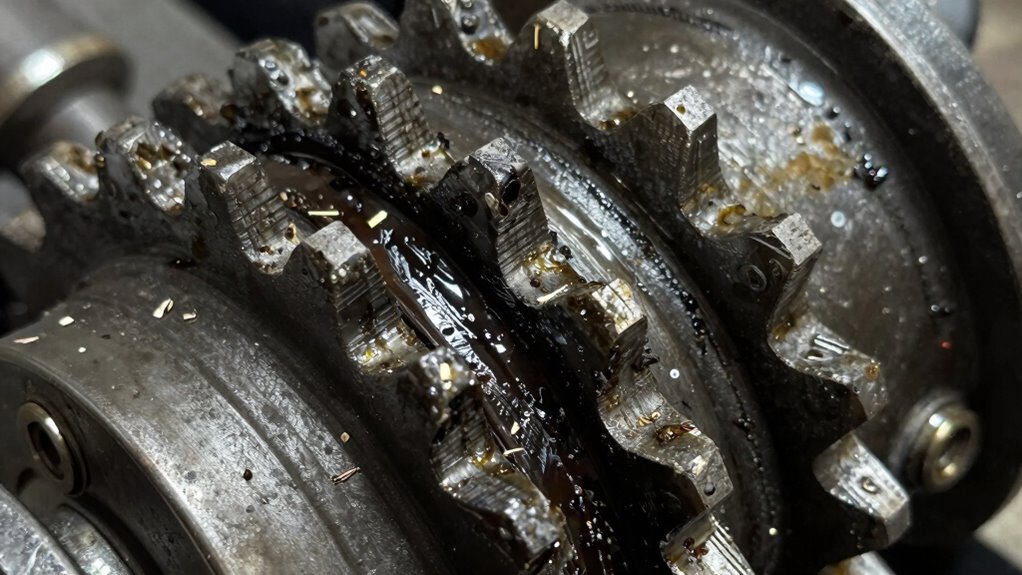

Motorcycle gearboxes endure tough conditions like high stress, heat, and friction, which challenge your bike oils. If the oil isn’t compatible or properly maintained, it breaks down faster, leading to increased wear and potential shear failure of gears. Harder gears require specific lubricants to protect against damage. Keeping up with the right oil and service schedule helps your gearbox stay resilient under pressure. To learn more about why your bike’s lubricant faces such challenges, continue exploring this topic.

Get business pricing on garage and car supplies
- Business-only prices and quantity discounts
- Tax-exempt purchasing
- Multiple users, one account, clear invoices
Key Takeaways
- Motorcycle gearboxes experience high stresses and heat, demanding oils with strong film strength and thermal stability.
- Incompatible or low-quality oils can fail to provide adequate lubrication, increasing metal-to-metal contact and shear risk.
- Harder gear materials require specialized additives in oils to prevent wear and shear under aggressive riding conditions.
- Frequent gear shifts and aggressive riding put additional strain on oils, causing them to degrade faster.
- Proper maintenance and using manufacturer-recommended oils help protect gear material and reduce shear failures.
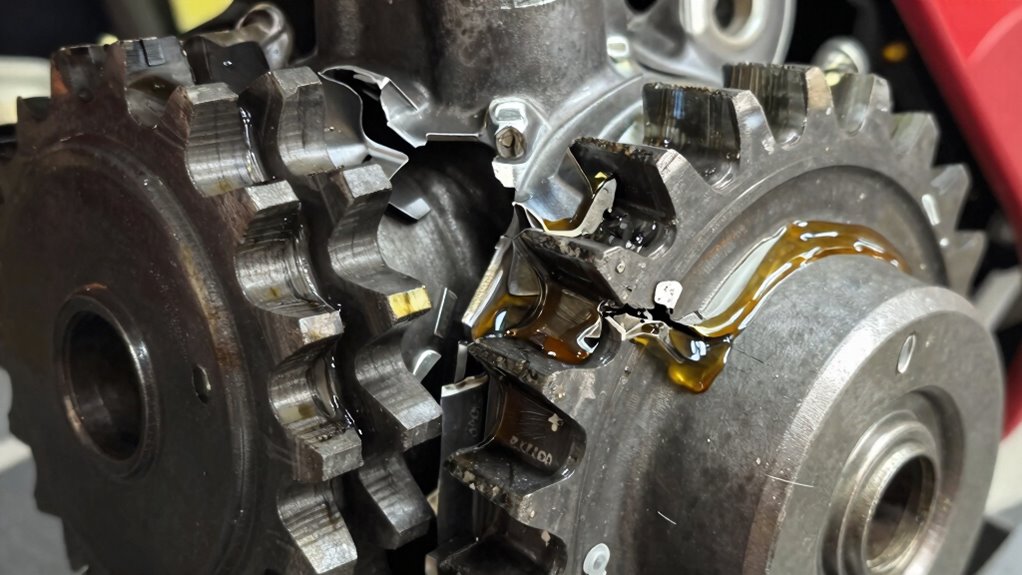
A motorcycle gearbox shear occurs when the gears inside the transmission break or become damaged under stress, often leading to sudden power loss or shifting issues. This failure isn’t just about metal breaking; it’s influenced heavily by the gear material and how well your bike’s oil supports that material. The gear material needs to be tough enough to withstand the forces and heat generated during riding, especially under high load or aggressive riding conditions. Common gear materials include hardened steel or alloy steels designed for durability, but even the strongest gear can shear if the lubrication isn’t compatible or effective.
Lubrication compatibility plays an essential role in preventing shear failure. Your motorcycle’s oil acts as a buffer, reducing friction and dissipating heat. If the oil isn’t suitable for your gear material—say, using a standard oil on high-performance gears—it can lead to inadequate lubrication. This causes increased wear and tear, creating hot spots that weaken the gear structure over time. When the oil doesn’t provide a proper film, metal-to-metal contact increases, leading to accelerated fatigue and, eventually, shear failure. Choosing the right oil isn’t just about viscosity; it’s about guaranteeing it’s formulated to handle the stress levels of your specific gear material.
Using the correct oil ensures proper lubrication and prevents gear shear failure.
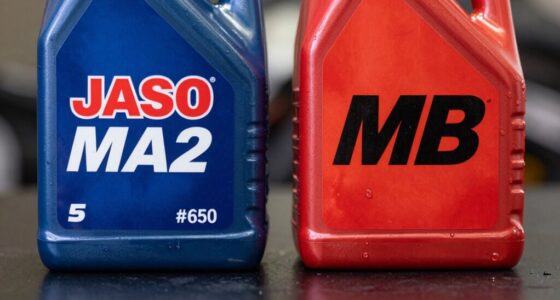
You need to pay close attention to your bike’s manufacturer recommendations for lubrication. Not all oils are created equal, and mismatched lubrication compatibility can dramatically shorten gear lifespan. Synthetic oils, for example, often provide better film strength and temperature stability, making them more compatible with high-performance gear materials. Conversely, using a low-quality or incorrect oil can be like pouring water on a fire—your gears won’t get the protection they need, increasing the risk of shear. Additionally, understanding lubrication chemistry helps in selecting the most suitable oil for your riding conditions.
Furthermore, the gear material itself can influence how often you’ll need to change your oil. Harder, more resilient gear materials often require oils with specific additive packages that support their unique properties. Regular maintenance and using the right lubrication ensure that the gear material remains protected under stress. This keeps your transmission smooth and reduces the risk of shear failure, which can leave you stranded or force costly repairs.
motorcycle gear oil synthetic high performance
As an affiliate, we earn on qualifying purchases.
As an affiliate, we earn on qualifying purchases.
Frequently Asked Questions
How Can I Tell if My Gearbox Oil Is Shear-Thinned?
You can tell if your gearbox oil is shear-thinned by checking its oil viscosity. If it feels thinner or flows more easily than when new, shear has likely occurred. Also, consider if the oil looks cloudy or has metal particles, indicating breakdown. Using gear oil additives can help maintain viscosity and protect against shear. Regular oil analysis or testing can give you a clear indication of shear thinning.
Does Shear Affect All Types of Motorcycle Gear Oils Equally?
Shear can affect all types of motorcycle gear oils, but its impact varies based on viscosity stability and additive breakdown. Synthetic oils generally resist shear better, maintaining their viscosity longer, while mineral oils may shear more quickly. When oil shear occurs, additives break down faster, reducing protection. So, regardless of type, all oils experience some shear, but quality and formulation determine how well they withstand it.
What Are the Signs of Gearbox Shear Damage?
Gearbox shear damage is like a silent assassin, slowly wrecking your bike’s performance. You’ll notice thickened oil viscosity, irregular shifting, or increased noise during rides. Regular gearbox inspection helps catch these signs early. When oil shear occurs, it reduces lubrication, causing gear wear or slipping. Keep an eye out for these symptoms, and don’t ignore changes in oil consistency—your bike’s health depends on it.
Can Shear Occur in Both Manual and Automatic Motorcycle Gearboxes?
Yes, shear can occur in both manual and automatic motorcycle gearboxes. When shear happens, you might notice clutch wear or transmission slipping, regardless of the type. This damage weakens the oil’s lubricating properties, causing metal particles and reduced performance. To prevent this, verify your bike uses the correct oil, change it regularly, and check for early signs like slipping or unusual clutch behavior.
How Often Should I Change Oil to Prevent Shear-Related Issues?
Did you know that changing your motorcycle oil every 3,000 to 5,000 miles reduces shear-related issues by up to 30%? To prevent shear, stick to the recommended oil change interval and use shear-resistant oils. Regular oil changes ensure proper lubrication, minimizing wear and tear on your gearbox. Incorporate shear prevention techniques like choosing high-quality oils and avoiding harsh riding conditions to keep your bike running smoothly longer.
motorcycle transmission oil compatible with hardened steel gears
As an affiliate, we earn on qualifying purchases.
As an affiliate, we earn on qualifying purchases.
Conclusion
So, next time you’re topping off your bike’s oil, ask yourself: are you giving your gearbox the protection it needs to withstand those endless shifts and brutal shearing forces? Motorcycle oils face a tougher life than you might think, fighting to keep your gears smooth and your ride reliable. By choosing the right oil and maintaining it properly, you’re ensuring your gearbox stays resilient. After all, isn’t a smoother ride worth the extra care?
motorcycle gear lubricant additive package
As an affiliate, we earn on qualifying purchases.
As an affiliate, we earn on qualifying purchases.
best motorcycle gear oil for aggressive riding
As an affiliate, we earn on qualifying purchases.
As an affiliate, we earn on qualifying purchases.
Fall Picks
fall essentials
As an affiliate, we earn on qualifying purchases.