
Using car oil in small engines can be okay temporarily if the viscosity matches your engine’s specifications. However, since small engines often operate under different conditions, their oils contain specific additives and formulations suited for outdoor use and high loads. Regular car oil might cause increased wear or sludge buildup over time. To keep your engine running smoothly long-term, it’s best to follow the manufacturer’s oil recommendations—there’s more to contemplate if you continue exploring.

Get business pricing on garage and car supplies
- Business-only prices and quantity discounts
- Tax-exempt purchasing
- Multiple users, one account, clear invoices
Key Takeaways
- Small engines can temporarily use car oil if viscosity matches manufacturer recommendations, but it’s not ideal long-term.
- Using the correct oil viscosity and type ensures proper lubrication and prevents engine damage in both small and car engines.
- Mixing car oil with small engine oil can cause chemical reactions, sludge buildup, and reduced engine performance.
- Regularly check engine manual for oil specifications; incompatible oils can lead to increased wear and engine failure.
- Proper oil maintenance, including using recommended oils and scheduled changes, is crucial for engine longevity regardless of oil type.
As an affiliate, we earn on qualifying purchases.
Why Do Small Engines Use Similar Oil to Cars?
Small engines and car engines use similar oil because they share many of the same mechanical and lubrication requirements. Both engines rely on oil to reduce friction, prevent wear, and keep parts running smoothly. They operate under comparable temperature ranges and load conditions, making standard motor oil effective for both. Additionally, small engines often have similar internal components like pistons, valves, and crankshafts, which need consistent lubrication. Using the same type of oil simplifies maintenance and ensures reliable performance. Since these engines don’t reach the high temperatures of some automotive engines, regular motor oil provides sufficient protection. Furthermore, understanding the lubrication needs of different engines helps in choosing the right oil for optimal functioning. Using the correct oil also helps in preventing engine damage and prolonging engine life. Overall, the similar design and function of small and car engines justify the use of comparable oils, ensuring both run efficiently and last longer.
As an affiliate, we earn on qualifying purchases.
What’s the Difference Between Car Oil and Small Engine Oil?
Car oil and small engine oil differ in their composition, with small engine oils often designed to handle higher stress and heat. Viscosity and additives also vary, affecting how well each oil protects its engine type. Understanding these differences helps you choose the right oil for peak engine performance and longevity.
Oil Composition Differences
Although both small engine oil and car engine oil serve to lubricate and protect engine components, their formulations differ considerably to meet the unique demands of each engine type. Small engine oils typically contain additives that handle higher levels of moisture and dirt, since these engines often operate in outdoor, dusty environments. They’re also formulated to withstand frequent use at variable speeds without breaking down. In addition, small engine oils often include specialized additives to combat corrosion and oxidation caused by outdoor exposure. Car oils, on the other hand, include additives designed for high-temperature operation, engine wear protection, and fuel economy. They often have more complex additive packages to deal with sludge and deposit control. These differences ensure each oil type ideally protects its specific engine, but using the wrong formulation can lead to inadequate lubrication and potential engine damage. Understanding these formulation differences is crucial for selecting the right oil for each engine.
Viscosity and Additives
Viscosity and additives are key factors that differentiate small engine oil from car engine oil. Viscosity measures how thick or thin the oil is at operating temperatures, impacting lubrication efficiency. Small engines typically require oils with different viscosity ratings suited for lower RPMs and high loads. Additives enhance oil performance by preventing wear, controlling deposits, and protecting against corrosion. Here’s what to remember:
- Small engine oils often have simpler additive packages tailored for brief, high-stress use.
- Car oils contain advanced additives to handle longer driving cycles and varied temperatures.
- Viscosity ratings differ: small engines usually need lower or specific viscosity grades.
- Using the wrong oil can impair lubrication and damage engine components over time.
- Proper oil selection also considers projector technology to ensure optimal engine protection and performance. Additionally, understanding oil formulation is crucial for selecting the right product for your engine’s needs. Recognizing the engine operating conditions can help choose the most suitable oil type and formulation. Being aware of engine maintenance practices can also contribute to extending engine life and maintaining efficiency.
Choosing the right oil ensures suitable engine protection and performance.
Engine Compatibility Factors
Understanding engine compatibility is essential because small engine oils and car oils are formulated to meet different operational demands. Small engines often run at higher RPMs and operate under more extreme conditions, requiring oils with specific additives and viscosity ranges. Car oils are designed for longer engine life and smoother performance over thousands of miles, while small engine oils focus on protection during short, intense periods of use. Using the wrong oil can lead to inadequate lubrication, increased wear, and even engine failure. Pay attention to manufacturer recommendations, oil specifications, and viscosity ratings. Always choose an oil that matches your engine’s requirements to guarantee ideal performance, longevity, and safety. oil compatibility is crucial because mismatched oils compromise engine health and can cause costly repairs. Additionally, understanding appliance testing can help prevent potential engine damage and ensure optimal operation.
As an affiliate, we earn on qualifying purchases.
Can You Use Car Oil in Small Engines? When Is It Okay?
You might wonder if car oil works in small engines, but it’s important to contemplate viscosity compatibility and your engine type. Using car oil can be okay for short-term needs if the oil matches your engine’s specifications. Just make sure to check manufacturer recommendations before proceeding. Proper piercing care and hygiene is essential to prevent issues if your engine requires frequent oil changes. Additionally, understanding smart home technology can help you monitor and maintain your equipment more effectively, ensuring optimal performance.
Oil Viscosity Compatibility
Is it safe to use car oil in small engines? Generally, it depends on whether the oil’s viscosity matches your small engine’s requirements. Using the wrong viscosity can lead to poor lubrication or excessive wear. Check your engine’s manual for the recommended oil viscosity, often expressed as SAE numbers like 10W-30 or 5W-30.
Here are key points to contemplate:
- Match the viscosity to the manufacturer’s specs.
- Lower viscosity oils flow better at cold temperatures, aiding starting.
- Higher viscosity oils provide better film strength at high temperatures.
- Using the wrong viscosity may cause engine damage or decreased performance.
Always choose oil with the correct viscosity to ensure your small engine runs smoothly and lasts longer.
Engine Type Considerations
While using car oil in small engines isn’t always ideal, there are situations where it can be acceptable. If your small engine has a similar design and operating requirements as a car engine, using car oil might be okay. For example, engines with pressurized lubrication systems often handle car oils better. However, if your small engine is air-cooled, it typically runs hotter and may require oils with specific formulations that aren’t found in standard car oils. Check your engine’s manufacturer guidelines; some small engines are designed to tolerate multi-grade oils, while others need specialized formulations. Ultimately, understanding your engine type helps determine whether car oil will perform well without compromising durability or risking damage.
Short-Term Usage Benefits
Using car oil in small engines can offer some short-term advantages, especially if you’re in a pinch or performing quick maintenance. It can help you get your engine running without immediate issues and buy time until proper oil is available. Here are some benefits:
- Immediate lubrication – Keeps moving parts smooth temporarily.
- Cost-effective – Saves money when you’re low on small engine oil.
- Quick top-up – Easy to find and pour in during emergencies.
- Prevents further damage – Reduces wear if you can’t access the correct oil right away.
However, remember this is a short-term fix. Using car oil temporarily can help you get by, but it’s not suitable for long-term engine health.
As an affiliate, we earn on qualifying purchases.
Risks of Using Car Oil in Small Engines
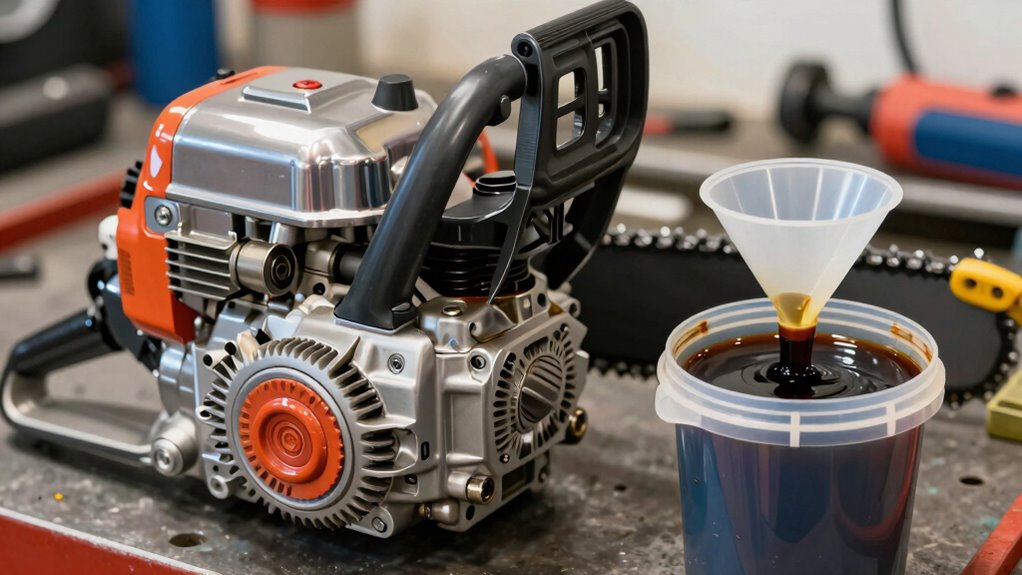
Although car oil might seem like a convenient option for small engines, it can pose significant risks. Car oils contain additives designed for high-temperature, high-pressure environments in automobiles, which can cause problems in small engines. These additives may lead to increased wear, as they don’t provide the proper lubrication for the engine’s specific needs. Using car oil can also cause buildup and sludge, clogging small passages and filters. Over time, this can result in decreased engine performance or failure. Small engines often operate at lower temperatures and different loads, making car oil unsuitable. Relying on the wrong oil can shorten your engine’s lifespan and lead to costly repairs, so it’s best to stick with oils formulated specifically for small engines. Proper testing accuracy of your oil ensures your engine remains in optimal condition and helps prevent these issues. Additionally, using the correct oil can help maintain engine longevity and reduce maintenance costs over time. It’s essential to understand the differences in oil formulations to make informed choices for your engine’s health. Selecting the right oil also involves understanding the specific performance requirements of your small engine, which can vary based on usage. Being aware of these oil compatibility factors can significantly extend the lifespan of your equipment.
How to Identify the Right Oil for Your Small Engine

To select the appropriate oil for your small engine, start by checking the oil viscosity ratings, which tell you how thick the oil is at different temperatures. You should also follow the manufacturer’s recommendations, usually found in the owner’s manual, to guarantee maximum performance. Matching these guidelines helps keep your engine running smoothly and lasts longer.
Oil Viscosity Ratings
Choosing the right oil viscosity for your small engine is essential for superior performance and longevity. Oil viscosity ratings, like 10W-30 or 5W-40, indicate how thick or thin the oil is at different temperatures. Using the correct rating guarantees proper lubrication during startup and operation. When selecting oil, consider these key points:
- Match the viscosity to the temperature range where you operate your engine.
- Thinner oils (lower numbers) flow better in cold weather, aiding startup.
- Thicker oils (higher numbers) provide better protection at higher temperatures.
- Always verify the recommended viscosity for your specific engine model.
Manufacturer Recommendations
Your small engine’s manufacturer provides the best guidance on selecting the right oil, usually found in the owner’s manual or on a label attached to the engine. These recommendations specify the correct oil type, viscosity, and whether synthetic or conventional oil is preferred. Following these instructions guarantees ideal engine performance and longevity. Ignore generic advice or assumptions based on car oils, as small engines often have different requirements. Manufacturers test and approve specific oils for their equipment, so using recommended oils helps prevent damage and maintains warranty coverage. Always check the label or manual before purchasing oil to ensure compatibility. Sticking to the manufacturer’s recommendations guarantees your small engine runs smoothly and lasts longer.
Signs Your Small Engine Needs an Oil Change
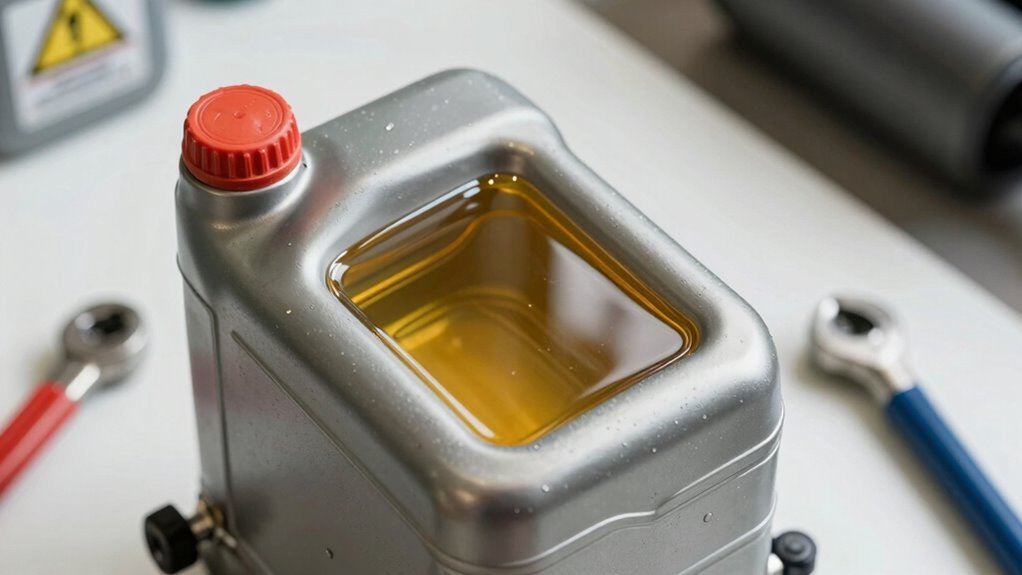
If you notice your small engine is running rough or making strange noises, it might be a sign that it needs an oil change. Pay attention to these indicators:
- Unusual engine noise – knocking or sputtering sounds suggest oil isn’t lubricating properly.
- Engine overheating – frequent overheating can be caused by low or degraded oil.
- Excess smoke – blue or gray smoke from the exhaust indicates oil burning.
- Reduced performance – difficulty starting or decreased power points to possible oil issues.
Regularly checking oil levels and quality helps prevent costly repairs and keeps your small engine running smoothly. Staying alert to signs of wear can help you catch problems early and avoid major repairs. Additionally, proper maintenance ensures your engine stays in top condition and avoids unnecessary breakdowns, including timely oil changes to maintain optimal lubrication. Implementing regular oil checks can further extend the lifespan of your small engine and improve its overall efficiency. Monitoring oil quality regularly can also prevent engine damage caused by sludge buildup or contaminated oil.
How Wrong Oil Choices Damage Small Engines Over Time
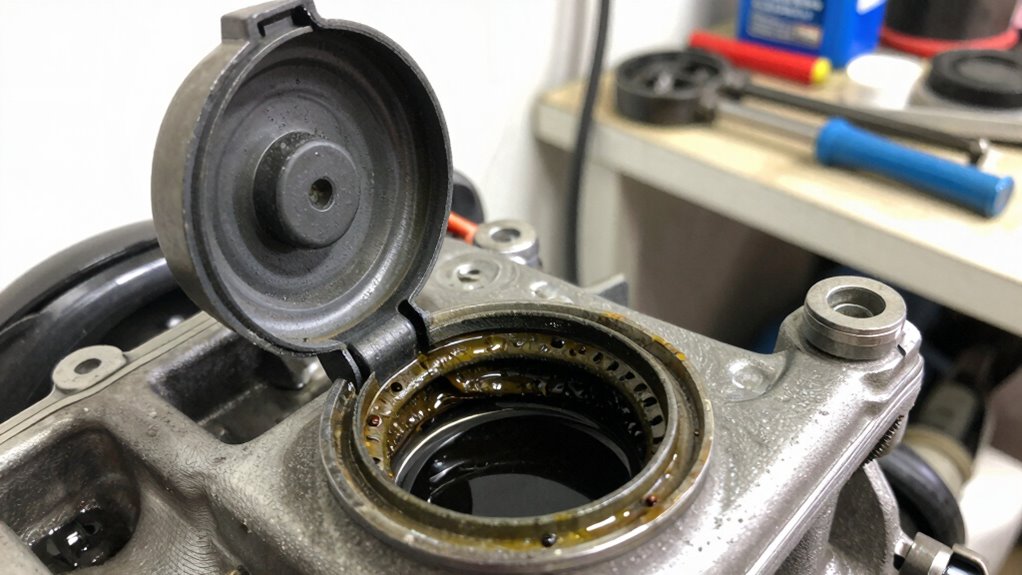
Using the wrong type of oil in your small engine can lead to serious, long-term damage. Low-quality or incompatible oil fails to provide proper lubrication, causing increased friction and wear on engine parts. Over time, this accelerates component degradation, leading to costly repairs or engine failure. Thick or thickening oils can clog small passages, reducing airflow and cooling efficiency. Conversely, using oil with incorrect viscosity prevents proper sealing of piston rings, resulting in decreased compression and power loss. Poor oil choices can also cause sludge buildup, which hampers moving parts and blocks essential oil flow. Additionally, improper oil can compromise heat buffering, making it harder for the engine to maintain optimal operating temperatures. Using oils that lack proper additives can further diminish engine protection and performance. Ultimately, consistently using the wrong oil accelerates engine aging, shortens its lifespan, and increases maintenance costs. Protect your engine by always selecting oil suited to its specifications, ensuring durability and smooth operation. Proper oil maintenance is essential for extending engine life and preventing costly repairs.
Tips for Choosing the Best Oil to Keep Your Small Engine Running

Choosing the right oil for your small engine starts with understanding its specific requirements. Check your owner’s manual for the recommended oil type and viscosity. Using the wrong oil can lead to poor lubrication or engine damage. Keep these tips in mind:
- Always select oil labeled for small engines or two-stroke engines if applicable.
- Match the viscosity to the manufacturer’s specs, often 10W-30 or 30-weight.
- Use synthetic oils if your manual recommends them for better performance.
- Avoid mixing different oil types, as this can compromise lubrication quality.
- Be aware that pet owner behaviors such as pet antics can sometimes interfere with outdoor equipment maintenance.
Can You Mix Different Oils in Your Small Engine?
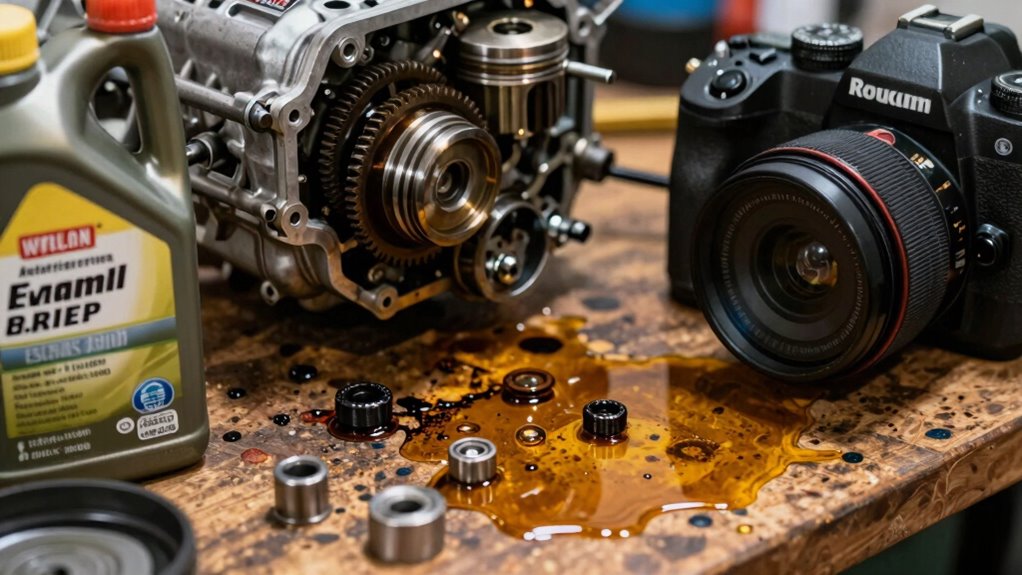
Mixing different types of oil in your small engine can cause problems with lubrication and engine performance. Different oils have unique additives, viscosities, and chemical compositions that don’t always blend well. When you mix oils, you risk reducing the effectiveness of the protective film on engine parts, which can lead to increased wear and potential damage. Some oils may not be compatible, causing chemical reactions that create sludge or deposits. If you’ve accidentally combined oils, check if they’re compatible before running the engine. Generally, it’s best to stick with the same type and brand of oil recommended by the manufacturer. Using mixed oils regularly can compromise engine longevity and efficiency, so it’s better to drain and replace with fresh oil instead of mixing different kinds. Being aware of oil compatibility can help prevent engine issues and extend your equipment’s lifespan.
When Should You Follow the Manufacturer’s Oil Recommendations?
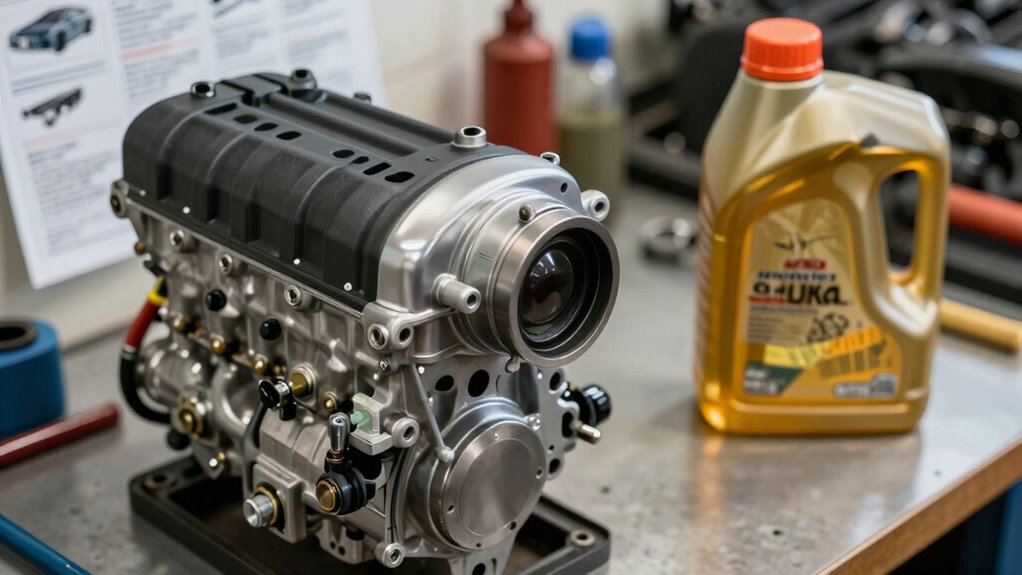
To keep your small engine running smoothly, it’s important to follow the manufacturer’s oil recommendations at all times. Using the right oil ensures peak performance and longevity. You should follow these key moments:
- When starting a new engine for the first time.
- During regular oil changes, based on the schedule.
- If your engine manufacturer specifies a particular oil type or viscosity.
- When operating your equipment under specific conditions, like high temperatures or heavy loads.
Ignoring these guidelines can cause increased wear, poor engine performance, or even damage. Always check your owner’s manual for precise recommendations. Using the correct oil at the right time keeps your engine efficient and helps avoid costly repairs down the line. When in doubt, stick to the manufacturer’s advice for the best results.
Frequently Asked Questions
How Often Should I Change the Oil in My Small Engine?
You should change the oil in your small engine every 25 to 50 hours of use or at least once a season, whichever comes first. Check your owner’s manual for specific recommendations, as some engines may need more frequent changes. Regular oil changes keep your engine running smoothly, prevent damage, and extend its lifespan. Don’t skip this maintenance; it’s essential for peak performance.
Can Synthetic Oil Be Used in Small Engines?
Yes, you can use synthetic oil in small engines. Think of it like upgrading from regular sneakers to high-performance running shoes—you get better protection and efficiency. Synthetic oil offers improved lubrication, especially in extreme temperatures, helping your engine run smoother and last longer. Just make sure it matches your engine’s specifications. Many small engine manufacturers now recommend synthetic for peak performance, so it’s a smart upgrade for your equipment.
What Are the Signs of Oil-Related Engine Problems?
You’ll notice oil-related engine problems if your engine misfires, stalls, or runs rough. Watch for excessive smoke, especially blue or gray, which signals burning oil. If you hear knocking or ticking sounds, it could mean inadequate lubrication. Also, check your oil level regularly; low oil can cause overheating and damage. If you detect a strong oil smell or see leaks, address it quickly to prevent further engine damage.
Does Oil Type Affect Engine Startup in Cold Weather?
Did you know that using the right oil can improve cold start performance by up to 50%? Yes, oil type definitely affects engine startup in cold weather. Thinner oils, like 5W-30, flow more easily at low temperatures, reducing strain on your engine. If you stick with recommended oils, you’ll notice smoother starts and less wear. So, always choose the correct oil for cold conditions to keep your engine running smoothly.
Are There Environmentally Friendly Oil Options for Small Engines?
Yes, you can choose environmentally friendly oils for small engines. Look for biodegradable, plant-based, or synthetic oils labeled as eco-friendly. These options reduce harmful emissions and are less toxic to the environment. Make sure they meet your engine’s specifications, and follow the manufacturer’s recommendations. Switching to eco-friendly oil helps protect the environment while keeping your engine running smoothly. Just verify compatibility before making the switch.
Conclusion
Choosing the right oil is like tending a delicate garden—you need the right nutrients to keep it thriving. Using the wrong oil can silently corrode your engine’s foundation, leading to costly breakdowns. Trust your manufacturer’s guidance as your map through this intricate landscape. When you select wisely, you nurture your engine’s spirit, ensuring it remains a resilient, steadfast companion—standing strong against time’s relentless march, much like a mighty oak rooted deep in the earth.
Fall Picks
fall essentials
As an affiliate, we earn on qualifying purchases.