

When the temperature drops, your snowblower’s engine oil thickens, making it harder for it to flow and lubricate parts during startup. This increased viscosity causes more wear on engine components, especially at startup when oil hasn’t yet circulated fully. Using the wrong oil or neglecting seasonal changes can lead to quicker engine wear and reduced lifespan. To prevent this, switching to a cold-weather or multi-viscosity oil is essential—learn more about how to protect your snowblower efficiently.

Get business pricing on garage and car supplies
- Business-only prices and quantity discounts
- Tax-exempt purchasing
- Multiple users, one account, clear invoices
Key Takeaways
- Cold temperatures increase oil viscosity, making it thicker and harder to flow during snowblower startup.
- Thick oil causes inadequate lubrication, leading to increased engine wear during initial operation.
- Using winter-appropriate multi-viscosity oils like 0W-30 improves flow and reduces startup wear.
- Proper cold-weather lubrication ensures smoother engine starts and longer component lifespan.
- Regularly checking and switching to suitable winter oil prevents startup issues and engine damage in cold conditions.
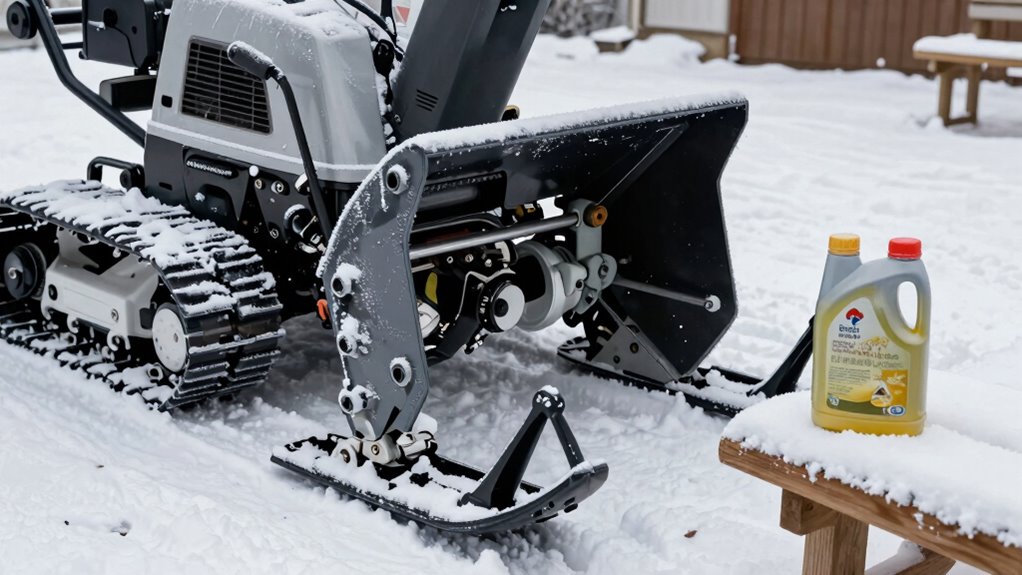
When temperatures drop, cold oil can cause snowblower engines to struggle or fail to start. The reason lies in how engine oil behaves in low temperatures. Oil’s viscosity, which measures its thickness or resistance to flow, increases as it gets colder. This means that in winter, standard oil can become too thick, making it harder for the engine’s moving parts to turn smoothly. If you use oil with the wrong viscosity, the engine may not receive proper lubrication during startup, leading to increased wear or even damage over time.
Cold weather lubrication is critical for your snowblower’s reliable operation. When the oil is too thick, it doesn’t circulate quickly enough, causing additional strain on the engine’s components. You might notice that your snowblower takes longer to start or runs roughly once it’s running. To prevent these issues, you need to pay close attention to the engine oil viscosity recommended by the manufacturer for winter use. Many snowblower models specify using a multi-viscosity oil, like 5W-30 or 0W-30, designed to flow easily at low temperatures. These oils are formulated to provide proper lubrication in cold weather, ensuring that the engine parts are protected from wear during startup and operation.
Cold weather lubrication ensures smooth engine startup and prevents wear during winter. Use multi-viscosity oils like 5W-30.
Choosing the right oil isn’t just about avoiding startup problems. Cold weather lubrication also helps extend the lifespan of your engine. When oil flows freely, it coats all moving parts evenly, reducing friction and wear. Conversely, if the oil is too thick, it won’t reach critical areas quickly enough, increasing the risk of damage over time. This is especially true if the engine was filled with a higher-viscosity oil meant for warmer conditions. Switching to a winter-grade oil before the first snowfall can make a significant difference in how smoothly your snowblower performs and how long it lasts.
In addition to selecting the proper oil viscosity, it’s a good idea to check the oil level regularly during winter. Cold temperatures can cause oil to settle or thicken, which might lead to under-lubrication if the level is low. Always follow the manufacturer’s instructions for oil changes and use high-quality, cold-weather lubricants to keep your snowblower ready when you need it most. Paying attention to engine oil behavior and choosing the right cold weather lubrication will ensure your snowblower starts reliably and runs smoothly, even in the harshest winter conditions.
snowblower cold weather oil 0W-30
As an affiliate, we earn on qualifying purchases.
As an affiliate, we earn on qualifying purchases.
Frequently Asked Questions
How Can I Prevent Cold Oil From Thickening in My Snowblower?
To prevent cold oil from thickening during a cold start, you should use a lightweight oil with lower viscosity suited for low temperatures. Before starting your snowblower, warm up the engine or let it sit in a warmer environment if possible. Regularly check and change the oil to guarantee ideal viscosity. This helps reduce startup wear and ensures your snowblower runs smoothly in cold conditions.
What Are the Signs of Startup Wear Related to Cold Oil?
Have you noticed your snowblower struggling during startup? That’s a sign of startup wear caused by cold oil. When oil viscosity is too high, it thickens and hampers engine movement. During engine startup, you might hear squealing, experience sluggish operation, or see delayed acceleration. These issues indicate the cold oil isn’t flowing smoothly, stressing engine parts. Addressing oil viscosity and warming up your snowblower can help prevent further startup wear.
Does Using Synthetic Oil Help Reduce Startup Wear?
Yes, using synthetic oil helps reduce startup wear. Synthetic oil benefits include better cold weather lubrication, which guarantees your engine components are protected during startup. It flows more quickly and maintains its viscosity in low temperatures, minimizing friction and wear. By choosing synthetic oil, you improve cold start performance and extend your snowblower’s lifespan, especially in cold climates where traditional oils struggle to provide adequate lubrication right away.
How Often Should I Change the Oil in Cold Weather?
You should change your snowblower oil every 25-50 hours of use during cold weather, or at least once at the start of winter as part of your winter maintenance tips. Cold temperatures can thicken oil, so frequent oil changes help maintain proper lubrication and reduce startup wear. Check your owner’s manual for specific recommendations, and consider synthetic oil for better performance in cold conditions.
Are There Specific Oil Viscosities Recommended for Winter Snowblowers?
For winter lubrication, you should choose oil viscosity that flows easily in cold temperatures—typically 5W-30 or even 0W-30. These specific oil viscosities guarantee your snowblower starts smoothly and operates efficiently in freezing conditions. Don’t overlook this detail; the right winter lubrication can prevent startup wear and extend your snowblower’s lifespan. Keep your equipment running flawlessly by selecting the proper oil viscosity tailored for cold weather.
multi-viscosity snowblower engine oil
As an affiliate, we earn on qualifying purchases.
As an affiliate, we earn on qualifying purchases.
Conclusion
Just like a car struggling to start on a freezing morning, snowblowers face their own cold oil dilemma. When oil thickens, it’s as if your machine’s gears are trying to wade through molasses. To keep your snowblower running smoothly, think of warm oil as its morning coffee—warming it up maintains everything flowing. With a little attention, you’ll ensure your snowblower’s winter battle remains a swift, icy waltz instead of a frozen struggle.
winter snowblower oil change kit
As an affiliate, we earn on qualifying purchases.
As an affiliate, we earn on qualifying purchases.
snowblower engine oil for cold temperatures
As an affiliate, we earn on qualifying purchases.
As an affiliate, we earn on qualifying purchases.
Halloween Picks
halloween
As an affiliate, we earn on qualifying purchases.