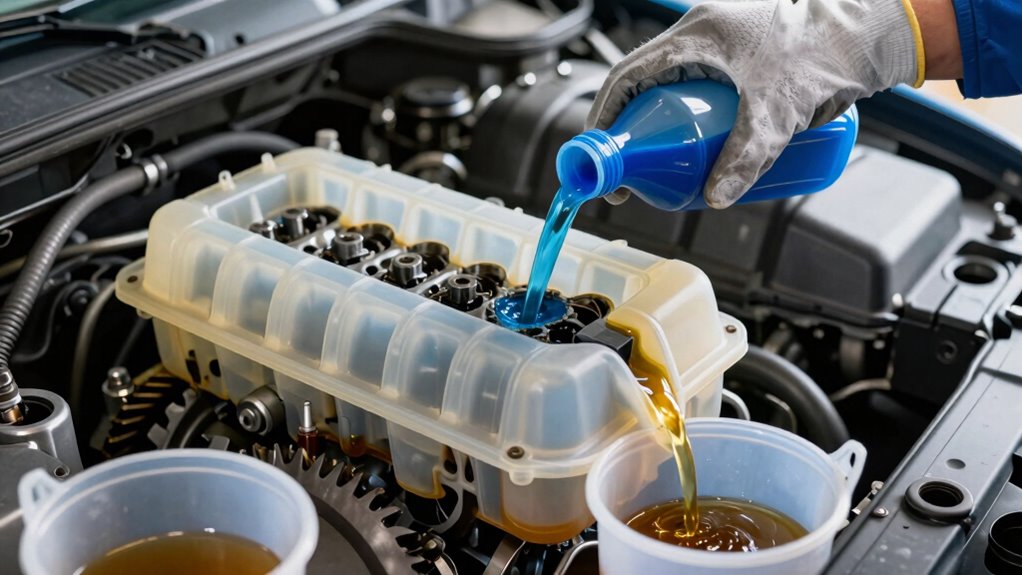

When comparing flushing ATF to drain-and-fill, many miss the risk of dislodging debris that can clog narrow passages or damage valves. Flushing forces new fluid through the entire system, which can stir up old sludge and metal shavings, potentially increasing wear or causing internal damage. Drain-and-fill is safer because it gently replaces some fluid at a time, allowing contaminants to stay settled. Continuing further reveals how choosing the right method can protect your transmission’s longevity.

Get business pricing on garage and car supplies
- Business-only prices and quantity discounts
- Tax-exempt purchasing
- Multiple users, one account, clear invoices
Key Takeaways
- Flushing can dislodge debris, risking clogs and damage, especially in older or high-mileage transmissions.
- Drain-and-fill gradually reduces contamination with minimal disturbance, lowering the risk of internal damage.
- Flushing may circulate harmful debris throughout the system, increasing wear and potential component failure.
- Drain-and-fill is safer for compromised transmissions, whereas flushing suits newer, well-maintained vehicles.
- Misuse of flushing can accelerate transmission deterioration, a risk often overlooked by vehicle owners.
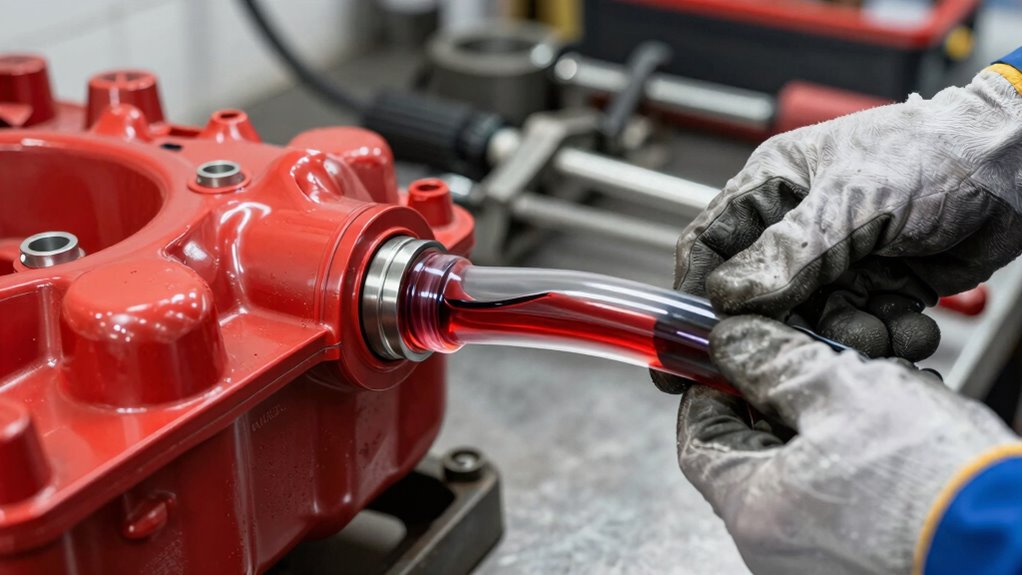
When it comes to maintaining your vehicle’s transmission, choosing between flushing the ATF and performing a drain-and-fill can be confusing. Both methods aim to replace old transmission fluid, but they do so differently and carry distinct risks. Understanding these differences is vital because improper maintenance can lead to fluid contamination and ultimately shorten your transmission’s lifespan. If you’re not careful, a flush might do more harm than good, especially if your transmission is already showing signs of wear or has accumulated debris.
Choosing between transmission flushes and drain-and-fill methods impacts your transmission’s longevity and safety.
A drain-and-fill involves removing a portion of the old fluid through a drain plug and replacing it with fresh fluid. This process leaves some of the contaminated fluid inside, but it’s generally safer for your transmission. Since only part of the fluid gets replaced, the remaining fluid continues to circulate, gradually diluting the contaminants and reducing the risk of disturbing any hardened deposits. This method allows you to refresh the fluid without forcing any debris or sludge through the entire system, which can happen during a flush.
On the other hand, a flush involves using a machine to force new transmission fluid through the system, pushing out the old fluid entirely. While it might seem like a thorough solution, it can inadvertently dislodge debris, sludge, or metal shavings that have settled in the transmission over time. This debris can become trapped in narrow passages, valves, or solenoids, leading to blockages or malfunctions. If your transmission already has fluid contamination or deposits, a flush might circulate these contaminants more widely, which can accelerate wear and reduce your transmission’s lifespan.
Many experts warn that a flush isn’t suitable for every vehicle, especially older models or those with high mileage and signs of transmission issues. The sudden movement of debris caused by a flush can cause damage, clog passages, or lead to internal component failure. Conversely, a controlled drain-and-fill provides a safer, more conservative approach, giving your transmission time to adapt to the new fluid gradually. This method minimizes the risk of dislodging debris and helps maintain the integrity of the transmission. Additionally, proper maintenance practices can help extend the lifespan of your transmission and avoid costly repairs down the line.
automatic transmission fluid flush machine
As an affiliate, we earn on qualifying purchases.
As an affiliate, we earn on qualifying purchases.
Frequently Asked Questions
Can Flushing Damage My Transmission More Than Draining?
Flushing your transmission can potentially cause more damage than draining if done improperly, especially if there’s existing transmission fluid contamination. The aggressive cleaning may dislodge debris that damages transmission seals or clogs essential components. Draining and replacing fluid gradually minimizes risks, reducing chances of transmission seal damage and ensuring contaminants are removed carefully. Always consult a professional before deciding on flushing, as it can impact your transmission’s longevity if not performed correctly.
Which Method Is Faster: Flushing or Drain-And-Fill?
Flushing is typically faster than drain-and-fill, taking about 15-30 minutes compared to an hour for draining and refilling. Studies show that DIY flush methods can be completed in less time, but they risk incomplete fluid replacement. If you want quick results, flushing wins; however, transmission fluid analysis afterward is vital to guarantee your transmission remains healthy. Always follow proper procedures to avoid potential damage.
Is Flushing Suitable for All Types of Transmissions?
Flushing isn’t suitable for all transmission types because it can cause issues with transmission materials and fluid compatibility. If your transmission has older or sensitive components, flushing might dislodge debris or damage seals. Always check your vehicle’s specifications and consult a professional to determine if flushing is safe. For some transmissions, a simple drain-and-fill may be better to avoid risking damage or costly repairs.
How Often Should I Perform a Transmission Flush?
Think of your transmission as a garden that needs regular tending. You should perform a transmission flush every 30,000 to 60,000 miles to guarantee proper transmission cleaning and fluid replacement. This practice helps remove old, degraded fluid and contaminants, keeping your transmission healthy. However, always follow your vehicle manufacturer’s recommendations, as some transmissions may need less frequent attention. Regular maintenance keeps your transmission running smoothly, just like a well-tended garden flourishes.
Are There Specific Signs Indicating a Flush Is Necessary?
You should consider a transmission flush if you notice fluid contamination, such as a burnt smell, dark color, or debris in the fluid. Slipping gears, delayed shifting, or rough operation also signal that your transmission may need a flush. Addressing these signs promptly helps prevent further damage, ensuring better transmission longevity. Regular maintenance keeps your transmission running smoothly, but don’t ignore warning signs—they could save you costly repairs later.
As an affiliate, we earn on qualifying purchases.
Conclusion
While flushing ATF might seem like a thorough option, it can carry risks if not done properly, like pushing contaminants into your transmission. A simple drain-and-fill usually does the job safely and effectively, especially if you’re unsure about flushing techniques. Don’t worry—sticking to drain-and-fill keeps your transmission healthy without the potential drawbacks of a risky flush. When in doubt, consult a professional to ensure your transmission stays in top shape.
transmission fluid exchange tool
As an affiliate, we earn on qualifying purchases.
As an affiliate, we earn on qualifying purchases.
transmission flush vs drain fill
As an affiliate, we earn on qualifying purchases.
As an affiliate, we earn on qualifying purchases.
Halloween Picks
halloween
As an affiliate, we earn on qualifying purchases.