Blow-by happens when combustion gases sneak past your piston rings into the crankcase, turning your engine oil into a messy mix of fuel, air, and byproducts. This increases crankcase pressure and can cause smoke, oil leaks, and faster wear on engine parts. Worn rings, high temperatures, or poor maintenance make it worse. If you want to understand how these gases impact your engine’s health and what to do about it, keep exploring further.

Get business pricing on garage and car supplies
- Business-only prices and quantity discounts
- Tax-exempt purchasing
- Multiple users, one account, clear invoices
Key Takeaways
- Blow-by occurs when combustion gases leak past piston rings into the crankcase, increasing pressure and contaminating oil.
- It results from worn piston rings, high engine temperatures, or poor maintenance, allowing gases and debris to mix with engine oil.
- The contaminated oil can degrade lubrication, cause oil consumption, and lead to potential engine damage over time.
- Blow-by gases are typically vented through the PCV system, but excessive gases can cause smoke from the crankcase vent or oil cap.
- Regular engine maintenance, timely repairs, and monitoring oil quality help manage blow-by and protect engine health.
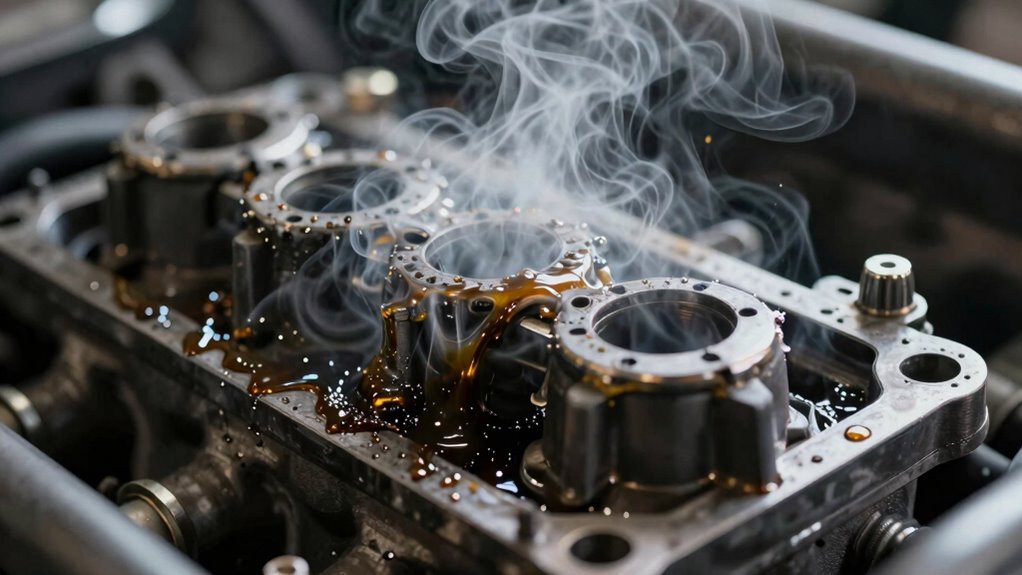
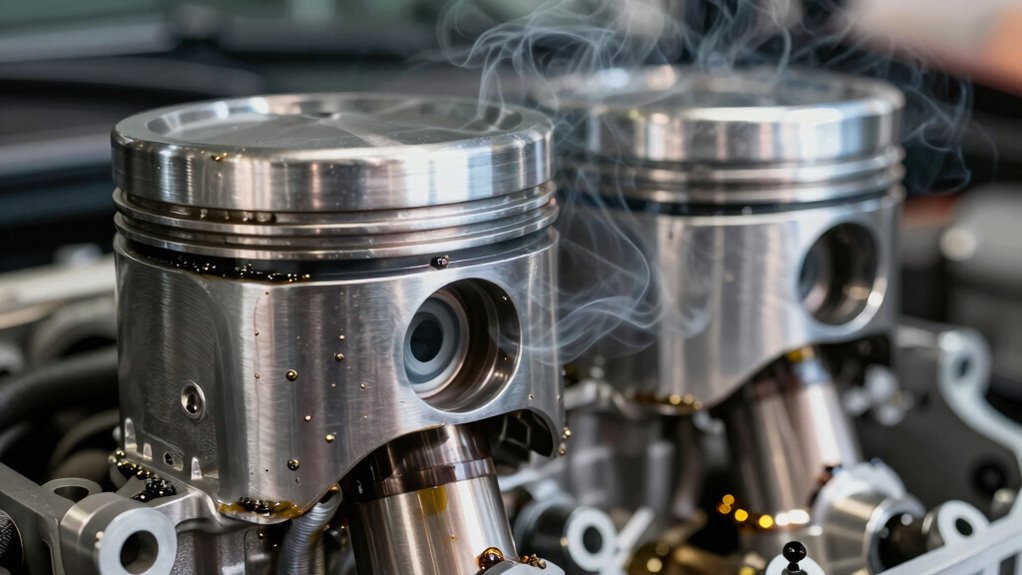
Have you ever wondered what causes engine oil to burn or smoke to escape from the crankcase? The answer lies in a phenomenon called blow-by, a common but often overlooked issue that impacts your engine’s performance. Essentially, blow-by occurs when combustion gases leak past the piston rings and escape into the crankcase. Piston rings are designed to seal the combustion chamber tightly, preventing gases from slipping into the crankcase. However, over time, these rings can wear out or become less effective, especially under heavy use or high mileage. When this happens, combustion gases—mainly unburned fuel, air, and combustion byproducts—push past the rings and enter the crankcase, increasing pressure inside the engine.
Blow-by occurs when combustion gases leak past piston rings into the crankcase, causing pressure and smoke.
This increased crankcase pressure is a key factor in blow-by. Normally, the crankcase is vented to release excess pressure safely through a PCV (Positive Crankcase Ventilation) system. But as blow-by gases accumulate, they elevate the pressure beyond normal levels. This excess pressure forces oil vapors and combustion gases to escape through any available openings, often resulting in smoke or fumes escaping from the crankcase vent or oil fill cap. You might notice a bluish smoke from the exhaust or see oil consumption increase unexpectedly. The smoke is a telltale sign that combustion gases are bypassing the piston rings and contaminating the oil, leading to degradation of lubrication and potential engine damage if left unchecked.
The source of blow-by can be traced back to the wear and tear of piston rings, which become less effective at sealing as they age. Other factors include high engine temperatures, poor maintenance, or manufacturing defects that accelerate ring wear. As blow-by worsens, it can cause oil to burn more readily, leading to increased emissions and reduced engine efficiency. The oil itself becomes contaminated with combustion byproducts, which diminishes its ability to lubricate properly. This contamination accelerates engine wear, potentially resulting in costly repairs or even engine failure if not addressed promptly. Regularly monitoring oil quality and engine performance can help detect early signs of blow-by before significant damage occurs.
To manage blow-by, mechanics often recommend regular maintenance, including oil changes and inspections of piston rings and the PCV system. Replacing worn piston rings or fixing leaks can restore proper sealing and reduce crankcase pressure. Proper engine tuning and avoiding excessive high-RPM operation can also help minimize blow-by. Recognizing the signs early—like increased oil consumption, smoke, or unusual engine noise—allows you to intervene before significant damage occurs. Ultimately, understanding the role of piston rings and crankcase pressure in blow-by helps you keep your engine running smoothly and efficiently, avoiding the dirty secret that oils are tasked with handling.
As an affiliate, we earn on qualifying purchases.
Frequently Asked Questions
How Does Blow-By Impact Overall Engine Performance?
Blow-by reduces your engine’s performance by pushing combustion gases past piston rings, which leads to engine oil contamination and increased piston ring wear. This causes loss of compression, power dips, and inefficient fuel use. When blow-by worsens, it stresses engine components and shortens their lifespan. To keep performance ideal, you need to address blow-by early, maintain proper oil levels, and use quality oils that resist contamination.
Can Blow-By Damage Engine Components Over Time?
Yes, blow-by can seriously damage your engine components over time. It causes engine oil contamination, which makes your oil less effective, and accelerates piston ring wear, risking engine failure. Think of it as tiny, relentless invaders sneaking past seals, slowly corroding essential parts. Ignoring blow-by’s impact lets this damage build, jeopardizing your engine’s health and longevity. Stay vigilant, and keep your engine sealed tight to prevent catastrophic failure.
What Are the Signs of Excessive Blow-By in an Engine?
If you notice excessive blow-by, you’ll likely see increased oil consumption and engine smoking. You might also experience a rough engine idle, lower power, and foul odors from the exhaust. These signs indicate that combustion gases are escaping past piston rings, which can cause wear and damage over time. Addressing blow-by early helps prevent serious engine issues, so keep an eye on oil levels and smoke emissions regularly.
How Often Should I Check for Blow-By in My Vehicle?
You should check for blow-by every 3,000 to 5,000 miles, balancing the peace of mind with your vehicle’s oil consumption and crankcase pressure. While it’s tempting to ignore subtle signs, regular inspections help catch issues early. Think of it as a routine health check for your engine—ensuring that excessive blow-by doesn’t sneak up, damaging your engine and costing you more in repairs down the line.
Are There Specific Driving Conditions That Increase Blow-By?
Yes, certain driving conditions can increase blow-by. When you drive at high altitudes, the thinner air causes your engine to work harder, leading to more blow-by. Cold weather conditions also play a role, as cold oil is thicker and less effective at sealing piston rings, which can result in increased blow-by. To keep your engine healthy, monitor your oil and consider these factors when driving in extreme conditions.
As an affiliate, we earn on qualifying purchases.
Conclusion
Now that you understand blow-by’s dirty dilemma, you see how vital proper oil maintenance is. Don’t dismiss the danger lurking in those tiny, toxic traces sneaking past seals. Stay vigilant, vigilant, vigilant—protect your engine’s health with proactive practices. By managing blow-by’s burdens, you prevent potential problems and preserve your power. Keep your engine’s environment clean and clear, and enjoy the smooth, stress-free journey you deserve. Because when it comes to your car, prevention paves the path to performance.
piston ring wear diagnostic tool
As an affiliate, we earn on qualifying purchases.
As an affiliate, we earn on qualifying purchases.
As an affiliate, we earn on qualifying purchases.
Fall Picks
fall essentials
As an affiliate, we earn on qualifying purchases.