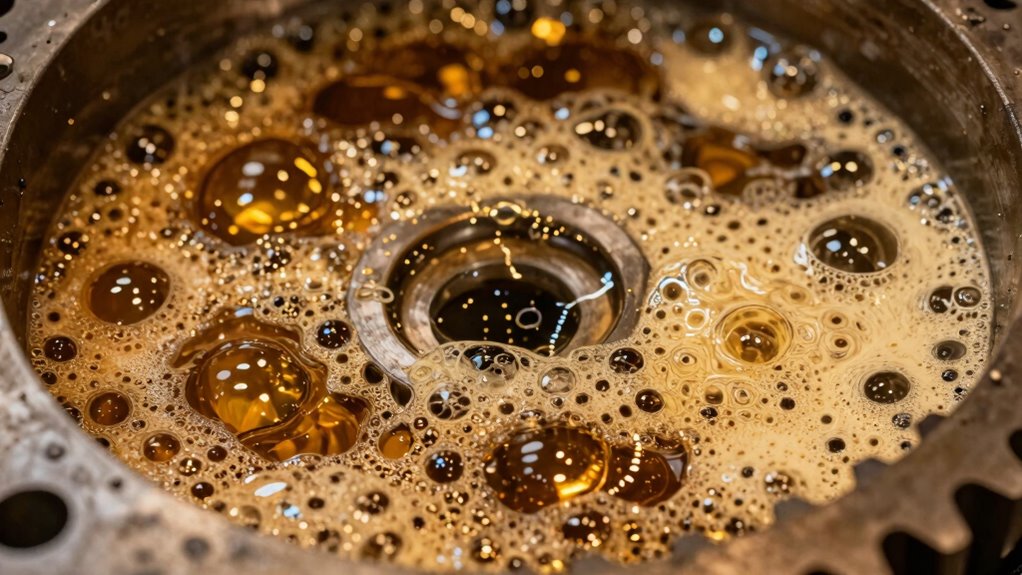

Overfilling gear oil or using the wrong viscosity can cause turbulence and splashing inside the gear housing, leading to increased heat. Excess oil traps air, creating foam that reduces lubrication efficiency and promotes metal contact and wear. Incorrect viscosity oils either lack enough film strength or generate more resistance, both raising temperatures further. If you want to understand how these issues accelerate gear damage and how to prevent them, keep exploring this topic.

Get business pricing on garage and car supplies
- Business-only prices and quantity discounts
- Tax-exempt purchasing
- Multiple users, one account, clear invoices
Key Takeaways
- Overfilling increases turbulence, causing excessive agitation and foam formation, which hampers heat dissipation.
- Wrong viscosity oil creates inadequate film strength, leading to increased friction and heat buildup.
- Excess oil introduces air into the lubricant, forming foam that reduces lubrication efficiency and causes overheating.
- Foam acts as an insulator, trapping heat and preventing proper cooling of gear components.
- Both overfill and incorrect viscosity disrupt optimal oil flow, increasing metal contact, friction, and heat generation.
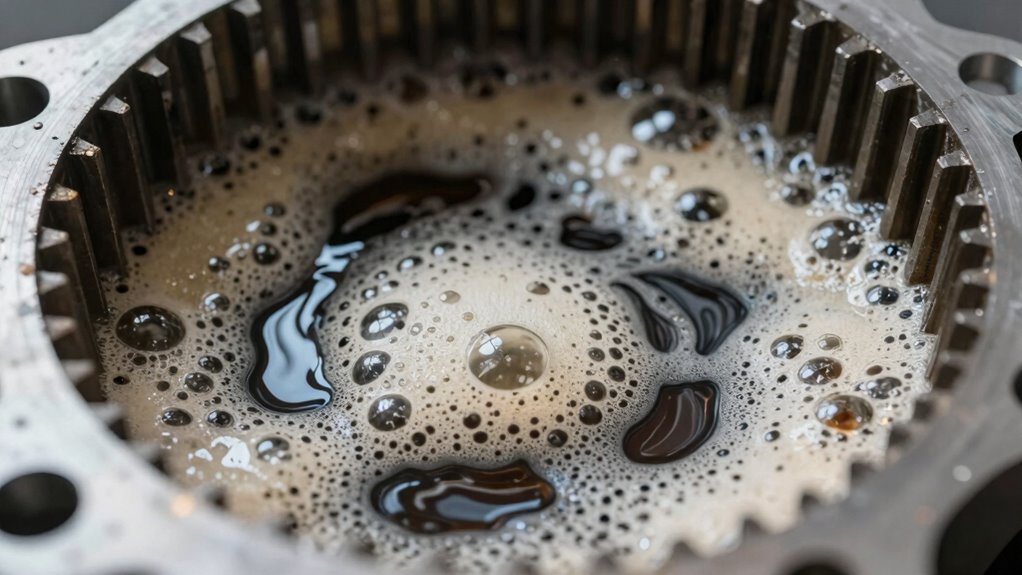
Gear oil foaming occurs when air bubbles form and trap within the lubricant, which can lead to decreased lubrication efficiency and increased wear on gear components. When foam develops, it hampers the oil’s ability to properly coat gear surfaces, resulting in insufficient lubrication during operation. This not only accelerates wear but also raises the risk of overheating and equipment failure. To prevent this, maintaining proper oil levels and choosing the correct viscosity are essential steps in contamination prevention and guaranteeing ideal gear performance.
Foaming reduces lubrication, increases wear, and risks overheating; proper oil levels and viscosity are essential for gear health.
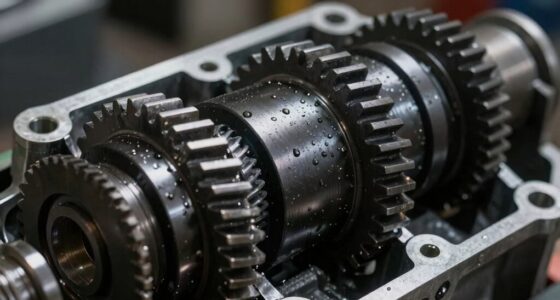
Overfilling your gear case is a common cause of foaming. When too much oil is added, it creates excess turbulence and splashing inside the housing. This agitation introduces air into the lubricant, forming foam. The trapped air disrupts the oil’s ability to flow smoothly through gear teeth and bearings, reducing lubrication efficiency. As the lubricant’s effectiveness diminishes, metal-to-metal contact increases, causing faster wear and potential damage. Regularly checking and maintaining the proper oil quantity helps minimize this risk, keeping the gear system clean and functioning properly.
Using the wrong viscosity oil also contributes to foaming and heat buildup. Oils with too low a viscosity may not provide enough film strength to separate gear surfaces, leading to metal-on-metal contact. Conversely, oils that are too thick can increase resistance and generate unnecessary heat during operation. The right viscosity ensures a stable lubricant film, reduces turbulence, and prevents excessive agitation that causes foaming. When selecting gear oil, always adhere to manufacturer recommendations for viscosity, especially under varying temperature conditions, to maximize lubrication efficiency and prevent unnecessary heat accumulation.
Foaming doesn’t just compromise lubrication; it also promotes contamination entry. Air bubbles can carry dirt, debris, or moisture into the oil, degrading its quality and further impairing gear operation. Contaminants can accelerate corrosion, clog filters, and cause abrasive wear. Therefore, controlling foaming is critical for contamination prevention. Using proper fill procedures, avoiding overfill, and selecting the right viscosity oil all contribute to a cleaner, more reliable gear system. Additionally, understanding gear oil viscosity and its impact on performance can help prevent foaming and heat buildup. When maintenance routines include these practices, you extend the lifespan of your gears, improve efficiency, and reduce costly repairs caused by heat-related failures.
gear oil overfill prevention kit
As an affiliate, we earn on qualifying purchases.
As an affiliate, we earn on qualifying purchases.
Frequently Asked Questions
Can Foaming Gear Oil Cause Permanent Transmission Damage?
Yes, foaming gear oil can cause permanent transmission damage. When gear oil foams, it leads to inadequate lubrication, increasing wear and accelerating gear oil degradation. Over time, this can cause contamination and damage to transmission components. To prevent this, guarantee proper oil viscosity and avoid overfilling, which helps maintain lubrication quality, reduces foaming, and promotes contamination prevention, ultimately protecting your transmission from long-term harm.
How Does Ambient Temperature Influence Gear Oil Foaming?
Ever wondered how ambient temperature influences gear oil foaming? Higher ambient temperatures increase thermal expansion, causing the oil to become more prone to foaming. As temperatures rise, the oil’s viscosity drops, making it less effective at preventing air bubbles. Cooler temperatures help maintain proper oil viscosity, reducing foaming risks. So, controlling ambient temperature helps keep your gear oil stable and minimizes foaming issues, protecting your transmission’s performance.
Are Synthetic Gear Oils Less Prone to Foaming?
Synthetic gear oils are less prone to foaming because of their synthetic advantages, which include improved viscosity stability. This stability helps maintain consistent lubrication and reduces air entrapment that causes foaming. You’ll find that synthetic oils resist breakdown and foam formation better than conventional oils, especially under high temperatures or heavy loads. By choosing synthetic, you help guarantee smoother operation, reduced heat buildup, and longer gear life.
What Are the Long-Term Effects of Overfilling Gear Oil?
Imagine a gear system overwhelmed by excess oil, like a river spilling over its banks. Overfilling gear oil can cause increased heat, accelerated wear, and potential seal damage. Long-term, it hampers gear efficiency and shortens lifespan. To prevent this, focus on proper gear oil maintenance and overfill prevention, ensuring you keep the oil at *ideal* levels. This way, your gears stay smooth, cool, and functioning well over time.
How Often Should Gear Oil Be Checked for Foaming?
You should check for gear oil foaming during your regular maintenance schedule, ideally every few months or as recommended by the manufacturer. During fluid inspection, look for signs of air bubbles or froth on the oil surface. If foaming is present, it indicates overfill or improper viscosity, which can lead to overheating. Address these issues promptly to maintain peak gear performance and prevent long-term damage.
As an affiliate, we earn on qualifying purchases.
Conclusion
If you overfill your gear oil or choose the wrong viscosity, you risk foaming and excessive heat buildup. This can lead to faster gear wear and potential failure. Did you know that gear overheating accounts for up to 70% of gear failures? To keep your gears running smoothly, always check oil levels and select the right viscosity. Staying vigilant helps prevent costly repairs and extends the life of your transmission.
gear oil foaming control additive
As an affiliate, we earn on qualifying purchases.
As an affiliate, we earn on qualifying purchases.
As an affiliate, we earn on qualifying purchases.
Fall Picks
fall essentials
As an affiliate, we earn on qualifying purchases.