TL;DR

Get business pricing on garage and car supplies
- Business-only prices and quantity discounts
- Tax-exempt purchasing
- Multiple users, one account, clear invoices
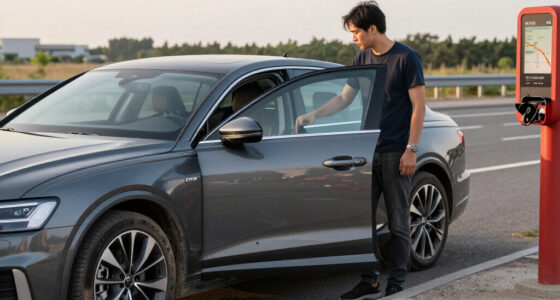
Powerdot has integrated with Hubject’s Plug & Charge ecosystem, making more than 7,000 of its charging points in France, Spain, Belgium and Poland compatible with the technology. Drivers with compatible vehicles and charging services can authenticate by plugging in, without using a separate app or RFID card at the charging point.
Powerdot says more than 7,000 of its charging points in France, Spain, Belgium and Poland now support Hubject’s Plug & Charge system, allowing compatible electric vehicles to authenticate automatically when connected. The rollout extends app-free charging authentication across a network Powerdot says has about 13,000 points at 2,400 locations in Europe.
The integration links Powerdot’s charging network with Hubject’s Plug & Charge ecosystem. The technology is based on the ISO 15118 standard, which allows vehicles and chargers to exchange information automatically. Rather than starting a session with a charging app or RFID card, a driver with compatible arrangements can connect the vehicle and have it authenticated in the background.
Hubject’s public key infrastructure is used to authenticate digital certificates exchanged among vehicles, charging infrastructure and mobility service providers. The source report says the more than 7,000 enabled Powerdot points are spread across the four named countries and represent over half of Powerdot’s stations. It does not provide a country-by-country breakdown or specify how many locations are included in the launch.
Powerdot focuses on destination charging at places where drivers may leave their cars for longer periods, including supermarkets, shopping centers, restaurants and other commercial sites. The company says its network is designed to work with outside mobility platforms, charging-service providers and vehicle manufacturers, rather than requiring drivers to use a proprietary Powerdot app.
Fewer Steps at Destination Chargers
Plug & Charge can reduce the number of steps drivers need to start a charging session at compatible locations. Instead of finding a provider’s app, signing in or presenting an RFID card, drivers can rely on their vehicle’s digital credentials and an enabled charger to handle authentication. That may make public charging easier for people who use multiple networks, although the experience depends on the vehicle and service arrangements supporting the system.
The rollout also has significance for a market where charging networks and mobility services often operate across different providers. Powerdot’s stated open-network approach and Hubject’s role as an interoperability provider connect the charging operator with a wider ecosystem. For drivers, the practical benefit is access to an additional authentication option at thousands of points; the announcement does not say that every vehicle or charging account can use it.
For Powerdot, enabling the feature at more than 7,000 points extends Plug & Charge beyond a small pilot and into a substantial part of its network. It could reduce friction at the destination sites where Powerdot operates, but the announcement provides no usage figures, customer feedback or evidence of how often drivers will choose Plug & Charge over other payment and authentication methods.
Products Worth Considering
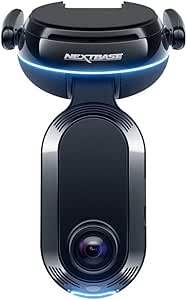
Nextbase iQ 4K Smart HD Dash Cam Pro with 64GB microSD Card – Front and Rear View, 1440p, Smart Sense Parking, Emergency SOS, Roadwatch AI

DEWALT 20V MAX 1/4-Inch Impact Driver Kit with Battery and Charger (DCF787D1)

NOCO Boost X GBX155 4250A UltraSafe Jump Starter
As an affiliate, we earn on qualifying purchases.
How the Network Integration Works
Plug & Charge is an authentication method built on ISO 15118, a standard for communication between electric vehicles and charging equipment. When the vehicle and charging service are set up to support it, they can exchange credentials so the charging point can identify the session without a separate app or card tap. The standard-based approach is intended to support communication among participating vehicles, charging operators and service providers.
Hubject operates a roaming and interoperability platform for electric-vehicle charging. In this integration, its public key infrastructure supports the secure handling and verification of digital certificates. Powerdot is the charging-point operator whose network is being connected to that system. The announcement describes the technical integration and coverage, but does not list the participating vehicle brands or mobility services.
Powerdot’s reported network totals about 13,000 charging points across Europe, while the newly enabled points are identified in France, Spain, Belgium and Poland. The distinction matters: the announcement does not say Plug & Charge is active across all Powerdot locations or all countries where it operates.
“Every operator that brings Plug & Charge to its network moves the industry closer to mass EV adoption, and Powerdot’s reach across Europe is a meaningful step in that direction.”
— Christian Hahn, Hubject CEO
Compatibility and Coverage Details
The announcement does not identify which vehicle models, manufacturers or mobility-service providers can use Plug & Charge at the newly enabled points. Compatibility depends on the vehicle and the relevant charging-service setup, so drivers should not assume that every car can start a session this way. The source also does not provide a list of individual stations, a country-by-country count or a timetable for enabling the rest of Powerdot’s network.
It is also unclear whether the integration changes pricing, payment options or the way drivers receive receipts and manage charging accounts. The announcement describes authentication and certificate exchange, but gives no operational data on successful sessions, reliability, adoption or customer response. Those details would help show how broadly the feature is being used in practice.
Further Rollout and User Guidance
Powerdot and Hubject have not, in the supplied announcement, set out a schedule for adding Plug & Charge to more Powerdot points or entering additional countries. The immediate next step for drivers is to check whether their vehicle and charging service support Hubject-connected Plug & Charge and whether the particular Powerdot location is enabled. Further information from the companies could clarify compatible services, station coverage and any expansion plans.
As the system is used across the enabled network, service availability and user experience will show how easily automatic authentication works at Powerdot’s destination sites. The announcement establishes the network integration and its stated coverage; broader adoption and the timing of any further rollout remain unreported.
Key Questions
What did Powerdot and Hubject announce?
They announced that more than 7,000 Powerdot charging points support Hubject’s Plug & Charge ecosystem. The points are in France, Spain, Belgium and Poland.
How does Plug & Charge work?
At a compatible vehicle and charger, digital credentials can be exchanged to authenticate a charging session when the driver plugs in. This can remove the need to start the session with a separate app or RFID card.
Can any electric vehicle use the enabled points?
Not necessarily. The vehicle and its charging-service arrangements must support Plug & Charge. The announcement does not name compatible vehicle models or service providers.
Are all Powerdot charging points included?
No. Powerdot reports about 13,000 charging points in its European network, while more than 7,000 points in four countries are covered by this announcement. It does not say that the remaining points are enabled.
Does Plug & Charge change charging prices?
The announcement does not describe any price changes. It focuses on how vehicles and chargers authenticate a session, and does not provide details on tariffs or payment terms.
Source: rss