
TL;DR
Dominic Chinea is adapting a 1917 Liberty V12 aircraft engine for an Edwardian-style race car, but the century-old cast-aluminum block has cracked during welding. After sharing the problem on YouTube, he received repair suggestions from viewers with experience in historic vehicles and industrial fabrication. The repair’s outcome and the car’s completion date are not yet known.
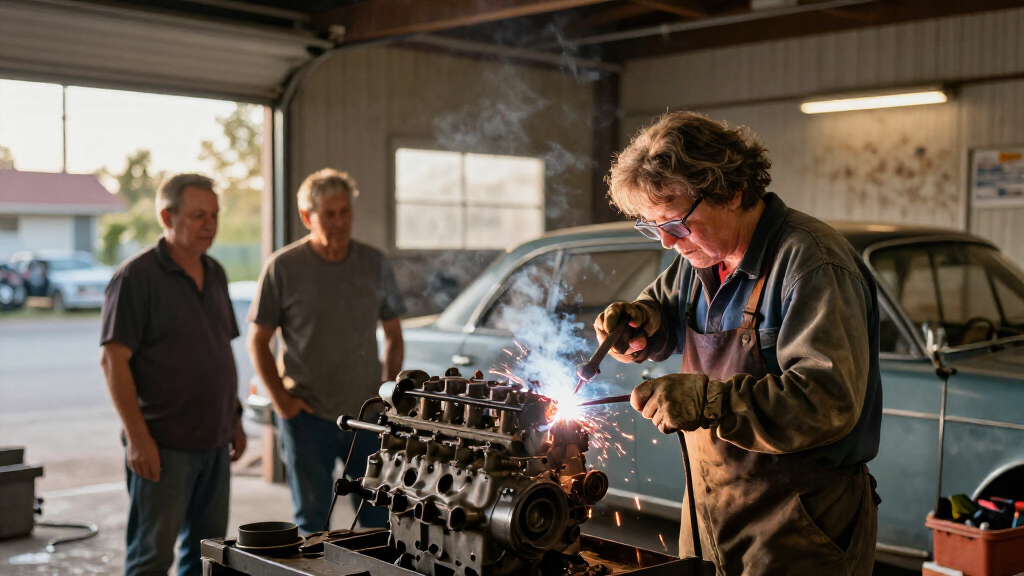
Dominic Chinea’s attempt to turn a 1917 Liberty V12 aircraft engine into a V8 for an Edwardian-style race car has become a community troubleshooting effort after welding the old cast-aluminum block produced cracks. In a video documenting the work, Chinea described repeated failures and asked viewers for advice; people with experience in historic cars, locomotive engineering and fabrication responded with possible ways to approach the repair.

Get business pricing on garage and car supplies
- Business-only prices and quantity discounts
- Tax-exempt purchasing
- Multiple users, one account, clear invoices
Chinea, a former set designer and cast member of the BBC program The Repair Shop, is building a car around a 1912 Rochet-Schneider chassis and the Liberty engine. The project is intended for vintage racing, with eligibility for the Goodwood Members’ Meeting as its stated goal. The report says the build is meant to use period-correct components and techniques.
The Liberty V12 was too long for the chassis, so Chinea decided to shorten it by converting it into a V8. The engine’s block consists of an upper section containing the cylinders and a lower section containing the crankcase and sump. The video focuses on rejoining the upper section; it does not document completion of the entire engine conversion.
The block is cast aluminum made to standards of the 1910s. During welding, impurities in the casting bubbled to the surface and contaminated the welds, which then cracked. Chinea tried welding short sections while cooling the material with wet rags, but the inside of the block presented tighter access, and cracks appeared on the outside after he worked on the interior. He then ran out of welding gas and sought suggestions from viewers.
Viewers Bring Workshop Experience
The responses show how a public project can draw on specialist knowledge that may be hard to find for an unusual repair. Advice came from people who said they had worked on older racing cars and industrial equipment, including a welder in Switzerland familiar with 1920s Bugattis and Bentleys. Their comments offered possible next steps, rather than confirmation that the engine had been repaired.
The work also highlights the practical difficulty of preserving and adapting historic machinery. Chinea is not simply replacing a modern part: the reported issue involves an old casting, constrained access and a requirement to keep the build aligned with period-correct methods and components. Whether the engine can be made reliable enough for racing remains an open question.
Products Worth Considering

DEWALT 20V MAX Cordless Drill and Impact Driver Combo Kit (DCK277D2)

VIOFO A329S 4K 60FPS Front and 2K Rear Dash Cam

Chemical Guys 17-Piece Car Detailing Kit for Interior, Exterior, and Wheels
As an affiliate, we earn on qualifying purchases.
Why the Liberty Engine Was Cut
After World War I, aircraft engines attracted racers because they could produce more power for their weight than many contemporary automobile engines. The Liberty engine was mass-produced for the war effort, leaving surplus engines available for later use, according to The Drive’s report.
Chinea’s project draws on the Edwardian-era British racing tradition of fitting aircraft engines to cars. The plan pairs the Liberty engine with the older Rochet-Schneider chassis, but the V12’s length made it unsuitable as supplied. The conversion is an adaptation of a historic component, not a restoration that leaves the engine unchanged.
““LIBERTY V8 – IMPOSSIBLE WELDING?””
— Dominic Chinea, in his YouTube video as described by The Drive
Repair Outcome Still Unknown
The report does not establish whether Chinea’s later work resolved the cracks or whether the engine is now structurally sound. It also does not confirm that the full V12-to-V8 conversion is complete, that the engine has run, or that the car has been accepted for the Goodwood Members’ Meeting. The viewers’ suggestions are advice, not verified repair results, and the source does not provide a timetable for the project’s next stage.
Further Welding and Build Progress
The next reported milestone would be Chinea’s response to the troubleshooting advice and whether he can complete the block repair without further cracking. The project will also require work beyond the upper section shown in the video, including the rest of the engine conversion and its installation in the chassis. The source does not state when another update will appear or when the car might be ready for racing.
Key Questions
Who is working on the engine?
Dominic Chinea, a former set designer and cast member of the BBC show The Repair Shop, is building the car and documenting the work on YouTube.
What is the engine being changed into?
Chinea plans to adapt a 1917 Liberty V12 aircraft engine into a V8 because it is too long for the 1912 Rochet-Schneider chassis.
Why have the welds cracked?
The report says impurities in the old cast aluminum rose to the surface during welding and contaminated the welds. A viewer reportedly identified excess aluminum oxide as a possible problem, but the repair has not been confirmed complete.
Has the engine been repaired?
The available report does not confirm that the cracks have been fixed or that the engine runs. It describes the welding challenge and advice viewers offered.
What is the car being built for?
The project is intended as an Edwardian-style vintage race car, with eligibility for the Goodwood Members’ Meeting as a stated goal. The source does not confirm entry or a completion date.
Source: thedrive.com