
When your torque converter shudders, it’s often caused by uneven fluid flow, friction issues, or internal wear. Contaminated or degraded transmission fluid can disturb hydraulic pressure, reducing frictional effectiveness and causing vibrations. Over time, wear on clutch plates, bushings, or other components worsens these problems, especially with heat buildup. Maintaining proper fluid quality and addressing early signs of wear helps keep everything working smoothly. If you want to learn how these forces interact, keep going.

Get business pricing on garage and car supplies
- Business-only prices and quantity discounts
- Tax-exempt purchasing
- Multiple users, one account, clear invoices
Key Takeaways
- Proper transmission fluid ensures smooth fluid flow, maintaining hydraulic pressure and preventing imbalances that cause shudder.
- Contaminated or degraded fluid alters viscosity, disrupting fluid dynamics and increasing the likelihood of torque converter shudder.
- Worn friction surfaces reduce frictional force transfer, leading to erratic lock-up engagement and vibrations.
- Heat buildup from slipping accelerates fluid degradation and component wear, worsening shudder over time.
- Regular maintenance of fluid quality and internal components helps preserve frictional effectiveness and prevent shudder.
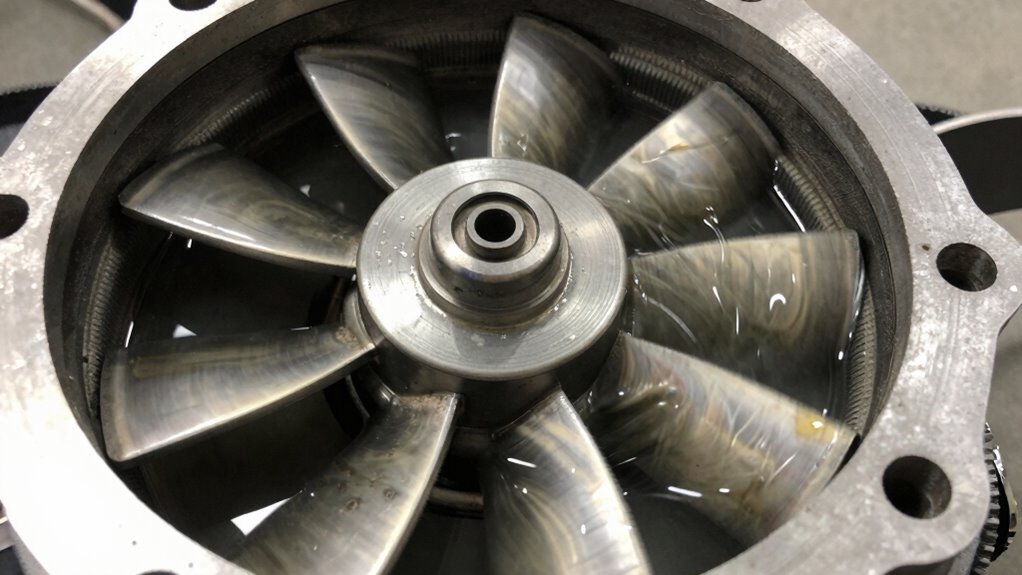
If you’ve noticed your vehicle shuddering or vibrating when shifting between gears, you might be experiencing a torque converter shudder. This unsettling sensation often points to issues within the torque converter, a crucial component in your automatic transmission system. At its core, the shudder results from disruptions in fluid dynamics and frictional forces that normally allow the converter to operate smoothly. When these forces become unbalanced, the transmission struggles to transfer power seamlessly, causing that familiar vibration.
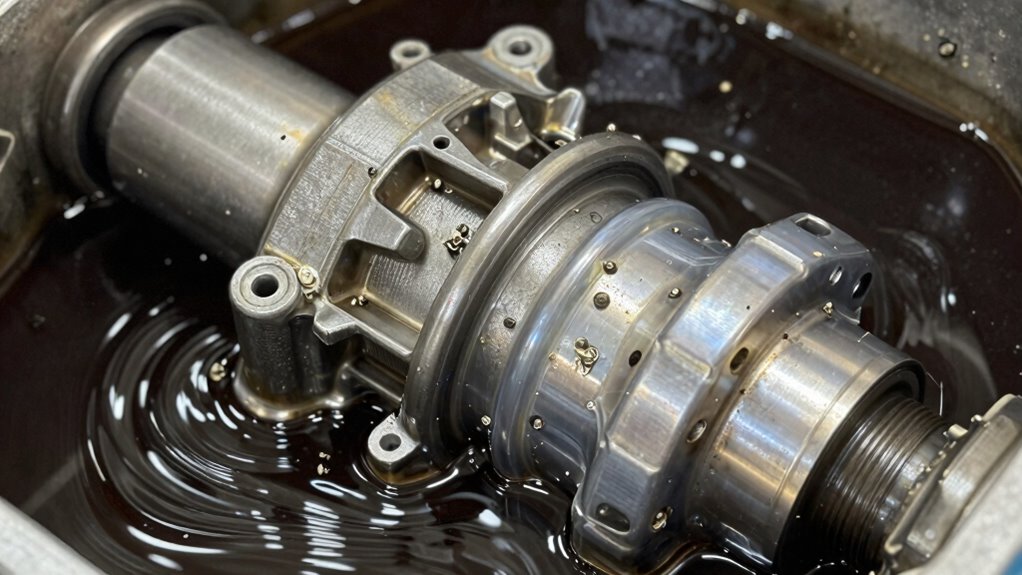
The torque converter relies heavily on transmission fluid to perform its functions. Under ideal conditions, this fluid flows efficiently within the converter, creating a hydraulic connection between the engine and transmission. Proper fluid flow ensures that the impeller, turbine, and stator work in harmony, allowing for smooth acceleration and deceleration. However, over time, the fluid can become contaminated or degraded, altering its viscosity and flow characteristics. When the fluid’s properties change, it impacts fluid dynamics inside the converter, leading to inconsistent pressure and flow patterns. This irregularity causes the converter to slip or engage unevenly, resulting in that shuddering feeling.
Frictional forces also play a significant role in the operation of the torque converter. The converter’s internal components rely on friction to transfer torque efficiently. When the frictional surfaces, such as clutch plates or bushings, wear out or become contaminated with debris, their ability to generate proper friction diminishes. This wear reduces the hydraulic lock-up ability of the converter, causing it to engage and disengage erratically. As a result, you feel vibrations because the frictional forces aren’t providing the stability needed for smooth power transfer. The interplay between fluid dynamics and friction is delicate; when either is compromised, the entire system struggles to maintain harmony.
Over time, wear and tear can exacerbate the problem. Heat buildup from repeated slipping can degrade the fluid further, creating a vicious cycle of worsening performance. If you ignore these signs, the shudder can intensify, potentially leading to more severe transmission issues. Recognizing that fluid quality and frictional health directly influence the converter’s performance helps you understand why regular maintenance is essential. Keeping the transmission fluid clean and at the correct level, along with addressing signs of wear early, can prevent or reduce shuddering. When these internal forces are properly managed, your vehicle will shift smoothly, restoring comfort and reliability.
automatic transmission fluid for torque converter
As an affiliate, we earn on qualifying purchases.
As an affiliate, we earn on qualifying purchases.
Frequently Asked Questions
Can Shudder Occur in All Types of Automatic Transmissions?
Shudder can occur in all types of automatic transmissions, but it’s more common in some models due to factors like transmission fluid quality and torque converter design. If your transmission fluid is old or degraded, it can cause uneven friction and slippage. Similarly, a poorly designed torque converter may lead to vibrations. Regular maintenance and fluid changes help prevent shudder, ensuring smooth operation across various automatic transmission types.
How Does Driving Style Influence Torque Converter Shudder?
Imagine your car’s engine revving fiercely as you accelerate aggressively; this rough tug can cause torque converter shudder. Your driving habits, especially sudden starts and aggressive acceleration, increase stress on the transmission. Over time, this wear disrupts fluid flow and friction, intensifying shudder. Gentle driving minimizes these vibrations, helping your transmission stay smooth and healthy longer. So, your driving style directly impacts how often you experience that unsettling shudder.
Are There Preventive Measures to Avoid Torque Converter Shudder?
To prevent torque converter shudder, you should prioritize fluid maintenance by regularly checking and changing your transmission fluid. Avoid aggressive driving habits, such as sudden acceleration or deceleration, which can cause unnecessary stress on the converter. Additionally, using the correct fluid type guarantees proper friction and lubrication. Staying consistent with fluid care and adopting smooth driving habits help reduce wear and keep your transmission running smoothly.
What Is the Typical Cost to Repair or Replace a Torque Converter?
Repair costs for a torque converter typically range from $500 to $1,200, depending on your vehicle’s make and model. If you need to replace it entirely, expect expenses to climb between $1,000 and $2,500, including labor. Keep in mind that some repairs may be more affordable, but extensive wear or damage can greatly increase your replacement expenses. Always get a detailed quote from a trusted mechanic for accurate estimates.
Does High Mileage Increase the Likelihood of Shudder?
High mileage can turn your transmission into a ticking time bomb, increasing the chances of shudder. As components wear over time, friction inside the torque converter worsens, making shudder more likely. The more miles your vehicle clocks, the thinner the transmission fluid becomes, reducing its ability to lubricate and cool parts effectively. Regular maintenance can help slow this process, but high mileage often means increased risk of shudder.
As an affiliate, we earn on qualifying purchases.
Conclusion
In conclusion, understanding the interplay of fluids, friction, and wear helps you better grasp torque converter shudder. By paying attention to subtle signals and staying proactive, you can prevent problems before they worsen. Remember, maintaining mindful maintenance minimizes messy malfunctions and maximizes vehicle importance. Stay vigilant, value your vehicle’s importance, and venture into vehicle care with confidence. A little awareness now can save you lots of suffering down the road.
As an affiliate, we earn on qualifying purchases.
automatic transmission fluid cleaner
As an affiliate, we earn on qualifying purchases.
As an affiliate, we earn on qualifying purchases.
Fall Picks
fall essentials
As an affiliate, we earn on qualifying purchases.