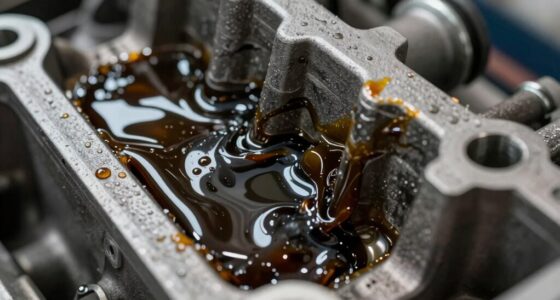

When people talk about viscosity and bearing protection, they mean choosing the right oil thickness to keep metal surfaces separated, reducing wear, and ensuring machinery runs smoothly. However, higher viscosity doesn’t always mean better protection; too thick can cause drag and inefficiency. Ideal viscosity depends on conditions like temperature and load. If you want to understand how proper viscosity supports bearing safety and efficiency, there’s more to explore.
Key Takeaways
- Proper viscosity ensures a strong oil film to prevent metal-to-metal contact in bearings.
- Excessively high or low viscosity can impair bearing protection and lead to wear or failure.
- Selecting the right viscosity depends on operating temperature, load, and machinery specifications.
- Additives help maintain consistent viscosity and enhance anti-wear protection under varying conditions.
- Higher viscosity doesn’t always mean better protection; optimal viscosity balances flow and film strength.
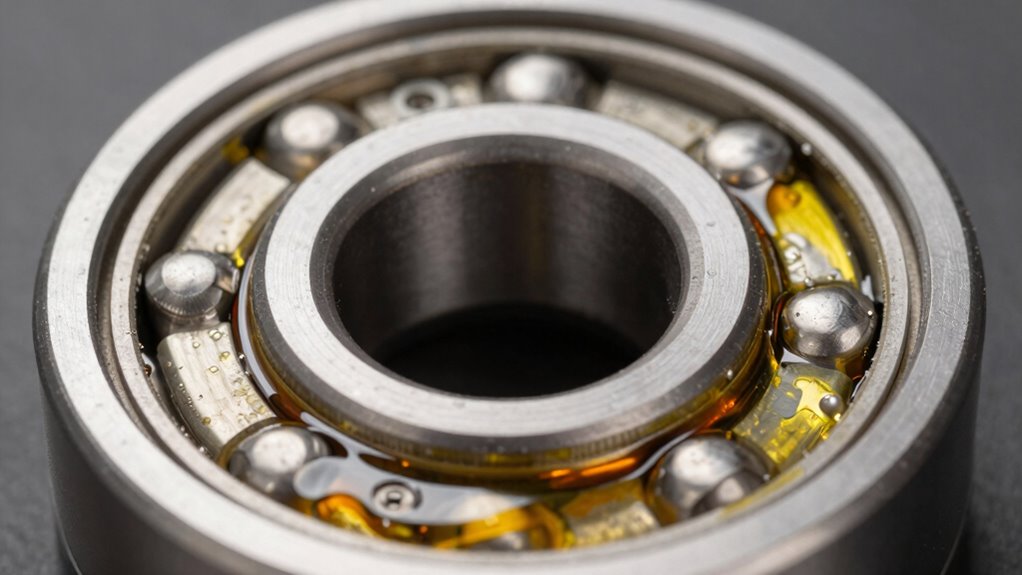
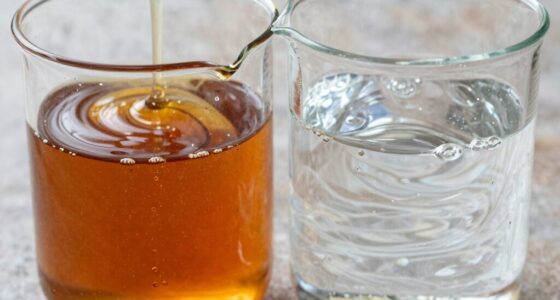
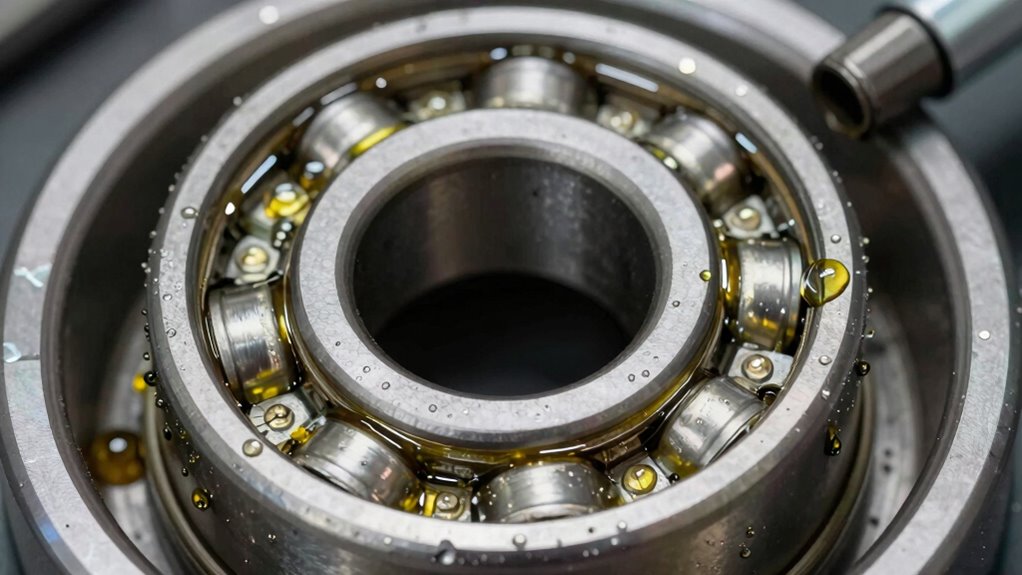
Understanding viscosity is vital for protecting bearings and guaranteeing machinery runs smoothly. When you select lubricants, you’re not just choosing based on brand or price—you need to understand how viscosity impacts performance. Viscosity measures a fluid’s resistance to flow; if it’s too high, the oil becomes thick and sluggish, making it harder for the bearing to move freely. If it’s too low, the oil may thin out too quickly under heat, compromising its ability to form a protective film. This film is essential because it keeps metal surfaces separated, preventing direct contact that can lead to bearing wear.
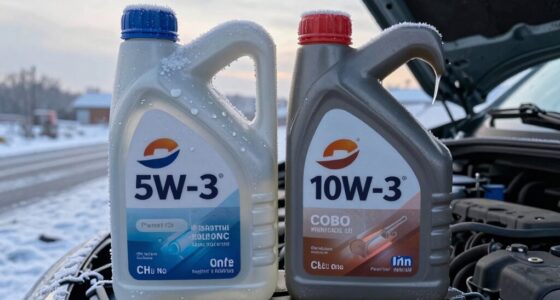
Many people believe that simply using a high-viscosity oil guarantees better protection. However, this isn’t always true. The right viscosity depends on operating conditions, load, and temperature. For example, during cold starts, an oil with too high a viscosity can cause sluggish movement, increasing wear and reducing efficiency. Conversely, at high temperatures, an oil with appropriate viscosity maintains its film strength, protecting bearings from metal-to-metal contact. This is where oil additives come into play—they modify the oil’s properties to enhance performance, such as improving viscosity index or adding anti-wear agents. These additives help maintain suitable viscosity across temperature ranges, reducing the risk of bearing wear due to oil thinning or thickening. Additionally, understanding the importance of oil viscosity can help prevent machinery failure caused by improper lubrication.
Another misconception is that increasing viscosity always reduces bearing wear. While thicker oils can provide a thicker film, they can also cause increased drag and energy consumption, and in some cases, contribute to overheating. The goal isn’t necessarily to use the thickest oil but to select one with the right viscosity for your specific application. Properly formulated lubricants, often containing oil additives, ensure that the oil maintains a consistent viscosity, providing the necessary protective film without unnecessary resistance. This balanced approach minimizes bearing wear, extends machinery life, and improves efficiency.
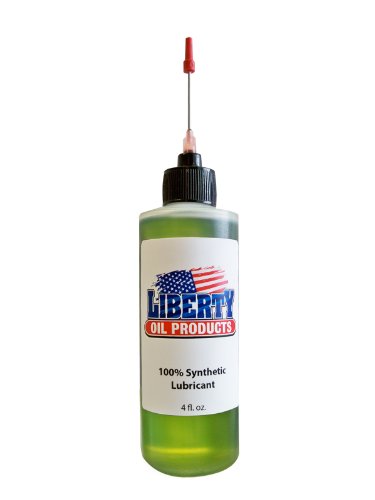
Liberty Oil, 4oz 100% Synthetic Oil for Lubricating Skateboard and Roller Blade Wheel Bearings
Protects, Cleans, and Lubricates Wheel Bearings
As an affiliate, we earn on qualifying purchases.
As an affiliate, we earn on qualifying purchases.
Frequently Asked Questions
How Often Should Bearing Lubricants Be Changed for Optimal Viscosity?
You should change bearing lubricants every 3 to 6 months to maintain ideal viscosity and prevent lubricant contamination. Regular changes help guarantee viscosity stability, reducing wear and preventing bearing failure. Keep an eye on operating conditions, as extreme temperatures or contamination can accelerate degradation. Scheduled maintenance minimizes risks and keeps your bearings running smoothly, extending their lifespan and maintaining equipment performance.
Can Synthetic Oils Improve Bearing Protection Compared to Mineral Oils?
Synthetic oils can definitely improve bearing protection compared to mineral oils. Their synthetic advantages include better temperature stability, lower breakdown risk, and enhanced lubrication. Mineral limitations often lead to higher viscosity changes and less effective protection in extreme conditions. By switching to synthetic oils, you get longer-lasting lubrication, reduced wear, and better performance, especially in demanding environments. So, upgrading your bearing lubricant to synthetic is a smart move for ideal protection.
How Does Temperature Fluctuation Affect Bearing Lubricant Viscosity?
Temperature fluctuations cause bearing lubricant viscosity to change, as thermal expansion impacts oil flow. When temperatures rise, viscosity decreases, making oil thinner and less protective; when temperatures drop, viscosity increases, thickening the oil. Using a lubricant with a high viscosity index helps maintain consistent flow despite these changes. You should monitor operating temperatures and select oils designed to resist viscosity shifts, ensuring reliable bearing protection across temperature swings.
Are There Industry Standards for Measuring Bearing Lubricant Viscosity?
Yes, industry standards exist for measuring bearing lubricant viscosity. You should refer to ASTM D445, which specifies methods for testing kinematic viscosity, and ISO 3104, focusing on similar parameters. These standards help guarantee your lubricant formulation maintains an appropriate viscosity index, providing consistent performance across temperature variations. By adhering to these standards, you can select lubricants that effectively protect bearings and optimize their lifespan.
What Are the Signs of Inadequate Bearing Lubrication in Industrial Equipment?
If your industrial equipment shows increased bearing noise or if you notice unusual vibrations, it’s a sign of inadequate lubrication. You might also see signs of lubricant contamination, like dirt or debris in the lubricant, which hampers proper lubrication. Regularly check for these symptoms to prevent bearing failure, and confirm your lubrication practices are up to standard to keep equipment running smoothly.

GENNEL 2grams Tube High Performance Spindle Lubricating Oil, Bearing Grease, Low/High Temperature Bicycle Grease for PC Bearing Fan Electric Motor Gear Keyboard Switch
High Performance Polyurea based lubricant grease. Excellent mechanical shear stability and oxidation stability. Low power loss, Compatible with…
As an affiliate, we earn on qualifying purchases.
As an affiliate, we earn on qualifying purchases.
Conclusion
Remember, understanding viscosity and bearing protection isn’t just about ancient scrolls or dusty manuals; it’s about keeping your machinery running smoothly. Don’t fall for misconceptions or half-truths. Think of it like the legendary Ark—protect what’s essential and guarantees longevity. By choosing the right lubricant and maintaining proper protection, you’ll avoid costly breakdowns and keep your equipment in top shape. Stay vigilant, and you’ll be the hero of your own industrial saga.

Liqui Moly MoS2 Anti-Friction Engine Treatment | 300 ml | Oil additive | SKU: 2009
Motor oil additive – Liqui Moly MoS2 anti-friction (300 ml. Can).Fit Type: Universal
As an affiliate, we earn on qualifying purchases.
As an affiliate, we earn on qualifying purchases.

Liberty Oil, Clear Nonstaining Oil for Lubricating All Moving Parts of your Sewing Machine. Large 4 Ounce Bottle
Liberty Oil comes in a 4-fluid-oz bottle with a stainless steel needle tip dispenser. Because it is premium…
As an affiliate, we earn on qualifying purchases.
As an affiliate, we earn on qualifying purchases.