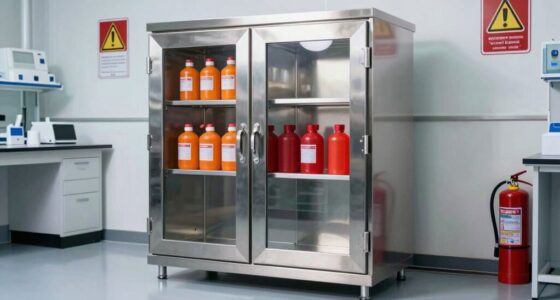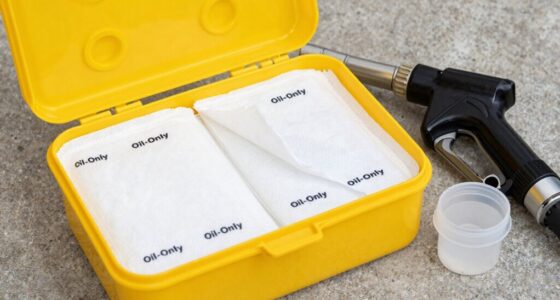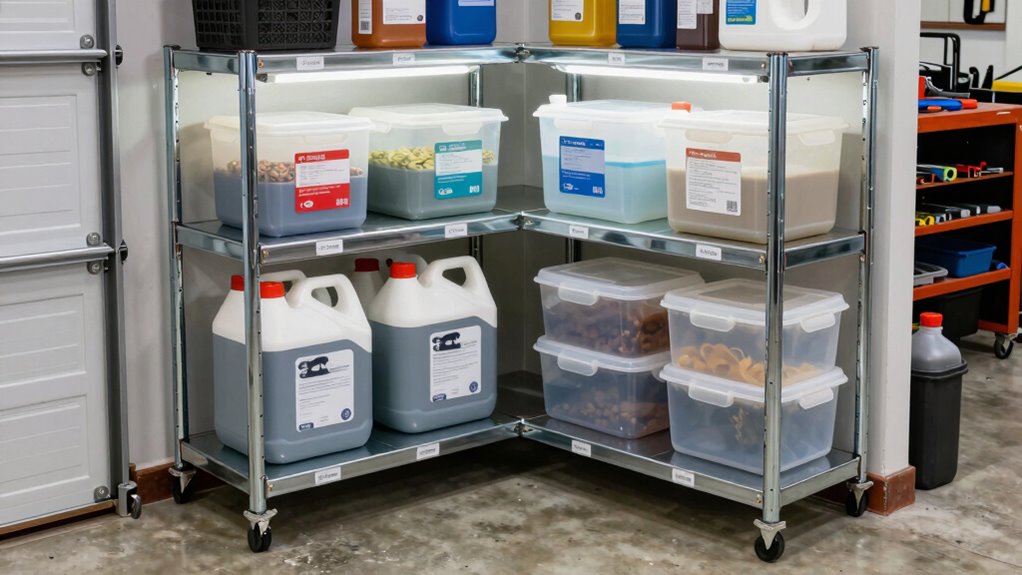

To prevent chemicals and fluids from damaging your garage, store them in clearly labeled, compatible containers that are checked regularly for leaks or damage. Keep flammables in a cool, well-ventilated area away from heat or sparks. Use spill containment measures like trays and keep spill kits handy for emergencies. Organize your storage and follow safety protocols to protect your space. If you want more tips on safe and effective storage, keep exploring how to do it right.
Key Takeaways
- Store chemicals in compatible, sealed containers in well-ventilated, cool areas away from heat sources and direct sunlight.
- Label all containers clearly and keep SDS accessible for hazard identification and proper handling.
- Separate incompatible chemicals, such as acids from bases and flammables from heat sources, to prevent dangerous reactions.
- Use spill containment trays, barriers, and absorbent materials to catch leaks and prevent chemical damage to your garage.
- Regularly inspect storage containers and areas for damage, leaks, or corrosion to maintain safety and prevent deterioration.

Rubbermaid Commercial Products BRUTE Tote Storage Container with Lid, 14-Gallon-included, Rugged/Reusable Boxes for Moving/Storing in Garage/Basement/Attic/Jobsite/Truck/Camping, Gray
HEAVY-DUTY: Storage bin is a heavy-duty storage container used for storing and transporting items
As an affiliate, we earn on qualifying purchases.
As an affiliate, we earn on qualifying purchases.
Identify Which Chemicals Need Safe Storage
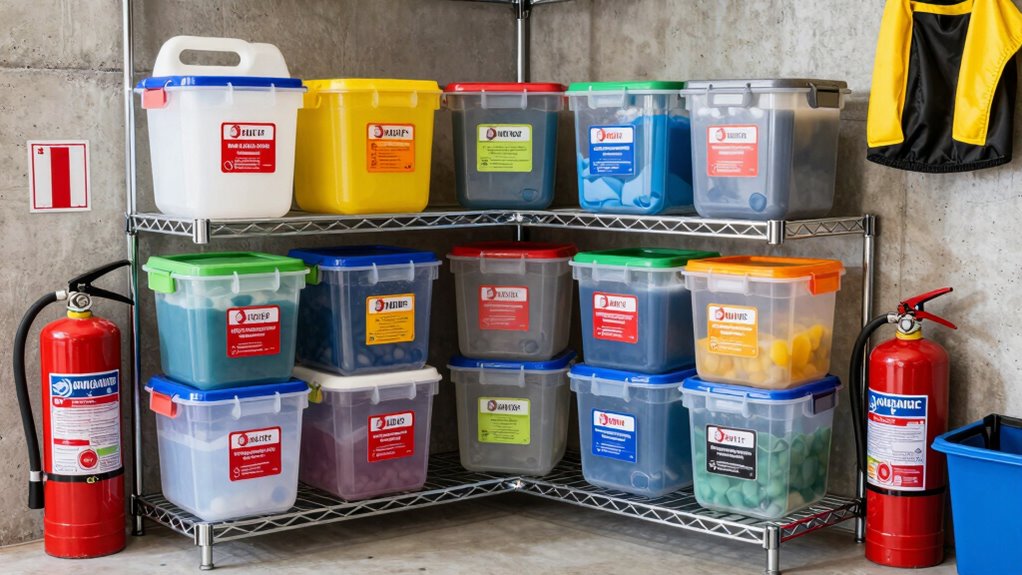
Have you ever wondered which chemicals require careful storage? Recognizing chemical hazards is the first step in protecting yourself and your property. Certain chemicals, like acids, flammable liquids, and corrosives, pose significant risks if not stored correctly. Storage regulations are in place to minimize accidents, spills, and exposure. Always check labels and safety data sheets (SDS) to identify hazardous substances, noting their specific storage needs. Keep incompatible chemicals apart to prevent dangerous reactions. For example, store acids separately from bases, and flammable liquids away from heat sources. Understanding the hazardous properties of chemicals can also help you manage tools and equipment safely. Proper storage practices are essential to prevent chemical deterioration and accidental leaks, ensuring safety and compliance. Additionally, knowing the correct container types for different chemicals is crucial to avoid container degradation or leaks over time. Being aware of chemical reactivity helps you develop a safe and effective storage plan, reducing the risk of accidents. By understanding which chemicals demand secure storage, you ensure safety and compliance. Proper identification helps you develop a clear plan for safe handling and storage, reducing potential accidents in your garage or workspace.

Modular 2 Drum Spill Pallet, 48x24x4 Inch, 2000 lbs Capacity, Heavy-Duty Forkliftable Containment Tray for Industrial Oil & Chemical
INDUSTRIAL-GRADE STRENGTH & CAPACITY: Engineered with high-density polyethylene, this heavy-duty spill containment tray reliably supports a static load…
As an affiliate, we earn on qualifying purchases.
As an affiliate, we earn on qualifying purchases.
Choose Containers That Prevent Leaks and Corrosion

Choosing the right container is essential to prevent leaks and corrosion. You need to guarantee the material is compatible with your chemicals and that the seal and cap are high quality. Doing so helps keep your chemicals safe and the storage environment secure. Incorporating testing accuracy into your storage setup ensures you can verify chemical integrity over time, preventing potential hazards. Additionally, selecting containers with appropriate chemical resistance ensures long-term durability and safety. Regularly inspecting containers for signs of deterioration and heat buildup management further enhances safety and prevents accidents. Ensuring your storage solutions account for chemical stability testing can help identify potential issues before they become serious problems. Employing reliable storage and backup gear can also minimize the risk of accidents caused by container failure or environmental factors.
Material Compatibility Matters
Selecting containers made from compatible materials is essential to prevent leaks and corrosion when storing chemicals. Using incompatible storage containers can lead to unwanted chemical reactions, weakening the container and risking spills. For instance, acids may corrode metal, while certain solvents can degrade plastics. Always check the chemical compatibility charts to ensure your storage containers won’t react with the chemicals inside. Choosing the right materials helps maintain the integrity of the container and keeps your chemicals safely contained. Proper material selection also minimizes the chance of leaks, spills, and damage to your garage. Remember, the goal is to prevent chemical reactions that could compromise the container’s structure and safety, protecting both your belongings and your health. Additionally, understanding material compatibility is crucial for selecting containers that will last and remain effective over time, especially considering long-term storage needs.
Seal and Cap Quality
Proper seals and caps are key to keeping chemicals safely contained. High seal quality guarantees that no fumes or liquids escape, reducing risks of corrosion and leaks. Durable caps resist cracking and warping over time, maintaining a tight closure even with frequent use. When selecting containers, check that the seals are made from compatible, resistant materials to prevent chemical degradation. Cap durability is equally important; a sturdy cap prevents accidental spills and prolongs the container’s lifespan. Investing in containers with reliable seals and durable caps helps prevent leaks, corrosion, and exposure, keeping your garage safer and your chemicals properly stored. Proper sealing is a simple but critical step in chemical storage safety. Selecting the right containers ensures long-term protection against chemical deterioration and accidents.

Danger Flammable Liquid Storage Hazard Flammable Label Decal Sticker 10 Inches X 14 Inches
PREMIUM QUALITY: Avoid accident and make sure safety is your number one priority with our 14×10 inches industrial…
As an affiliate, we earn on qualifying purchases.
As an affiliate, we earn on qualifying purchases.
Store Chemicals in a Cool, Well-Ventilated Area
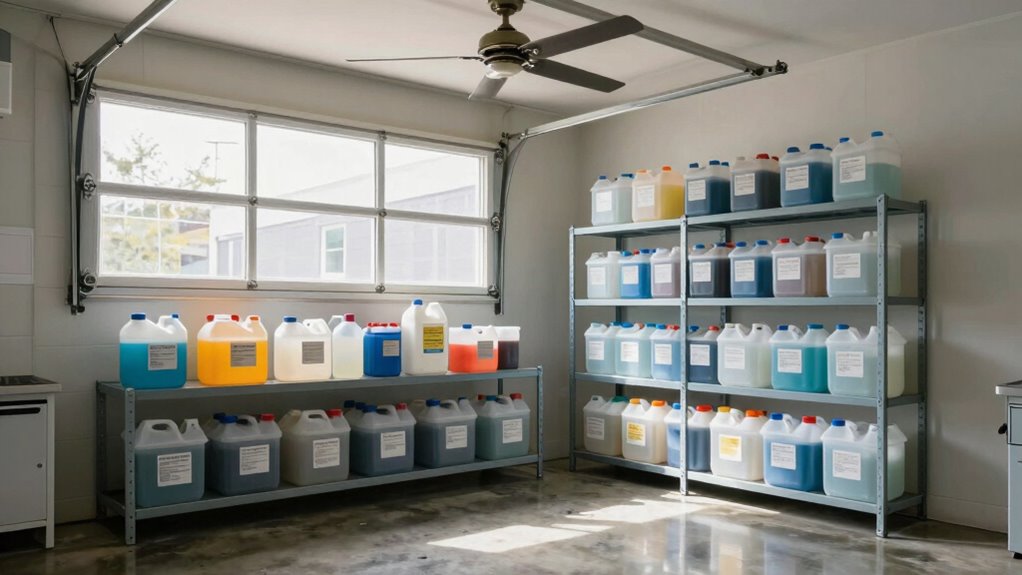
Storing chemicals in a cool, well-ventilated area is vital for maintaining safety and preventing accidents. Heat can cause chemicals to degrade or become unstable, so keep them away from heat sources and direct sunlight. Proper ventilation systems are essential; they help disperse fumes and reduce the risk of buildup that could lead to health hazards or fires. Make sure each container has clear chemical labeling to identify contents and hazards easily. This labeling is crucial for quick identification and safe handling. Choose a storage spot with good airflow and consistent temperature control. Avoid cramped spaces or areas near electrical equipment. Regularly check ventilation systems and ensure containers are sealed tightly. Additionally, implementing safety protocols can help prevent spills or leaks that might occur over time, especially in environments where chemicals are frequently accessed. Incorporating environmental controls, such as temperature monitoring and humidity regulation, can further enhance chemical safety by providing real-time data on storage conditions. Utilizing monitoring devices can alert you immediately to any deviations from safe storage parameters, helping prevent accidents. Implementing AI-driven solutions can further improve safety protocols by monitoring chemical conditions in real-time. Proper storage minimizes risks and keeps your garage safe for long-term chemical handling.

PIG Chemical Cleanup Kit – for Small Laboratory Spills – 9.25" L x 4" W x 13" H – PM50002
CLEANUP KIT INCLUDES: 3 – 10" W x 13" L PIG HazMat Chemical Absorbent Pad, 1 – 3.5…
As an affiliate, we earn on qualifying purchases.
As an affiliate, we earn on qualifying purchases.
Label Containers Clearly and Separate Chemicals Properly
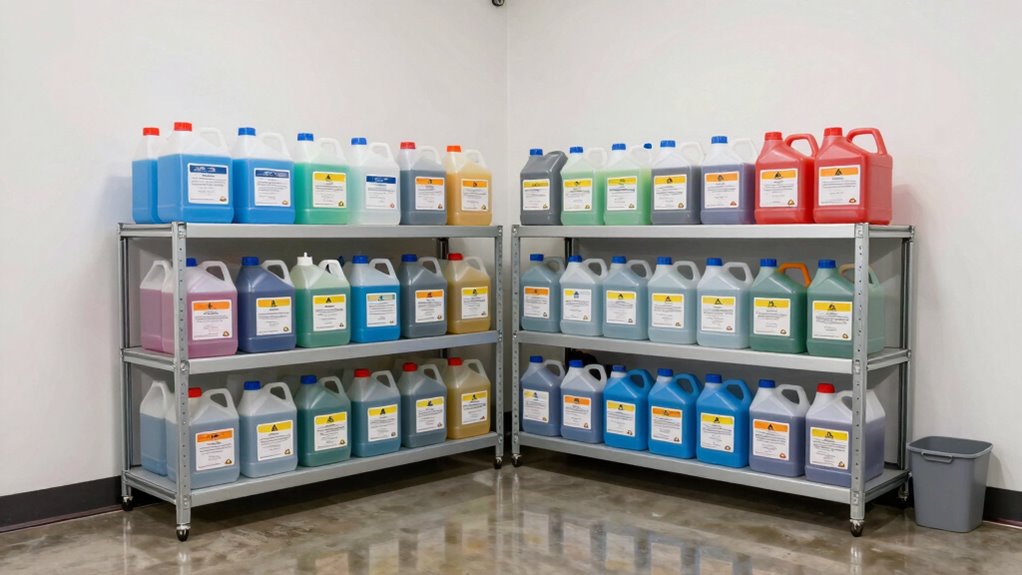
Labeling containers clearly and separating chemicals correctly are key steps in maintaining a safe storage area. Proper labeling guarantees you can quickly identify contents, reducing the risk of misuse or accidental mixing. Use clear, durable labels with accurate descriptions and date of storage. Container separation helps prevent dangerous reactions if chemicals are incompatible. Store acids away from bases, and keep flammable liquids separate from oxidizers. Designate specific zones for different chemical types to avoid cross-contamination. Always use original containers when possible, and ensure lids are tight to prevent leaks. Proper labeling combined with strategic container separation keeps your garage organized and minimizes hazards, making it safer for everyone. Taking these simple steps can prevent accidents and protect your health and property. Understanding chemical compatibility is essential for safe storage practices. To further enhance safety, familiarize yourself with chemical reactivity, so you can identify which substances should never be stored together. Additionally, proper storage techniques can significantly reduce the risk of spills or leaks. Being aware of storage guidelines helps ensure your garage remains a safe environment.
Keep Flammables Away From Heat and Sparks

You should store flammables in well-ventilated areas to prevent dangerous vapor buildup. Always keep them away from open flames, sparks, or any heat sources that could ignite a fire. Proper placement reduces the risk of accidents and keeps everyone safe. Additionally, ensure that chemical storage containers are properly sealed to avoid leaks or spills. Using outdoor cooling fans to disperse vapors in storage areas can also help improve safety. Regularly inspecting storage containers for wear and damage can further prevent leaks and accidents. Implementing secure storage measures can help prevent unauthorized access and potential hazards, especially considering the importance of safety protocols in managing hazardous materials.
Store Flammables in Ventilated Areas
To prevent fires and accidents, it’s vital to store flammable chemicals in well-ventilated areas away from sources of heat and sparks. Use fire resistant shelving to keep these substances secure and minimize fire risk. Make certain your garage has effective ventilation systems that allow fumes to escape safely, reducing flammable vapor buildup. Proper airflow prevents dangerous concentrations of vapors from accumulating, which could ignite unexpectedly. Keep vents unobstructed and consider installing exhaust fans if needed. Always position flammable containers away from potential ignition points, and regularly inspect ventilation systems for proper operation. Adequate ventilation is essential for safe storage and helps protect you from fire hazards caused by trapped vapors.
Keep Away From Open Flames
Keeping flammable chemicals away from open flames, sparks, and heat sources is essential to prevent fires and explosions. Fire hazards increase dramatically when these substances are exposed to heat or ignition sources. To protect your garage, keep flammables in areas free of open flames. Visualize a few common hazards:
- An unattended candle left burning near chemicals.
- Sparks from a faulty garage door opener igniting vapors.
- A dropped cigarette igniting fumes from a container.
Set Up Spill Containment and Keep Spill Kits Ready
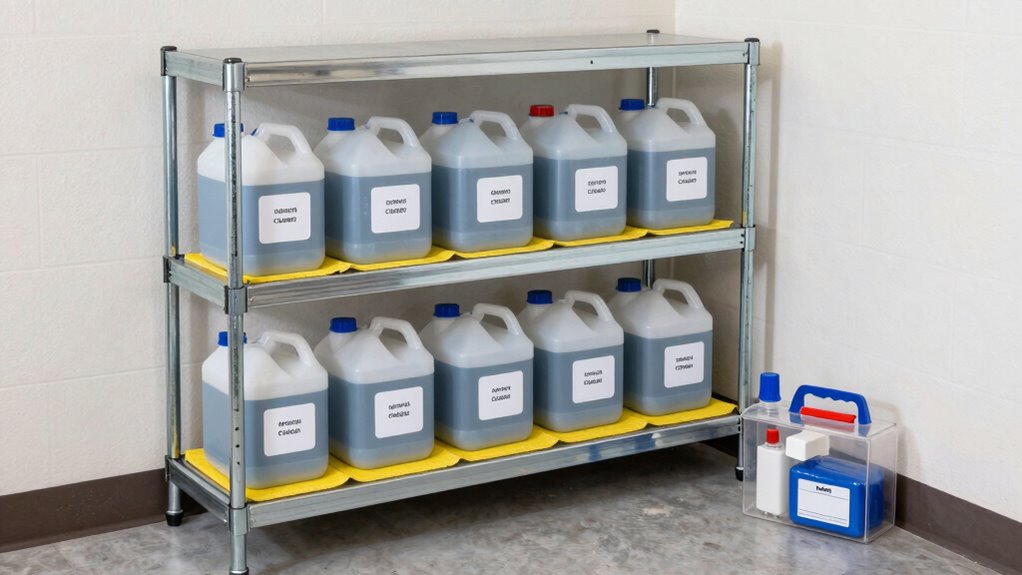
Setting up effective spill containment measures is essential for minimizing the impact of accidental chemical releases. You should install spill containment trays or barriers beneath storage containers to prevent leaks from spreading. Ascertain your garage has dedicated areas with proper drainage or absorbent mats to contain spills. Keep spill kits readily accessible in visible, central locations so you can respond quickly. Spill kits typically include absorbent materials, gloves, and disposal bags, making cleanup easier and safer. Regularly check that spill kits are fully stocked and in good condition. By establishing these measures, you reduce the risk of chemical damage to your garage and protect yourself from exposure. Proper spill containment and readiness are key to responsible chemical storage.
Inspect and Maintain Your Storage Area Regularly
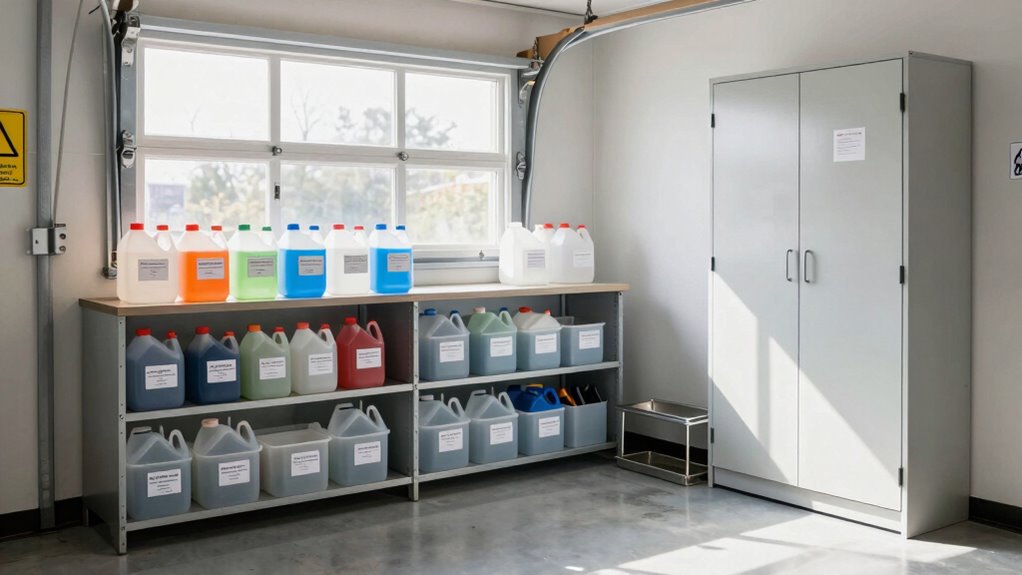
Regularly inspecting and maintaining your storage area helps guarantee that spill containment measures remain effective and that your chemicals stay safe. By routinely checking, you prevent potential hazards from chemical reactions caused by improper storage or temperature fluctuations. Imagine walking into your garage and noticing:
- Cracked or damaged containers that could leak.
- Signs of corrosion or rust on metal shelves.
- Temperature inconsistencies that might accelerate chemical reactions.
Maintaining proper storage temperature is vital, as fluctuations can compromise the integrity of your chemicals. Regular inspections help catch issues early, ensuring that containers are secure, and conditions remain controlled. This proactive approach keeps your garage safe and protects your chemicals from unnecessary deterioration or dangerous reactions.
Follow Local Regulations for Chemical Disposal and Safe Storage
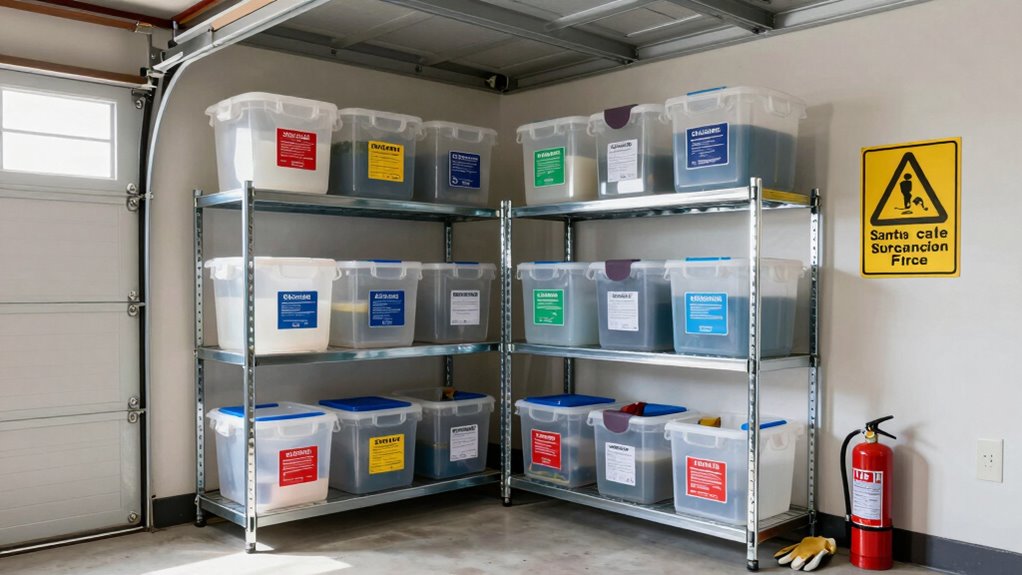
Following local regulations for chemical disposal and safe storage is essential to guarantee environmental contamination and ensure your safety. Proper disposal prevents hazardous waste from polluting your land, water, and air, protecting both the environment and your health. Familiarize yourself with local guidelines on hazardous waste handling, including designated disposal sites and collection events. Chemical recycling is often encouraged as an eco-friendly way to repurpose certain fluids, reducing waste. Always label chemicals clearly and store them in approved containers, following legal requirements for hazardous substances. Ignoring local regulations can lead to hefty fines or environmental damage. Staying informed about proper disposal methods not only keeps your garage safe but also contributes to community safety and sustainability efforts.
Organize Your Garage for Easy Access and Safety
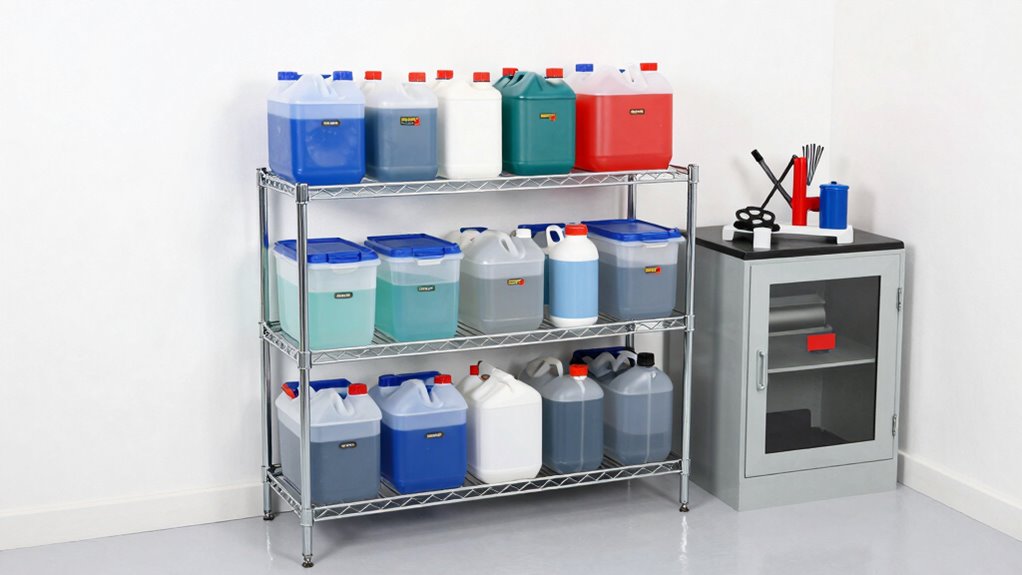
To guarantee your garage is both safe and easy to navigate, start by grouping similar items together and designating specific zones for tools, chemicals, and other supplies. Effective garage organization ensures quick access and reduces hazards. Use smart storage solutions like labeled bins, wall-mounted shelves, and pegboards to keep everything visible and within reach. Visualize these steps:
- Create a dedicated chemical storage area, away from household items.
- Install hooks or racks for frequently used tools for easy retrieval.
- Use stackable bins for small parts and supplies, minimizing clutter.
These storage solutions help you maintain a tidy space, preventing accidental spills or injuries. Clear zones improve safety and efficiency, making it simple to find what you need without rummaging through clutter. Proper garage organization is key to keeping your space safe and functional.
Frequently Asked Questions
How Often Should I Check My Chemical Storage for Safety?
You should check your chemical storage at least once a month to guarantee safety. Regular storage routines help you spot leaks, corrosion, or spills early, reducing hazards. During safety inspections, look for damaged containers and proper labeling. Maintaining consistent checks keeps your garage safe, prevents accidents, and assures chemicals stay secure. Make it a habit to document each inspection so you can track any issues and address them promptly.
What Are the Best Signs That Containers Need Replacement?
You’ll know it’s time to replace containers when you notice signs of container degradation, like cracks, bulges, or leaks. If labels are peeling, faded, or illegible, it’s a clear sign they need replacing, especially since labels often contain critical safety info. When these issues coincide, it’s a coincidence that can lead to dangerous spills or mishandling. Regular checks help you catch these signs early and keep your garage safe.
Can I Store Chemicals in the Garage During Winter?
Yes, you can store chemicals in your garage during winter, but you need to focus on temperature control. Keep the garage warm enough to prevent freezing, which can cause containers to crack or leak. Use insulation or space heaters if necessary, and store chemicals off the floor on shelves to avoid moisture damage. Proper winter storage guarantees your chemicals stay safe and effective throughout the cold months.
Are There Specific Labels Required for Hazardous Chemicals?
You should verify your hazardous chemicals have proper labels, as dictated by hazardous chemical regulations. These labels act as your silent guides, clearly indicating contents, hazards, and safety precautions. Proper chemical labeling is essential for safe storage and handling, helping you avoid accidents or mishaps. Always follow local regulations for labeling, and keep labels intact and legible. This simple step safeguards your garage environment and keeps everyone safe from unseen dangers.
How Do I Dispose of Chemicals Safely if I No Longer Need Them?
You should never pour chemicals down the drain or onto the ground. Instead, follow proper disposal methods by contacting local hazardous waste collection programs. Before disposal, guarantee all containers are properly labeled and sealed. If a spill occurs, perform a chemical spill response by wearing protective gear and containing the spill. Always follow local regulations and guidelines to keep yourself and the environment safe while disposing of chemicals you no longer need.
Conclusion
By following these tips, you’ll keep your garage safe and your chemicals secure. Proper storage prevents accidents, damage, and health risks—so why risk your safety and your home? Take a moment to organize today and guarantee everything stays in its place. When you prioritize safe chemical storage, you protect yourself and your loved ones from harm. Isn’t a safer, cleaner garage worth the effort?