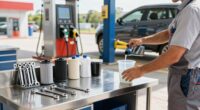
Pour point isn’t a reliable shortcut for winter performance because it only shows the lowest temperature at which a liquid flows. It ignores other key factors like viscosity index and additives that help lubricants perform well in cold conditions. Even if a product has a low pour point, it can still struggle if its viscosity changes too much or if additives aren’t effective. To truly understand winter readiness, consider the full formulation—more details await as you explore further.
Key Takeaways
- Pour point indicates the lowest temperature a lubricant flows but doesn’t fully predict winter performance.
- Viscosity index and additives significantly influence cold-weather behavior beyond just pour point.
- Manufacturers may label oils as ‘winter grade’ based solely on pour point, which can be misleading.
- Additives like pour point depressants improve flow in cold temperatures without necessarily lowering the pour point.
- A comprehensive assessment of formulation properties is essential for reliable winter lubrication, not just the pour point.
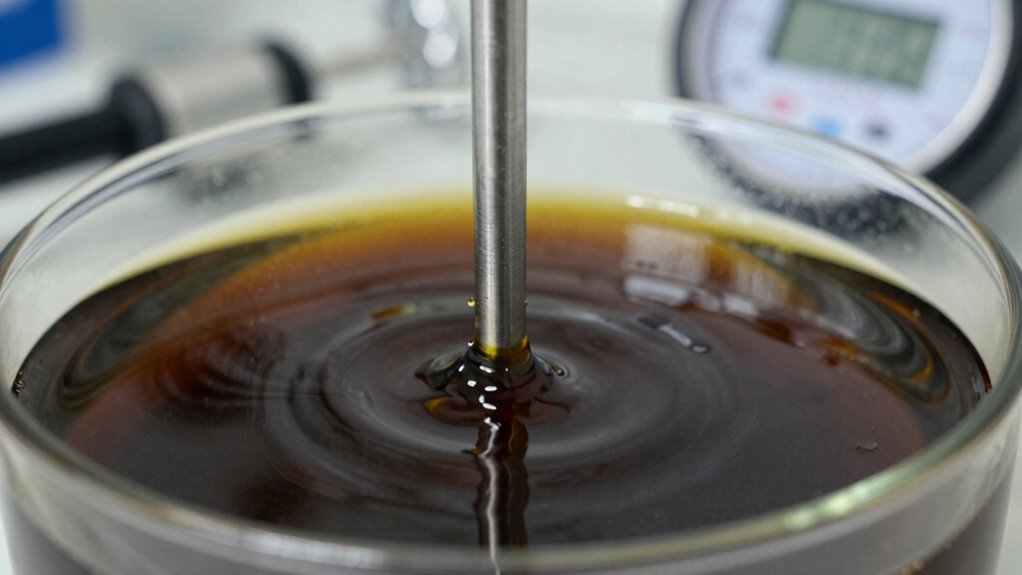
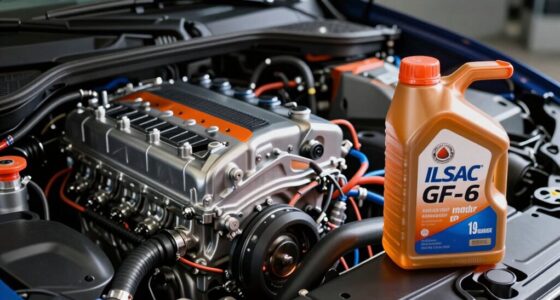
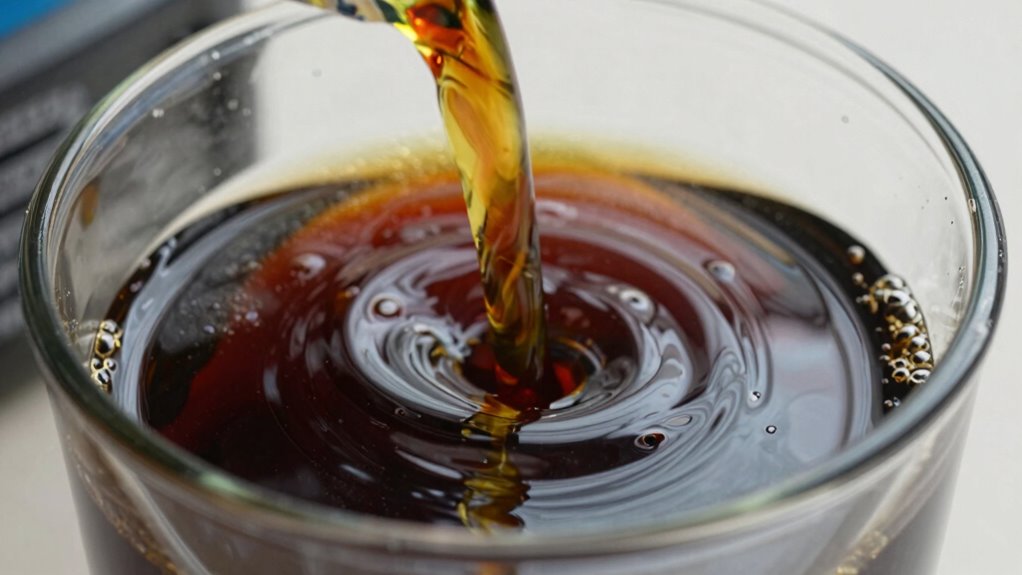
Ever wondered what the pour point of a liquid really means? It’s the lowest temperature at which a liquid, like motor oil or lubricant, remains pourable and flows under gravity. Many people assume that a lower pour point automatically indicates better winter performance, but that’s an oversimplification. The true story involves understanding how viscosity index and additive effects influence how a liquid behaves in cold conditions. The viscosity index measures how much a fluid’s viscosity changes with temperature. A higher viscosity index means the liquid maintains a more consistent thickness across temperature ranges, which is vital for reliable lubrication in winter. If a lubricant has a poor viscosity index, it may become too thick or too thin when temperatures drop, leading to potential engine wear or failure. That’s where additive effects come into play; modern lubricants often include special additives designed to improve their cold-weather performance. These additives help maintain flowability and protect engine parts even when the temperature plunges below the pour point. Additionally, understanding the performance characteristics of a lubricant can help you select the most suitable product for winter conditions.
However, it’s important to recognize that the pour point isn’t the sole indicator of a lubricant’s winter suitability. Manufacturers may label a product as ‘winter grade’ based on its pour point, but this oversimplifies the complex interactions at work. Additives can alter a lubricant’s properties considerably, making it flow better at lower temperatures without necessarily lowering the pour point itself. For example, pour point depressants can modify the wax crystal structure within the oil, allowing it to flow more freely in cold conditions. But relying solely on the pour point as a shortcut can be misleading because it doesn’t account for how viscosity index and additive effects work together to guarantee ideal performance.
In reality, a lubricant’s cold-weather performance depends on more than just its pour point. The viscosity index, combined with carefully formulated additive effects, creates a more accurate picture of how the liquid will behave in winter. While a low pour point is desirable, it’s not the only factor to weigh. You should look at the product’s overall formulation, including how well the additives work to maintain fluidity and protect your engine, especially in extreme cold. So, next time you see a lubricant advertised as a ‘winter grade,’ remember that its effectiveness hinges on a complex balance of properties—not just the pour point alone.
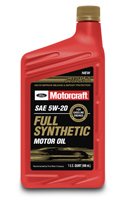
Motorcraft Full Synthetic Motor Oil XO-5W20-QFS 12 Qt Case
- Suitable for Ford, Lincoln, Mercury: Top-quality motor oil for specific vehicles
- API Certified for Gasoline Engines: Meets API SN and ILSAC GF-5 standards
- High Viscosity Index Synthetic Oil: Ensures excellent performance in all temperatures
As an affiliate, we earn on qualifying purchases.
As an affiliate, we earn on qualifying purchases.
Frequently Asked Questions
How Does Pour Point Affect Vehicle Performance in Cold Weather?
In cold weather, a lower pour point means your oil maintains proper viscosity, preventing it from thickening and ensuring smooth engine operation. If the pour point is too high, your oil may thicken, reducing lubrication and fuel efficiency. This can lead to engine wear and decreased performance. So, choosing oil with an appropriate pour point helps your vehicle run reliably and efficiently, especially during winter conditions.
Can Pour Point Be Altered by Adding Additives?
Think of pour point modification like tuning a guitar; additives can fine-tune your oil’s flow. Yes, additives can alter pour point by influencing its molecular structure, improving cold temperature performance. These additive effects help lower the pour point, making the oil more fluid in winter conditions. However, the extent of change depends on the additive’s quality and formulation. Always choose products designed specifically for pour point modification to guarantee best results.
Is Pour Point Testing Standardized Across Different Oil Types?
Yes, pour point testing is standardized across different oil types through specific viscosity standards and testing procedures. You’ll find that industry organizations like ASTM and IP set these guidelines to guarantee consistent results. By following these standardized methods, you can accurately compare pour points across various oils, regardless of their formulation or application. This consistency helps you determine the suitability of an oil for low-temperature environments reliably.
How Often Should Pour Point Be Tested in Industrial Applications?
You should test the pour point regularly, especially during temperature fluctuations that challenge oil performance. The testing frequency depends on your specific industrial applications and environmental conditions, but typically, monthly or quarterly checks are recommended. Staying vigilant guarantees your oils perform reliably in all conditions. Don’t wait until failure occurs—consistent testing helps catch issues early, safeguarding equipment and maintaining safety. Regular testing is your best defense against unexpected failures.
What Is the Environmental Impact of Low Pour Point Oils?
You should consider the environmental impact of low pour point oils because they can reduce emissions by improving oil flow at lower temperatures, aiding climate adaptation. These oils typically have better viscosity performance in cold conditions, decreasing energy consumption and minimizing environmental harm. By choosing low pour point oils, you support sustainable practices, reduce the risk of spills, and help protect ecosystems from harmful pollutants associated with less efficient, higher-viscosity alternatives.

LIQUI MOLY Motor Oil Saver | 300 ml | Oil additive | SKU: 2020
- Reduces oil consumption: Improves piston ring and valve guide efficiency
- Prevents exhaust smoke: Reduces blue, smoky emissions
- Seals leaks: Prevents leaks at elastomeric seals
As an affiliate, we earn on qualifying purchases.
As an affiliate, we earn on qualifying purchases.
Conclusion
Think of pour point like a thermometer for oil—it tells you when things get too cold to flow. I once watched a friend assume winter-grade oil was enough, only to find his engine struggled in freezing weather. Just like relying on a coat in a snowstorm isn’t enough, assuming pour point alone guarantees winter performance is risky. Always check the specifics—don’t let assumptions freeze your engine’s performance. Knowledge keeps you moving smoothly.

The 2027-2032 World Outlook for Pour Point Depressants for Lubricants
As an affiliate, we earn on qualifying purchases.
As an affiliate, we earn on qualifying purchases.

Castrol GTX High Mileage 5W-30 Synthetic Blend Motor Oil, 5 Quarts
- Emission System Protection: Phosphorus Replacement Technology for longer system life
- Sludge Prevention: Superior dispersancy fights sludge buildup
- Oil Burn-off Protection: Exceeds industry standards with leak-reducing seal conditioners
As an affiliate, we earn on qualifying purchases.
As an affiliate, we earn on qualifying purchases.