
The idea of a single “one oil for all cars” sounds simple but is too idealistic because engines vary widely in design, materials, and operating conditions. OEM approvals weigh heavily in choosing the right oil, but different manufacturers often recommend specific formulations tailored to their vehicles’ needs. Industry standards set broad categories but can’t cover every engine requirement, making a universal oil unlikely. If you want to understand why this promise is so challenging, keep exploring the details ahead.

Get business pricing on garage and car supplies
- Business-only prices and quantity discounts
- Tax-exempt purchasing
- Multiple users, one account, clear invoices
Key Takeaways
- OEM approvals are based on specific engine designs and operating conditions, making a universal oil incompatible with all vehicles.
- Variations in engine materials, tolerances, and performance demands prevent a single oil formulation from fitting every car.
- Industry standards like API and SAE provide broad categories, but lack the specificity needed for a one-size-fits-all oil.
- Automakers often endorse tailored oils to meet their unique requirements, conflicting with the universal oil concept.
- Market fragmentation and differing manufacturer recommendations hinder the development of a truly universal automotive oil.
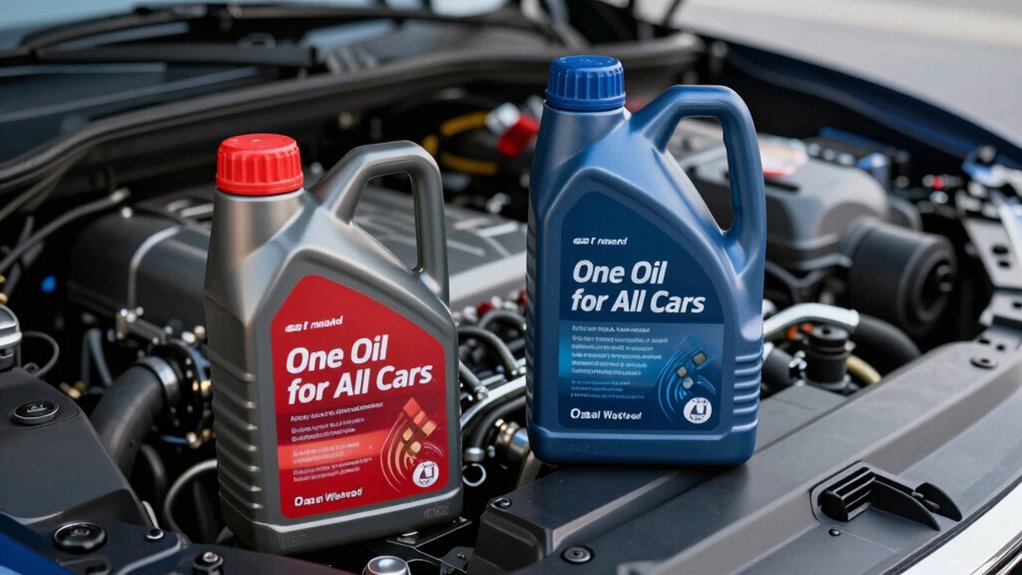
Could a single type of oil truly work for all cars? This question seems simple but is actually quite complex, especially when considering the wide variety of engines, driving conditions, and manufacturer requirements. The idea behind the “One Oil for All Cars” promise is appealing—imagine a universal oil that works just as well in a compact sedan as it does in a heavy-duty truck. However, in practice, this isn’t as straightforward as it sounds. Different automakers and industry standards emphasize specific formulations, often leading to disagreements about what qualifies as the best universal oil. One key aspect is the variety of oil types available, including synthetic blends, full synthetics, and conventional oils. Synthetic blends combine the affordability of conventional oils with the enhanced performance of synthetics, and they often include carefully formulated additive packages designed to improve engine protection, reduce wear, and maintain efficiency across diverse conditions.
OEM approvals play a significant role in defining what oils are considered acceptable for use in specific vehicles. These approvals are based on rigorous testing and standards set by organizations like the American Petroleum Institute (API) or the Society of Automotive Engineers (SAE). But the conflicting opinions of OEMs complicate the picture. Some manufacturers endorse certain synthetic blends with specific additive packages that provide ideal performance tailored to their engines. Others prefer full synthetic oils that offer superior stability at high temperatures and better sludge control. When a manufacturer issues an approval, it’s often based on tests that evaluate the oil’s ability to protect engine components, ensure fuel efficiency, and maintain long-term durability. Understanding industry standards can help clarify why formulations differ and how they are evaluated.
This divergence stems from the fact that different engines have varying tolerances, materials, and operating conditions. For example, high-performance engines may require oils with advanced additive packages that can withstand higher temperatures and pressures, while economy-focused vehicles might prioritize fuel economy and low-cost formulations. Because of this, no single oil can perfectly meet all these diverse needs. Industry standards try to accommodate this by providing broad categories, but the reality remains that what works well for one vehicle might not be suitable for another. So, even with the promise of a one-size-fits-all oil, automakers and oil companies often disagree on the best formulations, leading to a fragmented market. Ultimately, choosing the right oil involves understanding your vehicle’s specific requirements and trusting the approvals and recommendations from your OEM, rather than relying solely on the idea of a universal solution.
synthetic motor oil for all cars
As an affiliate, we earn on qualifying purchases.
As an affiliate, we earn on qualifying purchases.
Frequently Asked Questions
How Do OEM Approvals Impact Oil Quality?
OEM approvals directly impact oil quality by ensuring it meets strict standards for synthetic blending and additive compatibility. When an oil gets approved, you can trust it works well with your engine’s materials and synthetic formulations, providing best protection. Without approval, the oil might not blend effectively or could cause compatibility issues, risking engine damage. Trust OEM approvals to guarantee your oil maintains high quality and performance.
Are All Cars Compatible With the Same Oil?
You might think all cars can use the same oil, but only about 30% of vehicles are compatible with universal oils. Not all cars suit synthetic blends or require specific oil filtration levels. Factors like engine design and OEM approvals matter. Using the wrong oil can lead to engine damage. Always check your vehicle’s manual to verify you’re choosing the right oil, especially if considering synthetic blends.
What Are the Risks of Using Universal Oils?
Using universal oils can pose risks, especially if they’re synthetic blends with generic additive packages. These oils might not meet your car’s specific requirements, leading to inadequate lubrication, increased engine wear, or even damage. Always check your manufacturer’s recommendations before switching to a universal oil. Even if it’s compatible, using oils with tailored additive packages guarantees ideal performance and longevity for your engine.
How Often Should I Change Oil With Universal Products?
You should change your oil every 5,000 to 7,500 miles when using universal products like synthetic blends with oil additives. These oils are designed to last longer, but regular oil changes are still vital to maintain engine performance. Keep an eye on your vehicle’s manual and consider more frequent changes if you drive in harsh conditions. This ensures your engine stays clean and well-lubricated.
Do OEM Approvals Guarantee Oil Performance?
Think of OEM approvals like a seal of approval from a trusted mentor—they indicate the oil meets specific standards, but don’t guarantee top performance. While synthetic blends with advanced additive packages are designed for ideal protection, approval alone doesn’t ensure your oil will outperform others. It’s crucial to take into account quality and compatibility to keep your engine running smoothly, rather than relying solely on OEM endorsements.
universal engine oil compatible with OEM standards
As an affiliate, we earn on qualifying purchases.
As an affiliate, we earn on qualifying purchases.
Conclusion
As you navigate the maze of OEM approvals, remember that relying on a single oil for all cars is like trying to fit a square peg into a round hole—impossible to satisfy every engine’s unique needs. Just as a key must match its lock perfectly, your car’s engine demands tailored care. Don’t let the promise of one oil deceive you into a false sense of security—trust the experts and choose wisely, for your engine’s health depends on it.
full synthetic vs synthetic blend motor oil
As an affiliate, we earn on qualifying purchases.
As an affiliate, we earn on qualifying purchases.
best engine oil for high-performance vehicles
As an affiliate, we earn on qualifying purchases.
As an affiliate, we earn on qualifying purchases.
Halloween Picks
halloween
As an affiliate, we earn on qualifying purchases.