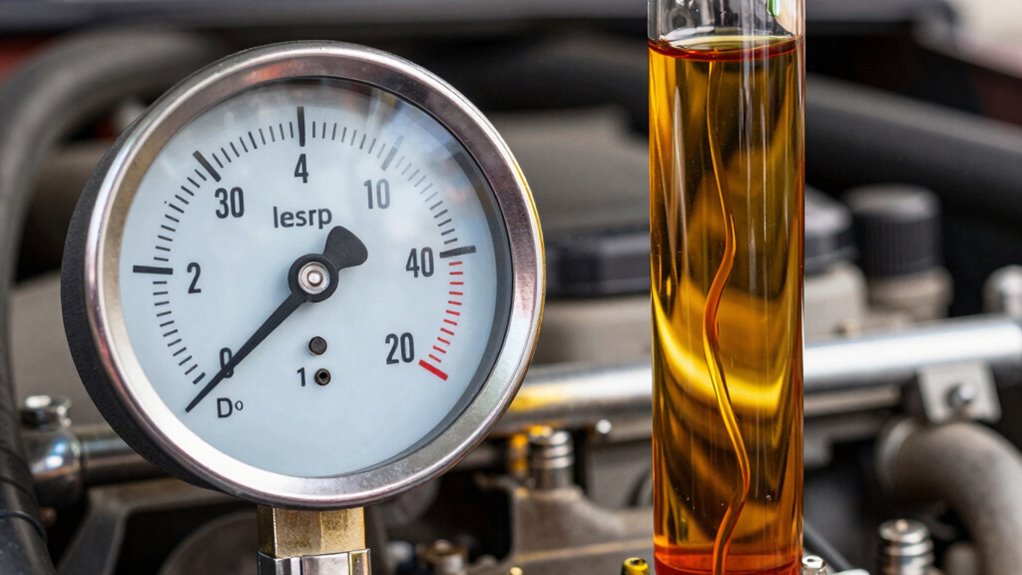
Higher oil pressure doesn’t always mean your engine is better protected. If pressure is high but flow is limited, your engine isn’t getting proper lubrication, which can cause damage. Factors like oil viscosity and pump efficiency play key roles. Excessive pressure can strain seals or signal blockages. Understanding the difference helps you notice issues early. Keep in mind, steady flow is more important than simply high pressure—so exploring this further can protect your engine better.

Get business pricing on garage and car supplies
- Business-only prices and quantity discounts
- Tax-exempt purchasing
- Multiple users, one account, clear invoices
Key Takeaways
- High oil pressure doesn’t guarantee better lubrication; proper flow is essential for engine protection.
- Excessive pressure can damage seals and indicate underlying issues like clogged filters or relief valve problems.
- Oil viscosity influences pressure; thicker oil raises pressure but may hinder flow, reducing lubrication effectiveness.
- Pump efficiency and proper flow are more critical than pressure alone for maintaining engine health.
- Monitoring consistent oil flow and viscosity provides better insights into engine condition than pressure readings alone.
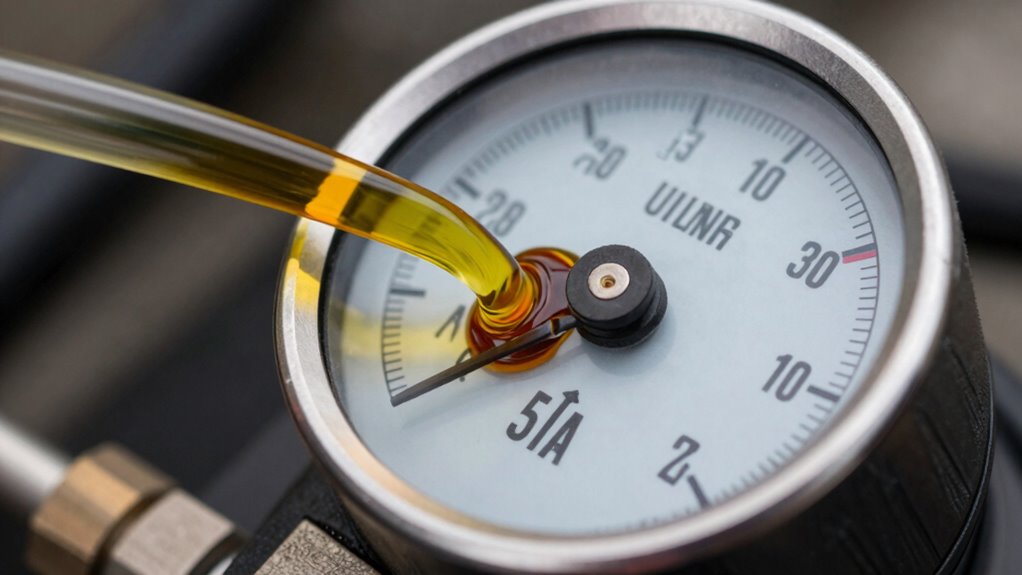
Understanding the difference between oil pressure and oil flow is essential for maintaining your engine’s health. While they’re closely related, higher oil pressure doesn’t automatically mean your engine is better protected. Instead, it’s vital to recognize how factors like viscosity effects and pump efficiency influence these measurements. Viscosity, or the thickness of your oil, plays a significant role in how well your engine is lubricated. Thicker oils resist flow more, which can lead to higher oil pressure readings. However, if the oil is too viscous, it might not flow freely through passages, reducing lubrication efficiency and potentially causing engine wear. Conversely, too thin oil might flow easily but fail to maintain adequate pressure, risking insufficient lubrication under engine load.
Proper lubrication depends on oil viscosity and pump efficiency, not just high pressure.
Pump efficiency also impacts oil pressure and flow. Your oil pump is designed to maintain a certain pressure and flow rate, but if it’s worn or malfunctioning, pressure can spike or drop unpredictably. Higher pressure readings could be a sign of a malfunctioning relief valve or a clogged filter, rather than better lubrication. It’s important to understand that the pump’s job isn’t just to generate high pressure but to ensure a steady, adequate flow of oil throughout your engine. When pump efficiency falters, pressure might increase because the pump is working harder to push oil through restricted passages, not because the engine is necessarily better lubricated.
You should also keep in mind that high oil pressure isn’t always desirable. Excessively high pressure can cause undue stress on seals and gaskets, leading to leaks or damage. Plus, it may indicate that your oil isn’t flowing properly, especially if viscosity effects cause the oil to resist movement. Proper oil flow ensures that all moving parts are lubricated evenly, reducing friction and wear. If pressure is high but flow is limited, your engine isn’t getting the full benefit of lubrication, which can accelerate parts’ deterioration. Additionally, understanding pump performance and how it interacts with viscosity can help diagnose potential issues more accurately.
In essence, understanding how viscosity effects and pump efficiency influence oil pressure and flow will help you interpret engine health more accurately. Don’t rely solely on pressure gauges; pay attention to how smoothly your engine runs, and consider oil viscosity and pump condition as part of your maintenance routine. Remember, maintaining optimal oil flow is more crucial than simply having high pressure, ensuring your engine stays well-lubricated and performs reliably over time.
As an affiliate, we earn on qualifying purchases.
Frequently Asked Questions
How Does Oil Viscosity Affect Pressure and Flow?
You’ll find that oil viscosity affects pressure and flow because higher viscosity increases flow resistance, making it harder for oil to circulate smoothly. Thicker oil creates more pressure, but it doesn’t always mean better lubrication. Conversely, lower viscosity reduces flow resistance, allowing easier movement, but may not protect engine parts as effectively at high temperatures. Adjusting viscosity guarantees ideal flow and pressure, balancing protection and efficiency.
Can Low Oil Pressure Indicate Engine Damage?
Low oil pressure can definitely indicate engine damage, especially if caused by issues like an oil leak or oil pump failure. You might notice warning signs like warning lights or unusual engine noises. If ignored, it could lead to severe damage, including worn bearings or piston failure. It is crucial to have your engine inspected promptly to identify and fix the problem before it worsens.
What Role Does Oil Temperature Play in Pressure and Flow?
Your engine’s oil temperature can skyrocket like a rocket launch, drastically affecting pressure and flow. When oil gets too hot, it thins out, making it harder to maintain proper pressure and flow. Oil coolers and temperature sensors work like vigilant guardians, preventing overheating and ensuring ideal viscosity. By monitoring and managing oil temperature, you keep your engine running smoothly, avoiding damage caused by overly thin or thick oil that hampers circulation.
How Do Different Engine Types Impact Oil Pressure Requirements?
You need to take into account engine design because different engine types have unique oil pressure requirements to ensure proper lubrication and fuel efficiency. For example, high-performance engines often demand higher oil pressure for ideal operation, while small or fuel-efficient engines may operate effectively with lower pressure. Understanding your engine’s specific needs helps maintain efficiency and longevity, preventing issues caused by improper oil flow or pressure.
Is Higher Oil Pressure Always More Efficient?
Higher oil pressure isn’t always more efficient because it can strain your engine and damage components like the oil filter. Using a pressure gauge helps you monitor the pressure levels to guarantee they stay within ideal ranges. If the pressure is too high, it means your system might be over-pressurized, reducing flow and lubrication efficiency. Keep an eye on your pressure gauge to maintain proper oil flow and engine health.
As an affiliate, we earn on qualifying purchases.
Conclusion
Remember, higher oil pressure isn’t always better—sometimes, it’s just noise. While strong flow keeps your engine alive, excessive pressure can cause damage. Think of it like a conversation: volume isn’t everything; clarity matters. Focus on balanced oil flow rather than chasing higher pressure. Ultimately, a well-maintained system with the right flow keeps your engine running smoothly, proving that sometimes, less really is more. Balance is key to lasting performance.
As an affiliate, we earn on qualifying purchases.
oil filter and pump maintenance kit
As an affiliate, we earn on qualifying purchases.
As an affiliate, we earn on qualifying purchases.
Fall Picks
fall essentials
As an affiliate, we earn on qualifying purchases.