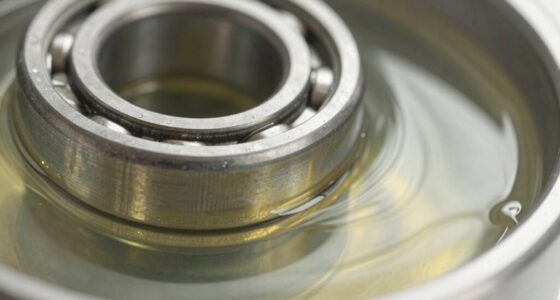
To tell whether water in your oil is from condensation or a coolant leak, check how quickly the contamination occurs and its pattern. Condensation tends to cause gradual moisture buildup over time during temperature changes, while coolant leaks often lead to a sudden, more significant increase in water with added chemicals or debris. Regular analysis can help identify the source, and further details will help you prevent damage effectively.
Key Takeaways
- Condensation water accumulates gradually and is usually pure, while coolant leaks often cause rapid contamination with additives and debris.
- Laboratory testing can identify the chemical composition, distinguishing benign condensation from harmful coolant contamination.
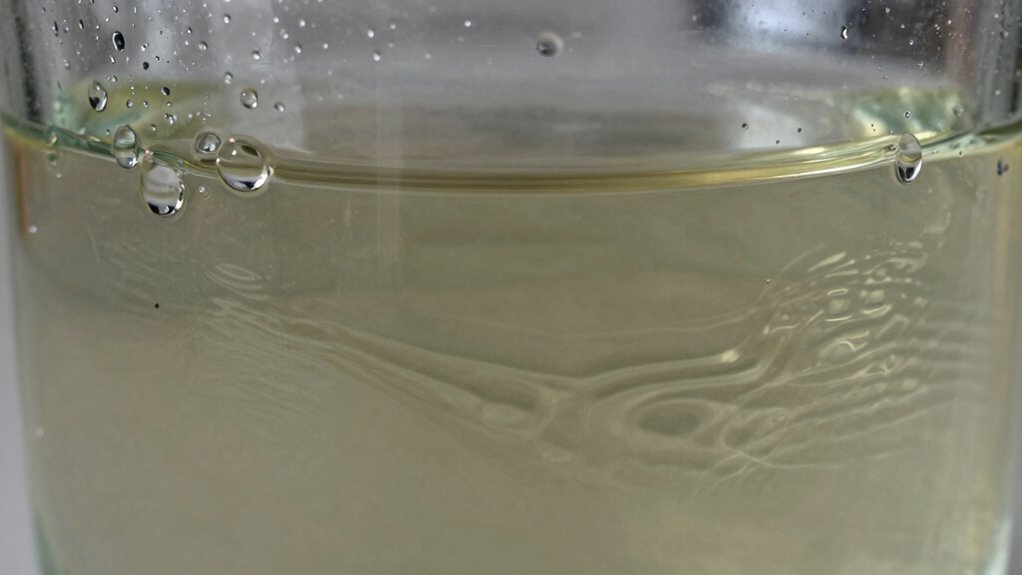
- Visual inspection shows condensation as clear or slightly cloudy water, whereas coolant leaks may have oily or chemical residues.
- Moisture levels increase slowly with condensation, while sudden spikes suggest a coolant leak or system failure.
- Regular oil analysis and moisture testing help differentiate the water source and guide appropriate maintenance actions.
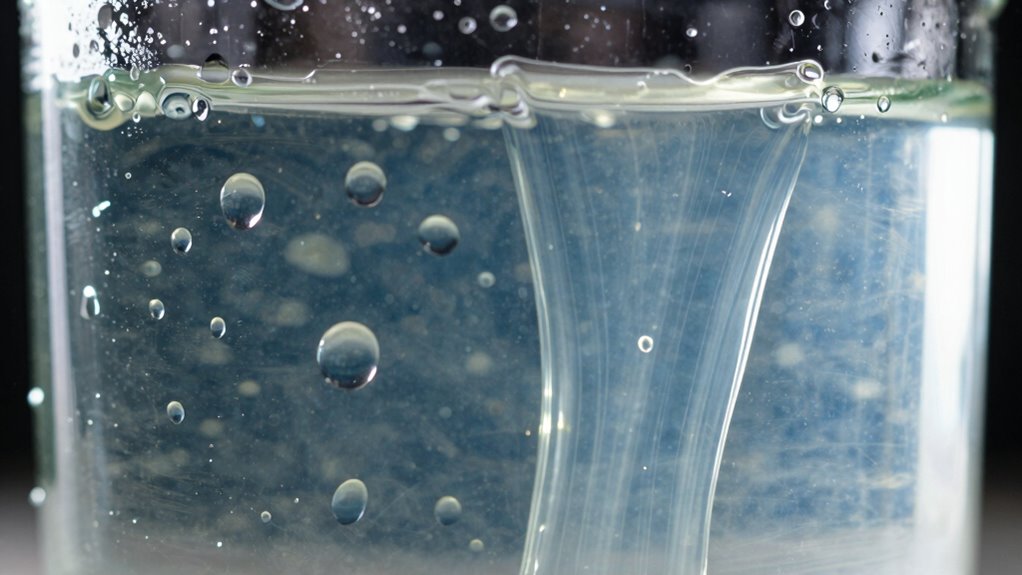
Have you ever wondered why water mixing with oil can cause problems in machinery or processes? The answer lies in oil contamination, which can lead to corrosion, reduced lubrication, and equipment failure. Detecting moisture in oil is essential for maintenance, but it’s equally important to understand the difference between water from condensation and water from coolant leaks. Both can introduce moisture into your oil, but their origins and implications differ markedly.
Condensation occurs naturally when warm oil cools down, causing water vapor in the air to turn into liquid water inside the equipment. This moisture can accumulate gradually over time, especially in environments with fluctuating temperatures or inadequate sealing. Moisture detection methods, such as oil test kits or electronic sensors, help identify this hidden water presence before it causes serious damage. Recognizing condensation as the source of water in oil means you can take targeted steps—like improving insulation, sealing, or regular oil filtration—to prevent ongoing moisture buildup. Since condensation tends to be gradual, monitoring the oil regularly allows you to catch the problem early, reducing the risk of corrosion or lubricant breakdown.
On the other hand, water from coolant leaks usually indicates a more serious issue related to equipment failure or malfunction. Coolant systems are designed to transfer heat away from machinery, but if they leak, water can seep into the oil, creating a different type of oil contamination. This water is often contaminated with additives, chemicals, or debris from the cooling system, making it more harmful than simple condensation. Detecting this type of moisture often requires more precise analysis, such as laboratory testing, because the water content might be substantial and rapidly cause corrosion or reduce the effectiveness of lubrication. If you suspect coolant leaks are contaminating your oil, it’s essential to inspect seals, gaskets, and cooling systems immediately to prevent extensive damage.
Knowing how to tell the difference between condensation and coolant-related water is critical for effective maintenance. While both can compromise oil quality, their sources determine the right corrective actions. Condensation issues can often be solved through improved insulation and regular moisture detection, while coolant leaks demand immediate mechanical repairs. Regular oil analysis and moisture testing help you stay ahead of these problems, ensuring your machinery runs smoothly and avoiding costly downtime. Ultimately, understanding the origin of water in oil empowers you to implement proper preventive measures, keeping oil clean and machinery reliable. Additionally, awareness of AI and sensor technologies can improve early detection of moisture issues, further protecting your equipment.

Moisture Test – Calcium Chloride Test Kit (Single Unit)
- Certified Accurate Testing: ASTM 1869 certified moisture vapor test
- Reliable Anytime Use: Durable, no expiration, accurate in various conditions
- Protects Investment: Prevents costly flooring and structural damage
As an affiliate, we earn on qualifying purchases.
As an affiliate, we earn on qualifying purchases.
Frequently Asked Questions
Can Water in Oil Cause Engine Failure?
Yes, water in oil can cause engine failure. When water mixes with oil, it accelerates engine corrosion and weakens lubrication, leading to increased wear and potential engine damage. You might notice engine knocking or overheating. To prevent this, regularly check your oil for water contamination and address leaks or condensation issues promptly to keep your engine running smoothly and avoid costly repairs.
How Quickly Does Water in Oil Cause Damage?
Water in oil can cause damage within days, especially if left untreated. It increases corrosion risk by promoting rust on engine parts and disrupts lubrication, leading to increased wear and potential engine failure. You might notice unusual noises or oil contamination, which signals that water is harming your engine. Addressing water in oil promptly helps prevent costly repairs, safeguarding your engine’s longevity and ensuring smooth operation.
Is Water in Oil More Common in Certain Climates?
Water in oil is more common in humid or cold climates where condensation occurs more frequently. Climate impact influences regional prevalence, so you’re likely to see more water contamination in areas with high humidity or temperature fluctuations. To prevent damage, regularly check your oil for water content, especially if you live in such climates. Proper maintenance helps you catch water issues early, protecting your equipment’s lifespan.
Can Oil Additives Prevent Water Contamination?
Oil additives can help reduce water contamination by improving the oil’s ability to repel moisture and prevent rust. While they won’t completely eliminate water, using high-quality additives can slow down corrosion and minimize water-related issues. Regular oil changes and proper maintenance are essential, but incorporating specific oil additives designed for water resistance adds an extra layer of protection against water contamination in your engine.
How Often Should I Check for Water in Oil?
You should check for water in oil during every oil change or at least every 3,000 to 5,000 miles. Regular oil testing helps monitor moisture levels, catching any water contamination early. Coincidentally, fluctuating weather or operating conditions can increase water presence, so stay vigilant. By routinely inspecting and testing your oil, you prevent damage and guarantee ideal engine performance. Don’t wait—make moisture level checks part of your maintenance routine.

Universal Water Coolant Oil Temp Sensor Temperature 1/8 Npt Electrical Sender Transmission Sensor Unit
- Sensor Type: 1/8 NPT temperature sender
- Compatible Fluids: Coolant, water, oil
- Connection Type: Single wire, earth through thread
As an affiliate, we earn on qualifying purchases.
As an affiliate, we earn on qualifying purchases.
Conclusion
Understanding whether water in your oil is from condensation or a coolant leak is like telling apart two similar twins. By paying attention to the oil’s appearance, smell, and the equipment’s behavior, you can spot the difference quickly. Addressing the issue early prevents serious damage, saving you time and money. Keep a keen eye on your oil—just like a detective, your instincts will help you catch the culprit before it causes bigger problems.

CXPRO 28pcs Radiator Pressure Tester Kit, Coolant Vacuum Refill Kit
- Complete Radiator Testing Kit: Includes pressure tester, vacuum refiller, and accessories
- Leak Detection and Temperature Measurement: Identify radiator leaks and measure temperature easily
- Universal Adapter Compatibility: Suitable for all vehicle models with adaptable fittings
As an affiliate, we earn on qualifying purchases.
As an affiliate, we earn on qualifying purchases.

Under My Hood Oil Analysis Kit – Oil Test Kit for Gasoline & Diesel Engines
- Aircraft Use Warning: Not for aircraft engine testing
- Equipment Monitoring: Tracks oil condition and wear metals
- Universal Compatibility: Suitable for gasoline and diesel engines
As an affiliate, we earn on qualifying purchases.
As an affiliate, we earn on qualifying purchases.