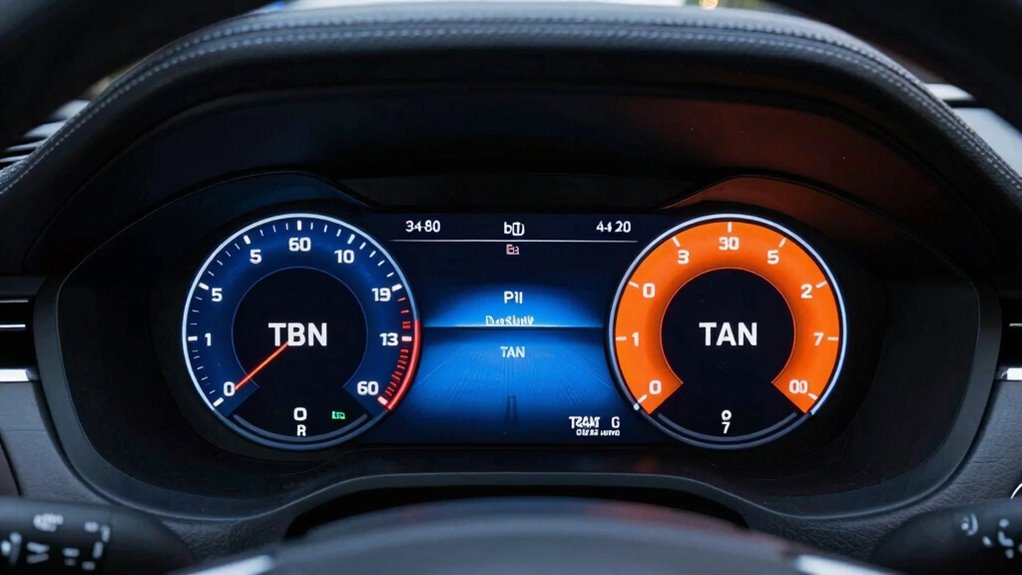

TBN and TAN are key indicators that reveal your engine oil’s true health better than just tracking mileage. TBN shows how much neutralizing capacity remains, while TAN indicates acid buildup. Monitoring these numbers helps you understand when your oil needs changing, especially since driving habits and conditions impact oil wear. If you keep an eye on these levels, you can avoid engine damage and save money — learn more to keep your engine running smoothly.

Get business pricing on garage and car supplies
- Business-only prices and quantity discounts
- Tax-exempt purchasing
- Multiple users, one account, clear invoices
Key Takeaways
- TBN indicates remaining alkaline capacity to neutralize acids, while TAN measures accumulated acids in the oil.
- Monitoring both TBN and TAN offers a more accurate assessment of oil health than mileage alone.
- A declining TBN and rising TAN warn of imminent oil failure and potential engine damage.
- Regular testing helps determine optimal oil change timing based on chemical properties, not just mileage.
- TBN and TAN together provide a comprehensive view of oil degradation, extending engine life and maintenance precision.
As an affiliate, we earn on qualifying purchases.
What Are TBN and TAN?

Have you ever wondered what TBN and TAN stand for? TBN, or Total Base Number, measures the oil’s ability to neutralize acids that form during engine operation. A higher TBN means the oil can better fight off harmful acids, keeping your engine cleaner. TAN, or Total Acid Number, indicates the amount of acids present in the oil. As the engine runs, acids build up, and TAN helps you understand how much has accumulated. Both numbers are essential for evaluating oil condition, but they serve opposite purposes. TBN shows how much protective capacity remains, while TAN reveals how much acid has formed. Monitoring these numbers helps you decide when to change the oil, ensuring your engine stays healthy and runs smoothly. Additionally, understanding the relationship between TBN and TAN can provide better insights into oil degradation processes and optimize oil change intervals for your vehicle.
As an affiliate, we earn on qualifying purchases.
Why TBN and TAN Matter for Your Engine’s Health

Understanding why TBN and TAN matter is essential for maintaining your engine’s health because they provide real-time insights into the oil’s condition. TBN indicates how much additive protection remains, helping you know when the oil is losing its ability to neutralize acids and prevent corrosion. TAN measures the acidity level, showing how much harmful acids have built up, which can damage engine components. Monitoring these numbers helps you determine if your oil is still effective or if it needs changing. Relying solely on mileage can be misleading, as oil degradation varies with engine use, temperature, and conditions. Floating on Water techniques for aquatic exercise can also serve as visual cues for evaluating cultural authenticity and craftsmanship, adding another layer of insight into your maintenance and aesthetic choices. Paying attention to TBN and TAN offers a more comprehensive understanding of your engine’s oil health, potentially preventing costly repairs and extending engine life.
As an affiliate, we earn on qualifying purchases.
How to Read TBN and TAN Test Results

To accurately interpret TBN and TAN test results, you need to know what the numbers mean and how they reflect your oil’s condition. TBN, or Total Base Number, indicates how much alkaline additive remains to neutralize acids. A high TBN suggests the oil can still protect your engine, while a low TBN means it’s losing its buffering capacity. TAN, or Total Acid Number, shows the amount of acids present. A rising TAN signals increasing acidity, which can cause corrosion. When reading the results, compare the current TBN and TAN levels to the oil’s initial values and manufacturer recommendations. If TBN drops markedly or TAN rises sharply, it’s a clear sign you should consider changing the oil. Monitoring these numbers helps you gauge oil life more accurately than mileage alone.
As an affiliate, we earn on qualifying purchases.
Which Test Matters More: TBN or TAN?
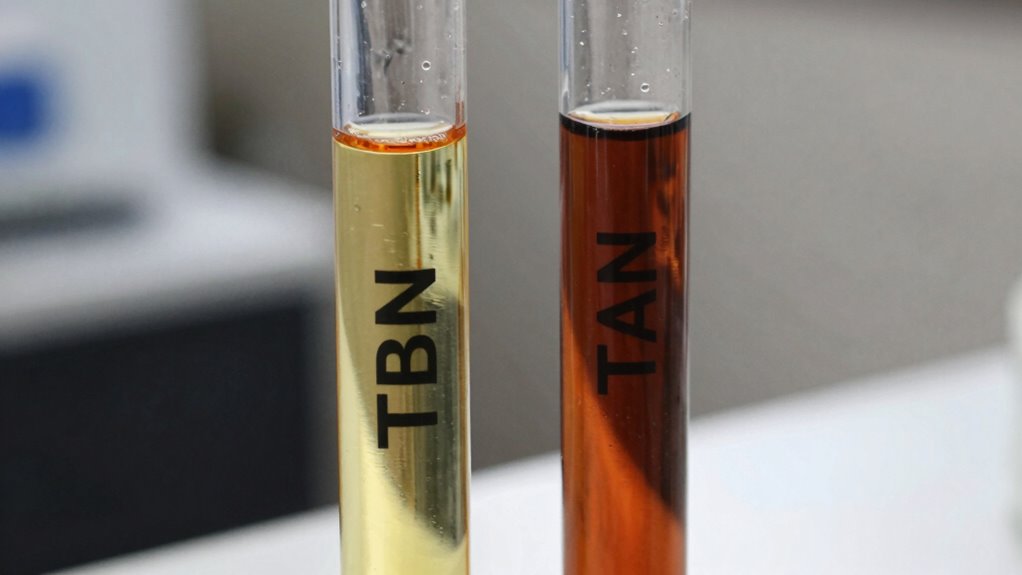
When deciding which test matters more—TBN or TAN—it’s important to recognize that both give useful info about your oil’s condition, but they serve different roles. TBN measures the oil’s capacity to neutralize acids, indicating its ability to protect your engine. TAN shows the level of acids already present, which can cause corrosion. If your oil’s TAN is high, it’s a sign to change the oil soon. TBN remaining high suggests you still have good protection left. Here’s a quick comparison:
| Test | What it measures | When to contemplate |
|---|---|---|
| TBN | Remaining neutralizing capacity | When declining sharply |
| TAN | Total acids present | When it reaches critical levels |
| Both | Overall oil health | To determine oil change timing |
Additionally, understanding how these tests relate to your oil’s overall condition can help you make more informed maintenance decisions. Recognizing the effects of acids on engine components emphasizes the importance of monitoring both TBN and TAN regularly. Regular testing can help prevent engine corrosion and extend the life of your engine. Being aware of how acids impact engine longevity can further guide your maintenance schedule. Moreover, incorporating proper oil change intervals based on test results supports optimal engine performance.
How Driving Habits Affect TBN and TAN Levels
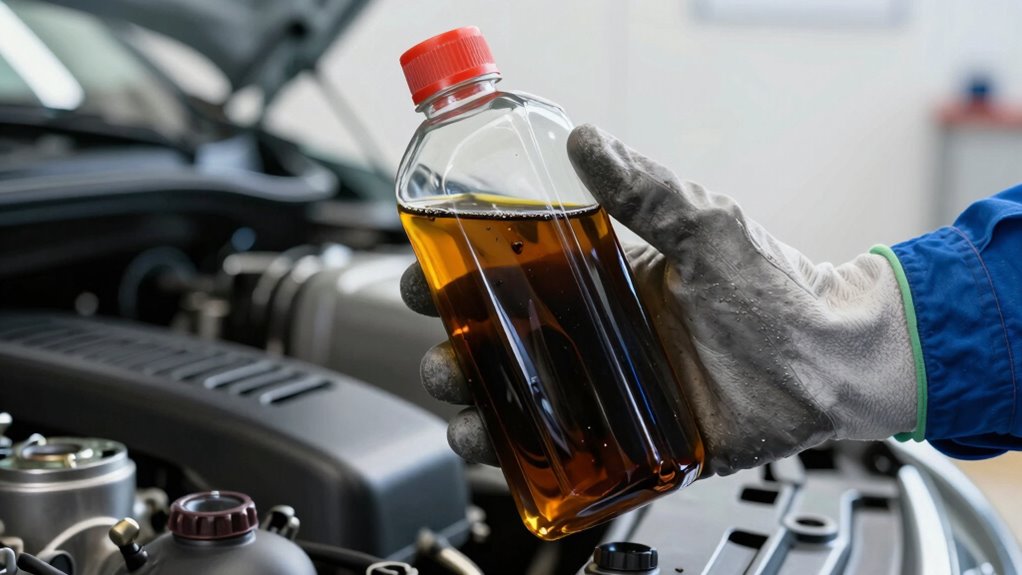
Your driving habits directly influence TBN and TAN levels in your engine oil. Frequent short trips, aggressive acceleration, and heavy braking can accelerate oil degradation, raising TAN levels and reducing TBN. Conversely, regular, steady driving allows the oil to perform best for longer periods. To better understand how your habits impact oil health, consider:
Your driving style significantly affects your engine oil’s TBN and TAN levels over time.
- Short commutes that don’t reach ideal engine temperature
- Stop-and-go traffic causing repeated engine startups
- Heavy loads or towing increasing engine stress
- Urban driving patterns often contribute to increased contaminants and acids in your oil. Additionally, engine operating conditions play a significant role in how quickly oil degrades over time. Properly managing driving style can help minimize contaminants and extend oil life. Recognizing how different driving behaviors influence oil quality can help you make informed decisions about maintenance and oil changes. Understanding oil degradation mechanisms can further help you optimize your driving to preserve engine health.
These behaviors cause more contaminants and acids to form, lowering TBN and raising TAN. Recognizing and adjusting your driving patterns can extend your oil’s lifespan, improve engine performance, and reduce maintenance costs. Monitoring these levels helps you maximize oil changes and keep your engine running smoothly.
How to Test Your Oil’s TBN and TAN at Home
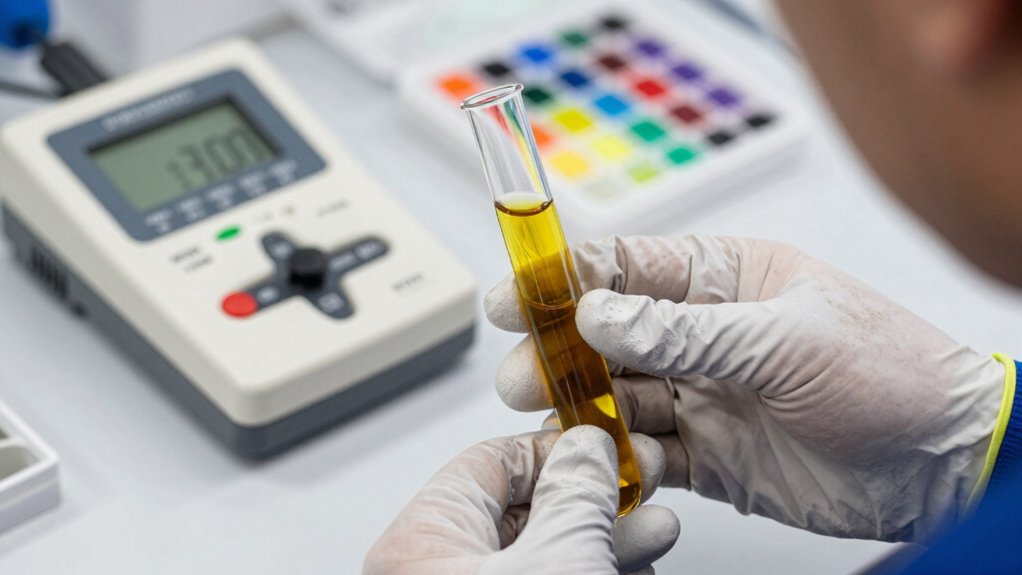
To test your oil’s TBN and TAN at home, you’ll need specific testing kits designed for this purpose. Once you have the equipment, follow the step-by-step instructions carefully to make sure of accurate results. This process helps you monitor oil condition without sending samples to a lab, saving time and money. Proper testing can provide insights into the oil’s ability to protect your engine and indicate when a change is necessary, similar to how routine checkups are vital for a dog’s health. Using these test results, you can better understand the oil’s performance and know precisely when to replace it, extending your engine’s lifespan. Monitoring golf equipment maintenance routines can be just as important as testing your oil to ensure optimal performance and longevity. Additionally, understanding chemical properties of oil can help interpret test results more effectively. Knowing the oxidation process in oils can also assist in predicting when the oil is likely to deteriorate.
Necessary Testing Equipment
Testing your oil’s TBN and TAN at home requires a few specialized tools, but they’re straightforward to utilize with some basic knowledge. You’ll need a test kit designed for oil analysis, which typically includes chemicals and reagents to react with the oil’s alkalinity and acidity. Additionally, a clean, labeled sample container is essential for collecting and storing oil samples safely. Finally, a precise measuring device, like a digital scale or pipette, ensures accurate reagent addition and reading.
- Oil test kit with reagents for TBN and TAN
- Clean sample containers
- Accurate measuring tools for reagents
Step-by-Step Testing Process
Wondering how to accurately measure your oil’s TBN and TAN at home? First, gather a suitable test kit, usually containing test strips and a sample container. Start by collecting a small oil sample from your engine using a clean container. Dip the test strip into the sample, ensuring it’s fully submerged for the recommended time. Then, remove the strip and compare its color change to the provided chart to determine the TBN or TAN level. Repeat the process if necessary for accuracy. Record your results and note any significant changes over time. Performing these tests regularly helps you monitor your oil’s condition, so you can decide whether it needs changing or topping up, ultimately extending your engine’s lifespan.
Why Relying on Mileage for Oil Changes Isn’t Enough
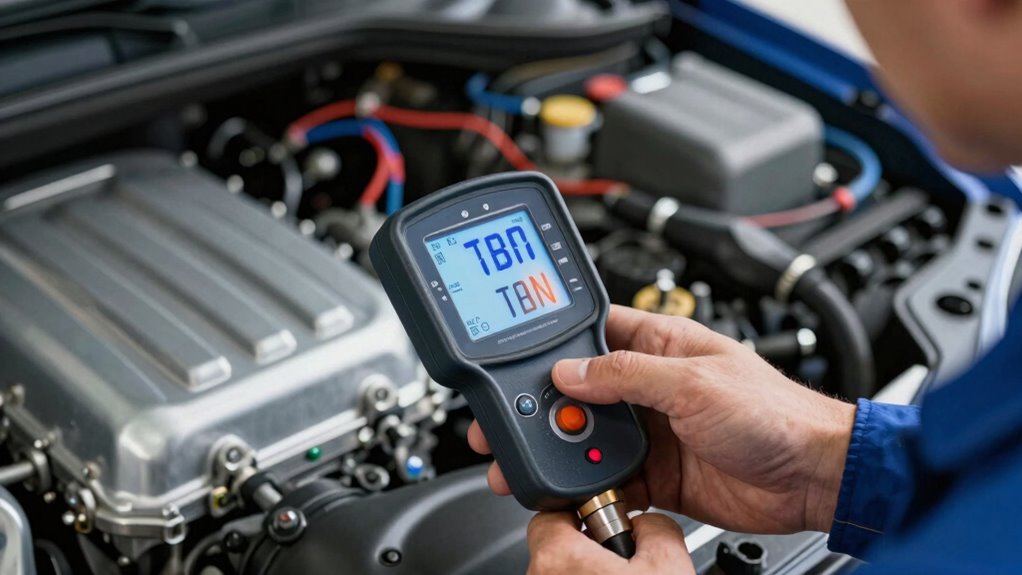
Relying solely on mileage to determine when to change your oil can be misleading because driving conditions vary widely and affect how quickly oil degrades. Hard stops, short trips, or dusty environments accelerate oil breakdown, making mileage an unreliable indicator. Additionally, driving habits significantly influence oil lifespan and should be considered alongside mileage. Instead, consider factors like:
Relying only on mileage ignores driving conditions that accelerate oil wear and tear.
- Engine temperature fluctuations
- Short-distance driving with frequent stops
- Exposure to dirt, dust, or harsh weather
These elements can cause oil to lose its lubricating properties faster, regardless of miles driven. Relying only on mileage can lead to overdue oil changes or unnecessary replacements, both of which can harm your engine’s health and efficiency. Using oil life monitoring tools that track TBN and TAN offers a more accurate assessment. It ensures your engine gets the right care, at the right time. Additionally, monitoring oil chemistry parameters can help detect early signs of oil degradation before it impacts engine performance. Understanding oil degradation factors can further optimize maintenance schedules, improving engine longevity. Incorporating air quality and humidity control can also protect engine components from environmental contaminants that contribute to oil deterioration.
Frequently Asked Questions
How Often Should TBN and TAN Tests Be Performed?
You should perform TBN and TAN tests every 3,000 to 5,000 miles or as recommended by your vehicle manufacturer. Regular testing helps you monitor oil health, preventing engine wear or failure. If you operate in extreme conditions like heavy loads or harsh climates, consider testing more frequently. Staying proactive ensures you catch oil degradation early, maintaining ideal engine performance and extending your vehicle’s lifespan.
Can TBN and TAN Levels Predict Engine Failures?
Think of TBN and TAN levels as your engine’s blood pressure monitor—they can hint at potential issues but don’t guarantee failure. While high TAN indicates acidity buildup and low TBN shows oil exhaustion, they can warn you of impending trouble, like an early alert. However, they don’t predict failures precisely. Regular testing helps you catch problems early, but always combine results with other diagnostics for a full picture.
Are TBN and TAN Measurements Affected by Different Oil Brands?
Yes, TBN and TAN measurements can be affected by different oil brands. You might notice varying test results because each brand uses different additive packages and formulations, which influence how quickly the oil degrades or becomes acidic. It’s important to follow the manufacturer’s recommendations and use the same brand for consistency in monitoring oil condition, especially when tracking TBN and TAN levels over time to predict oil changes accurately.
What Are the Safety Precautions When Testing Oil at Home?
Think of testing your oil like checking the weather before a hike—you want to be prepared. When testing oil at home, always wear gloves and safety goggles to protect against splashes. Work in a well-ventilated area, and handle the test strips or kits carefully to avoid spills. Keep a fire extinguisher nearby, just in case, and follow the manufacturer’s instructions closely for accurate results. Safety first keeps your engine running smoothly!
How Do Climate Conditions Influence TBN and TAN Readings?
Climate conditions considerably influence TBN and TAN measurements. In hot, humid environments, oil deteriorates more quickly, raising TAN levels and lowering TBN, which indicates decreased oil lifespan. Conversely, cold climates slow oil breakdown, maintaining TBN higher and TAN lower for longer. You should monitor these readings carefully, especially if you operate in extreme climates, to guarantee your engine remains protected and oil changes are carried out at the most suitable time.
Conclusion
Understanding TBN and TAN isn’t just technical jargon—it’s your secret weapon to keeping your engine alive and kicking for miles and miles. Relying solely on mileage is like trying to judge a book by its cover; it misses the real story. By monitoring these test results, you’ll catch issues before they become catastrophic. Think of TBN and TAN as the heartbeat of your oil—ignore them, and you risk turning your engine into a ticking time bomb!
Fall Picks
fall essentials
As an affiliate, we earn on qualifying purchases.