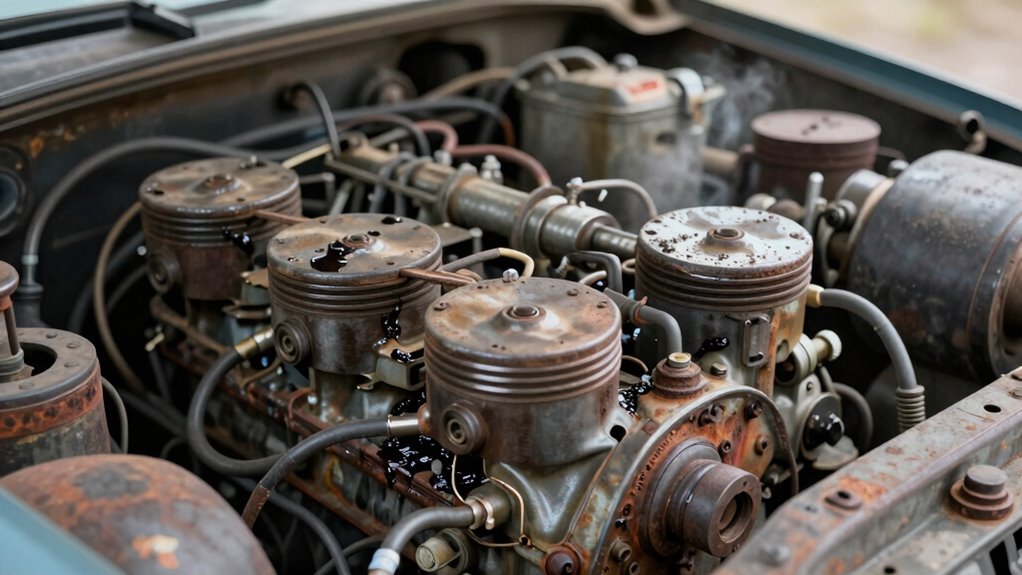

When your engine idles for a long time, it stays hot, which speeds up oil breakdown even without miles driven. The high temperature causes chemical changes, making the oil less viscous and prone to forming sludge and deposits. This reduces lubrication, increases wear, and can lead to engine damage over time. If you want to understand how prolonged idling impacts your oil’s health and what steps you can take, keep exploring the details.

Get business pricing on garage and car supplies
- Business-only prices and quantity discounts
- Tax-exempt purchasing
- Multiple users, one account, clear invoices
Key Takeaways
- Prolonged idling keeps the engine hot, causing the oil to degrade chemically and physically even without miles driven.
- High engine temperatures during extended idling accelerate oxidation, forming acids and sludge that harm the oil.
- Sustained heat reduces oil viscosity and protective qualities, leading to increased engine wear despite low mileage.
- Lack of movement prevents oil circulation, allowing contaminants and deposits to accumulate and impair oil effectiveness.
- Regular oil changes and turning off the engine during long waits help minimize oil breakdown caused by idling.
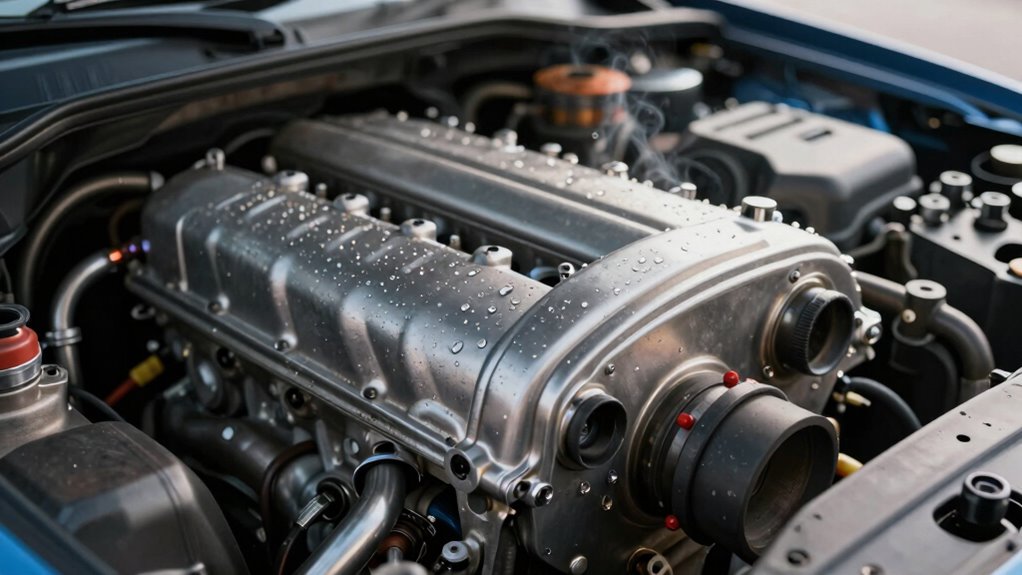
Even if you rarely drive long distances, your engine’s oil can still suffer. When your vehicle is idling for extended periods, the engine temperature remains high enough to impact the oil’s condition. Unlike driving at highway speeds, where the engine reaches ideal operating temperature quickly and the oil circulates efficiently, prolonged idling keeps the engine hot for a sustained period. This sustained heat accelerates oil degradation, reducing its ability to lubricate and protect engine components effectively. As the oil breaks down, it becomes less viscous and more prone to forming sludge and deposits, which can clog oil passages and hinder proper lubrication.
During long idling sessions, your engine’s temperature fluctuates at higher levels than during short trips or stop-and-go city driving. These elevated temperatures cause chemical changes within the oil — breaking down its molecular structure and diminishing its protective qualities. This process, known as thermal breakdown, results in oil losing its viscosity and becoming less capable of forming a thick, protective film around engine parts. Consequently, engine components are exposed to increased friction and wear, which can lead to premature engine failure if not addressed. The heat generated during extended idling also accelerates oxidation, leading to the formation of acids and sludge that further impair oil performance.
Extended idling causes thermal breakdown, reducing oil viscosity and increasing engine wear and risk of failure.
You might not notice immediate effects, but over time, the cumulative impact of high engine temperature and oil degradation can cause significant damage. The oil’s ability to absorb contaminants and carry away heat diminishes, leaving your engine vulnerable to increased wear and reduced efficiency. This is especially true if you neglect regular oil changes or use oil with an inadequate viscosity rating for prolonged idling conditions. The longer your engine stays hot without proper cooling and oil renewal, the more likely it is for harmful deposits to build up, which can eventually clog essential oil passages and impair engine function.
Understanding that extended idling is tough on your engine oil is essential to maintaining your vehicle’s health. Even if you don’t cover many miles, the heat generated during long stops can still degrade your oil and accelerate engine wear. To mitigate this, consider turning off your engine during long waits, or at least avoid unnecessary idling. Regular oil changes and using high-quality, temperature-resistant oil can also help counteract the effects of high engine temperature. Additionally, proper engine cooling and maintenance can significantly reduce thermal stress on your oil, helping to keep your engine running smoothly. By staying attentive to these factors, you ensure your engine remains properly lubricated, reducing the risk of costly repairs and extending its lifespan.
As an affiliate, we earn on qualifying purchases.
Frequently Asked Questions
How Does Engine Temperature Affect Oil Degradation During Long Idling?
During long idling, engine temperature rises, affecting oil degradation. As engine cooling becomes less effective, oil gets hotter, which reduces its viscosity and accelerates breakdown. This higher temperature causes the oil to lose its lubricating properties faster, leading to increased wear and potential engine damage. To prevent this, make certain of proper cooling and consider using oil formulated for high-temperature stability, helping your engine stay protected during extended idling.
Can Long Idling Cause Immediate Engine Damage Despite Low Mileage?
Long idling can strike like a ticking time bomb, causing immediate engine damage despite low mileage. During this time, engine corrosion accelerates and oil contamination worsens, leading to potential wear on crucial parts. The heat and moisture buildup create a hostile environment, risking damage even before miles accumulate. So, if you idle too long, you’re risking your engine’s health, not just wasting fuel.
What Are the Signs of Oil Breakdown From Prolonged Idling?
If your oil breaks down from prolonged idling, you’ll notice signs like engine sludge buildup and oil contamination. These issues cause your engine to run less smoothly, and you might see warning lights or experience increased exhaust smoke. The oil’s lubricating properties weaken, risking damage. Regularly check your oil’s color and consistency, and get it changed sooner if you notice it’s dark, thick, or contaminated to prevent costly repairs.
How Often Should I Change Oil if I Mostly Do Long Idling?
If you mostly do long idling, change your oil every 3,000 to 4,000 miles or roughly every 3 to 4 months. Studies show oil viscosity can break down faster during extended idling, and oil additives become less effective. Since your engine isn’t burning miles, regular oil changes are essential to maintain proper lubrication and protect against sludge buildup. Keep an eye on oil quality, and don’t skip those scheduled changes.
Does Fuel Quality Influence Oil Wear During Extended Idling Periods?
Yes, fuel quality impacts oil wear during extended idling. Poor-quality fuel with fewer fuel additives can lead to incomplete combustion, causing contaminants that break down oil faster. Lower oil viscosity also exacerbates wear, as thinner oil fails to protect engine parts effectively. To minimize this, use high-quality fuel with proper additives and verify your oil matches recommended viscosity, especially if you frequently idle for long periods.
oil additive for engine protection
As an affiliate, we earn on qualifying purchases.
As an affiliate, we earn on qualifying purchases.
Conclusion
So, next time you think your car’s just sitting idle, remember, your oil’s health is trembling on the edge of disaster! Even without miles racking up, your engine’s tiny, invisible warriors are fighting a never-ending battle against corrosion, sludge, and breakdown. If you ignore this, you might wake up one day to a car that refuses to start, a disaster of epic proportions! Treat your oil right, or face the monstrous consequences lurking in every silent, idle moment.
As an affiliate, we earn on qualifying purchases.
As an affiliate, we earn on qualifying purchases.
Halloween Picks
halloween
As an affiliate, we earn on qualifying purchases.