Not all oil filters are the same, mainly because of bypass valves that protect your engine. These valves act as safety features, allowing oil to flow around the filter when it’s clogged or the oil is too thick, preventing starvation. They make certain your engine continues to receive lubrication, even if the filter can’t keep up. Understanding how these valves work and choosing the right filter for your vehicle helps keep your engine running smoothly—there’s more to uncover behind the mechanics.
Key Takeaways
- Bypass valves prevent oil starvation by redirecting oil around a clogged filter when pressure exceeds a set limit.
- They protect the engine from running with unfiltered or insufficient oil, reducing potential damage.
- Bypass valves activate when filters are clogged or oil is too thick, ensuring continuous lubrication.
- Proper filter maintenance and selecting filters with suitable bypass valve settings are crucial for engine safety.
- Bypass valves work with filter materials to balance filtration efficiency and oil flow, safeguarding engine longevity.
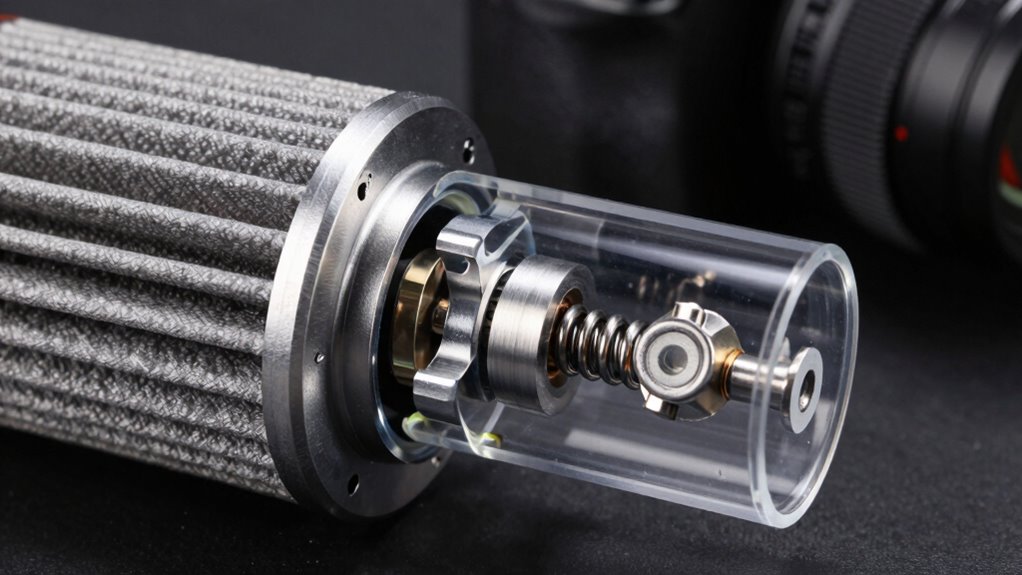
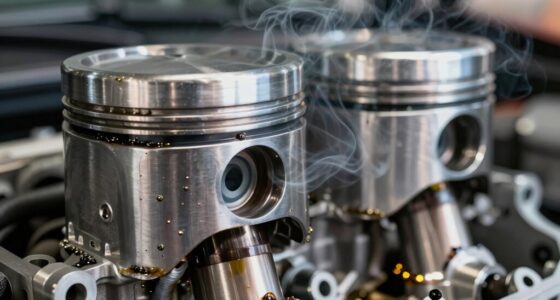
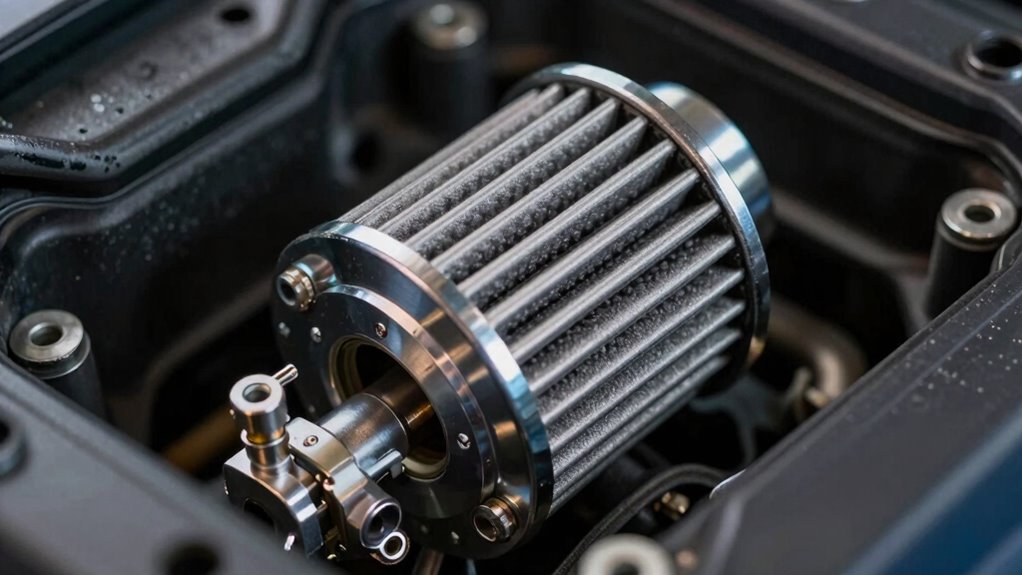
Have you ever wondered how your engine stays clean and runs smoothly? The secret lies in your oil filter, a crucial component that keeps impurities out of your engine’s vital parts. Not all oil filters are created equal; they differ in design, filter materials, and how they handle oil flow. At the heart of these differences is the bypass valve, an essential feature that protects your engine from potential damage when the filter can’t keep up. Understanding how filter materials and bypass valve mechanics work together helps you appreciate why choosing the right filter matters for your vehicle’s health. Filter materials are the first line of defense in trapping debris, dirt, and metal particles that accumulate in engine oil. High-quality filters use advanced materials like synthetic fibers, cellulose, or a blend of both, which can trap smaller particles more effectively. These materials influence how well the filter performs and how long it lasts before needing replacement. Cheaper filters with inferior materials may look similar but often fail to capture contaminants efficiently, risking your engine’s longevity. When you select a filter with premium filter materials, you guarantee that your engine oil remains cleaner for longer periods, reducing wear on engine components. However, even the best filter materials have limits. When dirt and debris clog the filter, or if the engine demands more oil flow than the filter can handle, the bypass valve mechanics come into play. The bypass valve is a safety feature designed to prevent oil starvation by redirecting oil around the filter when it becomes clogged or when the oil is too thick, such as during cold starts. Essentially, it acts as a fail-safe, ensuring your engine continues receiving lubrication even if the filter isn’t actively filtering. The mechanics of this valve involve a spring-loaded mechanism that opens when pressure exceeds a certain threshold, allowing oil to bypass the filter temporarily. While bypass valves protect your engine from potential damage caused by oil starvation, they also mean that unfiltered oil can circulate if the filter is heavily clogged. This underscores the importance of regular oil and filter changes and choosing a filter with proper filter materials suited to your driving conditions. In essence, the interplay between filter materials and bypass valve mechanics determines how well your oil system protects your engine. Knowing these details helps you make smarter choices when selecting a filter, ensuring your engine stays clean, efficient, and durable for miles to come. Additionally, understanding the design features of filters can help you select the most suitable option for your vehicle and driving habits.

Dorman 917-992 Oil Filter Bypass Valve Compatible with Select Models (OE FIX)
- Direct replacement for specific vehicles: Engine oil filter bypass valve
- Cost-effective repair: Eliminates need to replace entire filter housing
- Easy to install: Simple replacement during oil filter service
As an affiliate, we earn on qualifying purchases.
As an affiliate, we earn on qualifying purchases.
Frequently Asked Questions
How Often Should I Replace My Oil Filter?
You should replace your oil filter every 3,000 to 5,000 miles, depending on your vehicle and driving conditions. The oil filter lifespan varies, but regular replacement is crucial to keep your engine clean and functioning properly. Check your owner’s manual for recommended replacement frequency, and don’t forget to change it with each oil change for peak engine health. This routine ensures you avoid clogs and maintain smooth operation.
Can a Faulty Bypass Valve Cause Engine Damage?
A faulty bypass valve can definitely cause engine damage. Did you know that bypass valve malfunction accounts for up to 30% of engine failures related to oil issues? When it malfunctions, it can allow contaminated engine oil to circulate, leading to increased wear and potential engine damage. This happens because the bypass valve fails to protect your engine from oil contamination, risking costly repairs if not caught early.
Are High-Performance Oil Filters Worth the Extra Cost?
Yes, high-performance oil filters are worth the extra cost if you prioritize premium filtration and better engine protection. These filters often feature advanced bypass valve technology, which guarantees clean oil circulation even when the filter is clogged. By investing in superior filtration, you reduce the risk of engine wear and damage, especially under demanding conditions. Ultimately, the added cost can extend your engine’s lifespan and improve overall performance.
What Are Signs of a Failing Bypass Valve?
Imagine your engine’s oil flow as a bustling river, and a failing bypass valve as a dam with cracks. When it malfunctions, you’ll notice oil flow restriction, causing engine knocking or warning lights. You might also see metal shavings in the oil or increased engine temperature. These signs point to a bypass valve malfunction, risking unfiltered oil circulating and potentially damaging your engine’s essential parts.
Do All Vehicles Require Bypass Valves in Their Oil Filters?
Not all vehicles require bypass valves in their oil filters. You need to check your vehicle compatibility because some engines, especially high-performance or older models, need specific bypass valve types to protect the engine during filter clogging. Modern vehicles often have integrated systems, but it’s crucial to follow manufacturer recommendations. If your vehicle uses a bypass valve, confirm it’s the correct type to prevent oil flow issues and engine damage.

K&N Oil Filter: 20,000 Mile Engine Protection, High Efficiency, HP-7026
- High Flow Rates: Exceptional oil flow for engine protection
- Versatile Compatibility: Suitable for all oil types
- Engine Protection: Removes harmful contaminants
As an affiliate, we earn on qualifying purchases.
As an affiliate, we earn on qualifying purchases.
Conclusion
Understanding bypass valves helps you choose the right oil filter, protecting your engine from potential damage. Did you know that a clogged filter can reduce oil flow by up to 50%, risking engine wear? By selecting filters with proper bypass valves, you guarantee continuous oil flow even when the filter is dirty. Keep your engine running smoothly by paying attention to these essential components—it’s a small step that makes a big difference in longevity.

Mobil 1 M1-212A Extended Performance Oil Filter, 1 Pack
- Synthetic fiber construction: Promotes clean oil for engine longevity
- Enhanced contaminant removal: Filters more particles than conventional filters
- Improved oil flow: Reduces resistance and boosts efficiency
As an affiliate, we earn on qualifying purchases.
As an affiliate, we earn on qualifying purchases.

iFJF FL2051S Oil Filter Replacement for Ford F250-F750 6.7L Powerstroke
- Compatible Vehicle Models: Fits Ford F250-F750 6.7L Powerstroke
- Interchange Part Numbers: Multiple OEM part numbers included
- Pressure Relief Valve: Ensures oil flow during cold or clogging
As an affiliate, we earn on qualifying purchases.
As an affiliate, we earn on qualifying purchases.