TL;DR

Get business pricing on garage and car supplies
- Business-only prices and quantity discounts
- Tax-exempt purchasing
- Multiple users, one account, clear invoices
A Rare Vehicles in Action YouTube build replaced an 80-Series Toyota Land Cruiser’s factory 12-valve diesel with a 24-valve Yanmar 6LP marine engine. The builder says the converted truck produces 320 horsepower and reaches 60 mph in 8.8 seconds, compared with 16 seconds for the original setup.
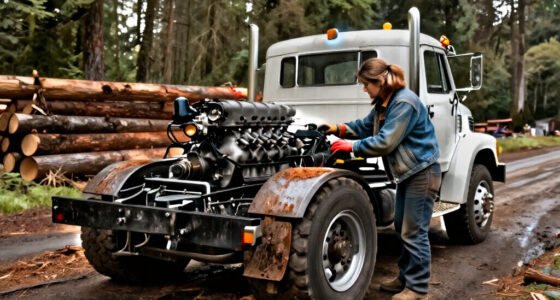
A builder featured on the Rare Vehicles in Action YouTube channel has installed a modified Yanmar 6LP marine diesel in an 80-Series Toyota Land Cruiser, reporting 320 horsepower and a 0-to-60 mph time of 8.8 seconds. The figures are roughly double the output and substantially quicker than the 16-second acceleration time cited for the truck’s original 12-valve diesel, though the performance numbers come from the build report rather than independent testing.
The Yanmar 6LP is a 4.2-liter, 24-valve turbocharged inline-six described by The Drive as closely related to the 1HD-FT diesel Toyota briefly offered in the 80-Series. The featured Land Cruiser originally had a factory 4.2-liter turbodiesel, but its 12-valve configuration differs from the Yanmar engine. According to the report, the conversion raises output to 320 hp, about twice that of the original engine.
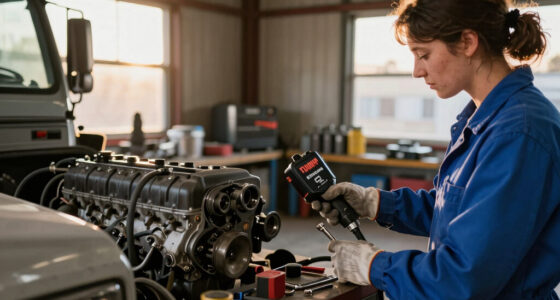
Boat-specific parts had to be changed for installation in the truck. The builder removed the engine’s seawater cooling pump and fitted a Toyota cooling system. Toyota parts also replaced the Yanmar oil sump and pickup to provide clearance, and the injector pump was changed because the marine version lacked a threaded connection for a tachometer. The engine is paired with a Toyota H152 five-speed gearbox.
The Drive reports that the Land Cruiser reaches 60 mph in 8.8 seconds, compared with 16 seconds in its original configuration. The builder said the result was achieved with the stock air intake, which the source describes as restrictive. The truck also received broader refurbishment, including front-axle work, corrosion and electrical repairs, and a new exhaust system. The report says it had covered about 200,000 miles with its original owner.
What the Marine Swap Changes
The project shows how an engine designed for one type of vehicle can be adapted for another when the underlying engine family is closely related. For Land Cruiser owners, the reported jump to 320 horsepower is a substantial change from the stock diesel’s slower performance, while the use of a Toyota gearbox and cooling components ties the conversion to available vehicle parts.
The figures remain specific to this build. They do not establish that every Yanmar 6LP conversion will produce the same power or acceleration, or that the vehicle has been tested under standardized conditions. The work also involved more than an engine installation: drivetrain fitment, cooling, lubrication clearance, instrumentation, and the truck’s general condition all formed part of the project.
Products Worth Considering

Milwaukee M12 FUEL 12V 1/4-Inch Hex Cordless Impact Driver Kit

NOCO Boost GB70 2000A 12V Lithium Jump Starter

DEWALT 20V MAX XR 3-Speed Cordless Impact Driver Kit (DCF845P1)
As an affiliate, we earn on qualifying purchases.
A Marine Relative of Toyota’s Diesel
The 80-Series Land Cruiser was offered with several engines in different markets, including a 4.2-liter factory turbodiesel. The Drive identifies the Yanmar 6LP as a marine version closely related to Toyota’s 1HD-FT, making the swap less distant from the vehicle’s original design than an unrelated engine conversion might be.
Marine diesel engines are configured for boat use, so their systems and ancillary parts are not automatically suitable for a road vehicle. In this case, the builder adapted the cooling system, sump, pickup and injector pump, then connected the engine to the Land Cruiser’s Toyota transmission. The project also included repairs to the vehicle itself, which had accumulated roughly 200,000 miles.
“The engine produces 320 horsepower.”
— Rare Vehicles in Action builder, as described by The Drive
How the Performance Was Measured
The supplied report does not specify the method or conditions used to establish the 320-hp output or the 8.8-second acceleration time. It also does not provide a dynamometer report, detailed build specifications, or independent verification of the comparison with the original truck. The builder’s statement that the stock intake restricts power is not accompanied by a quantified estimate of how much performance it limits.
Other details are not given, including the conversion’s total cost, the exact model year and market specification of the Land Cruiser, and whether the gearbox, axles or other components have been tested for long-term use at the reported output. The source describes the vehicle’s repairs but does not report a formal roadworthiness inspection or extended post-conversion testing.
Further Testing Could Clarify Results
The supplied report does not identify a scheduled follow-up, formal test, or additional development milestone. The next useful evidence would be independent power and acceleration measurements, along with more information about the engine’s calibration, transmission behavior and reliability after extended road use.
For now, the confirmed development is a completed conversion documented by the builder and covered by The Drive. The reported performance figures should be treated as build-specific claims until testing details or independent results are published.
Key Questions
What engine was installed in the Land Cruiser?
The build uses a Yanmar 6LP 4.2-liter, 24-valve turbocharged inline-six, a marine engine The Drive describes as closely related to Toyota’s 1HD-FT diesel.
How much power does the converted Land Cruiser reportedly make?
The report gives an output of 320 horsepower, about twice that of the original 12-valve diesel. The supplied material does not include independent verification or a dynamometer report.
How fast is the Land Cruiser after the swap?
The builder’s reported 0-to-60 mph time is 8.8 seconds, compared with 16 seconds for the original setup, according to The Drive. The source does not describe the test conditions.
What had to be changed to fit the marine engine?
The builder replaced the boat’s seawater cooling arrangement with a Toyota cooling system, fitted Toyota sump and oil-pickup parts for clearance, and changed the injector pump. The engine is connected to a Toyota H152 five-speed gearbox.
Is the reported performance independently confirmed?
Not in the supplied report. The horsepower and acceleration figures are attributed to the build, and the source does not provide independent test data or the methods used to measure them.
Source: thedrive.com