

When a vehicle’s manual permits both full synthetic and synthetic blend oil, the decision is whether the extra cost of full synthetic buys a benefit your driving and engine actually need. Both can meet the required viscosity and performance specifications, but full synthetic generally holds up better in severe heat, cold starts, and demanding use. A blend costs less and can suit routine driving when it carries the exact approvals your vehicle requires. Choose full synthetic for a newer, turbocharged, heavily used, or temperature-stressed engine; consider a blend for an older vehicle with moderate use and a clear price advantage.

Get business pricing on garage and car supplies
- Business-only prices and quantity discounts
- Tax-exempt purchasing
- Multiple users, one account, clear invoices

Mobil 1 Advanced Full Synthetic Motor Oil, 5W-30, 5 Quart
- ✔ Brand: Mobil 1
- ✔ Oil type: Full synthetic motor oil
- ✔ SAE viscosity: 5W-30
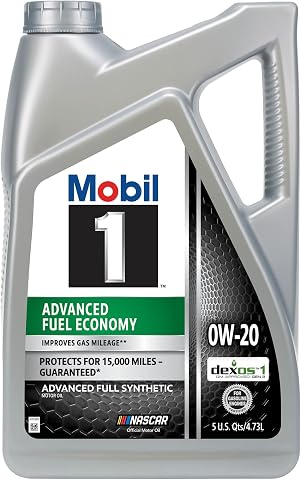
Mobil 1 Advanced Fuel Economy Full Synthetic Motor Oil, 0W-20, 5 Quart
- ✔ Brand: Mobil 1
- ✔ Oil type: Full synthetic motor oil
- ✔ SAE viscosity: 0W-20

Valvoline MaxLife High Mileage 5W-20 Synthetic Blend Motor Oil, 5 qt
- ✔ Brand: Valvoline
- ✔ Oil type: Synthetic blend motor oil
- ✔ SAE viscosity: 5W-20
At a Glance
| Criteria | Full synthetic motor oil | Synthetic blend motor oil | Winner |
|---|---|---|---|
| Base oil and formulation | Predominantly synthetic base oils; formulations vary by brand and grade. | Combines conventional and synthetic base oils; the synthetic share and package vary by product. | A |
| Temperature performance | Generally flows more readily in cold conditions and resists breakdown at high temperatures. | Can meet the same specified viscosity, but usually has less performance margin at temperature extremes. | A |
| Oxidation and deposit control | Typically offers stronger resistance to oxidation, sludge, and deposits under demanding conditions. | Adequate for many normal-use applications, with less reserve under prolonged heat or heavy loads. | A |
| Change interval | May support longer intervals only when the vehicle manual and oil-life system allow them. | Follow the vehicle maker’s interval; blend status alone does not determine a safe interval. | Depends |
| Price and value | Costs more per quart; added performance can justify the premium in severe service or long ownership. | Usually costs less; a good-value choice when it meets the engine’s exact requirements. | B |
| Availability and specification fit | Widely available in common grades, including products with manufacturer approvals. | Often available in popular grades, but check the label for required approvals and specifications. | Depends |
Mobil 1 Advanced Full Synthetic Motor Oil, 5W-30, 5 Quart
For a vehicle that specifies 5W-30, this is the lineup’s most balanced choice. Its full synthetic formulation is designed to reduce friction and help limit sludge and deposit buildup, with cold-start performance also part of its stated purpose. Compared with Valvoline MaxLife, it is not targeted specifically at high-mileage engines or formulated as a synthetic blend; compared with Mobil 1 Advanced Fuel Economy, it uses a 5W-30 grade rather than 0W-20 and does not lead with a fuel-economy focus.The manufacturer states protection for up to 15,000 miles or one year, whichever comes first. That is a stated maximum, not a reason to extend a vehicle’s own service interval: oil life, driving conditions, and the manual’s schedule still matter. Its 5-quart container suits a full oil change for many vehicles, but capacity varies, so check the fill amount and compatibility for your engine.This pick earns the top spot because it combines full synthetic oil, a common grade for vehicles that specify it, and a clear balance of cleanliness and component protection claims. The key limitation is equally clear: 5W-30 fit is not universal. A vehicle requiring 0W-20 or 5W-20 should use an oil meeting that requirement instead, even if this option’s broader positioning seems appealing.
Pros:
- Full synthetic formulation designed to help reduce friction, sludge, and deposits
- Cold-start and low-temperature performance is part of its stated purpose
- Manufacturer states protection up to 15,000 miles or one year, whichever comes first
- Five-quart container provides 160 fluid ounces
Cons:
- 5W-30 must match the vehicle’s specified viscosity and approval requirements
- The stated protection interval has a one-year limit and does not replace the vehicle’s maintenance schedule
Best for: Drivers whose owner’s manual specifies 5W-30 and who want a full synthetic oil with stated cold-start, wear, and deposit-control benefits.
Not ideal for: Owners of vehicles requiring another viscosity grade, or buyers seeking a dedicated high-mileage formula or a product explicitly focused on fuel economy.
Bottom line: For vehicles that call for 5W-30, this is our strongest all-around full-synthetic choice in the group.
“For vehicles that call for 5W-30, this is our strongest all-around full-synthetic choice in the group.”
Mobil 1 Advanced Fuel Economy Full Synthetic Motor Oil, 0W-20, 5 Quart
When an engine calls for 0W-20, this Mobil 1 option gives buyers a distinct reason to choose it: fuel economy is the formulation’s stated focus. It is a full synthetic oil designed to help protect against wear, sludge, and deposits, and it is listed as suitable for cars, trucks, and hybrid vehicles. Its 0W-20 grade is also positioned for cold starts and low-temperature performance.Compared with the 5W-30 Advanced Full Synthetic, this oil makes a more specific case around efficiency and compatible hybrid use, but it is only appropriate where 0W-20 is specified. It also differs from Valvoline MaxLife: this is a full synthetic option aimed at grade-specific efficiency, while MaxLife is a synthetic blend focused on higher-mileage engines. A hybrid label alone does not settle fit; the vehicle’s manual remains decisive.Like its 5W-30 counterpart, it carries a manufacturer-stated protection interval of up to 15,000 miles or one year, whichever comes first. That claim should be read alongside the vehicle’s schedule and operating conditions. The main tradeoff is narrow compatibility: 0W-20 is not a universal upgrade for thicker grades. For a compatible engine, the focused formulation makes it our second choice; for other engines, the right answer is to select the required viscosity.
Pros:
- Full synthetic formulation with a stated fuel-economy focus
- Listed for compatible cars, trucks, and hybrid vehicles
- Designed to help protect against wear, sludge, and deposits
- Cold-start and low-temperature performance is part of its stated purpose
Cons:
- 0W-20 is suitable only when it matches the vehicle’s specified grade
- The stated interval is capped at one year and remains subject to the vehicle’s maintenance guidance
Best for: Drivers of cars, trucks, and hybrids whose manufacturer specifies 0W-20 and who want a full synthetic oil with a stated fuel-economy focus.
Not ideal for: Owners whose vehicles require 5W-20, 5W-30, or another viscosity, and buyers looking for a dedicated high-mileage oil.
Bottom line: Choose this over the 5W-30 option when your engine specifies 0W-20 and efficiency is a priority.
“Choose this over the 5W-30 option when your engine specifies 0W-20 and efficiency is a priority.”
Valvoline MaxLife High Mileage 5W-20 Synthetic Blend Motor Oil, 5 qt
Valvoline MaxLife serves a narrower need than either Mobil 1 oil: it is a synthetic blend designed for engines with 75,000 miles or more. Seal conditioners are intended to help reduce leaks and oil consumption, while detergents and friction-fighting additives are positioned to support cleanliness and wear protection. Those features make its focus distinct, but they do not establish that every older engine needs a high-mileage formula.Compared with the two Mobil 1 products, MaxLife is the only synthetic blend and the only option here centered on high-mileage engine concerns. That may be a better match for a compatible 5W-20 engine where seal conditioning is relevant. The tradeoff is that buyers seeking a full synthetic formulation will prefer either Mobil 1 option, provided the viscosity matches. Its 5W-20 grade is the deciding constraint: neither high mileage nor seal conditioners justify using it in an engine that calls for another grade.The product lists ILSAC GF-7A, API SQ, API SP, API SN with SN PLUS, and earlier gasoline categories, alongside Ford and Chrysler specifications. Owners should still confirm the exact approval their vehicle requires. MaxLife ranks third overall because its intended use is more specialized, not because that specialization lacks value. For a higher-mileage engine that specifies 5W-20, it may be the most directly relevant choice in this comparison.
Pros:
- Designed for engines with 75,000 miles or more
- Seal conditioners are intended to help reduce leaks and oil consumption
- Detergents and friction-fighting additives support cleanliness and wear protection
- Lists multiple API and ILSAC categories plus Ford and Chrysler specifications
Cons:
- Synthetic blend rather than full synthetic
- 5W-20 grade limits suitability to engines that specify it
- High-mileage positioning may not address the priorities of newer or lower-mileage engines
Best for: Owners of engines with at least 75,000 miles whose vehicle specifies 5W-20 and who want a synthetic blend with seal conditioners.
Not ideal for: Drivers whose engines require a different viscosity, or buyers who specifically want a full synthetic oil.
Bottom line: For a high-mileage engine that calls for 5W-20, MaxLife offers the lineup’s most targeted blend and seal-conditioning focus.
“For a high-mileage engine that calls for 5W-20, MaxLife offers the lineup’s most targeted blend and seal-conditioning focus.”
As an Amazon Associate we earn from qualifying purchases.
Key Differences
The practical difference is performance margin. Full synthetic is usually the stronger choice when oil faces repeated cold starts, high heat, towing, stop-and-go traffic, or a turbocharger. That advantage can help maintain protection and cleanliness under stress, but it does not make every engine run better or allow an owner to ignore the manual. A correctly specified blend can serve many ordinary driving patterns well.
Price and maintenance rules change the value calculation. A blend usually costs less at purchase, while a full synthetic may be worth the premium for severe service, long-term ownership, or a vehicle whose manufacturer requires it. Neither label sets the oil-change interval by itself: use the interval in the owner’s manual, the vehicle’s oil-life monitor, and any applicable warranty terms. Check the viscosity grade and formal specifications on the container before choosing.
Detailed Comparison
Base oil and formulation (Full synthetic motor oil wins — moderate)
Full synthetic relies predominantly on synthetic base oils, while a blend combines synthetic and conventional base oils. That distinction describes the formulation, but it does not by itself prove that a particular bottle meets a vehicle’s needs. The performance category, viscosity, and manufacturer approvals on the label matter too. Full synthetic wins for formulation consistency and potential performance margin; the gap is moderate because product quality varies within both categories.
Temperature performance (Full synthetic motor oil wins — major)
Full synthetic generally flows more readily during cold starts and resists high-temperature breakdown better than a blend. That advantage matters most in very cold weather, sustained high-speed driving, towing, or engines that run hot. For mild weather and ordinary trips, a blend that meets the required specifications may be entirely adequate. Full synthetic wins by a moderate to major margin as conditions become more severe.
Oxidation and deposit control (Full synthetic motor oil wins — moderate)
Full synthetic typically offers more resistance to oxidation and sludge when oil is exposed to sustained heat or heavy use. That can help protect cleanliness, especially in turbocharged engines or severe service. A quality blend still has detergent and protective additives, and routine driving does not automatically make it inferior in practice. Full synthetic has a moderate advantage under stress; for normal use, the difference may be minor.
Change interval (major difference)
Neither oil type earns a longer interval by label alone. The vehicle maker’s schedule, the oil-life monitor, driving conditions, and product approval determine the appropriate interval. Full synthetic may tolerate demanding use better, but stretching changes beyond the manual’s guidance can undermine that benefit. There is no general winner: follow the vehicle-specific maintenance instructions for either oil.
Price and value (Synthetic blend motor oil wins — moderate)
Synthetic blend usually costs less per quart, so it wins on initial purchase price. Full synthetic’s premium can be worthwhile if the engine requires it or the vehicle regularly sees severe conditions. If both products meet the exact specification and the vehicle is used normally, the blend can offer better value. The difference is minor when oil changes are infrequent relative to total vehicle costs, but more noticeable to high-mileage drivers.
Availability and specification fit (major difference)
Both types are sold in common grades, but the required viscosity and formal approval are more important than the synthetic label. Some vehicles require full synthetic or a specific manufacturer approval; others allow a blend. Full synthetic often comes in a broad range of modern grades, while blends may be less common for niche specifications. The winner depends on the vehicle: choose the product that explicitly meets its manual’s requirements.
Full synthetic motor oil: Pros and Cons
Pros:
- Stronger performance margin in cold starts and high heat.
- Often better suited to turbocharged engines, towing, and severe service.
- Commonly available in grades and approvals required by newer vehicles.
Cons:
- Higher purchase price than most blends.
- Its advantages may be small in routine, moderate-condition driving.
- Does not authorize longer oil-change intervals without manufacturer guidance.
Synthetic blend motor oil: Pros and Cons
Pros:
- Lower upfront cost.
- Can meet the needs of many vehicles under ordinary driving conditions.
- A sensible value option when the manual permits it and the product has the right approvals.
Cons:
- Usually offers less reserve in temperature extremes and severe service.
- May not meet requirements for vehicles that specify full synthetic or a particular approval.
- The lower price is no benefit if it leads to using the wrong grade or specification.
Who Should Choose What
Choose Full synthetic motor oil if:
- Your owner’s manual requires full synthetic or your engine needs a specific approval offered by the product.
- You drive in very cold or hot conditions, tow, commute in heavy traffic, or regularly make short trips.
- You own a turbocharged vehicle or want extra performance margin for demanding use.
Choose Synthetic blend motor oil if:
- Your manual permits a synthetic blend and you drive mostly under normal conditions.
- The blend clearly meets the required viscosity and specifications, and its lower cost matters to your budget.
- You prefer to pay less per change while following the vehicle maker’s maintenance schedule.
Skip both if: Skip any product that lacks the vehicle’s required viscosity, performance category, or manufacturer approval; select an approved oil of another type instead.
Value for Money
Pay more for full synthetic when the vehicle requires it or when severe conditions make its added performance margin useful. The premium is also easier to justify if you plan to keep the vehicle for years and want an oil suited to repeated heat, cold, or heavy loads. For ordinary driving in a vehicle that permits either option, a correctly specified synthetic blend is often the better value. Do not count on fewer oil changes to repay the premium unless the vehicle maker’s schedule allows that interval.
Final Verdict
Choose full synthetic if your manual calls for it, or if your driving regularly exposes the engine to cold starts, high heat, towing, or turbocharger stress. For most drivers whose manuals allow either oil and whose trips are routine, a synthetic blend that meets every listed specification is a sound, lower-cost choice. The biggest deciding factor is not the word “synthetic” on the bottle; it is whether the oil matches the engine’s requirements and the conditions it faces. When both options qualify, pay more for full synthetic when you need its extra margin, and choose the blend when you do not.
Frequently Asked Questions
Is full synthetic always better than synthetic blend?
Full synthetic generally offers more performance margin in temperature extremes and demanding conditions. It is not automatically the right choice for every vehicle: a blend can be suitable when the manual permits it and the oil meets the required specifications.
Can I switch from a synthetic blend to full synthetic?
In most cases, switching is fine if the new oil has the viscosity and approvals required for your vehicle. Check the owner’s manual and product label; the oil type alone does not dictate whether a switch is appropriate.
Does full synthetic let me go longer between oil changes?
Not by itself. Follow the interval set by the owner’s manual or oil-life monitor, including guidance for severe driving. Use a longer interval only when the vehicle maker’s instructions support it.
Which oil is better for a high-mileage car?
Age and mileage alone do not decide the answer. Choose the viscosity and performance specifications in the manual, and account for oil consumption, leaks, and the car’s condition. A full synthetic may suit demanding use, while an approved blend may be adequate for ordinary service.