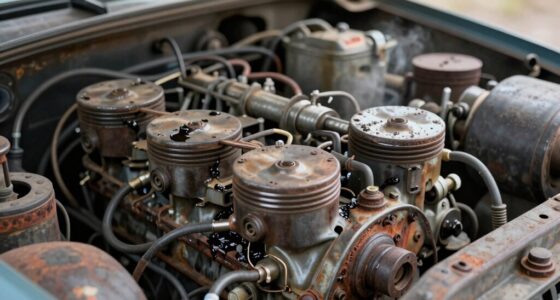

When you take short trips, your engine doesn’t warm up fully, which causes your oil to stay cooler longer. This prevents the oil from burning off moisture and contaminants, leading to faster breakdown and reduced lubrication. Over time, this wear can damage engine parts and decrease performance. If you want to keep your engine healthy, understanding how short trips stress your oil is important—something you’ll discover as you explore further.

Get business pricing on garage and car supplies
- Business-only prices and quantity discounts
- Tax-exempt purchasing
- Multiple users, one account, clear invoices
Key Takeaways
- Short trips prevent engine oil from reaching optimal temperature, reducing its ability to burn off moisture and contaminants.
- Frequent stopping and starting accelerate oil degradation, leading to less effective lubrication and increased engine wear.
- Incomplete warm-up causes oil to remain cooler longer, speeding up breakdown and reducing its protective qualities.
- Regular oil checks and using high-quality synthetic oils can help mitigate the stress caused by short trip driving.
- Combining short trips with occasional longer drives helps maintain oil effectiveness and prolong engine lifespan.

Have you ever wondered how to make the most of a short trip by car? Many drivers overlook the impact those quick jaunts have on their vehicle’s health, especially when it comes to engine oil. Short trips might seem harmless, but they put your engine under a different kind of stress. Unlike long drives, where the engine reaches ideal operating temperature, short trips often involve stopping and starting, which prevents the engine from fully warming up. This incomplete warm-up means your engine oil doesn’t get hot enough to burn off moisture, fuel residues, and other contaminants. Over time, this leads to engine oil degradation, where the oil’s lubricating qualities diminish faster than they should. As a result, your engine isn’t protected as well as it needs to be during these quick drives.
When engine oil degrades prematurely, the effects ripple through your vehicle’s engine. One of the most immediate consequences is increased engine wear effects. Without proper lubrication, metal parts rub against each other more than they should, accelerating wear and tear. This can cause components like pistons, cylinders, and valves to wear out faster, potentially leading to costly repairs down the line. You might not notice these effects right away, but over time, the accumulation of wear can reduce engine performance, decrease fuel efficiency, and even cause breakdowns. The problem worsens if you frequently rely on short trips without regular oil changes or maintenance checks, as the oil becomes less effective at protecting your engine from heat and friction.
Additionally, using high-quality synthetic oils** can help mitigate some of these issues by resisting degradation under stressful conditions like frequent short trips. To prevent this, it’s essential to understand how your driving habits influence your engine’s health. Short trips tend to keep your engine operating at lower temperatures, which hampers the oil’s ability to perform its protective functions. Regularly checking your oil level and quality can alert you to early signs of degradation. If you notice the oil is dark, gritty, or has a burnt smell, it’s time for an oil change. Additionally, consider occasionally taking longer drives that allow your engine to reach full temperature, helping burn off moisture and contaminants** and ensuring your oil remains effective.
In the end, understanding how engine oil degradation and engine wear effects are linked to your short trips can save you money and extend your engine’s lifespan. Pay attention to your car’s signals, maintain regular oil changes, and try to combine short trips when possible with longer drives. Doing so keeps your engine healthier, ensuring those quick trips don’t turn into costly problems down the road.
high quality synthetic engine oil
As an affiliate, we earn on qualifying purchases.
As an affiliate, we earn on qualifying purchases.
Frequently Asked Questions
How Does Short Trip Driving Affect Engine Oil Longevity?
Short trip driving accelerates engine oil degradation because your engine doesn’t reach ideal temperature, causing contaminants to build up faster. This reduces your oil’s ability to lubricate and protect, leading to potential engine wear. Additionally, frequent short trips lower fuel efficiency, as your engine runs less efficiently when cold. To protect your engine, consider regular oil changes and longer drives to allow your engine to warm up properly.
Can Short Trips Damage My Vehicle’s Transmission System?
Yes, short trips can cause significant transmission wear and accelerate oil degradation in your vehicle. When you start your car, the transmission fluid doesn’t reach essential temperature, leading to increased friction and early component wear. Repeated short drives prevent proper lubrication, risking damage to transmission seals and clutches. Over time, this relentless stress can drastically shorten your transmission’s lifespan, making it vital to occasionally take longer drives for proper system health.
What Are the Signs of Oil Stress From Short Trips?
You’ll notice signs of oil stress from short trips like increased oil consumption, which means your engine is using more oil than usual. You might also experience engine overheating, especially if the oil doesn’t circulate properly. Pay attention to warning lights, unusual noises, or a burning smell. Addressing these signs early can prevent serious damage and keep your vehicle running smoothly.
Is There a Specific Type of Oil Better for Short Trip Driving?
For short trip driving, synthetic blends are your best choice because they handle frequent startups and stops better than conventional oils. You should also consider regular engine flushes to remove accumulated deposits and keep your oil flowing smoothly. These measures help reduce oil stress, protect your engine, and extend its lifespan, especially when your driving involves lots of short trips. Stay proactive to keep your engine healthy and avoid costly repairs.
How Often Should I Change My Oil if I Mainly Do Short Trips?
You should change your oil every 3,000 to 5,000 miles if you mainly do short trips, as short drives can cause increased engine wear and oil contamination. Regular oil change frequency helps prevent engine damage from the extra stress. Keep an eye on your vehicle’s manual and consider more frequent changes if your short trips are frequent or particularly short, ensuring your engine stays protected and runs smoothly.
As an affiliate, we earn on qualifying purchases.
Conclusion
You might think short trips don’t harm your car, but the truth is, they can stress your oil more than you realize. Even quick drives can cause your engine oil to break down faster, leading to potential issues down the line. Don’t dismiss these small trips—regular maintenance and oil checks are key. Taking a little extra time now can save you costly repairs later. Stay proactive, and your car will thank you for it.
oil change indicator light sensor
As an affiliate, we earn on qualifying purchases.
As an affiliate, we earn on qualifying purchases.
engine oil additive for short trips
As an affiliate, we earn on qualifying purchases.
As an affiliate, we earn on qualifying purchases.
Halloween Picks
halloween
As an affiliate, we earn on qualifying purchases.