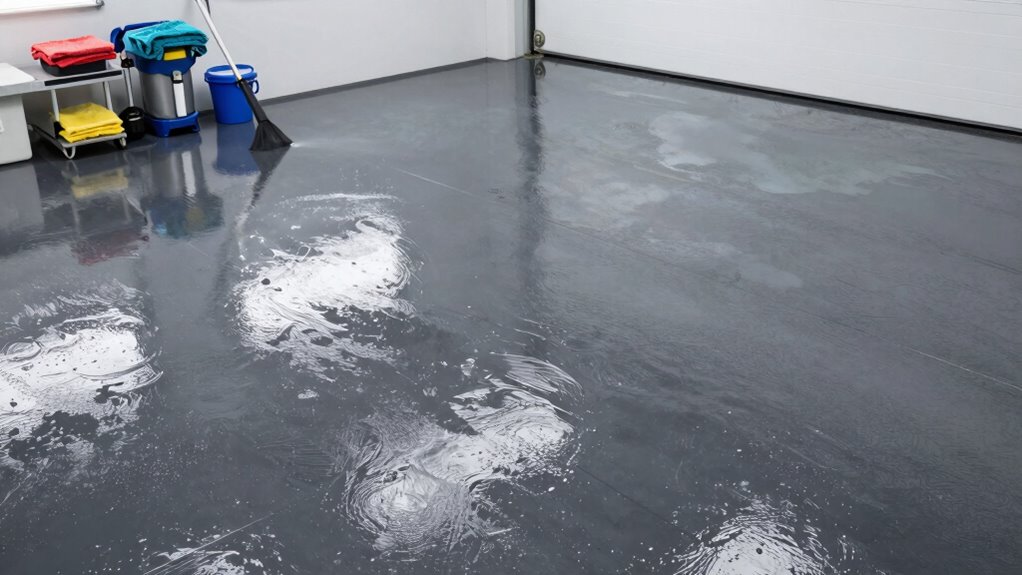
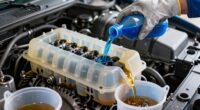
When cleaning up fluid spills on your garage floor, act quickly to prevent stains and damage. Use absorbent materials like kitty litter or spill pads, then scrub with degreasing agents, dish soap, or natural remedies like baking soda and vinegar. For tougher stains, commercial degreasers work well. Always wear protective gear and dispose of spills properly. To learn more about effective methods, tips, and prevention strategies, keep exploring proven cleanup techniques and maintenance advice.
Key Takeaways
- Act quickly to contain and clean spills using absorbent materials like kitty litter or spill pads.
- Use targeted cleaning agents such as degreasers, baking soda paste, or vinegar for effective stain removal.
- For stubborn stains, combine natural remedies like baking soda and vinegar or citrus solutions for eco-friendly cleaning.
- Follow safety protocols by wearing protective gear and properly disposing of hazardous fluids like antifreeze.
- Regularly inspect and maintain your garage floor, sealing it if needed, and seek professional help for deep stains or persistent odors.

Drymate XL Oil Spill Mat (36" x 59"), Premium Absorbent Oil Pad, Reusable, Washable, Durable, Waterproof Backing Contains Liquids, Protects Garage Floor Surface (USA Made)
ABSORBENT MATERIAL TRAPS SPILLS, (PROTECTS SURFACE): The Drymate Oil Spill Mat traps and contains the mess! Patented Drymate…
As an affiliate, we earn on qualifying purchases.
As an affiliate, we earn on qualifying purchases.
Why Fluid Spills Can Damage Your Garage Floor and Why It Matters
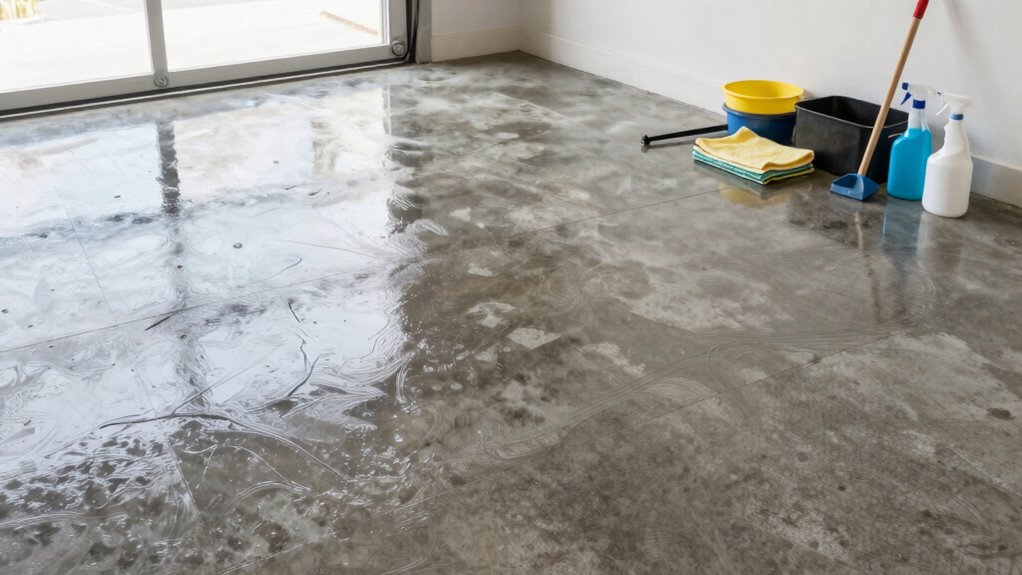
Fluid spills in your garage may seem harmless at first, but they can quickly cause significant damage to your floor if left unchecked. Over time, spills like oil, gasoline, or chemicals can erode the protective surface, leading to stains, cracks, and deterioration. Proper garage floor maintenance is essential to prevent long-term damage. Implementing eco-friendly disposal tips such as recycling or safely disposing of hazardous liquids can help reduce environmental impact and maintain a safer workspace. Spill prevention strategies such as using drip pans, absorbent mats, or sealing the concrete to minimize absorption are also effective. Quick cleanup is *crucial* to avoid corrosive effects and costly repairs, especially since concrete sealing provides an additional layer of protection against absorption. By staying proactive, you protect your investment and maintain a safe, clean environment. Addressing spills immediately also prevents slipping hazards and keeps your garage looking good. Effective spill prevention is a *vital* part of preserving your garage floor’s integrity and longevity.

Procare – Degreaser Concentrate – Tool, Shop Floor, Engine & Commercial Kitchen Cleaner – Cleaning Supplies – Degreaser – Made in the USA (1 Gallon)
STRONG DEGREASING ACTION: ProCare's concentrated degreaser is carefully formulated to exhibit the strongest degreasing action using cationic technology….
As an affiliate, we earn on qualifying purchases.
As an affiliate, we earn on qualifying purchases.
How to Identify What Spilled and the Best Way to Tackle It
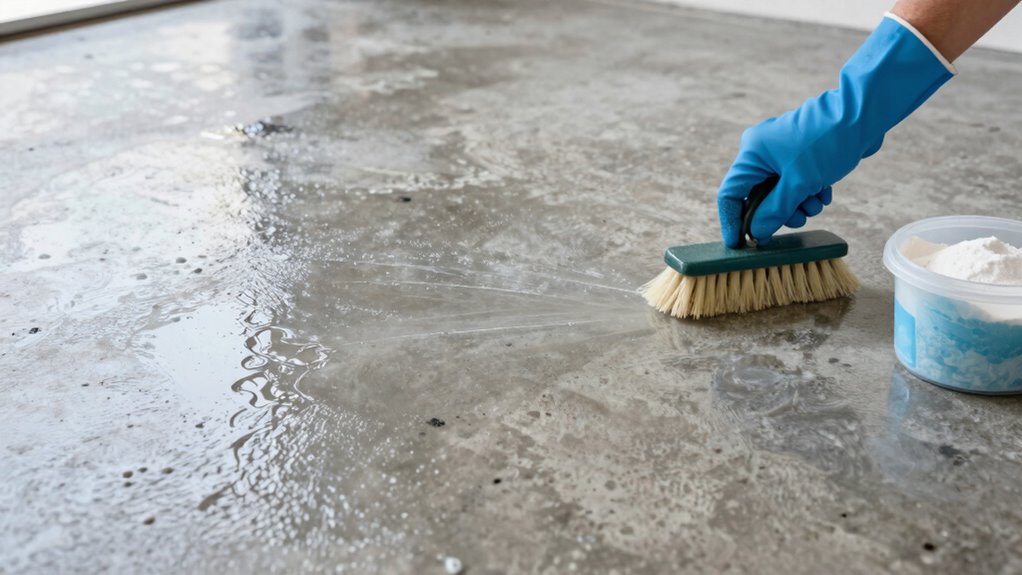
Knowing what spilled on your garage floor is key to choosing the right cleaning method and preventing damage. Start with spill identification by observing the stain’s color, texture, and location. This initial assessment helps you determine its nature and how to approach stain analysis effectively. Consider these three steps:
- Examine the color and consistency to differentiate between oil, coolant, or other fluids. Recognizing the chemical properties of different fluids can also guide you in selecting appropriate cleaning techniques, ensuring you don’t cause further harm. Being aware of patterns in numbers can sometimes also reveal recurring issues with specific spills.
- Check the size and shape of the stain for clues about the spill’s origin.
- Smell the residue to further identify the substance. Proper stain analysis saves time and effort, helping you tackle spills efficiently and prevent long-term damage to your garage floor.
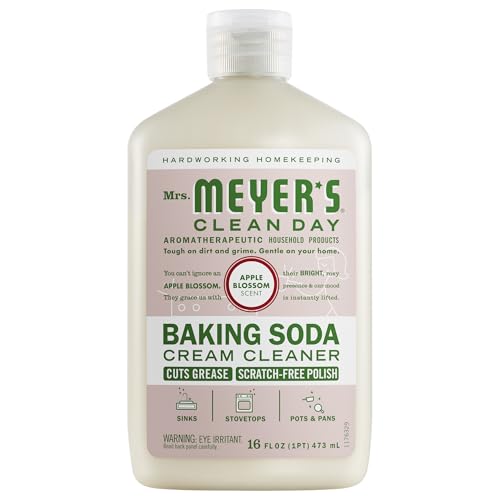
MRS. MEYER'S CLEAN DAY Baking Soda Cream Cleaner, Cuts Grease, Scratch-Free Polish, Apple Blossom, 16 Fl Oz, Pack of 1
Mrs. Meyer’s Baking Soda Cream Cleaner removes soap scum and grease build-up to make your kitchen sparkle
As an affiliate, we earn on qualifying purchases.
As an affiliate, we earn on qualifying purchases.
Effective Methods to Remove Oil and Grease Stains From Your Garage Floor
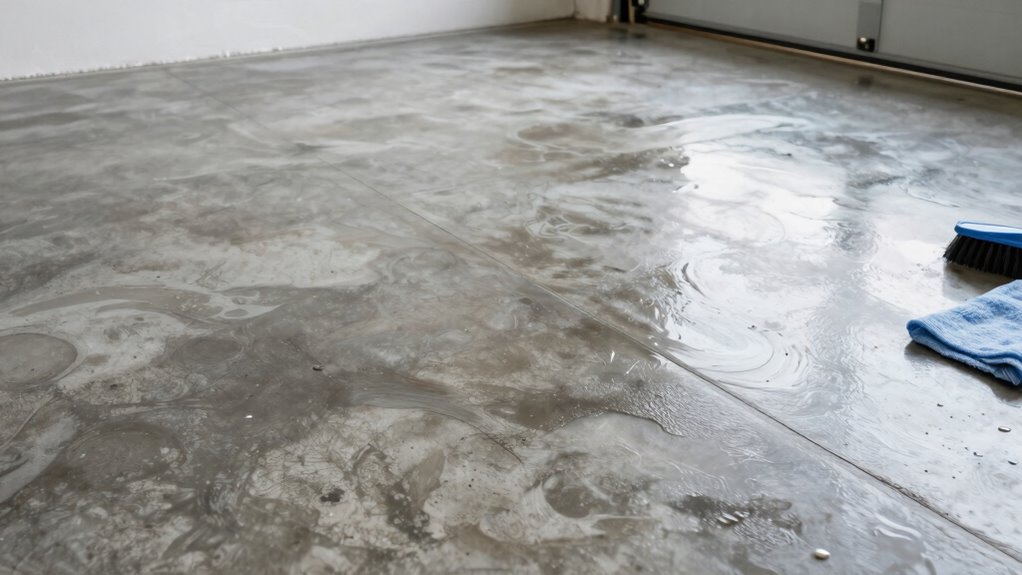
Oil and grease stains can be stubborn, but with the right methods, you can effectively remove them from your garage floor. Start by applying a degreasing agent or a mixture of dish soap and hot water directly to the stain. Let it sit for 10-15 minutes to loosen the grime. Scrub the area with a stiff-bristle brush, then rinse with clean water. For tougher stains, consider using a commercial degreaser or a paste made from baking soda and water. Improving your garage organization and storage solutions can help prevent future spills and make cleaning easier. Keep oily tools and parts stored properly, and regularly inspect for leaks. Staying proactive minimizes staining and keeps your garage looking clean and well-maintained. Being aware of market trends and maintaining proper storage can further reduce the likelihood of oil spills. Additionally, ensuring good indoor air quality by proper ventilation can help reduce the buildup of fumes and odors associated with oil spills. Using appropriate measurement tools to monitor fluid levels can also aid in early leak detection, preventing bigger messes. Regularly checking fluid levels and promptly addressing leaks can further prevent staining and protect your garage floor.

RadonSeal DIY Concrete Foundation Crack Repair Kit (20-ft) – The Homeowner's Solution to Fixing Basement Wall Cracks Like The Pros
NO DRILLING REQUIRED – The low-pressure injection method eliminates the need for drilling.
As an affiliate, we earn on qualifying purchases.
As an affiliate, we earn on qualifying purchases.
How to Clean Up Coolant and Antifreeze Spills Safely and Effectively

Cleaning up coolant and antifreeze spills requires you to prioritize safety first by wearing gloves and ensuring proper ventilation. Next, use absorbent materials and cleaning solutions designed for these liquids to remove the spill effectively. Additionally, taking steps to prevent future spills by inspecting your vehicle and securing fluid containers properly can help avoid accidents. Moreover, understanding the microplastics in dust can be useful, as residues from spills may contribute to indoor air quality concerns. Additionally, having the right essential DIY tools on hand can make cleanup safer and more efficient. Using appropriate cleaning agents that are effective against piercing materials can also help prevent corrosion or damage to sensitive components. Incorporating curiosity about safety protocols can further enhance your preparedness for handling such spills effectively. Being aware of household safety tips can also guide you in creating a safer environment during cleanup.
Safety Precautions First
When dealing with coolant and antifreeze spills on your garage floor, safety should always come first. Protect yourself by wearing gloves, goggles, and a mask to avoid skin contact and inhalation of fumes. Make certain proper ventilation safety by opening doors and windows to disperse harmful vapors. Before starting cleanup, keep these key points in mind: 1. Always wear protective gear to prevent exposure to toxic substances. 2. Maintain good ventilation to reduce inhalation risks. 3. Never rush; take your time to handle spills carefully and avoid spreading the fluid. Additionally, understanding indoor plant care can help you create a safer environment by reducing indoor pollutants and ensuring proper air quality. Incorporating regional flavors and insights into your safety practices can also enhance awareness of localized chemical handling recommendations. For added safety, familiarize yourself with smart lock technology to secure your garage during the cleanup process and prevent unauthorized access. Being aware of chemical safety protocols can further improve your spill response and protect your household.
Effective Cleanup Methods
To clean up coolant and antifreeze spills effectively, start by containing the spill to prevent it from spreading further. Use absorbent materials like kitty litter or commercial spill pads to soak up as much liquid as possible, minimizing damage to your garage floor maintenance. Once absorbed, sweep up the debris and dispose of it properly. Next, clean the area with a degreasing detergent and water to remove any residual residue. Always wear gloves and ensure proper ventilation for safety. Spill prevention techniques, such as sealing containers tightly and placing drip trays under vehicles, help reduce future accidents. Addressing spills promptly and thoroughly not only protects your garage floor but also keeps it safe and clean for ongoing maintenance. Additionally, understanding the properties of common automotive fluids can help you select the most effective cleaning agents and prevent long-term damage. Being aware of the weight of different pinball machines can assist if you need to move heavy spills or equipment around your garage safely. Proper disposal of hazardous materials like antifreeze also involves following local regulations, ensuring environmental safety. Incorporating spill containment strategies into your routine can further minimize risks and protect your flooring.
Prevent Future Spills
Preventing future coolant and antifreeze spills starts with proper handling and storage. You need to guarantee containers are sealed tightly and kept upright to minimize leaks. Regularly inspect hoses and fittings for signs of wear, replacing them before a spill occurs. Good floor maintenance also plays a role; clean spills immediately to prevent slips and stains. To improve spill prevention, consider these steps:
- Store fluids in clearly labeled, leak-proof containers.
- Keep a spill kit nearby for quick response.
- Schedule routine inspections of your garage setup.
Implementing these practices helps reduce the risk of spills and maintains a safer, cleaner environment. Consistent floor maintenance combined with careful spill prevention keeps your garage safer and minimizes damage from future fluid leaks.
Easy DIY and Natural Remedies for Garage Floor Stains
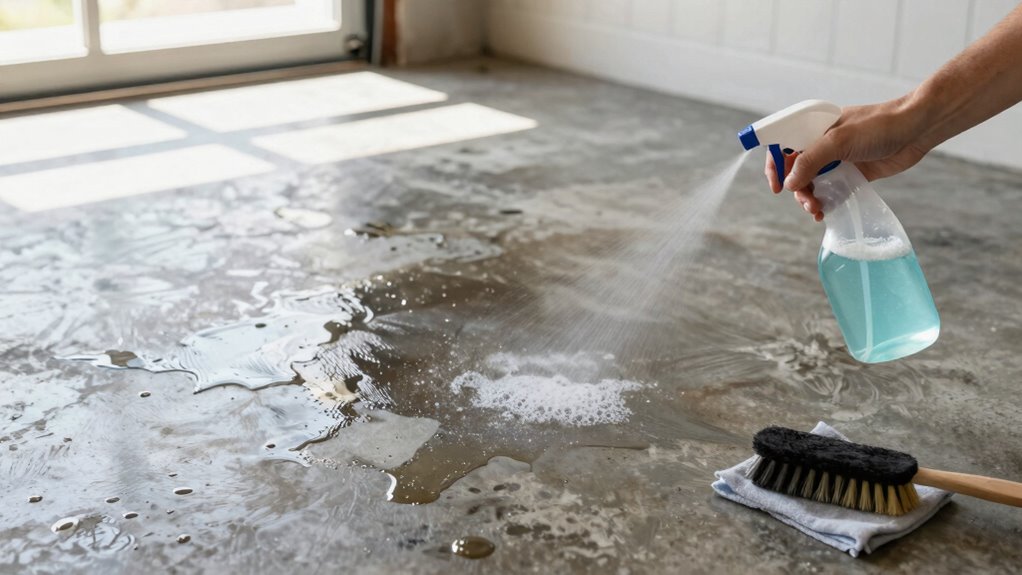
You can use simple, natural cleaning agents to tackle garage floor stains without harsh chemicals. DIY remedies like baking soda, vinegar, or lemon juice are effective and inexpensive options. Give these easy tips a try to keep your garage looking clean and fresh. Additionally, understanding stain removal techniques can help you choose the most effective method for different types of garage floor stains. For example, natural energy sources like manual tools or small generators can be a sustainable way to power cleaning equipment or tools in your garage. Incorporating environmentally friendly practices can further enhance your cleaning routine and reduce your ecological footprint. Utilizing landscaping ideas can also help divert water runoff away from your garage, minimizing future spills.
Natural Cleaning Agents
When dealing with garage floor stains, natural cleaning agents offer an effective and eco-friendly solution. These biodegradable cleaners are safe for your family and the environment, making them a smart choice for regular maintenance. Citrus-based solutions are especially powerful, breaking down grease and oil with natural acids. Here are three natural remedies to try:
- Vinegar and Baking Soda – creates a fizzing reaction that lifts stains and grime.
- Lemon Juice – a natural citrus based solution that cuts through oil and brightens concrete.
- Biodegradable Cleaners – commercial options made from plant-based ingredients that ensure effective cleaning without harsh chemicals.
Using these agents keeps your garage clean and safe while reducing environmental impact.
DIY Stain Removal Tips
For tackling garage floor stains, DIY natural remedies are both effective and budget-friendly. You can use common household ingredients to perform stain removal without harsh chemicals. Baking soda neutralizes acid spills, while vinegar breaks down grease and oil. For stubborn stains, create a paste with baking soda and water, then scrub gently. Lemon juice works well on rust or mineral deposits. Here’s a visual to guide you:
| Ingredient | Purpose | Application |
|---|---|---|
| Baking soda | Absorbs and lifts stains | Spread and scrub with a brush |
| Vinegar | Breaks down grease | Pour and scrub after 10 min |
| Lemon juice | Removes rust | Apply directly, then rinse |
These DIY cleaning tips make stain removal manageable and eco-friendly.
Which Commercial Products Work Best for Fluid Spill Cleanup
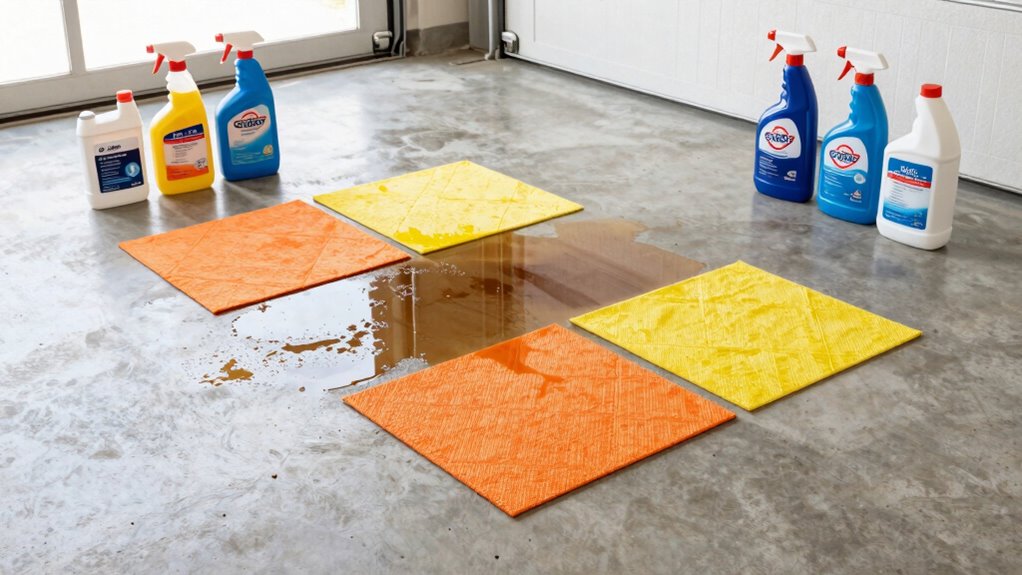
Choosing the right commercial product can make all the difference when cleaning up fluid spills from your garage floor. Effective products trigger chemical reactions that break down stains, making cleanup easier. To choose the best, consider these factors:
Selecting the right cleaner ensures effective, safe spill cleanup and prevents floor damage.
- Stain Identification: Use products suited for specific spills, like oil or grease, to ensure ideal results.
- Chemical Reactions: Select cleaners that react with the spill’s composition, neutralizing acids or breaking down hydrocarbons.
- Surface Compatibility: Make sure the product works safely with your garage floor material to prevent damage.
Tips to Prevent Future Fluid Spills and Keep Your Garage Floor Clean

Preventing fluid spills before they happen is the best way to keep your garage floor clean and safe. Start by applying high-quality floor sealants to create a protective barrier that resists stains and makes cleanup easier. Use spill containment trays or mats around vehicles and work areas to catch leaks and drips before they reach the floor. Regularly inspect hoses, fittings, and containers for leaks, repairing or replacing them promptly. Keep your garage organized so you can easily spot potential spill sources. Training everyone who uses the space on proper handling and spill response is also vital. By taking these proactive steps, you’ll reduce the chances of spills and maintain a cleaner, safer garage environment.
When to Hire Professional Garage Floor Cleaning Services
Sometimes, despite your best efforts, stubborn stains and heavy grime can make your garage floor look worn and unkempt. When this happens, it’s time to contemplate professional garage floor cleaning services. You should hire experts if:
- The garage odor persists despite cleaning—indicating deep-seated spills or mold.
- Stains resist multiple cleaning attempts, affecting the overall appearance.
- You want to protect your floor with sealing that enhances longevity and prevents future stains.
Professionals can provide thorough cleaning and floor sealing, ensuring your garage stays fresh and stain-free. They also have specialized equipment to remove deeply embedded grime, restoring your floor’s appearance and preventing future issues. Recognizing these signs helps maintain a clean, odor-free garage that’s safe and inviting.
Frequently Asked Questions
How Often Should I Deep Clean My Garage Floor After Spills?
You should deep clean your garage floor immediately after any spill to prevent stains and damage. For regular maintenance, schedule a thorough cleaning every 3 to 6 months, depending on usage and spill response timing. Promptly addressing spills minimizes cleaning frequency, but don’t skip deep cleans if stains or residues persist. Consistent maintenance keeps your garage floor in good shape and prevents long-term issues caused by delayed spill response.
Are There Eco-Friendly Options for Cleaning Fluid Spills?
When it comes to cleaning fluid spills eco-friendly style, you’re in luck—there are options that won’t harm the planet. You can use biodegradable detergents and natural cleaning agents that cut through grease without toxic chemicals. Think of it as killing two birds with one stone: keep your garage spotless while staying kind to the environment. Just remember, gentle doesn’t mean ineffective—these green solutions work wonders!
Can I Use Household Items to Remove Stubborn Stains?
Yes, you can use household items for stubborn stains on your garage floor. Try applying baking soda mixed with water to create a paste, then scrub with a stiff brush. Alternatively, use dish soap and warm water for light stains or a vinegar solution for tougher spots. These household cleaning methods are eco-friendly and effective for stain removal techniques, making your garage floor look clean without harsh chemicals.
What Are Signs My Garage Floor Needs Professional Cleaning?
If your garage floor shows cracks, persistent stains, or a dull, uneven surface, it’s time for professional cleaning. These signs indicate garage maintenance issues and surface deterioration that DIY methods can’t fully address. You’ll notice lingering odors, oil spots that won’t lift, or a loss of shine. When these problems persist despite your efforts, professional cleaning restores your floor’s integrity, prolongs its lifespan, and keeps your garage looking fresh and well-maintained.
How Do I Prevent Future Spills From Damaging My Floor?
You can prevent future spills from damaging your garage floor by applying a high-quality sealant to create a protective barrier. Additionally, use spill-proof storage containers for oils, paints, and chemicals to contain leaks. Regularly inspect and maintain your storage areas, promptly clean up any small spills, and consider adding mats or trays under fluid containers. These steps help keep your floor clean and damage-free over time.
Conclusion
Think of your garage floor as a canvas—you want it to stay pristine. I once spilled oil during a project, and with quick action, I saved my concrete from staining forever. Regular cleaning and the right products keep spills from becoming permanent scars. Just like a painter’s careful brushstrokes, your attention now prevents bigger messes later. Stay proactive, and your garage will stay clean, fresh, and ready for whatever comes next.