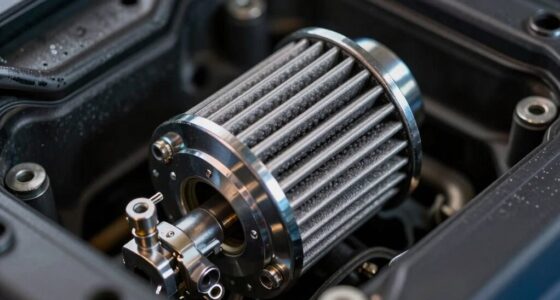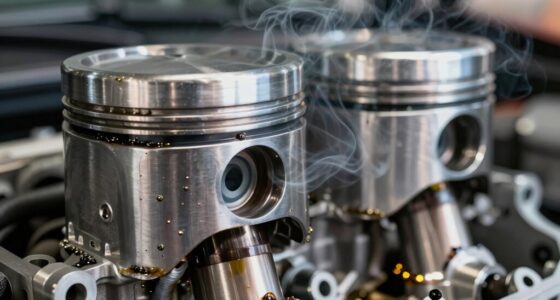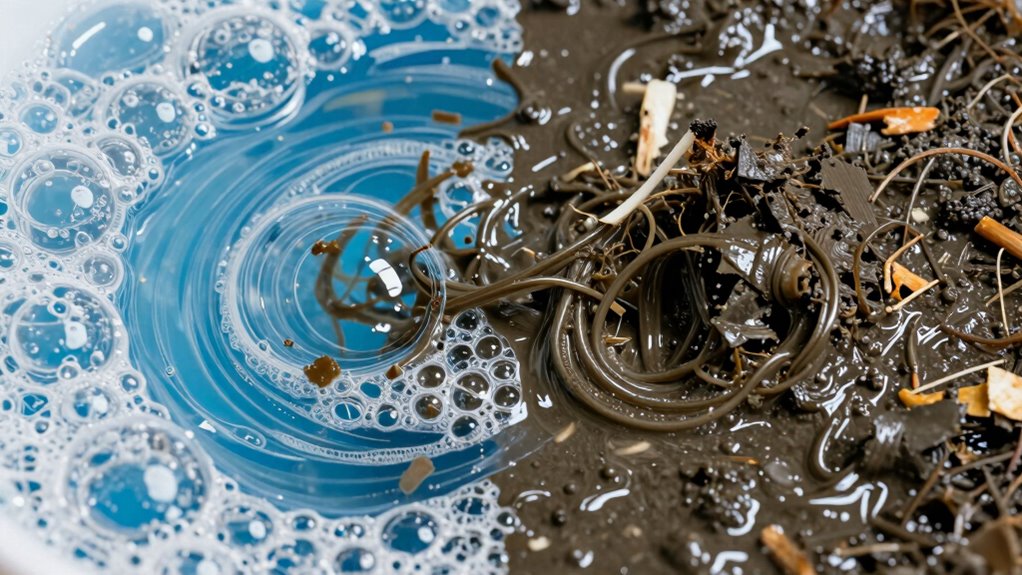
In the sludge story, detergents and dispersants play different roles. Detergents actively break down and remove existing sludge, making them ideal for heavy buildup. Dispersants, on the other hand, prevent new sludge from forming by keeping dirt particles suspended. While detergents offer thorough cleaning, dispersants focus on ongoing prevention. To keep your engine clean and running smoothly, understanding these differences can help you choose the right approach—more details can help you make smarter decisions.

Get business pricing on garage and car supplies
- Business-only prices and quantity discounts
- Tax-exempt purchasing
- Multiple users, one account, clear invoices
Key Takeaways
- Detergents actively break down and remove heavy sludge deposits in engines.
- Dispersants prevent particles from settling, keeping contaminants suspended in oil.
- Detergents are effective for cleaning existing sludge; dispersants excel at preventing buildup.
- Heavy sludge requires detergents; ongoing contamination issues are better managed with dispersants.
- Proper selection depends on engine condition, type of contamination, and maintenance needs.
As an affiliate, we earn on qualifying purchases.
What Causes Sludge in Engines and Machinery?
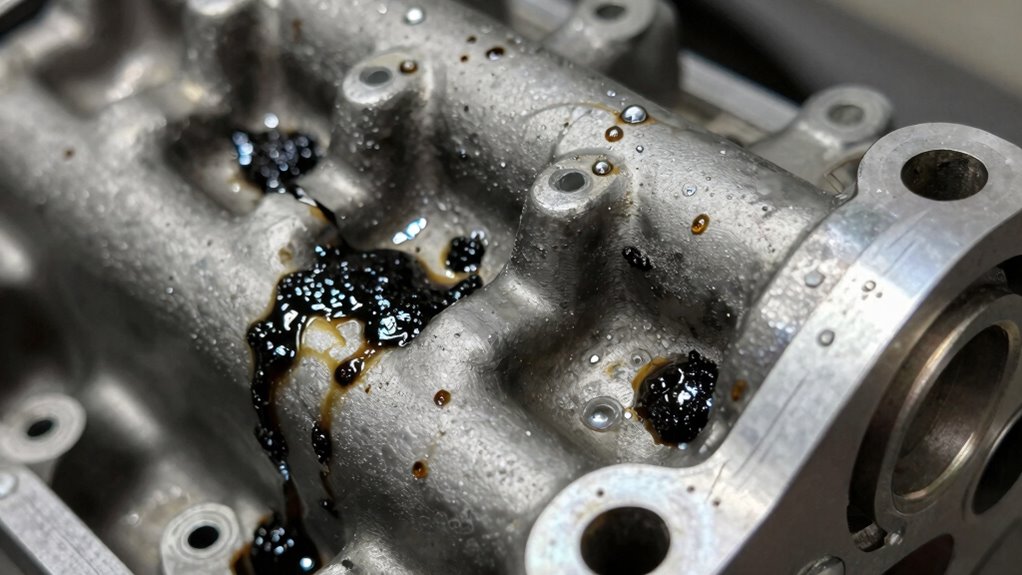
Have you ever wondered what leads to sludge buildup in engines and machinery? It often starts with the accumulation of dirt, metal particles, and combustion byproducts that combine with oil. Over time, these contaminants stick to engine parts, forming thick deposits. Frequent short trips, infrequent oil changes, and poor maintenance accelerate this process. Excess moisture and high operating temperatures also promote sludge formation by breaking down oil and encouraging chemical reactions. As the oil degrades, it loses its ability to lubricate properly, making deposits more likely. These deposits can clog filters, reduce engine efficiency, and cause wear and tear. Ultimately, sludge buildup results from a combination of contaminants, improper maintenance, and harsh operating conditions that hinder oil’s ability to protect your engine.
As an affiliate, we earn on qualifying purchases.
How Do Detergents and Dispersants Differ in Sludge Prevention?
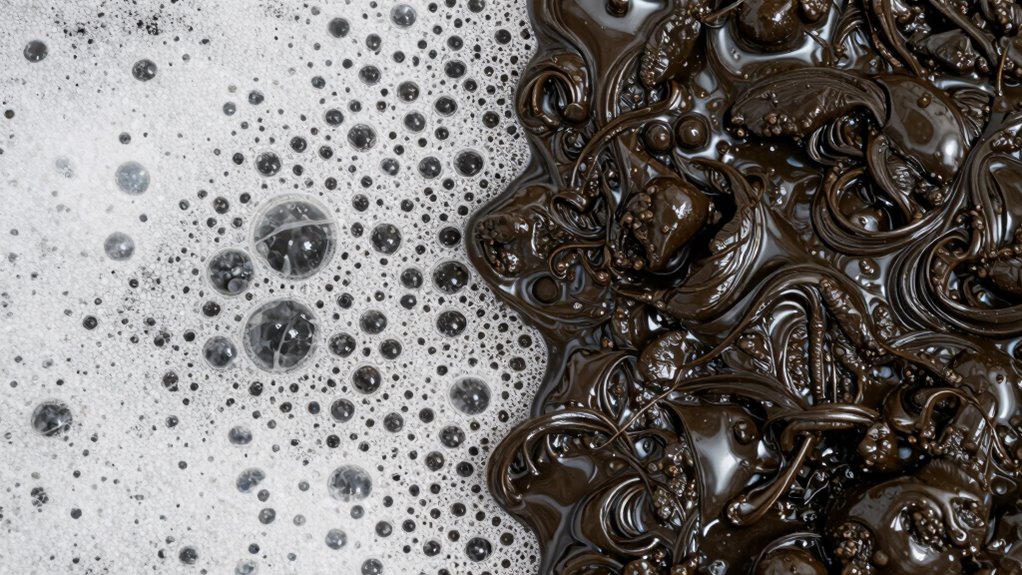
Understanding how detergents and dispersants work differently is key to preventing sludge buildup in engines and machinery. Detergents actively break down and remove existing deposits and grime from surfaces, keeping parts clean. They chemically react with dirt, making it easier to wash away. Dispersants, on the other hand, don’t remove sludge directly but keep particles suspended in the oil, preventing them from settling and forming deposits. They stabilize contaminants so they stay dispersed until they can be drained or cleaned out. Color accuracy also plays a role in visualizing the effectiveness of cleaning processes and ensuring that surfaces are thoroughly inspected for residues.
Detergents remove grime; dispersants keep particles suspended to prevent sludge buildup.
- Detergents clean by chemically breaking down and removing deposits.
- Dispersants keep sludge particles suspended, preventing accumulation.
- Detergents focus on cleaning surfaces; dispersants focus on preventing deposit formation.
As an affiliate, we earn on qualifying purchases.
Pros and Cons of Detergents Versus Dispersants?
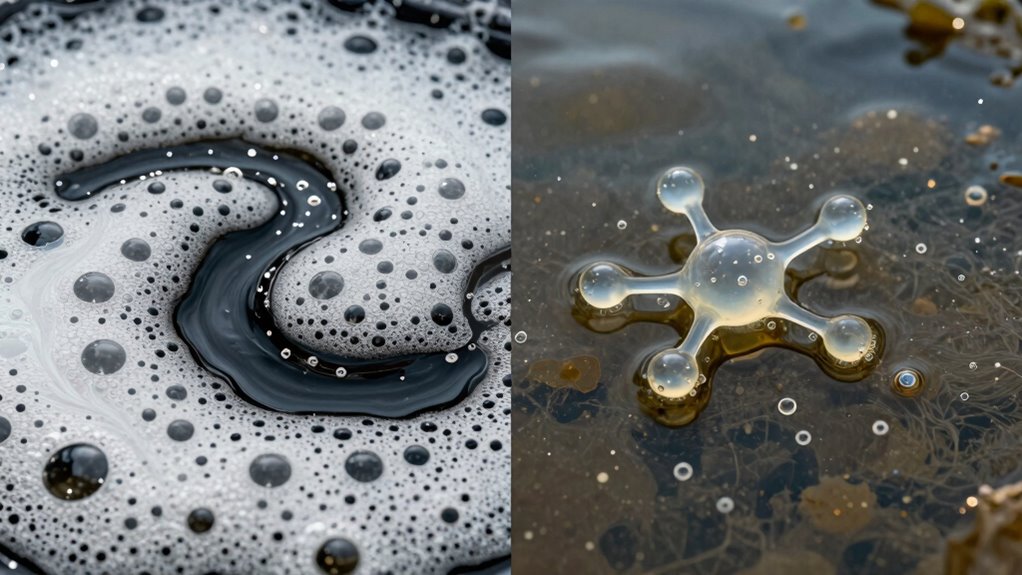
Both detergents and dispersants offer distinct advantages and drawbacks when it comes to engine cleanliness and maintenance. Detergents excel at breaking down and removing sludge and deposits, keeping engine parts clean. However, they can sometimes cause foaming issues and may wash away protective films. Dispersants, on the other hand, prevent sludge from settling by suspending particles, reducing buildup. But they might not clean as thoroughly as detergents, especially on heavy deposits. Additionally, understanding the testing accuracy of these additives can help in selecting the most effective treatment for your engine. Recognizing the long-term effects of each additive can assist in making informed maintenance decisions. Here’s a quick comparison:
| Feature | Detergents | Dispersants | Ideal Use |
|---|---|---|---|
| Cleaning Power | High (removes sludge) | Moderate (prevents buildup) | Heavy sludge removal |
| Deposit Control | Excellent | Good | Ongoing engine cleanliness |
| Potential Drawbacks | Foaming, may strip protective films | Less effective on heavy deposits | Regular maintenance needs |
As an affiliate, we earn on qualifying purchases.
Which Is Better for Your Equipment: Detergents or Dispersants?
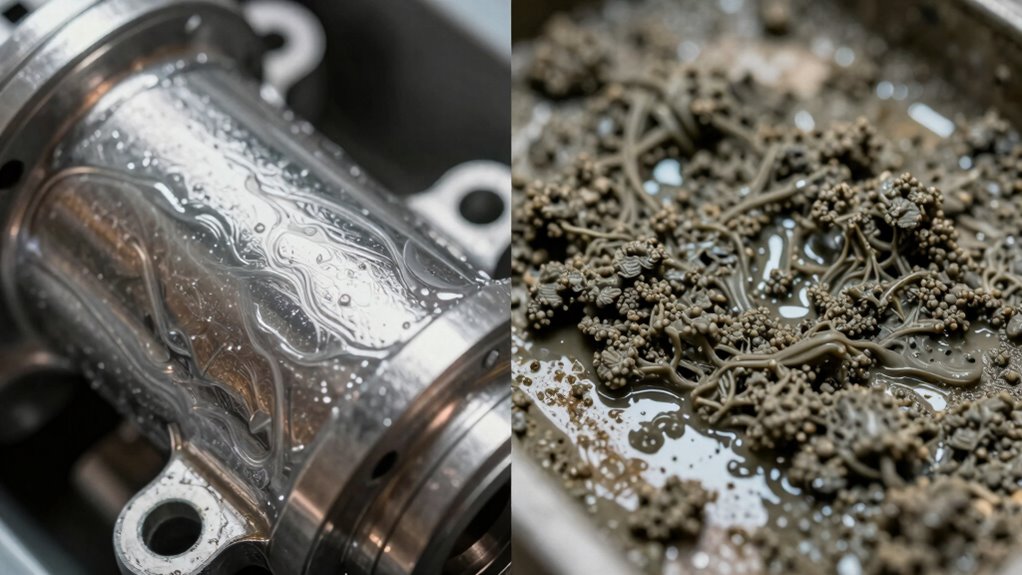
Choosing between detergents and dispersants depends on your equipment’s specific needs and operating conditions. If your engine tends to produce heavy sludge buildup, detergents are better at breaking down deposits and keeping parts clean. Dispersants, on the other hand, excel at preventing sludge from agglomerating and settling, making them ideal for engines with ongoing contamination issues. Consider the following:
Choose detergents for heavy sludge; use dispersants to prevent deposits and settle contamination issues.
- Type of contamination: Heavy sludge or fine particles?
- Engine condition: Well-maintained or prone to buildup?
- Operating environment: High temperature or extreme conditions?
Your choice should align with your equipment’s wear patterns and maintenance routine. Using the right additive ensures maximum performance, prolongs engine life, and minimizes downtime. Always evaluate your engine’s specific demands before selecting the appropriate additive type.
How to Choose the Best Sludge Control Additive for Your Engine?
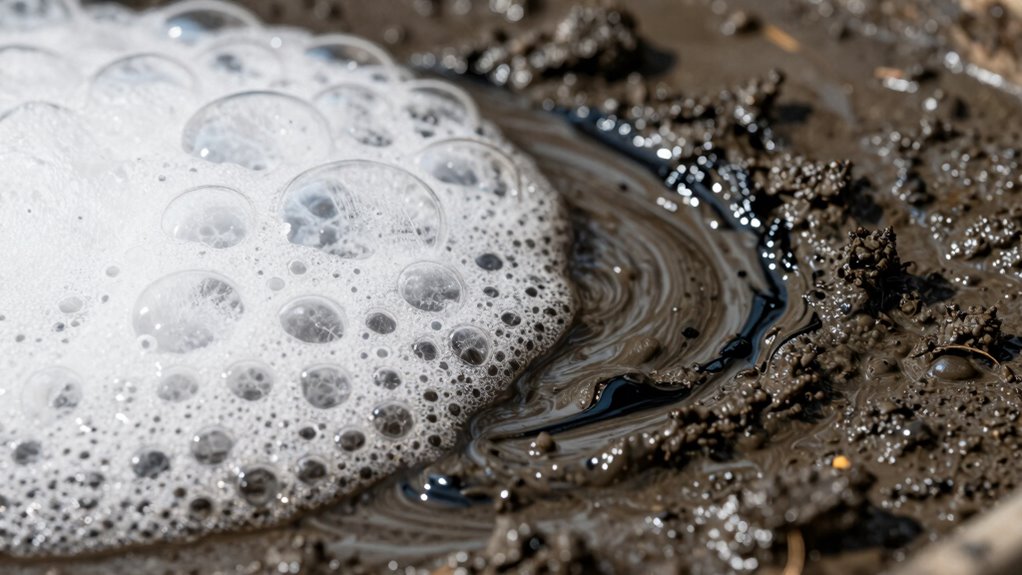
Selecting the right sludge control additive for your engine requires evaluating its specific needs and operating conditions. First, consider your engine type and manufacturer recommendations. If your engine operates in harsh conditions or short trips, opt for additives with stronger dispersant properties to prevent sludge buildup. For engines with high mileage or signs of existing sludge, choose products designed for sludge removal and cleaning. Check the additive’s formulation—look for those with proven dispersant and detergent capabilities. Compatibility is key; ensure it works with your oil type. Also, consider your maintenance schedule. Using the correct additive helps keep your engine clean, reduces wear, and prolongs engine life. Always follow the manufacturer’s instructions for dosage and application for ideal results.
Frequently Asked Questions
How Do Detergents and Dispersants Chemically Interact With Engine Deposits?
You’ll find that detergents chemically break down engine deposits by emulsifying oil and dirt, making them easier to wash away. Dispersants, on the other hand, suspend sludge particles within the oil, preventing them from settling and creating buildup. Both work actively in your engine to keep parts clean, but detergents excel at removing deposits, while dispersants focus on preventing new sludge formation by stabilizing particles in the oil.
Are There Environmental Impacts Associated With Using Detergents Versus Dispersants?
You might worry about environmental impacts, and they can differ between detergents and dispersants. For example, dispersants used in oil spill cleanup can harm marine life, while eco-friendly detergents break down more easily and pose less risk. Using biodegradable options reduces pollution, but improper disposal of any chemical can still harm ecosystems. Always choose environmentally safe products and follow proper disposal practices to minimize ecological damage.
Can Mixing Detergents and Dispersants Improve Sludge Prevention?
Mixing detergents and dispersants can improve sludge prevention by combining their strengths to better break down and disperse waste. You’ll likely see enhanced cleaning and reduced buildup, as dispersants prevent particles from settling, while detergents lift grease and grime. However, be cautious, as improper mixing might reduce effectiveness or cause potential environmental concerns. Always follow manufacturer guidelines or consult experts to optimize their combined use safely.
What Is the Long-Term Effectiveness of Each Additive in Engine Maintenance?
You’ll find that detergents quickly wash away grime, keeping your engine cleaner over time, but may need replenishment. Dispersants, on the other hand, act like tiny magnets, holding sludge in suspension so it doesn’t settle and cause damage. Long-term, detergents maintain cleanliness effectively with regular use, while dispersants excel at preventing sludge buildup, especially in older engines. Your choice depends on your engine’s age and maintenance routine.
How Do Maintenance Schedules Influence the Choice Between Detergents and Dispersants?
You should base your maintenance schedule on your engine’s usage and oil change intervals. Regular, frequent changes favor detergents because they keep the engine cleaner over time. If you have infrequent maintenance, dispersants are better as they suspend sludge and prevent buildup between oil changes. Adjust your schedule accordingly to optimize engine health, ensuring the right additive is used for your specific driving habits and maintenance routine.
Conclusion
Think of your engine as a delicate garden. Choosing the right additive is like planting the perfect seeds—detergents clean deeply, while dispersants keep particles from settling. To keep your engine thriving and free from sludge, pick the tool that suits your needs best. With the right choice, you’ll nurture a healthy, smooth-running machine that blooms with performance and longevity. Protect your engine’s future—treat it like a cherished garden, and watch it flourish.
Fall Picks
fall essentials
As an affiliate, we earn on qualifying purchases.